Kirjojen hintavertailu. Mukana 11 244 527 kirjaa ja 12 kauppaa.

Kirjahaku

Etsi kirjoja tekijän nimen, kirjan nimen tai ISBN:n perusteella.

3 kirjaa tekijältä A Ohri

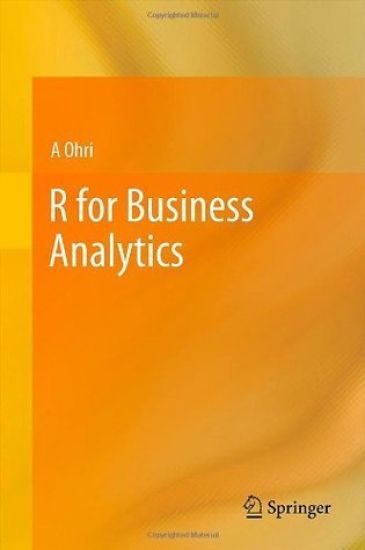
R for Business Analytics

R for Business Analytics

A Ohri

Springer-Verlag New York Inc.
2012
sidottu
R for Business Analytics looks at some of the most common tasks performed by business analysts and helps the user navigate the wealth of information in R and its 4000 packages. With this information the reader can select the packages that can help process the analytical tasks with minimum effort and maximum usefulness. The use of Graphical User Interfaces (GUI) is emphasized in this book to further cut down and bend the famous learning curve in learning R. This book is aimed to help you kick-start with analytics including chapters on data visualization, code examples on web analytics and social media analytics, clustering, regression models, text mining, data mining models and forecasting. The book tries to expose the reader to a breadth of business analytics topics without burying the user in needless depth. The included references and links allow the reader to pursue business analytics topics. This book is aimed at business analysts with basic programming skills for using R for Business Analytics. Note the scope of the book is neither statistical theory nor graduate level research for statistics, but rather it is for business analytics practitioners. Business analytics (BA) refers to the field of exploration and investigation of data generated by businesses. Business Intelligence (BI) is the seamless dissemination of information through the organization, which primarily involves business metrics both past and current for the use of decision support in businesses. Data Mining (DM) is the process of discovering new patterns from large data using algorithms and statistical methods. To differentiate between the three, BI is mostly current reports, BA is models to predict and strategize and DM matches patterns in big data. The R statistical software is the fastest growing analytics platform in the world, and is established in both academia and corporations for robustness, reliability and accuracy. The book utilizes Albert Einstein’s famous remarks on making things as simple as possible, but no simpler. This book will blow the last remaining doubts in your mind about using R in your business environment. Even non-technical users will enjoy the easy-to-use examples. The interviews with creators and corporate users of R make the book very readable. The author firmly believes Isaac Asimov was a better writer in spreading science than any textbook or journal author.
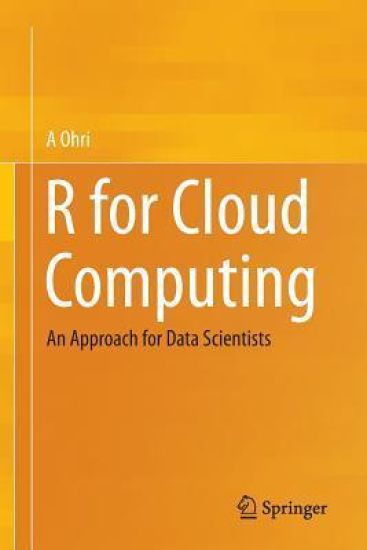
R for Cloud Computing

R for Cloud Computing

A Ohri

Springer-Verlag New York Inc.
2014
nidottu
R for Cloud Computing looks at some of the tasks performed by business analysts on the desktop (PC era) and helps the user navigate the wealth of information in R and its 4000 packages as well as transition the same analytics using the cloud. With this information the reader can select both cloud vendors and the sometimes confusing cloud ecosystem as well as the R packages that can help process the analytical tasks with minimum effort, cost and maximum usefulness and customization. The use of Graphical User Interfaces (GUI) and Step by Step screenshot tutorials is emphasized in this book to lessen the famous learning curve in learning R and some of the needless confusion created in cloud computing that hinders its widespread adoption. This will help you kick-start analytics on the cloud including chapters on both cloud computing, R, common tasks performed in analytics including the current focus and scrutiny of Big Data Analytics, setting up and navigating cloud providers.Readers are exposed to a breadth of cloud computing choices and analytics topics without being buried in needless depth. The included references and links allow the reader to pursue business analytics on the cloud easily. It is aimed at practical analytics and is easy to transition from existing analytical set up to the cloud on an open source system based primarily on R.This book is aimed at industry practitioners with basic programming skills and students who want to enter analytics as a profession. Note the scope of the book is neither statistical theory nor graduate level research for statistics, but rather it is for business analytics practitioners. It will also help researchers and academics but at a practical rather than conceptual level.The R statistical software is the fastest growing analytics platform in the world, and is established in both academia and corporations for robustness, reliability and accuracy. The cloud computing paradigm is firmly established as the next generation of computing from microprocessors to desktop PCs to cloud.
R for Business Analytics

R for Business Analytics

A Ohri

Springer-Verlag New York Inc.
2016
nidottu
R for Business Analytics looks at some of the most common tasks performed by business analysts and helps the user navigate the wealth of information in R and its 4000 packages. With this information the reader can select the packages that can help process the analytical tasks with minimum effort and maximum usefulness. The use of Graphical User Interfaces (GUI) is emphasized in this book to further cut down and bend the famous learning curve in learning R. This book is aimed to help you kick-start with analytics including chapters on data visualization, code examples on web analytics and social media analytics, clustering, regression models, text mining, data mining models and forecasting. The book tries to expose the reader to a breadth of business analytics topics without burying the user in needless depth. The included references and links allow the reader to pursue business analytics topics. This book is aimed at business analysts with basic programming skills for using R for Business Analytics. Note the scope of the book is neither statistical theory nor graduate level research for statistics, but rather it is for business analytics practitioners. Business analytics (BA) refers to the field of exploration and investigation of data generated by businesses. Business Intelligence (BI) is the seamless dissemination of information through the organization, which primarily involves business metrics both past and current for the use of decision support in businesses. Data Mining (DM) is the process of discovering new patterns from large data using algorithms and statistical methods. To differentiate between the three, BI is mostly current reports, BA is models to predict and strategize and DM matches patterns in big data. The R statistical software is the fastest growing analytics platform in the world, and is established in both academia and corporations for robustness, reliability and accuracy. The book utilizes Albert Einstein’s famous remarks on making things as simple as possible, but no simpler. This book will blow the last remaining doubts in your mind about using R in your business environment. Even non-technical users will enjoy the easy-to-use examples. The interviews with creators and corporate users of R make the book very readable. The author firmly believes Isaac Asimov was a better writer in spreading science than any textbook or journal author.