Kirjojen hintavertailu. Mukana 11 717 486 kirjaa ja 12 kauppaa.

Kirjahaku

Etsi kirjoja tekijän nimen, kirjan nimen tai ISBN:n perusteella.

40 kirjaa tekijältä A. C. Grayling

Meditations for the Humanist: Ethics for a Secular Age

Meditations for the Humanist: Ethics for a Secular Age

A. C. Grayling

Oxford University Press
2003
nidottu
"Magnanimity is in short supply," writes A. C. Grayling is this wonderfully incisive book, "but it is the main ingredient in everything that makes the world a better place" And indeed Meditations for the Humanist: Ethics for a Secular Age is itself a generous, insightful, wide-ranging, magnanimous inquiry into the philosophical and ethical questions that bear most strongly on the human condition. Containing nearly fifty linked commentaries on topics ranging from love, lying, perseverance, revenge, racism, religion, history, loyalty, health, and leisure, Meditations for the Humanist does not offer definitive statements but rather prompts to reflection. These brief essays serve as springboards to the kind of thoughtful examination without which, as Socrates famously claimed, life is not worth living. As Graying notes in his introduction, "It is not necessary to arrive at polished theories on all these subjects, but it is necessary to give them at least a modicum of thought if one's life is to have some degree of shape and direction." The book is divided into three sections-Virtues and Attributes, Foes and Fallacies, and Amenities and Goods-and within these sections essays are grouped into related clusters. But each piece can be read alone and each is characterized by brevity, wit, and a liveliness of mind that recalls the best of Montaigne and Samuel Johnson. Grayling's own perspective on these subjects is broadened and deepened by liberal quotations from Sophocles and Shakespeare to Byron, Twain, Proust, Simone de Beauvoir, Martin Luther King, Jr., and many others. For those wishing to explore ethical issues outside the framework of organized religious belief, Meditations for the Humanist offers an inviting map to the country of philosophical reflection.
Russell

Russell

A. C. Grayling

Oxford University Press
2002
nidottu
Bertrand Russell (1872-1970) is one of the most famous and important philosophers of the twentieth century. In this account of his life and work A.C. Grayling introduces both his technical contributions to logic and philosophy, and his wide-ranging views on education, politics, war, and sexual morality. Russell is credited with being one of the prime movers of Analytic Philosophy, and with having played a part in the revolution in social attitudes witnessed throughout the twentieth-century world. This introduction gives a clear survey of Russell's achievements across their whole range. ABOUT THE SERIES: The Very Short Introductions series from Oxford University Press contains hundreds of titles in almost every subject area. These pocket-sized books are the perfect way to get ahead in a new subject quickly. Our expert authors combine facts, analysis, perspective, new ideas, and enthusiasm to make interesting and challenging topics highly readable.
Wittgenstein

Wittgenstein

A. C. Grayling

Oxford University Press
2001
nidottu
Ludwig Wittgenstein (1889-1951) was an extraordinarily original philospher, whose influence on twentieth-century thinking goes well beyond philosophy itself. In this book, which aims to make Wittgenstein's thought accessible to the general non-specialist reader, A. C. Grayling explains the nature and impact of Wittgenstein's views. He describes both his early and later philosophy, the differences and connections between them, and gives a fresh assessment of Wittgenstein's continuing influence on contemporary thought. ABOUT THE SERIES: The Very Short Introductions series from Oxford University Press contains hundreds of titles in almost every subject area. These pocket-sized books are the perfect way to get ahead in a new subject quickly. Our expert authors combine facts, analysis, perspective, new ideas, and enthusiasm to make interesting and challenging topics highly readable.
Life, Sex, and Ideas: The Good Life Without God

Life, Sex, and Ideas: The Good Life Without God

A. C. Grayling

Oxford University Press
2003
sidottu
"A distinctive voice somewhere between Mark Twain and Michel Montaigne" is how Psychology Today described A.C. Grayling. In Life, Sex, and Ideas: The Good Life Without God, readers have the pleasure of hearing this distinctive voice address some of the most serious topics in philosophy--and in our daily lives--including reflections on guns, anger, conflict, war; monsters, madness, decay; liberty, justice, utopia; suicide, loss, and remembrance. A civilized society, says Grayling, is one which never ceases having a discussion with itself about what human life should best be. In this book, Grayling adds to this discussion a series of short informal essays about ethics, ideas, and culture. A recurring theme is religion, of which he writes "there is no greater social evil." He argues, for instance, that liberal education is better than religion for inculcating moral values. "Education in literature, history, and appreciation of the arts," he says, "opens the possibility for us to live more reflectively and knowledgeably, especially about the nature and variety of human experience. That in turn increases our capacity for understanding others better, so that we can treat them with respect and sympathy, however different their outlook on life." Thought provoking rather than definitive, these essays don't tell readers what to think, but only note what has been thought about how it is best to live. A person who does not think about life, the author reminds us, is like a stranger mapless in a foreign land. These brief and suggestive essays offer us the outlines of a map, with avenues of thought that are a pleasure to wander down.
Life, Sex and Ideas: The Good Life Without God

Life, Sex and Ideas: The Good Life Without God

A. C. Grayling

Oxford University Press
2004
nidottu
"A distinctive voice somewhere between Mark Twain and Michel Montaigne" is how Psychology Today described A.C. Grayling. In Life, Sex, and Ideas: The Good Life Without God, readers have the pleasure of hearing this distinctive voice address some of the most serious topics in philosophy--and in our daily lives--including reflections on guns, anger, conflict, war; monsters, madness, decay; liberty, justice, utopia; suicide, loss, and remembrance. A civilized society, says Grayling, is one which never ceases having a discussion with itself about what human life should best be. In this book, Grayling adds to this discussion a series of short informal essays about ethics, ideas, and culture. A recurring theme is religion, of which he writes "there is no greater social evil." He argues, for instance, that liberal education is better than religion for inculcating moral values. "Education in literature, history, and appreciation of the arts," he says, "opens the possibility for us to live more reflectively and knowledgeably, especially about the nature and variety of human experience. That in turn increases our capacity for understanding others better, so that we can treat them with respect and sympathy, however different their outlook on life." Thought provoking rather than definitive, these essays don't tell readers what to think, but only note what has been thought about how it is best to live. A person who does not think about life, the author reminds us, is like a stranger mapless in a foreign land. These brief and suggestive essays offer us the outlines of a map, with avenues of thought that are a pleasure to wander down.
The History of Philosophy

The History of Philosophy

A. C. Grayling

Penguin Books Ltd
2020
pokkari
AUTHORITATIVE AND ACCESSIBLE, THIS LANDMARK WORK IS THE FIRST SINGLE-VOLUME HISTORY OF PHILOSOPHY SHARED FOR DECADES'A cerebrally enjoyable survey, written with great clarity and touches of wit' Sunday Times The story of philosophy is an epic tale: an exploration of the ideas, views and teachings of some of the most creative minds known to humanity. But there has been no comprehensive history of this great intellectual journey since 1945. Intelligible for students and eye-opening for philosophy readers, A. C. Grayling covers with characteristic clarity and elegance subjects like epistemology, metaphysics, ethics, logic, and the philosophy of mind, as well as the history of debates in these areas, through the ideas of celebrated philosophers as well as less well-known influential thinkers. The History of Philosophy takes the reader on a journey from the age of the Buddha, Confucius and Socrates. Through Christianity's dominance of the European mind to the Renaissance and Enlightenment. On to Mill, Nietzsche, Sartre, then the philosophical traditions of India, China and the Persian-Arabic world.And finally, into philosophy today.
The Frontiers of Knowledge

The Frontiers of Knowledge

A. C. Grayling

PENGUIN BOOKS LTD
2022
pokkari
'Grayling brings satisfying order to daunting subjects' Steven Pinker_________________________In very recent times humanity has learnt a vast amount about the universe, the past, and itself. But through our remarkable successes in acquiring knowledge we have learned how much we have yet to learn: the science we have, for example, addresses just 5 per cent of the universe; pre-history is still being revealed, with thousands of historical sites yet to be explored; and the new neurosciences of mind and brain are just beginning. What do we know, and how do we know it? What do we now know that we don't know? And what have we learnt about the obstacles to knowing more? In a time of deepening battles over what knowledge and truth mean, these questions matter more than ever. Bestselling polymath and philosopher A. C. Grayling seeks to answer them in three crucial areas at the frontiers of knowledge: science, history and psychology. A remarkable history of science, life on earth, and the human mind itself, this is a compelling and fascinating tour de force, written with verve, clarity and remarkable breadth of knowledge._________________________'Remarkable, readable and authoritative. How he has mastered so much, so thoroughly, is nothing short of amazing' Lawrence M. Krauss, author of A Universe from Nothing'This book hums with the excitement of the great human project of discovery' Adam Zeman, author of Aphantasia
Philosophy and Life

Philosophy and Life

A. C. Grayling

PENGUIN BOOKS LTD
2024
pokkari
'Grayling brings satisfying order to daunting subjects' Steven Pinker'An enthusiastic thinker who embraces humour, common sense and lucidity' Independent_______________From the eminent philosopher, an authoritative exploration of the great questions of how to live'There is a question everyone has to ask and answer - in fact, has to keep on asking and keep on answering. It is, 'How should I live my life?' meaning, 'What values shall I live by? 'What sort of person should I be? What shall I aim for?' The great majority of people do not ask this question, they merely answer it unthinkingly, by adopting conventional views of life and what matters in it...'From Stoics to existentialists, in philosophy and literature, discussion of the philosophy of life -- of love and death, of courage, fortitude and wisdom -- challenges us all to think about what kinds of life are truly worth living. In this summation of a lifetime thinking and writing about this great question, A. C. Grayling explores with clarity and depth the ideas that each of us must use in answering it for ourselves.Drawing on the lives, experiences and works of a fantastically eclectic range of thinkers -- taking in not only philosophers such as Confucius, Seneca and Nietzsche, but also authors from Shakespeare to Ursula LeGuin, and modern thinkers such as Martha Nussbaum and Bernard Williams - Philosophy and Life brings together wisdom from across eras and continents in a tour de force on the philosophy of being human in a complicated world.
Friendship

Friendship

A. C. Grayling

Yale University Press
2014
pokkari
An entertaining and provocative investigation of friendship in all its variety, from ancient times to the present day A central bond, a cherished value, a unique relationship, a profound human need, a type of love. What is the nature of friendship, and what is its significance in our lives? How has friendship changed since the ancient Greeks began to analyze it, and how has modern technology altered its very definition? In this fascinating exploration of friendship through the ages, one of the most thought-provoking philosophers of our time tracks historical ideas of friendship, gathers a diversity of friendship stories from the annals of myth and literature, and provides unexpected insights into our friends, ourselves, and the role of friendships in an ethical life. A. C. Grayling roves the rich traditions of friendship in literature, culture, art, and philosophy, bringing into his discussion familiar pairs as well as unfamiliar—Achilles and Patroclus, David and Jonathan, Coleridge and Wordsworth, Huck Finn and Jim. Grayling lays out major philosophical interpretations of friendship, then offers his own take, drawing on personal experiences and an acute awareness of vast cultural shifts that have occurred. With penetrating insight he addresses internet-based friendship, contemporary mixed gender friendships, how friendships may supersede family relationships, one’s duty within friendship, the idea of friendship to humanity, and many other topics of universal interest.
War

War

A. C. Grayling

Yale University Press
2018
pokkari
A renowned philosopher challenges long-held views on just wars, ethical conduct during war, why wars occur, how they alter people and societies, and more For residents of the twenty-first century, a vision of a future without warfare is almost inconceivable. Though wars are terrible and destructive, they also seem unavoidable. In this original and deeply considered book, A. C. Grayling examines, tests, and challenges the concept of war. He proposes that a deeper, more accurate understanding of war may enable us to reduce its frequency, mitigate its horrors, and lessen the burden of its consequences. Grayling explores the long, tragic history of war and how warfare has changed in response to technological advances. He probes much-debated theories concerning the causes of war and considers positive changes that may result from war. How might these results be achieved without violence? In a profoundly wise conclusion, the author envisions “just war theory” in new moral terms, taking into account the lessons of World War II and the Holocaust and laying down ethical principles for going to war and for conduct during war.
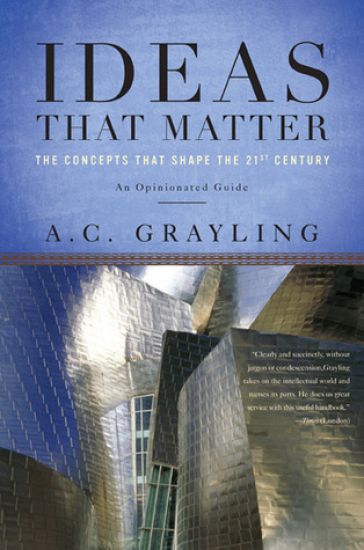
Ideas That Matter

Ideas That Matter

A. C. Grayling

Basic Books
2012
nidottu
Ideas can, and do, change the world. Just as Marxism, existentialism, and feminism shaped the last century, so are fundamentalism, globalization, and bioethics transforming our world now. In Ideas That Matter , renowned philosopher A. C. Grayling provides a personal and heartfelt guide to the ideas,past and present,that will shape our future. With customary wit, fire, and erudition, Grayling ranges across the gamut of essential theories, movements, and philosophies,from animal rights to neurophilosophy to war crimes,to deliver a rich, elucidating book intended both to arm readers with vital knowledge and to engage them in provocative philosophical debate.
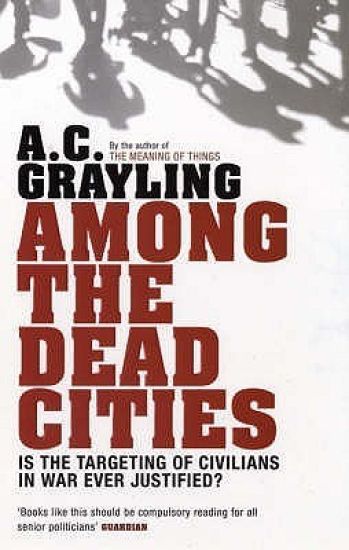
Among the Dead Cities

Among the Dead Cities

A. C. Grayling

Bloomsbury Publishing PLC
2007
nidottu
Britain and the USA carried out a massive bombing offensive against the cities of Germany and Japan in the course of the Second World War, which ended with the destruction of Hamburg, Dresden, Tokyo, Hiroshima and Nagasaki. Was the bombing of civilian targets justified by the necessities of war? Or was it, in fact, a crime against humanity? How should we, the descendants of the Allies who won the victory in that war, reply to the moral challenge of the descendants of those whose cities were targeted? A.C. Grayling looks at the stands people took, both for and against, and crucially asks what the lessons are that we can learn for today about how people should behave in a world of tension and moral confusion, of terrorism and fragile democracies. "Among the Dead Cities" is both a lucid and revealing work of modern history and an investigation of conscience into one of the last remaining controversies of that time.
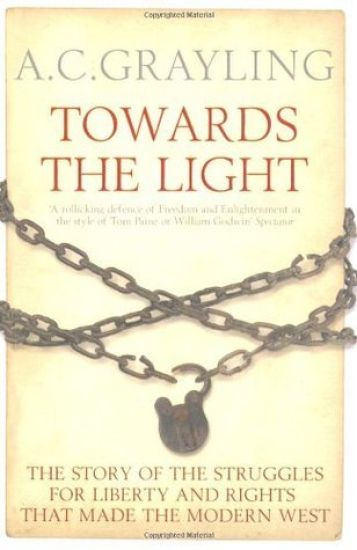
Towards the Light

Towards the Light

A. C. Grayling

Bloomsbury Publishing PLC
2008
nidottu
The often-violent conflicts of the fifteenth and sixteenth centuries were sparked by the pursuit of freedom of thought. In time, this drive led to bitter fighting, including the English Civil War. Then came revolutions in America and France that swept away monarchies for more representative forms of government and making possible the abolition of slavery, the enfranchisement of women, and the idea of universal human rights and freedoms. Each of these struggles was a memorable human drama, and Grayling interweaves the stories of these heroes, including Martin Luther, Mary Wollstonecraft and Rosa Parks, whose sacrifices make us value these precious rights, especially in an age when governments under pressure find it necessary to restrict rights in the name of freedom.
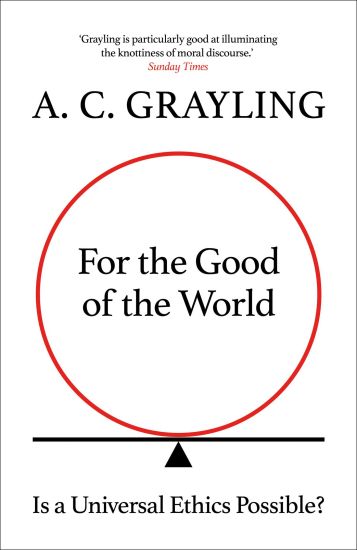
For the Good of the World

For the Good of the World

A. C. Grayling

Oneworld Publications
2022
sidottu
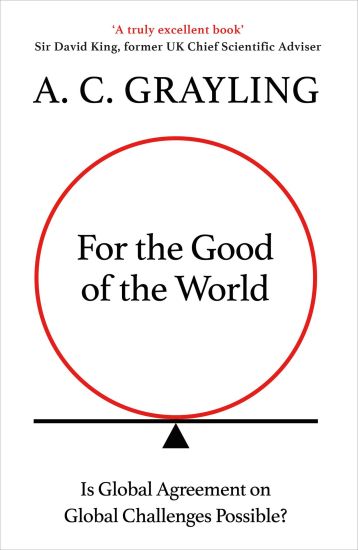
‘A must read’ Gordon Brown ‘A truly excellent book’ Sir David King The three biggest challenges facing the world today, in A. C. Grayling’s view, are climate change, technology and justice. In his timely new book, he asks: can human beings agree on a set of values that will allow us to confront the numerous threats facing the planet, or will we simply continue with our disagreements and antipathies as we collectively approach our possible extinction? As every day brings new stories about extreme weather events, spyware, lethal autonomous weapons systems, and the health imbalance between the northern and southern hemispheres, Grayling’s question – Is Global Agreement on Global Challenges Possible? – becomes ever more urgent. The solution he proposes is both pragmatic and inspiring.
For the Good of the World

For the Good of the World

A. C. Grayling

Oneworld Publications
2022
pokkari
‘A must read’ Gordon Brown ‘A truly excellent book’ Sir David King The three biggest challenges facing the world today, in A. C. Grayling’s view, are climate change, technology and justice. In his timely new book, he asks: can human beings agree on a set of values that will allow us to confront the numerous threats facing the planet, or will we simply continue with our disagreements and antipathies as we collectively approach our possible extinction? As every day brings new stories about extreme weather events, spyware, lethal autonomous weapons systems, and the health imbalance between the northern and southern hemispheres, Grayling’s question – Is Global Agreement on Global Challenges Possible? – becomes ever more urgent. The solution he proposes is both pragmatic and inspiring.
Who Owns the Moon?

Who Owns the Moon?

A. C. Grayling

Oneworld Publications
2024
sidottu
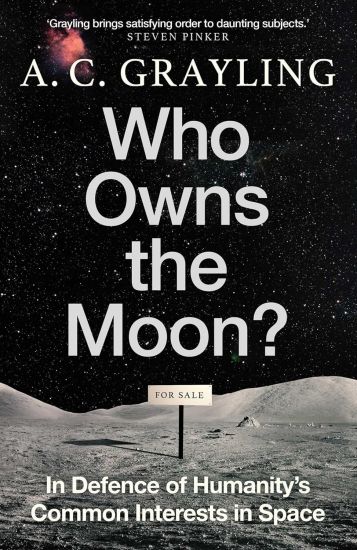
As the world's superpowers and corporations jostle for control in space, A. C. Grayling asks: who really owns our planet? 'Grayling brings satisfying order to daunting subjects.' STEVEN PINKER Silicon for microchips; manganese for batteries; titanium for missiles. The moon contains a wealth of natural resources. So, as the Earth’s supplies have begun to dwindle, it is no surprise that the world’s superpowers and wealthiest corporations have turned their eyes to the stars. As this new Space Race begins, A.C. Grayling asks: who, if anyone, owns the moon? Or Mars? Or other bodies in near space? And what do those superpowers and corporations owe to Planet Earth and its inhabitants as a whole? From feudal common land, through the rules of the sea, to the vast, nationless expanse of Antarctica, Grayling explores the history of the places which no one, and therefore everyone, owns. Examining the many ways this so-called terra nullius has fallen victim to ‘the tragedy of the commons’ – the tendency for communal resources to be exploited by a few individuals for personal gain at the expense of everyone else – Who Owns the Moon? puts forward a compelling argument for a bold new global consensus, one which recognises and defends the rights of everyone who lives on this planet.
Who Owns the Moon?

Who Owns the Moon?

A. C. Grayling

Oneworld Publications
2025
pokkari
As the world's superpowers and corporations jostle for control in space, A. C. Grayling asks: who really owns our planet? 'Grayling brings satisfying order to daunting subjects.' STEVEN PINKER Silicon for microchips; manganese for batteries; titanium for missiles. The moon contains a wealth of natural resources. So, as the Earth’s supplies have begun to dwindle, it is no surprise that the world’s superpowers and wealthiest corporations have turned their eyes to the stars. As this new Space Race begins, A.C. Grayling asks: who, if anyone, owns the moon? Or Mars? Or other bodies in near space? And what do those superpowers and corporations owe to Planet Earth and its inhabitants as a whole? From feudal common land, through the rules of the sea, to the vast, nationless expanse of Antarctica, Grayling explores the history of the places which no one, and therefore everyone, owns. Examining the many ways this so-called terra nullius has fallen victim to ‘the tragedy of the commons’ – the tendency for communal resources to be exploited by a few individuals for personal gain at the expense of everyone else – Who Owns the Moon? puts forward a compelling argument for a bold new global consensus, one which recognises and defends the rights of everyone who lives on this planet.
Discriminations

Discriminations

A. C. Grayling

Oneworld Publications
2025
nidottu
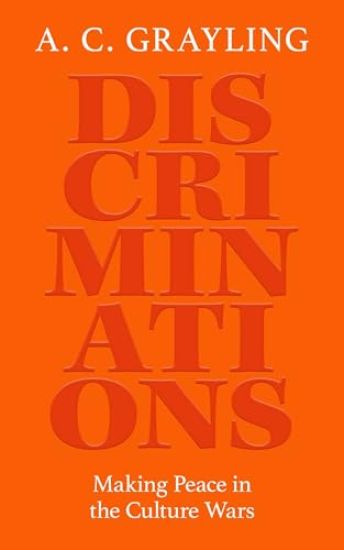
World-renowned philosopher A. C. Grayling explores the messy politics of the ‘culture wars’ It seems like we can’t talk about anything nowadays… Whether it’s war or something utterly inconsequential, the internet is primed for furore. And the results can be horrifying – from online pile-ons and doxing to job loss and, in some cases, death. But how did we end up here? Nuanced and historically grounded, A. C. Grayling searches for middle ground in an otherwise incendiary debate. Looking at the history of cancellation, from Ancient Greek ‘ostracism’ through hemlock cups, witch trials and the House of Un-American Activities, Discriminations is a timely examination of the state of our public culture and the chilling effect it’s having on intellectual discourse.
Liberty in the Age of Terror

Liberty in the Age of Terror

A. C. Grayling

Bloomsbury Publishing PLC
2010
nidottu
"The means of defence against foreign danger historically have become the instruments of tyranny at home." James Madison Our societies, says Anthony Grayling, are under attack not only from the threat of terrorism, but also from our governments' attempts to fight that threat by reducing freedom in our own societies - think the 42-day detention controversy, CCTV surveillance, increasing invasion of privacy, ID Cards, not to mention Abu Ghraib, rendition, Guantanamo...As Grayling says: 'There should be a special place for political irony in the catalogues of human folly. Starting a war 'to promote freedom and democracy' could in certain though rare circumstances be a justified act; but in the case of the Second Gulf War that began in 2003, which involved reacting to criminals hiding in one country (Al Qaeda in Afghanistan or Pakistan) by invading another country (Iraq), one of the main fronts has, dismayingly, been the home front, where the War on Terror takes the form of a War on Civil Liberties in the spurious name of security. To defend 'freedom and democracy', Western governments attack and diminish freedom and democracy in their own country. By this logic, someone will eventually have to invade the US and UK to restore freedom and democracy to them.' In this lucid and timely book Grayling sets out what's at risk, engages with the arguments for and against examining the cases made by Isaiah Berlin and Ronald Dworkin on the one hand, and Roger Scruton and John Gray on the other, and finally proposes a different way to respond that makes defending the civil liberties on which western society is founded the cornerstone for defeating terrorism.
Thinking of Answers

Thinking of Answers

A. C. Grayling

Bloomsbury Publishing PLC
2011
nidottu
Thought-provoking short essays by Britain's leading public philosopher that show us how to discover our own answers to life's challenges‘While most philosophy is written in abstruse and ponderous prose, Grayling's is a model of clarity and elegance' The Times'An enthusiastic thinker who embraces humour, common sense and lucidity' Independent~ If beauty existed only in the eye of the beholder, would that make it an unimportant quality?~ Are human rights political?~ Can ethics be derived from evolution by natural selection?~ If both sides in a conflict can passionately believe that theirs is the just cause, does this mean that the idea of justice is empty?~ Does being happy make us good? And does being good make us happy?~ Are human beings especially prone to self-deception?As in his previous books of popular philosophy, including the best-selling The Reason of Things and The Meaning of Things, rather than presenting a set of categorical answers Grayling offers instead suggestions for how to think about every aspect of a question, and arrive at one's own conclusions. As a result Thinking of Answers is both an enjoyable and inspirational collection.