Kirjojen hintavertailu. Mukana 11 244 527 kirjaa ja 12 kauppaa.

Kirjahaku

Etsi kirjoja tekijän nimen, kirjan nimen tai ISBN:n perusteella.

9 kirjaa tekijältä A. Kayode Coker

Ludwig's Applied Process Design for Chemical and Petrochemical Plants Incorporating Process Safety Incidents
Ludwig’s Applied Process Design for Chemical and Petrochemical Plants Incorporating Process Safety Incidents is ever evolving starting with the first edition some 60 years ago. The volumes in this fifth edition provide improved techniques and fundamental design methodologies to guide the practicing engineer in designing process equipment and applying chemical processes to the properly detailed hardware. As indicative of the new title, process safety incidents are incorporated in many of the chapters, reviewing the root causes, and how these could be mitigated in future. Like its predecessor, this new edition continues to present updated information for achieving optimum operational and process conditions and to avoid problems caused by inadequate sizing and lack of internally detailed hardware. The volumes provide both fundamental theories where applicable and direct application of these theories to applied equations essential in the design effort. This approach in presenting design information is essential for troubleshooting process equipment and in executing system performance analysis. Volume 1A covers (chapters 1 - 6), process planning, flow-sheeting and scheduling, cost estimation and economic, physical properties of liquids and gases, fluid flow, mechanical separations. It builds upon Ernest E. Ludwig’s classic text to further enhance its use as a chemical engineering process design manual of methods and proven fundamentals. This new edition contains twelve chapters, which include new content on three-phase separation, mixing of liquids, ejectors, and mechanical vacuum systems, process safety and pressure relieving devices, metallurgy and corrosion, and optimization of chemical process/blending. The chapters in Volume 1A review pressure-relieving devices and provide case studies for process safety incidents, which are well illustrated from US Chemical Safety Hazard Investigation Board (www.csb.gov). Finally, this book contains an extensive glossary of Petroleum and Petrochemical Terminologies and Physical and Chemical Characteristics of Major Hydrocarbons
Ludwig's Applied Process Design for Chemical and Petrochemical Plants Incorporating Process Safety Incidents
Ludwig’s Applied Process Design for Chemical and Petrochemical Plants Incorporating Process Safety Incidents is ever evolving starting with the first edition some 60 years ago. The volumes in this fifth edition provide improved techniques and fundamental design methodologies to guide the practicing engineer in designing process equipment and applying chemical processes to the properly detailed hardware. As indicative of the new title, process safety incidents are incorporated in many of the chapters, reviewing the root causes, and how these could be mitigated in future. Like its predecessor, this new edition continues to present updated information for achieving optimum operational and process conditions and to avoid problems caused by inadequate sizing and lack of internally detailed hardware. The volumes provide both fundamental theories where applicable and direct application of these theories to applied equations essential in the design effort. This approach in presenting design information is essential for troubleshooting process equipment and in executing system performance analysis. Volume 1B continues to cover mixing of liquids, process safety and pressure[1]relieving devices, metallurgy and corrosion, and process optimization. It builds upon Ernest E. Ludwig’s classic text to further enhance its use as a chemical engineering process design manual of methods and proven fundamentals. This new edition includes new content on three-phase separation, mixing of liquids, ejectors, and mechanical vacuum systems, process safety and pressure-relieving devices, metallurgy and corrosion, and optimization of chemical process/blending. Some chapters review pressure-relieving devices and provide case studies for process safety incidents, which are well illustrated from US Chemical Safety Hazard Investigation Board (www.csb.gov). Finally, this book contains a glossary of Petroleum and Petrochemical Terminologies and Physical and Chemical Characteristics of Major Hydrocarbons.
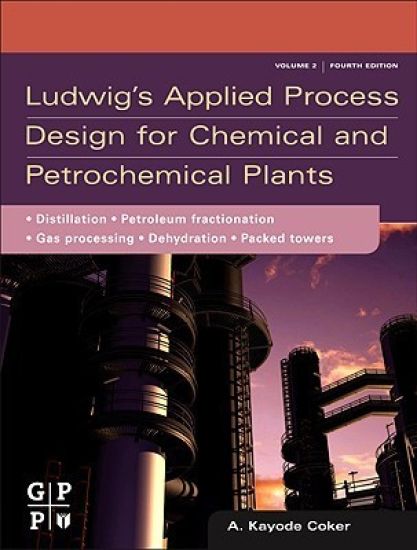
Ludwig's Applied Process Design for Chemical and Petrochemical Plants
The Fourth Edition of Applied Process Design for Chemical and Petrochemical Plants Volume 2 builds upon the late Ernest E. Ludwig’s classic chemical engineering process design manual. Volume Two focuses on distillation and packed towers, and presents the methods and fundamentals of plant design along with supplemental mechanical and related data, nomographs, data charts and heuristics. The Fourth Edition is significantly expanded and updated, with new topics that ensure readers can analyze problems and find practical design methods and solutions to accomplish their process design objectives.
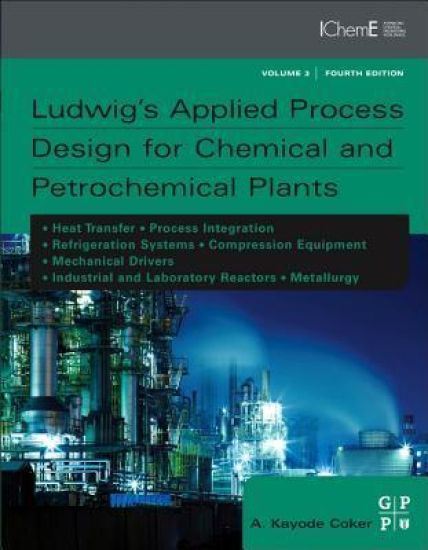
Ludwig's Applied Process Design for Chemical and Petrochemical Plants
The fourth edition of Ludwig’s Applied Process Design for Chemical and Petrochemical Plants, Volume Three is a core reference for chemical, plant, and process engineers and provides an unrivalled reference on methods, process fundamentals, and supporting design data. New to this edition are expanded chapters on heat transfer plus additional chapters focused on the design of shell and tube heat exchangers, double pipe heat exchangers and air coolers. Heat tracer requirements for pipelines and heat loss from insulated pipelines are covered in this new edition, along with batch heating and cooling of process fluids, process integration, and industrial reactors. The book also looks at the troubleshooting of process equipment and corrosion and metallurgy.
Petroleum Refining Design and Applications Handbook, Volume 1
There is a renaissance that is occurring in chemical and process engineering, and it is crucial for today's scientists, engineers, technicians, and operators to stay current. With so many changes over the last few decades in equipment and processes, petroleum refining is almost a living document, constantly needing updating. With no new refineries being built, companies are spending their capital re-tooling and adding on to existing plants. Refineries are like small cities, today, as they grow bigger and bigger and more and more complex. A huge percentage of a refinery can be changed, literally, from year to year, to account for the type of crude being refined or to integrate new equipment or processes. This book is the most up-to-date and comprehensive coverage of the most significant and recent changes to petroleum refining, presenting the state-of-the-art to the engineer, scientist, or student. Useful as a textbook, this is also an excellent, handy go-to reference for the veteran engineer, a volume no chemical or process engineering library should be without. Written by one of the world's foremost authorities, this book sets the standard for the industry and is an integral part of the petroleum refining renaissance. It is truly a must-have for any practicing engineer or student in this area.
Petroleum Refining Design and Applications Handbook, Volume 2
A must-read for any practicing engineer or student in this area There is a renaissance that is occurring in chemical and process engineering, and it is crucial for today's scientists, engineers, technicians, and operators to stay current. This book offers the most up-to-date and comprehensive coverage of the most significant and recent changes to petroleum refining, presenting the state-of-the-art to the engineer, scientist, or student. Useful as a textbook, this is also an excellent, handy go-to reference for the veteran engineer, a volume no chemical or process engineering library should be without.
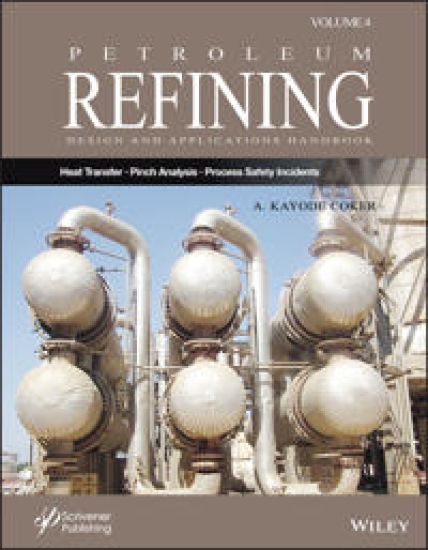
Petroleum Refining Design and Applications Handbook, Volume 4
PETROLEUM REFINING This fourth volume in the Petroleum Refining set, this book continues the most up-to-date and comprehensive coverage of the most significant and recent changes to petroleum refining, presenting the state-of-the-art to the engineer, scientist, or student. This book provides the design of heat exchanger equipment, crude oil fouling in pre-heat train exchangers, crude oil fouling models, fouling mitigation and monitoring, prevention and control of liquid and gas side fouling, using the Excel spreadsheet and UniSim design software for the design of shell and tube heat exchangers, double pipe heat exchangers, air-cooled exchangers, heat loss tracing for process piping, pinch analysis for hot and cold utility targets and process safety incidents involving these equipment items and pertinent industrial case studies. Use of UniSim Design (UniSim STE) software is illustrated in further elucidation of the design of shell and tube heat exchangers, condensers, and UniSim ExchangerNet R470 for the design of heat exchanger networks using pinch analysis. This is important for determining minimum cold and hot utility requirements, composite curves of hot and cold streams, the grand composite curve, the heat exchanger network, and the relationship between operating cost index target and the capital cost index target against ?Tmin. Useful as a textbook, this is also an excellent, handy go-to reference for the veteran engineer, a volume no chemical or process engineering library should be without. Written by one of the world’s foremost authorities, this book sets the standard for the industry and is an integral part of the petroleum refining renaissance. It is truly a must-have for any practicing engineer or student in this area. This groundbreaking new volume: Assists engineers in rapidly analyzing problems and finding effective design methods and select mechanical specifications Provides improved design manuals to methods and proven fundamentals of process design with related data and charts Covers a complete range of basic day–to–day petroleum refining operations topics with new materials on significant industry changes Extensive Excel spreadsheets for the design of process vessels for mechanical separation of two-phase and three-phase fluids, double-pipe heat exchanger, air-cooled exchanger, pinch analysis for hot and cold utility targets. Provides UniSim ®-based case studies for enabling simulation of key processes outlined in the book Helps achieve optimum operations and process conditions and shows how to translate design fundamentals into mechanical equipment specificationsHas a related website that includes computer applications along with spreadsheets and concise applied process design flow charts and process data sheetsProvides various case studies of process safety incidents in refineries and means of mitigating these from investigations by the US Chemical Safety Board Includes a vast Glossary of Petroleum and Technical Terminology
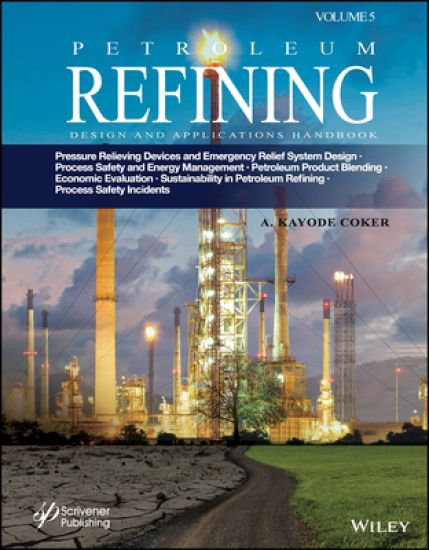
Petroleum Refining Design and Applications Handbook, Volume 5
PETROLEUM REFINING With no new refineries having been built in decades, companies continue to build onto or reverse engineer and re-tool existing refineries. With so many changes in the last few years alone, books like this are very much in need. There is truly a renaissance for chemical and process engineering going on right now across multiple industries. This fifth and final volume in the “Petroleum Refining Design and Applications Handbook” set, this book continues the most up-to-date and comprehensive coverage of the most significant and recent changes to petroleum refining, presenting the state-of-the-art to the engineer, scientist, or student. Besides the list below, this groundbreaking new volume describes blending of products from the refinery, applying the ternary diagrams and classifications of crude oils, flash point blending, pour point blending, aniline point blending, smoke point and viscosity blending, cetane and diesel indices. The volume further reviews refinery operational cost, cost allocation of actual usage, project and economic evaluation involving cost estimation, cash flow involving return on investment, net present values, discounted cash flow rate of return, net present values, payback period, inflation and sensitivity analysis, and so on. It reviews global effects on the refining economy, carbon tax, carbon foot print, global warming potential, carbon dioxide equivalent, carbon credit, carbon offset, carbon price, and so on. It reviews sustainability in petroleum refining and alternative fuels (biofuels and so on), impact of the overall greenhouse effects, carbon capture and storage in refineries, process intensification in biodiesel, biofuel from green diesel, acid-gas removal and emerging technologies, carbon capture and storage, gas heated reformer unit, pressure swing adsorption process, steam methane reforming for fuel cells, grey, blue and green hydrogen production, new technologies for carbon capture and storage, carbon clean process design, refinery of the future, refining and petrochemical industry characteristics. The text is packed with Excel spreadsheet calculations and Honeywell UniSim Design software in some examples, and it includes an invaluable glossary of petroleum and petrochemical technical terminologies. Useful as a textbook, this is also an excellent, handy go-to reference for the veteran engineer, a volume no chemical or process engineering library should be without. Written by one of the world’s foremost authorities, this book sets the standard for the industry and is an integral part of the petroleum refining renaissance. It is truly a must-have for any practicing engineer or student in this area.