
Kirjahaku
Etsi kirjoja tekijän nimen, kirjan nimen tai ISBN:n perusteella.
15 kirjaa tekijältä A. R. Gurney
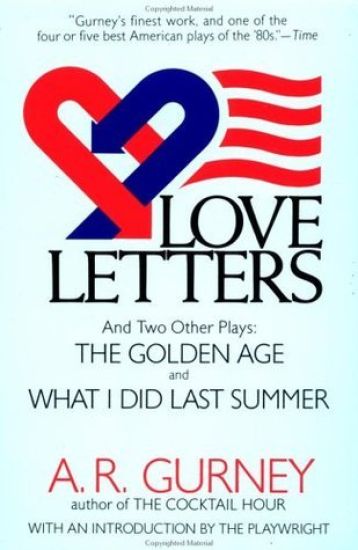
Love Letters and Two Other Plays: The Golden Age, What I Did Last Summer
A. R. Gurney
Penguin Publishing Group
1990
nidottu
Three plays look at love and the times of our lives
"If the family is the key theme of American drama, A R Gurney's ANCESTRAL VOICES: A FAMILY STORY is a beautiful chamber work in that great tradition. The short play is staged as a concert work, with five performers sitting on chairs in front of music stands, where they've laid their scripts. The five are playing members--grandfather, grandmother, father, mother, son--of a rich WASP family in Buffalo NY between 1935 and 1942, with a brief coda from the 1960s. The son, Eddie, who goes from age eight to twelve, is our narrator, guide and point of view.... This lovely play unites the microcosm of family to the macrocosm of America at war. On Eddie's first date he brings his girl a paper war-sage'. It's also about something in between--a city. It's an elegy for Buffalo, a once-glorious place whose fortunes are declining. The texture of life in Buffalo is heartbreakingly evoked in ways reminiscent of The Magnificent Ambersons.... This is a magical play, not a mere exercise in uncritical nostalgia, but a nuanced reminiscence full of time and change and loss and suffering--as well as joy." Donald Lyons, New York Post "...A R Gurney's genteel and gently comic ANCESTRAL VOICES...leaving exceedingly pleasant memories in its wake. Mr Gurney's play is performed in the manner of his popular epistolary drama LOVE LETTERS, with the cast reading from scripts while seated on a bare stage.... The hybrid Mr Gurney has produced is as elegantly faceted as a marquise diamond. What distinguishes the tales is the rueful maturity with which it is recounted by a man gazing back over the decades. The characters feel like fully fleshed-out cousins of the denizens of the novels of John Cheever, to whom the dramatist is often compared. The production is not dramatic in the strictest sense, either; the flare-ups in this confrontation-averse clan flicker only for instants. Yet isn't that the way a lot of families let off steam?" Peter Marks, The New York Times "...with ANCESTRAL VOICES, the result is a wistful, colorful companion piece to LOVE LETTERS. That two-character epistolary goldmine, of course, has been similarly read on stages, cruise ships and wherever pairs of actors hunger for quick-study, quality work. Given the new one's larger cast requirements, it is not likely to duplicate the phenomenal popularity of its predecessor. The story of unraveling expectations in a society that considered itself a constant, however, is no less captivating a human document of recent but very foreign times." Linda Winer, Newsday
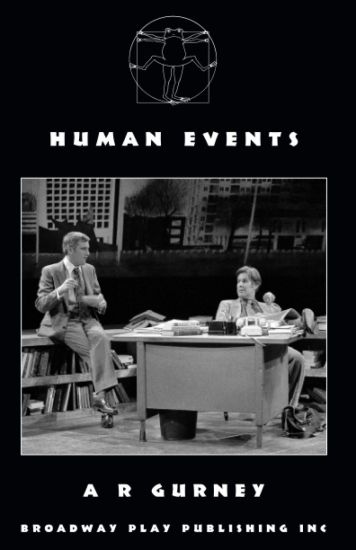
"Remember All About Eve, the classic film in which older actress Margo Channing takes younger actress Eve Harrington under her wing, only to see her prot g attempt to take over her life and her love? ...A R Gurney...took that plot and reset it in academia for his novel Entertaining Strangers. Now he's adapted that book into HUMAN EVENTS...a witty and entertaining comedy of manners. Porter Platt is an associate professor at an esteemed Boston college. He meets Englishman Christopher Simpson, and is impressed by his Eton and Oxford education. Simpson wants a job at the school, and Platt does yeoman work to get him one. Soon, Simpson is rising in the department, while Platt is not. Simpson also takes a shine to Platt's wife, who's attracted to him as well. ...HUMAN EVENTS shows that Gurney is still one of America's most entertaining playwrights." Peter Filichia, The Star-Ledger " The play] poses questions about trust--among friends, among colleagues, between spouses. With its wit, literary quality, and insight into human nature, the work is up to the standard expected of Gurney, one of the most intelligent theatrical writers active today." Charles Paolino, Home News Tribune
"Politicians poised to sling mud might take a pointer or two from A R Gurney: Good manners can be lethal weapons, and a glancing sideswipe may cause more damage than a punch in the nose. An expert demonstration of such tactics is on ... in Mr Gurney's disarming new play, MRS FARNSWORTH ... Though it deals with revelations that are the stuff of smear campaigns, MRS FARNSWORTH is as polite and sweetly subversive a political attack as you're likely ever to come across. ...Mr Gurney's latest offering feels as if it's spoken out of the side of the mouth, sotto voce through a firmly locked jaw. Well, jaws would be locked, as this is Gurney country, land of the endangered species called WASP ... fine specimens of this breed: wealthy, inhibited folk who wear their sense of entitlement with sheepishness and smugness. They're people you might run across at a Bush fund-raiser. Mr Bush, however, would be woefully mistaken to perceive them as allies ... MRS FARNSWORTH is set in a creative-writing class in Manhattan, run by a sardonic, harried teacher named Gordon. Class is under way when a resplendently well-groomed student makes a late and incongruous entrance, like a rara avis in an urban pigeon coop. That's the pastel-clad Marjorie Farnsworth, fresh from the Connecticut suburbs and fluttering with apologies. It seems she wants to learn to write because she has a story that urgently needs to be told. It's the tale of a Vassar girl who becomes pregnant by a hard-partying Yale boy, who then pays her (by proxy) to have an abortion. Mrs Farnsworth's narrative starts to sound like a memoir in which only the names have been changed. Could be the boy in question be the young George W Bush? The left-leaning Gordon is atremble with excitement. Despite surface evidence, Mrs Farnsworth is a registered Democrat, deeply concerned about the state of the nation and keen on making her tale public. There is, however, one serious problem, she says: her disapproving husband. Enter Mr Farnsworth, with the contained apprehension and curiosity of a Victorian explorer in darkest Africa. It wouldn't be cricket, as the Farnsworths might put it, to divulge more. Though MRS FARNSWORTH is essentially a debate play, there is nothing dry about it and little that's predictable. This despite Mr and Mrs Farnsworth's being utterly true to their high WASP form, with all the expected geographical references (Fisher's Island, Greenwich) and locutions ('Pardon my French'). As one of Mr Gurney's playwriting antecedents, Philip Barry, said in THE PHILADELPHIA STORY, there are no rules for human beings, including pure-bred, thin-blooded WASPs. As Mr and Mrs Farnsworth present their respective cases to Gordon and his students, they reveal unexpected facets. Neither emerges as someone entirely to be trusted, but both come off as people of good faith. That is more than can be said of the focus of their argument, Mr Bush, who by the play's end has been effectively cut open and found empty ... Mr and Mrs Farnsworth may be prisoners of their class and its superficial trappings. But like the central figures in Mr Gurney's COCKTAIL HOUR and LATER LIFE, they harbor doubts and conflict beneath their decorous surfaces. While breeding usually trumps their more rebellious instincts, it's not before a human heart is glimpsed within the cartoonish outlines ... Mrs Farnsworth is obviously longing to escape her identity and doomed to fail. It's the longing that makes you like her so much ... 'Political writing and political discussions are simple-minded and reductive, ' Mr Farnsworth says. That's the opposite, he continues, of good writing, 'which should be subtle, complicated and ambiguous.' Even standing on a soapbox, Mr Gurney happily heeds Mr Farnsworth's admonition." -Ben Brantley, The New York Times


"The fundamental things may still apply, but they warp and change color as time goes by. In his gleefully partisan new the indefatigable A R Gurney takes on the movie that immortalized the song As Time Goes By, retooling Casablanca for the 21st century. The title of his latest work is simply SCREEN PLAY, but were it actually to make it to movie theaters it would no doubt be called Buffalo. That's Buffalo, NY, which, in Mr Gurney's collegiate caper of a play, set in the year 2015, has become a way station for Americans in a blue state of mind who seek passage across the border into Canada. Rick's Cafe is now a bar named Nick's. And, as in the adored Warner Brothers' classic, it's the place where everybody goes--from Peter Lorre-like parasites who peddle illegal visas to handsome freedom fighters and their beautiful companions, as well as their sneering adversaries, who in this version are not Nazis but politicians of the Christian right. SCREEN PLAY is the third of Mr Gurney's works that deals directly with American politics, following the sincere... O JERUSALEM and the disarming MRS FARNSWORTH. True, the show often brings to mind a vintage Mad magazine movie spoof, with its contented goofiness and satiric swipes at big targets. And, of course, you wait to see how Mr Gurney roasts chestnuts like Round up the usual suspects' and Here's looking at you, kid.' But the gimmick that is the basis of SCREEN PLAY has a built-in resonance that Mr. Gurney amplifies without, for the most part, screeching a sermon. There's a grin-making chutzpah in the very idea of relocating the moral crisis of Casablanca to American shores. For Mr Gurney sees the internal war between cynicism and idealism waged by Humphrey Bogart's hard-bitten romantic Rick as being especially pertinent to today's climate of political fatigue and passivity. ...For Mr Gurney, being frivolous has become a deadly national epidemic. SCREEN PLAY, it turns out, fights frivolity with frivolity." Ben Brantley, The New York Times "A R Gurney wrote this irreverent political satire--a left-wing broadside grafted onto the plot of Casablanca. ...the unstaged-reading format makes this neat little package so efficient to stage and cheap to produce, SCREEN PLAY could be tossed in a suitcase and assembled as needed, wherever demoralized Democrats gather to contemplate dark deeds of Jacobean revenge.... SCREEN PLAY is a clever pastiche of that immortal wartime film classic in which Humphrey Bogart plays cynical host to the political scum of the earth at Rick's Cafe Americain in no man's-land Morocco. Action is transposed here to no man's land Buffalo and set in 2015, when the U S is supposedly governed by a Republican dictatorship of right-wing religious fanatics. Gurney's script abides original source by observing formulaic elements like the border lockdown that prompts brisk underworld traffic in bogus passports for illegal immigrants frantic to make it over the border to--where else--Canada. ...the 2000 presidential election, which in Gurney's book was the criminal event that drove every decent American (including a noble Ingrid Bergman stand-in and her freedom-fighter husband) running for the border.... ...the play's the thing, here, with its pointed political jabs and hilarious Buffalo gags. Setting the show in his hometown gives Gurney joke rights to such objects of civic pride as Niagara Falls. It also allows scribe to pen the funniest line in show: We'll always have Buffalo.'" Marilyn Stasio, Variety
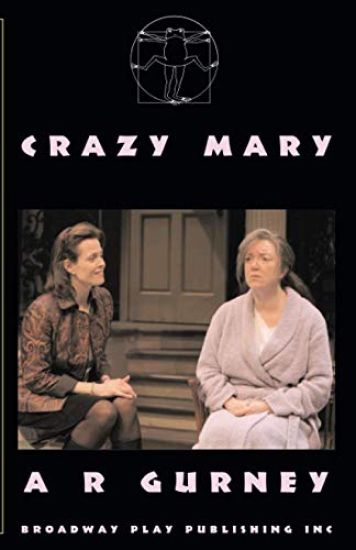
In an attempt to account for the family inheritance, the scion of a wealthy Buffalo, New York clan and her willful, college-aged son visit their long-lost cousin Mary. The catch: Mary is living in an asylum for the wealthy insane and has barely spoken in years, forcing mother and son to employ radical ends to get through. "Comparisons between playwrights and novelists are almost always misleading, but I'd say it's more or less accurate to think of A R Gurney as the John P Marquand of American drama. Like Marquand, Mr Gurney writes about WASPs and their discontents, and his ruefully funny studies of a ruling class in decline are too often dismissed as trivial by critics who take no interest in the inner lives of the insufficiently underprivileged. Also, like Marquand, he is prolific to a fault, and his work is as unevenly inspired as it is unfailingly professional. I've reviewed several of his plays in this space, always with pleasure - I like his best work very much - but rarely with outright enthusiasm. Thus, I'm glad to report that CRAZY MARY, Mr Gurney's new portrait of life among the white-bread set, is a highly impressive piece of work, a serious comedy that succeeds in wringing honest laughs out of an awkward subject. The Mary in question is a middle-aged manic depressive who has spent the past three decades stashed away in a high-priced sanitarium to which her late father consigned her after she made the fatal mistake of sleeping with the gardener. in addition to being crazy, Mary is loaded - she inherited all her father's money - and when Lydia, Mary's second cousin once removed, becomes her legal guardian after a death in the family ... well, you figure it out, if you can. Every twist in the plot of CRAZY MARY took me by surprise, and none of them disappointed me in the slightest. What impressed me the most about CRAZY MARY is that Mr Gurney walks with unerring skill along the knife edge that separates comedy from pathos. In truth, there is nothing remotely funny about Mary's situation, much less her condition, and we laugh at her plight precisely because it is so pitiful. Nor does Mr Gurney let any of his characters off the hook, least of all Lydia, who has spent her own life walking on tiptoe through a world of tight-lipped propriety in which the most important things are left unsaid ..." Terry Teachout, The Wall Street Journal "... Aside from the tireless (and seemingly immortal) Horton Foote, no eminent American playwright of the last few decades rivals the staying power and productivity of Mr Gurney. Though he would seem to be limited by sticking to one area of expertise - the malaise and mores of the endangered East Coast WASP - Mr Gurney's theatrical output is surprisingly varied. If his essential subject has largely remained the same, he keeps shifting his focus and perspective in admirably venturesome ways, most recently with his fiercely partisan, Bush-baiting political comedies ... As a story of ethnic dinosaurs stranded by history, CRAZY MARY brings to mind vintage Gurney works like THE COCKTAIL HOUR and THE MIDDLE AGES ... His earlier plays had the passive wistfulness of Henry James portraits of unlived lives; CRAZY MARY has the active morality of E M Forster novels, demanding that its characters get off their isolated duffs and connect with the world beyond. The spirit in CRAZY MARY is honorably willing ..." -Ben Brantley, The New York Times
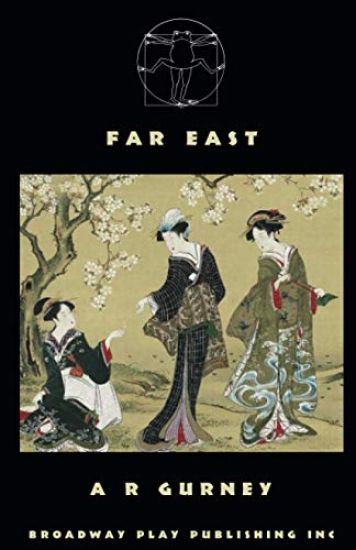
"... this poignant new play is a welcome reminder of A R Gurney's gliding dialogue and structural elegance, as well as the troubled, rueful heart that informs all his work." Ben Brantley, The New York Times "A play that does everything right. The new drama by A R Gurney looks at who Americans were in the mid-1950s-a few Americans, anyway-and how they behaved out in those vast stretches of the world over which they had sway, and what their songs and movies and slang expressions and values were. The story centers on four U S Navy people (one a Navy wife) stationed at a base in Japan in 1954 and 1955...This subtle, tender play is, I think, Gurney's best work. It's John Cheever-meets-James Michener and it's a critical elegy for a long-vanished American view of life." Donald Lyons, New York Post "It is no coincidence that the movie playing at the overseas Officer's Club in A R Gurney's new play FAR EAST, is From Here to Eternity: the 1953 Pearl Harbor drama starring Burt Lancaster as a rugged Army sergeant who has a torrid affair with the restless wife of his commander ... A] deliciously wry play ..." Amy Gamerman, The Wall Street Journal
