Kirjojen hintavertailu. Mukana 11 342 296 kirjaa ja 12 kauppaa.

Kirjahaku

Etsi kirjoja tekijän nimen, kirjan nimen tai ISBN:n perusteella.

7 kirjaa tekijältä A. Rupert Hall

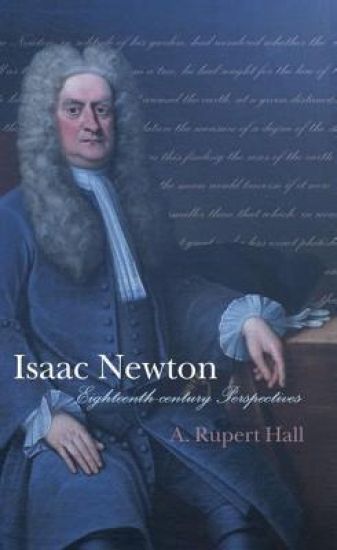
Isaac Newton: Eighteenth-century Perspectives

Isaac Newton: Eighteenth-century Perspectives

A. Rupert Hall

Oxford University Press
1998
sidottu
This new work by one of this century's most eminent Newtonian scholars - Rupert Hall - brings together for the first time the early eighteenth century biographical notices of Sir Isaac Newton. The centrepiece of the book is a brand new translation of Paolo Frisi's biography, the first published on Newton in 1778. Also included are the biographies by Fontenelle (1727), Thomas Birch (1738), Charles Hutton (1795), and John Conduitt. Each translation is accompanied by a commentary by Professor Hall. A brief biography and a bibliography of Newton have also been included for the reader. This book will be an extremely valuable addition to the works on Newton, and provide a fascinating text for historians of science
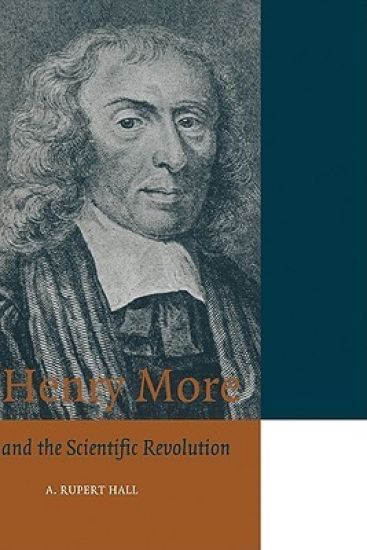
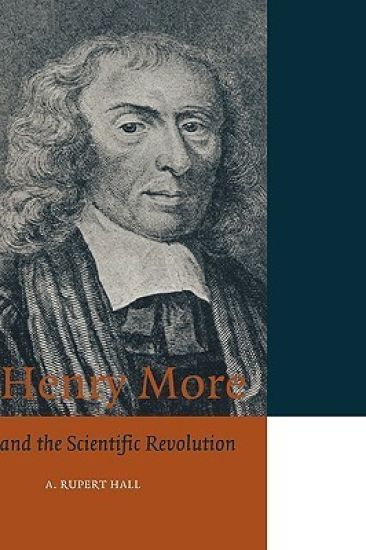
Henry More

Henry More

A. Rupert Hall

Cambridge University Press
1996
sidottu
Henry More (1614–87) was the greatest English metaphysical theologian and the most perplexing; he was also perhaps the most distinguished member of the group of divines known as the Cambridge Platonists. An admirer of Galileo, Descartes, and Boyle, he rejected their detailed applications of mechanical philosophy to the explanation of natural phenomena. He was an experimenter, yet also a cabbalist and one of the few writers whom Newton acknowledged as having influenced his ideas. This thorough and accessible biography is the first book-length treatment of this remarkable character. More’s important contributions to science are illuminated, particularly his work on space and time which influenced Newton, and the book gives fascinating insights into his spiritual philosophy and his preoccupation with witchcraft. The depth of Professor Hall’s scholarship makes the book an exceptional account of the turbulent world of the Scientific Revolution.
Isaac Newton

Isaac Newton

A. Rupert Hall

Cambridge University Press
1996
pokkari
In this elegant, absorbing biography of Isaac Newton (1642–1727), Rupert Hall surveys the vast field of modern scholarship in order to interpret Newton’s mathematical and experimental approach to nature. Mathematics was always the deepest, most innovative and productive of Newton’s interests. However, he was also a historian, theologian, chemist, civil servant, and natural philosopher. These diverse studies were unified in his single design as a Christian to explore every facet of God’s creation. The story of Newton’s life and discoveries has been greatly altered by exploration of his huge manuscript legacy during the last forty years, throwing new light upon his personality and intellect. Hall’s discussion of this research shows that Newton cannot simply be explained as a Platonist, mystic, or magus. He remains a complex and enigmatic genius with an immensely imaginative and commonsensical mind.
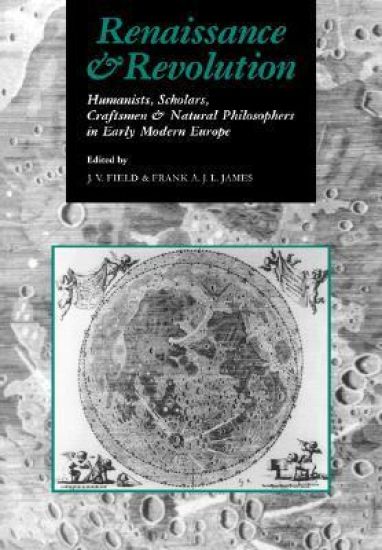
Renaissance and Revolution

Renaissance and Revolution

A. Rupert Hall

Cambridge University Press
1997
pokkari
Renaissance and Revolution is a collection of fifteen essays which open up new perspectives on some of the problems presently seen to be associated with the Scientific Revolution of the sixteenth and seventeenth centuries. The topics treated include the dissemination of Greek science, medical empiricism, natural history, the relations of scholars and craftsmen in various walks of life from the fifteenth to the sixteenth centuries, the so-called ‘mechanical philosophy’ in France and England, the work of Isaac Newton, and the difficulties encountered by proponents of Newtonianism in Italy in the early eighteenth century. Figures discussed include Leonardo Fioravanti, Jan Swammerdam, Piero Della Francesca, Johannes Hevelius, Jonas Moore, Robert Boyle, Isaac Newton, Christiaan Huygens, Francesco Algarotti, and Luigi Ferdinando Marsigli. There is an introduction by the editors and an afterword by A. Rupert Hall.
Henry More

Henry More

A. Rupert Hall

Cambridge University Press
2002
pokkari
Henry More (1614–87) was the greatest English metaphysical theologian and the most perplexing; he was also perhaps the most distinguished member of the group of divines known as the Cambridge Platonists. An admirer of Galileo, Descartes, and Boyle, he rejected their detailed applications of mechanical philosophy to the explanation of natural phenomena. He was an experimenter, yet also a cabbalist and one of the few writers whom Newton acknowledged as having influenced his ideas. This thorough and accessible biography is the first book-length treatment of this remarkable character. More’s important contributions to science are illuminated, particularly his work on space and time which influenced Newton, and the book gives fascinating insights into his spiritual philosophy and his preoccupation with witchcraft. The depth of Professor Hall’s scholarship makes the book an exceptional account of the turbulent world of the Scientific Revolution.
Newton, his Friends and his Foes

Newton, his Friends and his Foes

A. Rupert Hall

Variorum
1993
sidottu
Over the last forty years Professor Hall has been a major contributor to the ’new view’ of Newton now generally accepted. Essentially this has derived from the bringing to light and examination of Newton’s vast, but long neglected legacy of manuscripts, and the first studies in this volume illustrate the wealth of information these provide on the earliest phases of his great discoveries in mathematics and science. In particular, they confirm the intensity and originality of Newton’s investigations before and through the ’anni mirabiles’ of 1665-66. Further papers then deal with his relations with contemporaries such as Hooke, Leibniz and Huyghens, again making extensive use of unpublished manuscript material, and with the developing influence of his work. Durant les quarante dernières années, le professeur Hall a été l’un des plus importants contributeurs à la nouvelle appréciation de l’oeuvre de Newton, qui est de nos jours la plus généralement acceptée. Ceci provient essentiellement de l’examen du vaste héritage de manuscrits laissés par Newton et très longtemps négligé; les premières études de ce volume illustrent la richesse d’informations contenues dans ceux-ci quant aux toutes premières phases de ses grandes découvertes dans le domaine des mathématiques et de le science. Ils confirment en particulier l’intensité et l’originalité des recherches de Newton avant et pendant les anni mirabiles de 1665-66. S’ajoutent à ceci plusieurs études, où il est à nouveau fait grand usage de manuscrits inédits, traitant des rapports qu’il entretenait avec ses contemporains tels, Hooke, Leibniz et Huyghens, ainsi que de l’influence progressive de ses travaux.
Science and Society

Science and Society

A. Rupert Hall

Variorum
1994
sidottu
This is the second selection of articles by Rupert Hall to be published by Variorum. Whereas the first volume focused on Newton and his work, the present one ranges more widely over the interactions between ’pure’ science, ’applied’ science, and craftsmanship, but with an emphasis on the period from the 17th century to the Industrial Revolution. The second and third sections look in particular at the relations between science and warfare, and science and medicine, and the position of the Royal Society forms the focus of several papers. Throughout Professor Hall argues for the need to keep in mind that the distinction between the practical or professional and the intellectual was not then valid in the same way as now; that the problems of the interaction and interdependence between ’knowing’ and ’doing’ are not invariant, but rather historically determined and with defined historical contexts.