Kirjojen hintavertailu. Mukana 12 086 829 kirjaa ja 12 kauppaa.

Kirjahaku

Etsi kirjoja tekijän nimen, kirjan nimen tai ISBN:n perusteella.

13 kirjaa tekijältä A.H. Brafman

The Language of Drawings

The Language of Drawings

A.H. Brafman

Routledge
2019
sidottu
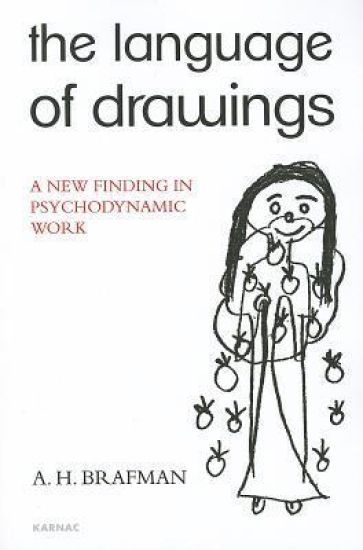
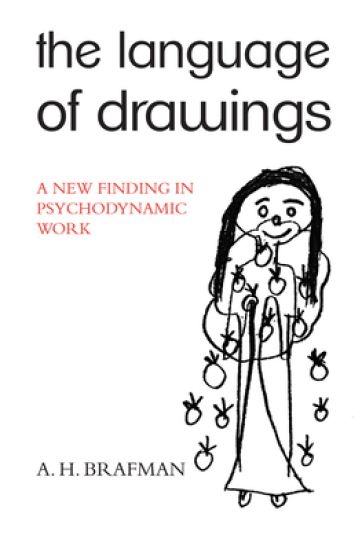
If a person is struggling with feeling that involve pain or anxiety, then we find a complex network of difficulties affecting that person's capacity to express what torments him. Whatever the person's age, they very often have no access to the words that might convey their internal conflicts. People interacting with that person may believe he is deliberately refusing to express what affects him, but it is certainly true that most times this is not the case. When dealing with children, these difficulties are even more acute. However, children often express in their drawings elements of the conflicts they are experiencing in themselves and the world in which they live. The author applied these findings in his work - not only with children and adolescents, but at times also with adults.This fascinating book arose from the discovery that single drawings could at times represent only a part of an underlying emotional experience that "completed" its expression in another picture drawn after that first one.
The 5 to 10 Year-Old Child

The 5 to 10 Year-Old Child

A.H. Brafman

Routledge
2019
sidottu
The fifth birthday represents an important landmark in a child's development. He is now ready to start full-time primary school, and we no longer speak of a baby or a little child; instead, we refer to the boy or the girl. Over the next five years, as his horizons become wider and his experiences outside the home increase exponentially, he seems to become more reserved; more difficult to approach and share things with. Sometimes, ordinary questions are ignored or responded to with some apparently unrelated answer. Occasionally, the child will move away even while someone is speaking to him. This is a child trying to make sense of his new experiences, adapting to new people and places, while preserving his link to his earlier environment.Adults can feel frustrated by this behaviour and impatient, but when moved to protest, tend to use words of exasperation rather than plain anger. There exists an unspoken understanding that the child needs time to adjust to his new pattern of life. However, not all over-fives are like this and we do find some who seem to blend into the new pattern of life and carry on with their home life as if no major change had taken place.
Can You Help Me?

Can You Help Me?

A.H. Brafman

Routledge
2019
sidottu
This book is based on common questions that parents have about their children and their relationships with the world at large. Drawing from his extensive experience as a child psychoanalyst (and as a father), Dr Brafman offers his thoughts on widespread problems faced by parents in an innovative way: he focuses on how the child perceives the situat
Fostering Independence

Fostering Independence

A.H. Brafman

Routledge
2019
sidottu
In a series of papers, the author addresses the needs of students, patients, and practitioners of psychodynamic therapies. The work of these professionals with children and with adults is discussed from a pragmatic point of view, stressing the importance of recognizing the needs and capacities of each individual patient. At the same time, the autho
The Language of Distress

The Language of Distress

A.H. Brafman

Routledge
2019
sidottu
This book describes a series of cases where the child's presenting complaint is seen to be the expression of an underlying emotional conflict that the child expects the parents to understand and help him or her to overcome. The parents' interpretation of the child's symptoms cannot but be influenced by their own previous life experiences and if
Untying the Knot

Untying the Knot

A.H. Brafman

Routledge
2019
sidottu
Untying The Knot sets out to present a clinical approach to cases where the referred patient is a child or adolescent, but in which the parents are intimately involved in the therapeutic situation.Three fundamental principles inform the work: firstly, that early experience influences present lives; secondly, that unconscious feelings and f
The Language of Drawings

The Language of Drawings

A.H. Brafman

Karnac Books
2012
nidottu
If a person is struggling with feeling that involve pain or anxiety, then we find a complex network of difficulties affecting that person's capacity to express what torments him. Whatever the person's age, they very often have no access to the words that might convey their internal conflicts. People interacting with that person may believe he is deliberately refusing to express what affects him, but it is certainly true that most times this is not the case. When dealing with children, these difficulties are even more acute. However, children often express in their drawings elements of the conflicts they are experiencing in themselves and the world in which they live. The author applied these findings in his work - not only with children and adolescents, but at times also with adults.This fascinating book arose from the discovery that single drawings could at times represent only a part of an underlying emotional experience that "completed" its expression in another picture drawn after that first one.
The Language of Distress

The Language of Distress

A.H. Brafman

Karnac Books
2016
nidottu
This book describes a series of cases where the child’s presenting complaint is seen to be the expression of an underlying emotional conflict that the child expects the parents to understand and help him or her to overcome. The parents’ interpretation of the child’s symptoms cannot but be influenced by their own previous life experiences and if their eventual response does not meet the child’s anxiety, the child feels misunderstood and the physical complaint remains unchanged. When seeing child and parents in a consultation, an attempt is made to discover the unconscious fantasy that underlies the presenting physical complaint, and also to investigate what led the parents to approach their child in the particular manner that, in practice, perpetuated the symptom. The proposal is put forward that the symptom can be seen as a language, a manner of expressing an underlying emotional anxiety. Once the therapist formulates this message in words the child can understand, and helps the parents to understand their response to the child, it becomes possible for the parents to approach the child in a more effective manner – and the symptom disappears.
Life in the Consulting Room

Life in the Consulting Room

A.H. Brafman

Karnac Books
2018
nidottu
Life in the Consulting Room offers a series of noteworthy vignettes that occurred in the author's consulting room. Although the context and objective of each consultation varied, the decision to present them here is due to a particularly interesting feature of the patient's life or a significant point that arose during their interview with the author. Many of the cases have issues of academic interest but these are not pursued here. Instead, these accounts should be seen as portraits, "snapshots" that were considered emotionally interesting and intellectually stimulating. Some of these patients were in short- or long-term therapy, but most cases were being assessed to determine whether psychotherapy was in fact the best way of helping them. No doubt all psychodynamic practitioners will have met some of these findings in their practice, but the present book offers a particularly significant collection of clinical episodes.
Untying the Knot

Untying the Knot

A.H. Brafman

Karnac Books
2001
nidottu
Untying The Knot sets out to present a clinical approach to cases where the referred patient is a child or adolescent, but in which the parents are intimately involved in the therapeutic situation.Three fundamental principles inform the work: firstly, that early experience influences present lives; secondly, that unconscious feelings and fantasies are elements which shape everyday conscious experience; and thirdly, that the interaction of children and parents leads to patterns which become self-perpetuating and make it virtually impossible to define what is cause and what is effect in their relationship.The author acknowledges the pioneering work of Donald Winnicott in the treatment of children, emphasizing particularly his refusal to be bound by rigid notions of treatment modalities, but instead to go to the heart of the matter - an understanding of the child's own confusion and pain, and then, through its elucidation and expression, to bring relief.
Can You Help Me?

Can You Help Me?

A.H. Brafman

Karnac Books
2004
nidottu
This book is based on common questions that parents have about their children and their relationships with the world at large. Drawing from his extensive experience as a child psychoanalyst (and as a father), Dr Brafman offers his thoughts on widespread problems faced by parents in an innovative way: he focuses on how the child perceives the situation and not on their resultant behaviour. He also steers away from providing clear-cut answers; there are no set rules for raising children. Instead Dr Brafman discusses each question, using real-life examples and providing insights that will help the parent decide what is best for their individual child.
The 5 to 10 Year-Old Child

The 5 to 10 Year-Old Child

A.H. Brafman

Karnac Books
2010
nidottu
The fifth birthday represents an important landmark in a child's development. He is now ready to start full-time primary school, and we no longer speak of a baby or a little child; instead, we refer to the boy or the girl. Over the next five years, as his horizons become wider and his experiences outside the home increase exponentially, he seems to become more reserved; more difficult to approach and share things with. Sometimes, ordinary questions are ignored or responded to with some apparently unrelated answer. Occasionally, the child will move away even while someone is speaking to him. This is a child trying to make sense of his new experiences, adapting to new people and places, while preserving his link to his earlier environment.Adults can feel frustrated by this behaviour and impatient, but when moved to protest, tend to use words of exasperation rather than plain anger. There exists an unspoken understanding that the child needs time to adjust to his new pattern of life. However, not all over-fives are like this and we do find some who seem to blend into the new pattern of life and carry on with their home life as if no major change had taken place.
Fostering Independence

Fostering Independence

A.H. Brafman

Karnac Books
2010
nidottu
In a series of papers, the author addresses the needs of students, patients, and practitioners of psychodynamic therapies. The work of these professionals with children and with adults is discussed from a pragmatic point of view, stressing the importance of recognizing the needs and capacities of each individual patient. At the same time, the author focuses on the professional's role in the clinical interaction, emphasizing the need to identify and respect what leads him to the consulting room, and what he expects to obtain from this strenous and demanding type of work.