Kirjojen hintavertailu. Mukana 12 016 292 kirjaa ja 12 kauppaa.

Kirjahaku

Etsi kirjoja tekijän nimen, kirjan nimen tai ISBN:n perusteella.

3 kirjaa tekijältä A.P.S. Selvadurai

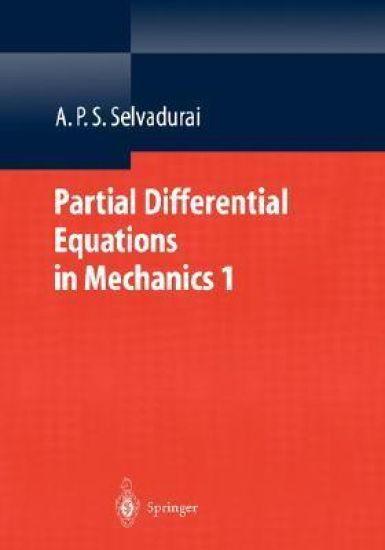
Partial Differential Equations in Mechanics 1

Partial Differential Equations in Mechanics 1

A.P.S. Selvadurai

Springer-Verlag Berlin and Heidelberg GmbH Co. K
2000
sidottu
"Por he who knows not mathematics cannot know any other sciences; what is more, he cannot discover his own ignorance or find its proper remedies. " [Opus Majus] Roger Bacon (1214-1294) The material presented in these monographs is the outcome of the author's long-standing interest in the analytical modelling of problems in mechanics by appeal to the theory of partial differential equations. The impetus for writing these volumes was the opportunity to teach the subject matter to both undergraduate and graduate students in engineering at several universi­ ties. The approach is distinctly different to that wh ich would adopted should such a course be given to students in pure mathematics; in this sense, the teaching of partial differential equations within an engineering curriculum should be viewed in the broader perspective of "The Modelling 0/ Problems in Engineering" . An engineering student should be given the opportunity to appreciate how the various combination of balance laws, conservation equations, kinematic constraints, constitutive responses, thermodynamic re­ strictions, etc. , culminates in the development of a partial differential equa­ tion, or sets of partial differential equations, with potential for applications to engineering problems. This ability to distill all the diverse information about a physical or mechanical process into partial differential equations is a particular attraction of the subject area.
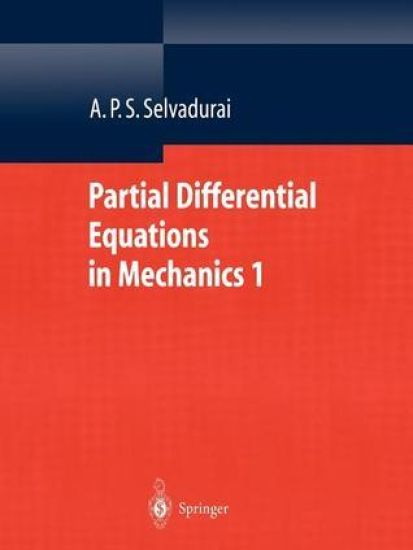
Partial Differential Equations in Mechanics 1

Partial Differential Equations in Mechanics 1

A.P.S. Selvadurai

Springer-Verlag Berlin and Heidelberg GmbH Co. K
2010
nidottu
"Por he who knows not mathematics cannot know any other sciences; what is more, he cannot discover his own ignorance or find its proper remedies. " [Opus Majus] Roger Bacon (1214-1294) The material presented in these monographs is the outcome of the author's long-standing interest in the analytical modelling of problems in mechanics by appeal to the theory of partial differential equations. The impetus for writing these volumes was the opportunity to teach the subject matter to both undergraduate and graduate students in engineering at several universi­ ties. The approach is distinctly different to that wh ich would adopted should such a course be given to students in pure mathematics; in this sense, the teaching of partial differential equations within an engineering curriculum should be viewed in the broader perspective of "The Modelling 0/ Problems in Engineering" . An engineering student should be given the opportunity to appreciate how the various combination of balance laws, conservation equations, kinematic constraints, constitutive responses, thermodynamic re­ strictions, etc. , culminates in the development of a partial differential equa­ tion, or sets of partial differential equations, with potential for applications to engineering problems. This ability to distill all the diverse information about a physical or mechanical process into partial differential equations is a particular attraction of the subject area.
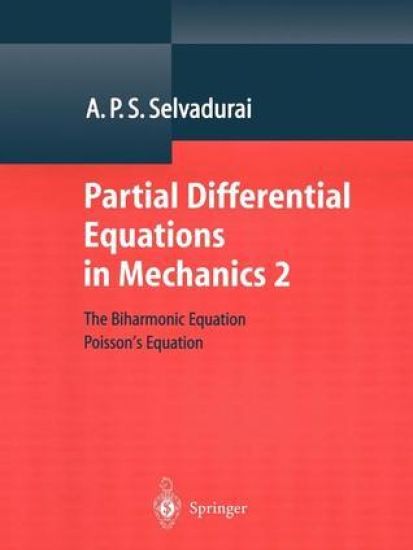
Partial Differential Equations in Mechanics 2

Partial Differential Equations in Mechanics 2

A.P.S. Selvadurai

Springer-Verlag Berlin and Heidelberg GmbH Co. K
2010
nidottu
"For he who knows not mathematics cannot know any other sciences; what is more, he cannot discover his own ignorance or find its proper remedies. " [Opus Majus] Roger Bacon (1214-1294) The material presented in these monographs is the outcome of the author's long-standing interest in the analytical modelling of problems in mechanics by appeal to the theory of partial differential equations. The impetus for wri­ ting these volumes was the opportunity to teach the subject matter to both undergraduate and graduate students in engineering at several universities. The approach is distinctly different to that which would adopted should such a course be given to students in pure mathematics; in this sense, the teaching of partial differential equations within an engineering curriculum should be viewed in the broader perspective of "The Modelling of Problems in Engineering" . An engineering student should be given the opportunity to appreciate how the various combination of balance laws, conservation equa­ tions, kinematic constraints, constitutive responses, thermodynamic restric­ tions, etc. , culminates in the development of a partial differential equation, or sets of partial differential equations, with potential for applications to en­ gineering problems. This ability to distill all the diverse information ab out a physical or mechanical process into partial differential equations is a par­ ticular attraction of the subject area.