Kirjojen hintavertailu. Mukana 11 433 028 kirjaa ja 12 kauppaa.

Kirjahaku

Etsi kirjoja tekijän nimen, kirjan nimen tai ISBN:n perusteella.

6 kirjaa tekijältä Aaron D. Purcell

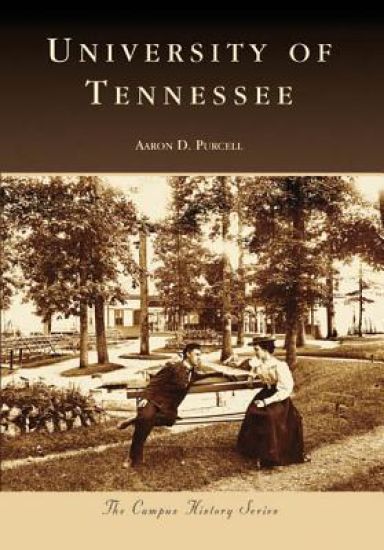
University of Tennessee

University of Tennessee

Aaron D. Purcell

Arcadia Publishing (SC)
2007
nidottu
The school that eventually became the University of Tennessee was founded as one of the first three colleges established west of the Appalachians.In 1794, two years before Tennessee even became a state, the legislature of the Southwest Territory established Blount College with a charter, and the small school struggled with a tiny student body and even smaller staff before changing its name to East Tennessee College in 1807. As the college grew, the trustees of the school scouted potential sites in Knoxville, settling on the site affectionately called "The Hill" in 1828, and changing its name once again in 1840 to East Tennessee University. During the Civil War, classes came to an abrupt halt as students and faculty were recruited to serve on battlefields, and troops used campus facilities as hospitals and barracks. With a final name change in 1879, the University of Tennessee has exploded in growth in the 20th century, with campuses and programs across the state. In addition to a rich sports tradition, the University of Tennessee is considered one of the best colleges in the Southeast, and among the best institutions of higher learning in the country.
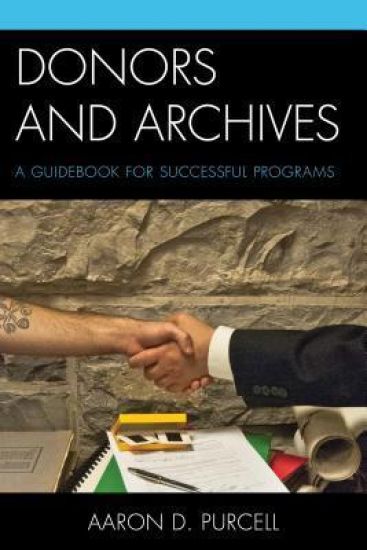
Donors and Archives

Donors and Archives

Aaron D. Purcell

Rowman Littlefield Publishers
2015
nidottu
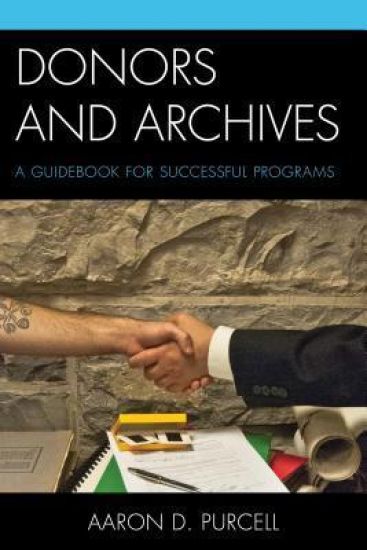
Donor work and fundraising is essential for any vibrant archival program. Without new collections and new funding, archives programs can stagnate, and their operations can become vulnerable to economic downturns. Archivists spend a lot of time managing collections, other archivists, and researchers in their reading rooms, but often not enough time considering the stuff that makes up their collections, where that stuff comes from, and how that stuff—and the sources of that stuff—can be valuable tools for advocacy, promotion, and fundraising for their archival programs. Donors and Archives: A Guidebook for Successful Programs reviews the complex landscape of donor work, archival donations, and institutional fundraising for today’s archivists. It provides practical approaches to enhance donor relations for all types of archival programs, such as academic, government, private, and corporate archives. The book covers the planning, the process, and the partners needed for successful donations and donor programs. Arranged into four sections, the book offers practical advice and best practices in a number of areas including: how donations work, who donates to archives, how to prepare for donors, how to evaluate and manage the stuff from potential donors, how to work with an institution’s development office, what are the obligations and expectations of archivists and donors, how to develop donor strategies, how to work with friends and supporters of the archives program, what happens after the donation is complete, and what is the overall value of donors to archival programs. Donors and Archives: A Guidebook for Successful Programs highlights the importance of development and fundraising for archives, while focusing on the donor and potential donor. Their interest, their support, their enthusiasm, and their stuff are vital to the success of archival programs. Archivists involved in donor work and fundraising will find the practical advice and best practices in this book applicable, replicable, timely, and valuable.
Donors and Archives

Donors and Archives

Aaron D. Purcell

Rowman Littlefield Publishers
2015
sidottu
Donor work and fundraising is essential for any vibrant archival program. Without new collections and new funding, archives programs can stagnate, and their operations can become vulnerable to economic downturns. Archivists spend a lot of time managing collections, other archivists, and researchers in their reading rooms, but often not enough time considering the stuff that makes up their collections, where that stuff comes from, and how that stuff—and the sources of that stuff—can be valuable tools for advocacy, promotion, and fundraising for their archival programs. Donors and Archives: A Guidebook for Successful Programs reviews the complex landscape of donor work, archival donations, and institutional fundraising for today’s archivists. It provides practical approaches to enhance donor relations for all types of archival programs, such as academic, government, private, and corporate archives. The book covers the planning, the process, and the partners needed for successful donations and donor programs. Arranged into four sections, the book offers practical advice and best practices in a number of areas including: how donations work, who donates to archives, how to prepare for donors, how to evaluate and manage the stuff from potential donors, how to work with an institution’s development office, what are the obligations and expectations of archivists and donors, how to develop donor strategies, how to work with friends and supporters of the archives program, what happens after the donation is complete, and what is the overall value of donors to archival programs. Donors and Archives: A Guidebook for Successful Programs highlights the importance of development and fundraising for archives, while focusing on the donor and potential donor. Their interest, their support, their enthusiasm, and their stuff are vital to the success of archival programs. Archivists involved in donor work and fundraising will find the practical advice and best practices in this book applicable, replicable, timely, and valuable.
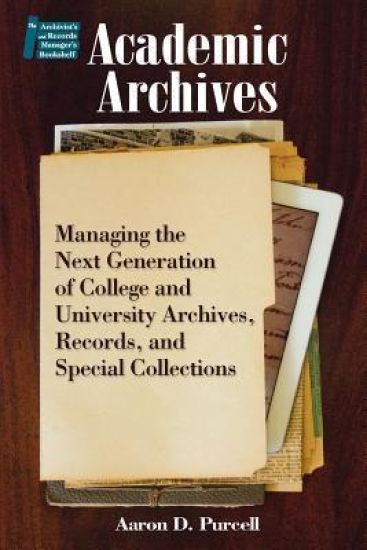
Academic Archives

Academic Archives

Aaron D. Purcell

Neal-Schuman Publishers Inc
2012
nidottu
Today, the field of academic archives is more expansive and complex than ever before. In addition to college and university archives, academic archives encompass records management programs, special collections departments, and other campus archival repositories. This new definition of academic archives programs has redefined the role, and training, of academic archivists. This book gives you the tools to fill that role, including collection strategies, a management plan for electronic records, and development strategies for starting a campus records management program, and an understanding of the emerging trends affecting all archivists. Academic Archives is designed to appeal to archivists of all ranks and experience, archivists working both inside and outside of academic libraries, archivists in training, other information professionals, library directors, and members of the academic community. If you want to start an archives program, update an existing archives program, begin a career in academic archives, or remain current on recent developments, you’ll find valuable advice in this timely addition to the Archivist’s and Records Manager’s Bookshelf Series.
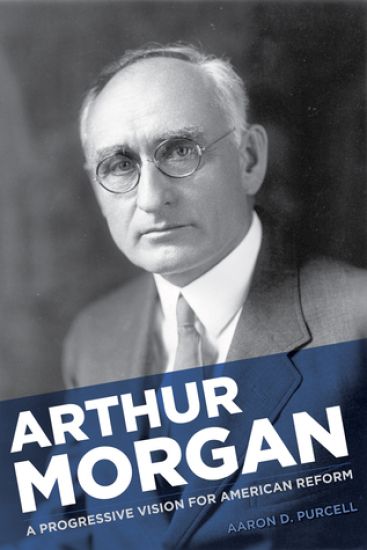
Arthur Morgan

Arthur Morgan

Aaron D. Purcell

University of Tennessee Press
2014
sidottu
On May 19, 1933, President Franklin D. Roosevelt announced the appointment of Arthur Morgan (1878–1975), a water-control engineer and college president from Ohio, as the chairman of the newly created Tennessee Valley Authority (TVA). With the eyes of the nation focused on the reform and recovery promised by the New Deal, Morgan remained in the national spotlight for much of the 1930s, as his visionary plans for the TVA drew both support and criticism. In this thoughtful biography, Aaron D. Purcell reassesses Morgan’s long life and career and provides the first detailed account of his post-TVA activities and fascination with utopian writer Edward Bellamy. As Purcell demonstrates, Morgan embraced an alternative type of Progressive Era reform throughout his life, one that was rooted in nineteenth-century socialism, an overlooked, but important, strain in American political thought.Purcell pinpoints Morgan’s reading of Edward Bellamy’s Looking Backward while a teenager as a watershed moment in the development of his vision for building modern American society. He recounts Morgan’s early successes as an engineer, budding Progressive leader, and educational reformer; his presidency of Antioch College; and his revolutionary but contentious tenure at the TVA. After his dismissal from the TVA, Morgan wrote extensively, eventually publishing over a dozen books, including a biography of Edward Bellamy, and countless articles. He also raised money to support an experimental community in Kerala, India, sharing Mahatma Gandhi’s belief in small, self-sustaining communities cooperatively supported by persons of strong moral character. At the same time, however, Morgan retained many of his late-nineteenth-century beliefs, including eugenics, as part of his societal vision. His authoritarian administrative style and moral rigidity limited his ability to attract large numbers to his community-based vision.As Purcell demonstrates, Morgan remained an active reformer well into the second half of the twentieth century, carrying forward a vision for American reform decades after his Progressive Era contemporaries had faded into obscurity. By presenting Morgan’s life and career within the context of the larger social and cultural events of his day, this revealing biographical study offers new insight into the achievements and motivations of an important but historically neglected American reformer.
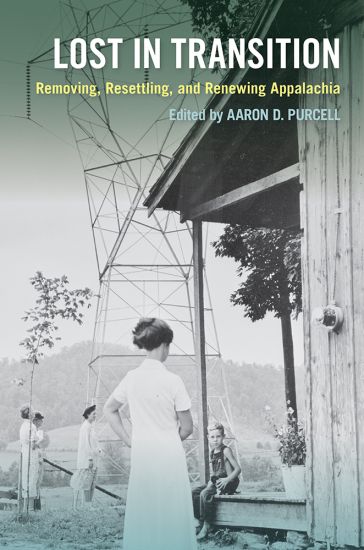
Lost in Transition

Lost in Transition

Aaron D. Purcell

University of Tennessee Press
2021
sidottu
In Lost in Transition: Removing, Resettling, and Renewing Appalachia, Aaron D. Purcell presents a thematic and chronological exploration of twentieth-century removal and resettlement projects across southern Appalachia. The book shares complex stories of loss and recollection that have grown and evolved over time.This edited volume contains seven case studies of public land removal actions in Virginia, Kentucky, the Carolinas, and Tennessee from the 1930s through the 1960s. Some of the removals include the Tennessee Valley Authority and the Norris Basin, Shenandoah National Park and the New River, the Great Smoky Mountains National Park, and the Keowee-Toxaway Project in northwestern South Carolina. Each essay asks key questions: How did governmental entities throughout the twentieth century deal with land acquisition and removal of families and communities? What do the oral histories of the families and communities, particularly from different generations, tell us about the legacies of these removals? This collection reveals confrontations between past and present, federal agencies and citizens, and the original accounts of removal and resettlement and contemporary interpretations. The result is a blending of practical historical concerns with contemporary nostalgia and romanticism, which often deepen the complexity of Appalachian cultural life.Lost in Transition provides a nuanced and insightful study of removal and resettlement projects that applies critical analysis of fact, mythology, and storytelling. It illustrates the important role of place in southern Appalachian history. This collection is a helpful resource to anthropologists, folklorists, and Appalachian studies scholars, and a powerful volume of stories for all readers who reflect upon the importance of place and home.