Kirjojen hintavertailu. Mukana 12 010 145 kirjaa ja 12 kauppaa.

Kirjahaku

Etsi kirjoja tekijän nimen, kirjan nimen tai ISBN:n perusteella.

5 kirjaa tekijältä Aaron Graham

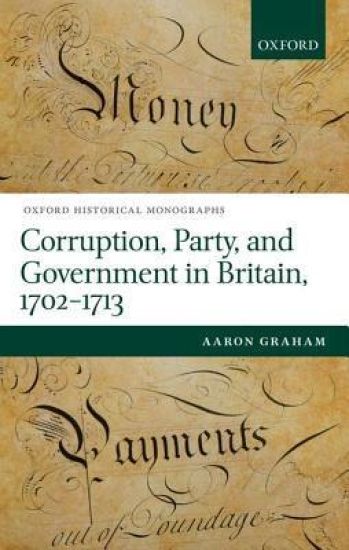
Corruption, Party, and Government in Britain, 1702-1713
Corruption, Party, and Government in Britain, 1702-1713 offers an innovative and original reinterpretation of state formation in eighteenth-century Britain, reconceptualising it as a political and fundamentally partisan process. Focussing on the supply of funds to the army during the War of the Spanish Succession (1702-13), it demonstrates that public officials faced multiple incompatible demands, but that political partisanship helped to prioritise them, and to hammer out settlements that embodied a version of the national interest. These decisions were then transmitted to agents in overseas through a mixture of personal incentives and partisan loyalties which built trust and turned these informal networks into instruments of public policy. However, the process of building trust and supplying funds laid officials and agents open to accusations of embezzlement, fraud and financial misappropriation. In particular, although successive financial officials ran entrepreneurial private financial ventures that enabled the army overseas to avoid dangerous financial shortfalls, they found it necessary to cover the costs and risks by receiving illegal 'gratifications' from the regiments. Reconstructing these transactions in detail, this book demonstrates that these corrupt payments advanced the public service, and thus that 'corruption' was as much a dispute over ends as means. Ultimately, this volume demonstrates that state formation in eighteenth-century Britain was a contested process of interest aggregation, in which common partisan aims helped to negotiate compromises between various irreconcilable public priorities and private interests, within the frameworks provided by formal institutions, and then collaboratively imposed through overlapping and intersecting networks of formal and informal agents.
Tropical Leviathan

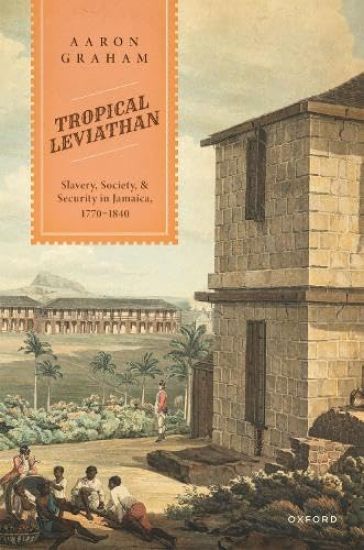
Tropical Leviathan

Aaron Graham

Oxford University Press
2025
sidottu
The colonial Jamaican state was immensely wealthy, but it was a society consumed by fear. The White population feared the possibility of enslaved rebellion and foreign invasion, and the Black population feared their cruel treatment as overworked labourers on Jamaica's brutal but economically productive sugar plantations. With the wealthy White population investing heavily in security to protect themselves from the rebelling enslaved majority, it was a society at war. The wealth of the plantation system meant that White Jamaicans and their imperial representatives were able to secure the finances for this until the last decade of the eighteenth century. By the early nineteenth century, however, the cost was proving increasingly burdensome, and the great slave rebellion of 1831-32 proved fatal to the financial and political viability of the colonial state, leading to emancipation in the mid-1830s. Tropical Leviathan re-evaluates the political and economic history of the colonial Jamaican state in the tumultuous age of revolution and abolition. With a large body of previous unknown data, it provides empirical evidence of a functioning colonial state that, contrary to previous interpretations, was far from declining in the years immediately before the abolition of the slave trade in 1807. Aaron Graham provides in-depth analysis of the ways in which Jamaica's economy attempted but eventually failed to provide the resources that would maintain Jamaica as a functioning plantation state and explains how the cost of securing the colonial state against enslaved opposition eventually led to near-state bankruptcy and to enslaved emancipation. Tropical Leviathan is a comprehensive study of the complex intersections between slavery and security in a slave society and an important re-evaluation of Jamaica in the age of revolution and abolition. The making, breaking, and remaking of the colonial state emerges as key in the rise and fall of slavery in Jamaica.
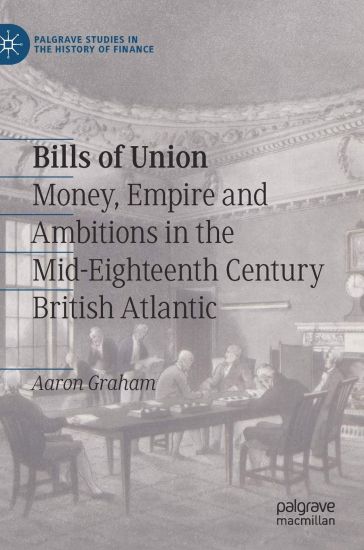
Bills of Union

Bills of Union

Aaron Graham

Springer Nature Switzerland AG
2021
sidottu
This book brings together for the first time more than half a dozen proposals for an imperial paper currency in the mid-eighteenth century British Atlantic, to show how manage colonial currency and banking in the expanding empire. Existing studies have looked at the successes and failures of schemes in individual colonies. But some had grander ambitions, such as Benjamin Franklin, and offered proposals for ‘imperial’ or ‘continental’ paper currencies and monetary unions which would help knit together colonial territories throughout North America and even the Caribbean into a cohesive whole during a moment of imperial reform. This book brings together these proposals for the first time, including several never studied before, to show how thinkers and writers on empire, currency and finance drew on financial practices, precedents and principles from across the British Atlantic to present their own visions of monetary union and the futureof empire. In doing so it makes an important and original contribution to the wider histories of monetary and financial thought and theory and the roots of American monetary policy, and the links between finance, empire, politics, reform and revolution. It will be of interest to academics working on the history of finance, banking and currency in the British Isles, North America and the Caribbean in the eighteenth century, as well as those working on the political economy of the British Empire, including mercantilism, trade, warfare and the politics of empire in the decades leading up to the American Revolution.
Bills of Union

Bills of Union

Aaron Graham

Springer Nature Switzerland AG
2022
nidottu
This book brings together for the first time more than half a dozen proposals for an imperial paper currency in the mid-eighteenth century British Atlantic, to show how manage colonial currency and banking in the expanding empire. Existing studies have looked at the successes and failures of schemes in individual colonies. But some had grander ambitions, such as Benjamin Franklin, and offered proposals for ‘imperial’ or ‘continental’ paper currencies and monetary unions which would help knit together colonial territories throughout North America and even the Caribbean into a cohesive whole during a moment of imperial reform. This book brings together these proposals for the first time, including several never studied before, to show how thinkers and writers on empire, currency and finance drew on financial practices, precedents and principles from across the British Atlantic to present their own visions of monetary union and the futureof empire. In doing so it makes an important and original contribution to the wider histories of monetary and financial thought and theory and the roots of American monetary policy, and the links between finance, empire, politics, reform and revolution. It will be of interest to academics working on the history of finance, banking and currency in the British Isles, North America and the Caribbean in the eighteenth century, as well as those working on the political economy of the British Empire, including mercantilism, trade, warfare and the politics of empire in the decades leading up to the American Revolution.