Kirjojen hintavertailu. Mukana 12 016 292 kirjaa ja 12 kauppaa.

Kirjahaku

Etsi kirjoja tekijän nimen, kirjan nimen tai ISBN:n perusteella.

7 kirjaa tekijältä Aaron Sachs

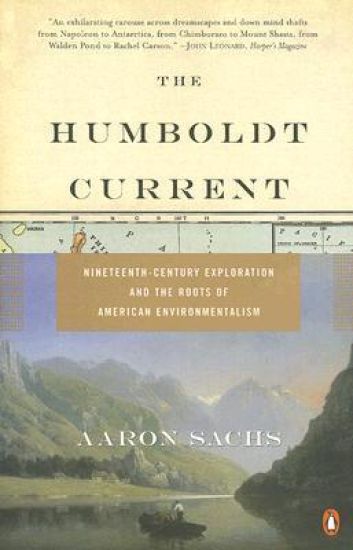
The Humboldt Current: Nineteenth-Century Exploration and the Roots of American Environmentalism
A masterly and beautifully written account of the impact of Alexander von Humboldt on nineteenth-century American history and culture The naturalist and explorer Alexander von Humboldt (1769-1859) achieved unparalleled fame in his own time. Today, however, he and his enormous legacy to American thought are virtually unknown. In The Humboldt Current, Aaron Sachs traces Humboldt's pervasive influence on American history through examining the work of four explorers--J. N. Reynolds, Clarence King, George Wallace, and John Muir--who embraced Humboldt's idea of a "chain of connection" uniting all peoples and all environments. A skillful blend of narrative and interpretation that also discusses Humboldt's influence on Emerson, Whitman, Thoreau, Melville, and Poe, The Humboldt Current offers a colorful, passionate, and superbly written reinterpretation of nineteenth-century American history.
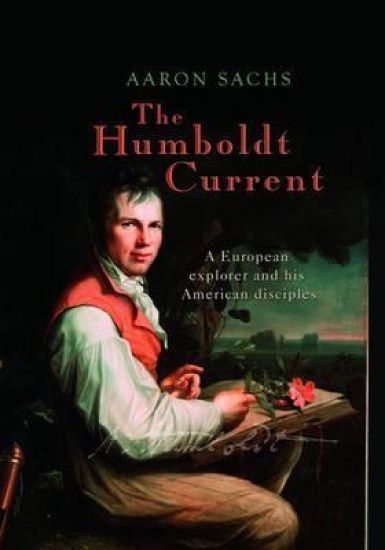
The Humboldt Current

The Humboldt Current

Aaron Sachs

Oxford University Press
2007
sidottu
While everyone has heard of the 'Humboldt Current', few know anything of the man after whom it was named. Yet Alexander von Humboldt was a towering figure of his time - scientist, explorer, and polymath, imbued with Enlightenment ideas - and he left a profound impact on the intellectual life of 19th century America. Aaron Sachs' colourful intellectual history rescues Humboldt from obscurity, and reveals the impact of a single European on both American thought and the environmental movement. Aaron Sachs traces Humboldt's legacy by focusing not only on the man himself but on the lives of other remarkable individuals who took their lead from him - explorers of the American mid-West, alienated Romantics, seminal American writers and artists, who together laid the groundwork for the great ecological tradition in 19th century America.
Arcadian America

Arcadian America

Aaron Sachs

Yale University Press
2014
pokkari
How a forgotten environmental tradition of the pre-Civil War era may prove powerfully useful to us now Perhaps America's best environmental idea was not the national park but the garden cemetery, a use of space that quickly gained popularity in the mid-nineteenth century. Such spaces of repose brought key elements of the countryside into rapidly expanding cities, making nature accessible to all and serving to remind visitors of the natural cycles of life. In this unique interdisciplinary blend of historical narrative, cultural criticism, and poignant memoir, Aaron Sachs argues that American cemeteries embody a forgotten landscape tradition that has much to teach us in our current moment of environmental crisis.Until the trauma of the Civil War, many Americans sought to shape society into what they thought of as an Arcadia—not an Eden where fruit simply fell off the tree, but a public garden that depended on an ethic of communal care, and whose sense of beauty and repose related directly to an acknowledgement of mortality and limitation. Sachs explores the notion of Arcadia in the works of nineteenth-century nature writers, novelists, painters, horticulturists, landscape architects, and city planners, and holds up for comparison the twenty-first century's—and his own—tendency toward denial of both death and environmental limits. His far-reaching insights suggest new possibilities for the environmental movement today and new ways of understanding American history.
Up from the Depths

Up from the Depths

Aaron Sachs

PRINCETON UNIVERSITY PRESS
2022
sidottu
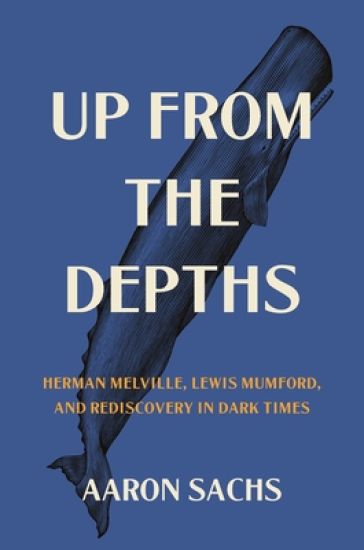
Finalist for the National Book Critics Circle Award in BiographyA double portrait of two of America’s most influential writers that reveals the surprising connections between them—and their uncanny relevance to our age of crisisUp from the Depths tells the interconnected stories of two of the most important writers in American history—the novelist and poet Herman Melville (1819–1891) and one of his earliest biographers, the literary critic and historian Lewis Mumford (1895–1990). Deftly cutting back and forth between the writers, Aaron Sachs reveals the surprising resonances between their lives, work, and troubled times—and their uncanny relevance in our own age of crisis.The author of Moby-Dick was largely forgotten for several decades after his death, but Mumford helped spearhead Melville’s revival in the aftermath of World War I and the 1918–1919 flu pandemic, when American culture needed a forebear with a suitably dark vision. As Mumford’s career took off and he wrote books responding to the machine age, urban decay, world war, and environmental degradation, it was looking back to Melville’s confrontation with crises such as industrialization, slavery, and the Civil War that helped Mumford to see his own era clearly. Mumford remained obsessed with Melville, ultimately helping to canonize him as America’s greatest tragedian. But largely forgotten today is one of Mumford’s key insights—that Melville’s darkness was balanced by an inspiring determination to endure.Amid today’s foreboding over global warming, racism, technology, pandemics, and other crises, Melville and Mumford remind us that we’ve been in this struggle for a long time. To rediscover these writers today is to rediscover how history can offer hope in dark times.
Up from the Depths

Up from the Depths

Aaron Sachs

PRINCETON UNIVERSITY PRESS
2024
pokkari
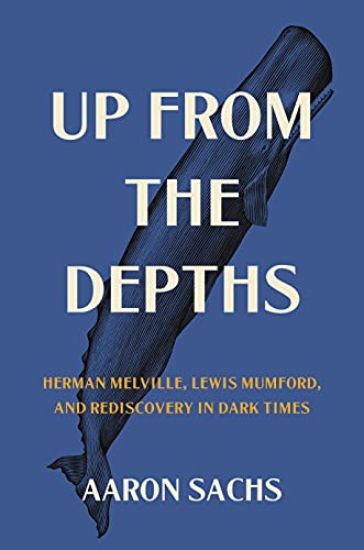
Finalist for the National Book Critics Circle Award in BiographyA double portrait of two of America’s most influential writers that reveals the surprising connections between them—and their uncanny relevance to our age of crisisUp from the Depths tells the interconnected stories of two of the most important writers in American history—the novelist and poet Herman Melville (1819–1891) and one of his earliest biographers, the literary critic and historian Lewis Mumford (1895–1990). Deftly cutting back and forth between the writers, Aaron Sachs reveals the surprising resonances between their lives, work, and troubled times—and their uncanny relevance in our own age of crisis.The author of Moby-Dick was largely forgotten for several decades after his death, but Mumford helped spearhead Melville’s revival in the aftermath of World War I and the 1918–1919 flu pandemic, when American culture needed a forebear with a suitably dark vision. As Mumford’s career took off and he wrote books responding to the machine age, urban decay, world war, and environmental degradation, it was looking back to Melville’s confrontation with crises such as industrialization, slavery, and the Civil War that helped Mumford to see his own era clearly. Mumford remained obsessed with Melville, ultimately helping to canonize him as America’s greatest tragedian. But largely forgotten today is one of Mumford’s key insights—that Melville’s darkness was balanced by an inspiring determination to endure.Amid today’s foreboding over global warming, racism, technology, pandemics, and other crises, Melville and Mumford remind us that we’ve been in this struggle for a long time. To rediscover these writers today is to rediscover how history can offer hope in dark times.
Stay Cool

Stay Cool

Aaron Sachs

NEW YORK UNIVERSITY PRESS
2023
sidottu
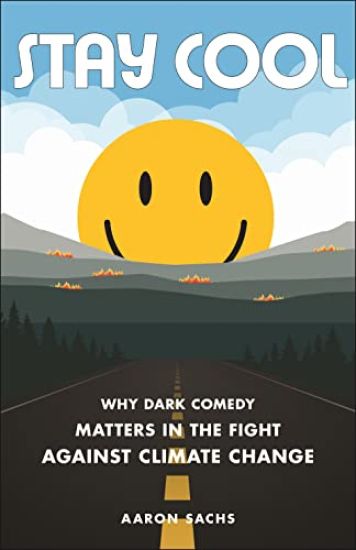
How gallows humor can bolster us to confront global warming We've all seen the headlines: oceans rising, historic heat waves, mass extinctions, climate refugees. It feels overwhelming, like nothing can make a difference in combating this ongoing global catastrophe. How can we mobilize to save the world when we feel this depressed? Stay Cool enjoins us to laugh our way forward. Human beings have used comedy to cope with difficult realities since the beginning of recorded time—the more dismal the news, the darker the humor. Using this rich tradition of dark comedy to investigate climate change, Aaron Sachs makes the case that gallows humor, a mainstay of African Americans and Jews facing extraordinary oppression, can cultivate endurance, persistence, and solidarity in the face of calamity. Sachs surveys the macabre tradition of laughing during great suffering, from the Black Plague to the San Francisco earthquake of 1906—and offers some of the earliest examples of superlative dark comedy. He also explores how a new generation of activists and comedians are deploying dark humor to great effect, by poking fun at older people's apathy about climate catastrophes, lambasting oil corporations' "eco" rebranding, and even producing an off-Broadway dystopian comedy called "Sea Level Rise." Sachs offers suggestions for how environmentalists can use dark comedy first to boost their own morale, and then to reframe their activism in more energizing and relatable ways. Environmentalism is probably the least funny social movement that's ever existed. Stay Cool seeks to change that. Will comedy save the world? Not by itself, no. But it can put people in a decent enough mood to get them started on a rescue mission.
Stay Cool

Stay Cool

Aaron Sachs

NEW YORK UNIVERSITY PRESS
2025
pokkari
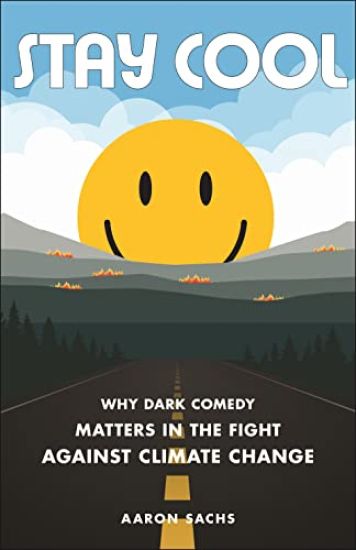
How gallows humor can bolster us to confront global warming We've all seen the headlines: oceans rising, historic heat waves, mass extinctions, climate refugees. It feels overwhelming, like nothing can make a difference in combating this ongoing global catastrophe. How can we mobilize to save the world when we feel this depressed? Stay Cool enjoins us to laugh our way forward. Human beings have used comedy to cope with difficult realities since the beginning of recorded time—the more dismal the news, the darker the humor. Using this rich tradition of dark comedy to investigate climate change, Aaron Sachs makes the case that gallows humor, a mainstay of African Americans and Jews facing extraordinary oppression, can cultivate endurance, persistence, and solidarity in the face of calamity. Sachs surveys the macabre tradition of laughing during great suffering, from the Black Plague to the San Francisco earthquake of 1906—and offers some of the earliest examples of superlative dark comedy. He also explores how a new generation of activists and comedians are deploying dark humor to great effect, by poking fun at older people's apathy about climate catastrophes, lambasting oil corporations' "eco" rebranding, and even producing an off-Broadway dystopian comedy called "Sea Level Rise." Sachs offers suggestions for how environmentalists can use dark comedy first to boost their own morale, and then to reframe their activism in more energizing and relatable ways. Environmentalism is probably the least funny social movement that's ever existed. Stay Cool seeks to change that. Will comedy save the world? Not by itself, no. But it can put people in a decent enough mood to get them started on a rescue mission.