Kirjojen hintavertailu. Mukana 12 357 233 kirjaa ja 12 kauppaa.

Kirjahaku

Etsi kirjoja tekijän nimen, kirjan nimen tai ISBN:n perusteella.

6 kirjaa tekijältä Aaron Trammell

Repairing Play

Repairing Play

Aaron Trammell

MIT PRESS LTD
2023
nidottu
A provocative study that reconsiders our notion of play--and how its deceptively wholesome image has harmed and erased people of color. Contemporary theorists present play as something wholly constructive and positive. But this broken definition is drawn from a White European philosophical tradition that ignores the fact that play can, and often does, hurt. In fact, this narrow understanding of play has been complicit in the systemic erasure of Black, Indigenous, and People of Color (BIPOC) from the domain of leisure. In this book, Aaron Trammell proposes a corrective: a radical reconsideration of play that expands its definition to include BIPOC suffering, subjugation, and taboo topics such as torture. As he challenges and decolonizes White European thought, Trammell maps possible ways to reconcile existing theories with the fact that play is often hurtful and toxic. Trammell upends current notions by exploring play's function as a tool in the subjugation of BIPOC. As he shows, the phenomenology of play is a power relationship. Even in innocent play, human beings subtly discipline each other to remain within unspoken rules. Going further, Trammell departs from mainstream theory to insist that torture can be play. Approaching it as such reveals play's role in subjugating people in general and renders visible the long-ignored experiences of BIPOC. Such an inclusive definition of play becomes a form of intellectual reparation, correcting the notion that play must give pleasure while also recasting play in a form that focuses on the deep, painful, and sometimes traumatic depths of living.
The Privilege of Play

The Privilege of Play

Aaron Trammell

NEW YORK UNIVERSITY PRESS
2023
sidottu
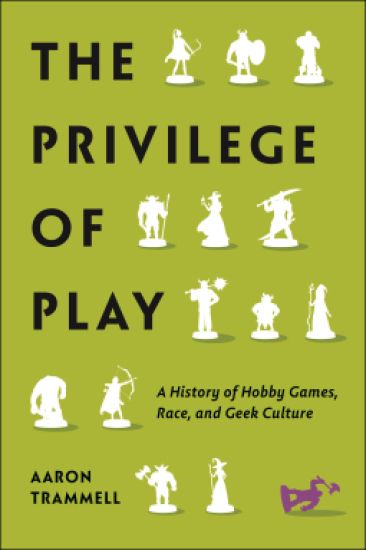
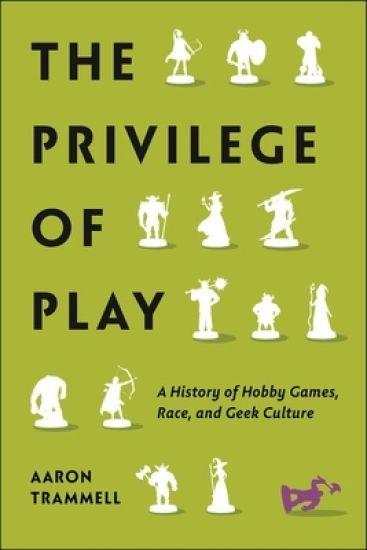
The story of white masculinity in geek culture through a history of hobby gaming Geek culture has never been more mainstream than it is now, with the ever-increasing popularity of events like Comic Con, transmedia franchising of the Marvel Cinematic Universe, market dominance of video and computer games, and the resurgence of board games such as Settlers of Catan and role-playing games like Dungeons & Dragons. Yet even while the comic book and hobby shops where the above are consumed today are seeing an influx of BIPOC gamers, they remain overwhelmingly white, male, and heterosexual. The Privilege of Play contends that in order to understand geek identity's exclusionary tendencies, we need to know the history of the overwhelmingly white communities of tabletop gaming hobbyists that preceded it. It begins by looking at how the privileged networks of model railroad hobbyists in the early twentieth century laid a cultural foundation for the scenes that would grow up around war games, role-playing games, and board games in the decades ahead. These early networks of hobbyists were able to thrive because of how their leisure interests and professional ambitions overlapped. Yet despite the personal and professional strides made by individuals in these networks, the networks themselves remained cloistered and homogeneous—the secret playgrounds of white men. Aaron Trammell catalogs how gaming clubs composed of lonely white men living in segregated suburbia in the sixties, seventies and eighties developed strong networks through hobbyist publications and eventually broke into the mainstream. He shows us how early hobbyists considered themselves outsiders, and how the denial of white male privilege they established continues to define the socio-technical space of geek culture today. By considering the historical role of hobbyists in the development of computer technology, game design, and popular media, The Privilege of Play charts a path toward understanding the deeply rooted structural obstacles that have stymied a more inclusive community. The Privilege of Play concludes by considering how digital technology has created the conditions for a new and more diverse generation of geeks to take center stage.
The Privilege of Play

The Privilege of Play

Aaron Trammell

NEW YORK UNIVERSITY PRESS
2023
pokkari
The story of white masculinity in geek culture through a history of hobby gaming Geek culture has never been more mainstream than it is now, with the ever-increasing popularity of events like Comic Con, transmedia franchising of the Marvel Cinematic Universe, market dominance of video and computer games, and the resurgence of board games such as Settlers of Catan and role-playing games like Dungeons & Dragons. Yet even while the comic book and hobby shops where the above are consumed today are seeing an influx of BIPOC gamers, they remain overwhelmingly white, male, and heterosexual. The Privilege of Play contends that in order to understand geek identity's exclusionary tendencies, we need to know the history of the overwhelmingly white communities of tabletop gaming hobbyists that preceded it. It begins by looking at how the privileged networks of model railroad hobbyists in the early twentieth century laid a cultural foundation for the scenes that would grow up around war games, role-playing games, and board games in the decades ahead. These early networks of hobbyists were able to thrive because of how their leisure interests and professional ambitions overlapped. Yet despite the personal and professional strides made by individuals in these networks, the networks themselves remained cloistered and homogeneous—the secret playgrounds of white men. Aaron Trammell catalogs how gaming clubs composed of lonely white men living in segregated suburbia in the sixties, seventies and eighties developed strong networks through hobbyist publications and eventually broke into the mainstream. He shows us how early hobbyists considered themselves outsiders, and how the denial of white male privilege they established continues to define the socio-technical space of geek culture today. By considering the historical role of hobbyists in the development of computer technology, game design, and popular media, The Privilege of Play charts a path toward understanding the deeply rooted structural obstacles that have stymied a more inclusive community. The Privilege of Play concludes by considering how digital technology has created the conditions for a new and more diverse generation of geeks to take center stage.
Analog Game Studies: Volume I

Analog Game Studies: Volume I

Aaron Trammell; Evan Torner; Emma Leigh Waldron

Lulu.com
2016
nidottu
Analog Game Studies is a bi-monthy journal for the research and critique of analog games. We define analog games broadly and include work on tabletop and live-action role-playing games, board games, card games, pervasive games, game-like performances, carnival games, experimental games, and more. Analog Game Studies was founded to reserve a space for scholarship on analog games in the wider field of game studies.
Analog Game Studies: Volume II

Analog Game Studies: Volume II

Aaron Trammell; Evan Torner; Emma Leigh Waldron

Lulu.com
2017
nidottu
Analog Game Studies is a bi-monthy journal for the research and critique of analog games. We define analog games broadly and include work on tabletop and live-action role-playing games, board games, card games, pervasive games, game-like performances, carnival games, experimental games, and more. Analog Game Studies was founded to reserve a space for scholarship on analog games in the wider field of game studies.
Analog Game Studies: Volume III

Analog Game Studies: Volume III

Evan Torner; Aaron Trammell; Emma Leigh Waldron

Lulu.com
2019
nidottu
Analog Game Studies is a bi-monthy journal for the research and critique of analog games. We define analog games broadly and include work on tabletop and live-action role-playing games, board games, card games, pervasive games, game-like performances, carnival games, experimental games, and more. Analog Game Studies was founded to reserve a space for scholarship on analog games in the wider field of game studies.