Kirjojen hintavertailu. Mukana 12 045 119 kirjaa ja 12 kauppaa.

Kirjahaku

Etsi kirjoja tekijän nimen, kirjan nimen tai ISBN:n perusteella.

7 kirjaa tekijältä Abbas Milani

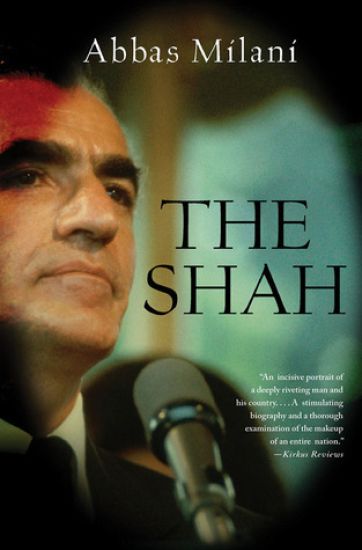
The Shah

The Shah

Abbas Milani

Palgrave Macmillan
2012
nidottu
Though his monarchy was toppled in 1979 and he died in 1980, Mohammad-Reza Shah Pahlevi, the last Shah of Iran, remains relevant today. He was a social reformer, a romantic egomaniac, and a deeply conflicted man and leader. Here, internationally respected author Abbas Milani gives us the definitive biography, more than ten years in the making, of the monarch who shaped Iran's modern age and with it the contemporary politics of the Middle East. The Shah's was a life filled with contradiction - he built schools, increased equality for women, and greatly reduced the power of the Shia clergy. He made Iran a global power and nationalized his country's many natural resources. But he was deeply conflicted and insecure in his powerful role. Intolerant of political dissent, he was eventually overthrown by the very people whose loyalty he so desperately sought. This comprehensive and gripping account shows us how Iran went from politically moderate monarchy to totalitarian Islamic republic. Milani reveals the complex and sweeping road that would bring the United States and Iran to where they are today.
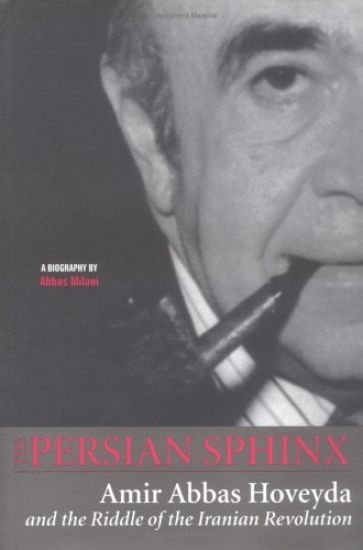
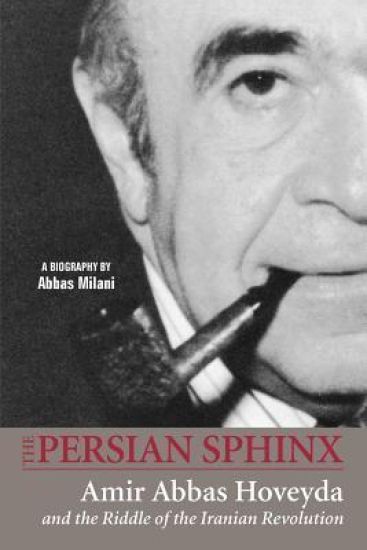
Persian Sphinx

Persian Sphinx

Abbas Milani

I.B. Tauris
2000
nidottu
Amir Abbas Hoveyda was an Iranian intellectual, more comfortable with Sartre than with the classical Persian poet Saadi, who rose to become his country's Prime Minister, faithfully and for 13 years serving his king. The tragic Shakespearian tale of Hoveyda, who allowed himself to be seduced by the illusion of power, makes for fascinating reading. This work provides a narrative which illuminates the life of Iran's most pivotal and enigmatic 20th century figures but also sheds important light on Iran's late 20th century history.
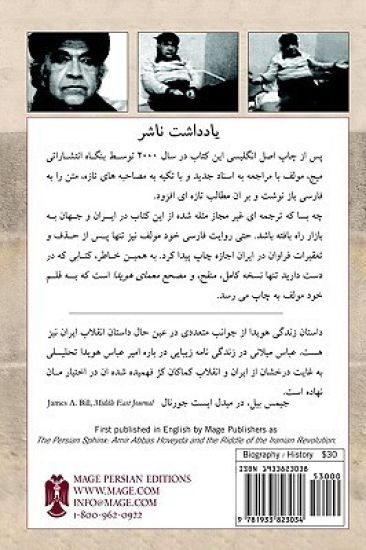
Persian Sphinx

Persian Sphinx

Abbas Milani

Mage Publishers
2009
nidottu
Amir Abbas Hoveyda was a central figure in the historic struggle between modernity and tradition in Iran -- a struggle pitting Western cosmopolitanism against Persian isolationism, secularism against religious fundamentalism, and ultimately civil society and democracy against authoritarianism. Born in Tehran in 1919 to a family of solid middle class comforts and faded aristocratic roots, Hoveyda was an elegant, cultivated, well-read, and witty man, educated in Beirut, London, and Brussels. After entering the Iranian foreign service in 1942, he served in France, Germany, and Turkey, then returned to Iran in 1956 to join the National Iranian Oil Company. In 1965, the shah appointed him the country's prime minister. Hoveyda would serve faithfully in that post for thirteen years. Amir Abbas Hoveyda embodied the aspirations, the accomplishments and also the failures of a whole generation of Iranian technocrats -- mostly Western-trained -- who sought to free Iran from the travails of poverty and repression and guide it into the modern age. Hoveyda would be both a leader and a victim of that effort.In telling the story of Hoveyda's life, the author has not only laid bare the development of Iranian society during a pivotal period (1919-1978) but has also unearthed important new material on U.S.-Iranian relations. From 1957 onward, Amir Abbas Hoveyda played critical roles in dealing with U.S. foreign policy and fundamentalist Islamic opposition in Iran. Through careful use of hitherto unexamined archival materials, unpublished letter, and personal journals, along with extensive interviews with over a hundred relatives, friends, and foes, the author has brilliantly caught the pathos and passion of Hoveyda's life and times. This is biography at its most powerful and will reward the scholar and the general reader alike.
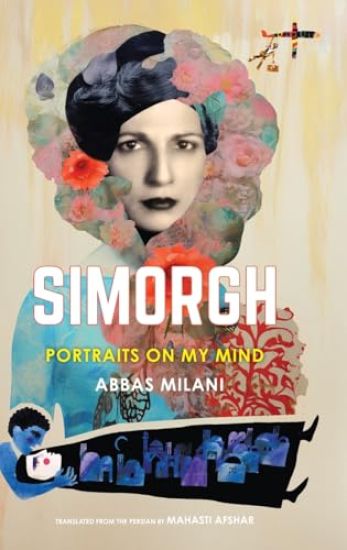
Simorgh

Simorgh

Abbas Milani

Mage Publishers
2025
sidottu
Simorgh: Portraits on My Mind is one of Abbas Milani's most self-reflective and engaging books, namedafter the fabulous bird in Iranian mythology and poetry that personifiesthe quest for knowledge, solace, and self-discovery.The rise of the Islamic regime in Iran following the revolution of 1979marked an era of cataclysmic change, accompanied by myriadconspiracy theories about its origins. The portraits presented in Simorgh, each a cross between a brief essay and a short story, explore thelives and loves, youthful illusions and utopian dreams, the harrowingexperiences of prison and exile, and the diasporic accomplishmentsand exilic traumas of individuals who either actively or inadvertentlypaved the way for the revolution - or whose lives were crushed by thenightmarish reality of contemporary Iran.The subjects of these portraits, all contemporaries of Milani, includesome of Iran's most renowned writers, politicians, scholars, and activists, alongside friends and family members who act as a poignant chorus tothe unfolding saga. Abbas Milani, who lived and worked in Iran until 1987and was deeply embedded in the crosscurrents of these lives, o ers anintimate perspective on their stories. Together, these portraits weave acohesive narrative, creating a cumulative e ect that is both profoundand compelling.Abbas Milani has served as the founding director ofthe Iranian Studies Program at Stanford University since2005. His extensive body of work includes The PersianSphinx: Amir-Abbas Hoveyda and the Riddle of theRevolution and The Shah. He is currently working on abook about Reza Shah. Simorgh, originally written andpublished in two volumes in Persian has been masterfullytranslated into English by Mahasti Afshar.Engaging and insightful, Simorgh is Milani at his best and will enthrall boththose new to his work and those already familiar with it.