Kirjojen hintavertailu. Mukana 11 244 527 kirjaa ja 12 kauppaa.

Kirjahaku

Etsi kirjoja tekijän nimen, kirjan nimen tai ISBN:n perusteella.

11 kirjaa tekijältä Adam Wood

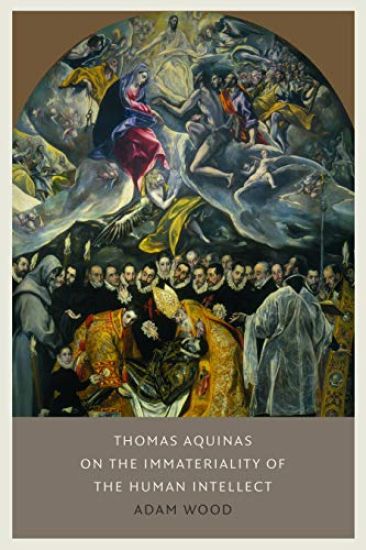
Thomas Aquinas on the Immateriality of the Intellect

Thomas Aquinas on the Immateriality of the Intellect

Adam Wood

The Catholic University of America Press
2019
sidottu
The chief aims of Thomas Aquinas on the Immateriality of the Human In­tellect are to provide a comprehensive interpretation of Aquinas’s oft-repeated claim that the human intellect is immaterial, and to assess his arguments on behalf of this claim. Adam Wood argues that Aquinas’s claim refers primarily to the mode in which the human intellect has its act of being. That the human intellect has an immaterial mode of being, however, crucially underwrites Aquinas’s additional views that the hu­man soul is subsistent and incorruptible. To show how it does so, Wood argues that the human intellect’s immateriality can also be put in terms of the impossibility of explaining its operations in terms of coordina­tion between bodily parts, states and processes. Aquinas’s arguments for the human intellect’s immateriality, therefore, can be understood as attempts to show why intellectual operations cannot be explained in bodily terms. The book argues that not all of them succeed in this aim and also proposes, however, a novel interpretation of Aquinas’s argu­ment based on human intellect’s universal mode of cognition that may indeed be sound. Wood concludes by considering the ramifications of Aquinas’s position on matters pertaining to the afterlife.Thomas Aquinas on the Immateriality of the Human Intellect represents the first book-length examination of Aquinas’s claim that the human intellect is immaterial, and so—given the centrality of this claim to his thought—should interest any scholars interested in understanding Thomas. While it focuses throughout on careful attention to Aquinas’s texts along with the relevant secondary literature, it also positions Thomas’s thought alongside recent developments in metaphysics and philosophy of mind. Hence it should also interest historically-minded metaphysicians interested in understanding how Thomas’s hylomor­phism intersects with recent work in hylomorphic metaphysics, philos­ophers of mind interested in understanding how Thomas’s philosoph­ical psychology relates to contemporary forms of dualism, physicalism and emergentism, and philosophers of religion interested in the possi­bility of the resurrection.
Thomas Aquinas on the Immateriality of the Human Intellect

Thomas Aquinas on the Immateriality of the Human Intellect

Adam Wood

THE CATHOLIC UNIVERSITY OF AMERICA PRESS
2025
pokkari
The chief aims of Thomas Aquinas on the Immateriality of the Human Intellect are to provide a comprehensive interpretation of Aquinas's oft-repeated claim that the human intellect is immaterial, and to assess his arguments on behalf of this claim. Adam Wood argues that Aquinas's claim refers primarily to the mode in which the human intellect has its act of being. That the human intellect has an immaterial mode of being, however, crucially underwrites Aquinas's additional views that the human soul is subsistent and incorruptible. To show how it does so, Wood argues that the human intellect's immateriality can also be put in terms of the impossibility of explaining its operations in terms of coordination between bodily parts, states and processes. Aquinas's arguments for the human intellect's immateriality, therefore, can be understood as attempts to show why intellectual operations cannot be explained in bodily terms. The book argues that not all of them succeed in this aim and also proposes, however, a novel interpretation of Aquinas's argument based on human intellect's universal mode of cognition that may indeed be sound. Wood concludes by considering the ramifications of Aquinas's position on matters pertaining to the afterlife. Thomas Aquinas on the Immateriality of the Human Intellect represents the first book-length examination of Aquinas's claim that the human intellect is immaterial, and so — given the centrality of this claim to his thought — should interest any scholars interested in understanding Thomas. While it focuses throughout on careful attention to Aquinas's texts along with the relevant secondary literature, it also positions Thomas's thought alongside recent developments in metaphysics and philosophy of mind. Hence it should also interest historically-minded metaphysicians interested in understanding how Thomas's hylomorphism intersects with recent work in hylomorphic metaphysics, philosophers of mind interested in understanding how Thomas's philosophical psychology relates to contemporary forms of dualism, physicalism and emergentism, and philosophers of religion interested in the possibility of the resurrection.
Our Preemie Adventure

Our Preemie Adventure

Adam Wood

Fulton Books
2021
pokkari
Our Preemie Adventure chronicles the journey that premature children and parents go through in the NICU. The book takes a humorous and heartwarming look at the milestones these children achieve as they work toward going home.
Our Preemie Adventure

Our Preemie Adventure

Adam Wood

Fulton Books
2021
sidottu
Our Preemie Adventure chronicles the journey that premature children and parents go through in the NICU. The book takes a humorous and heartwarming look at the milestones these children achieve as they work toward going home.
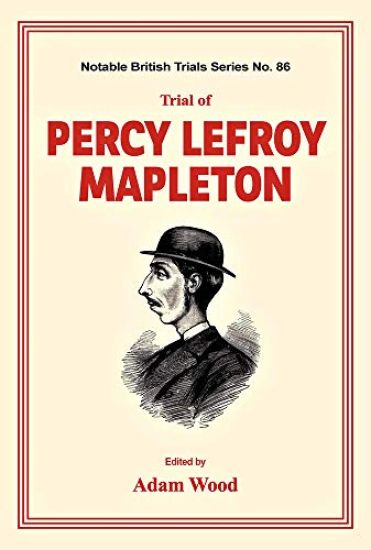
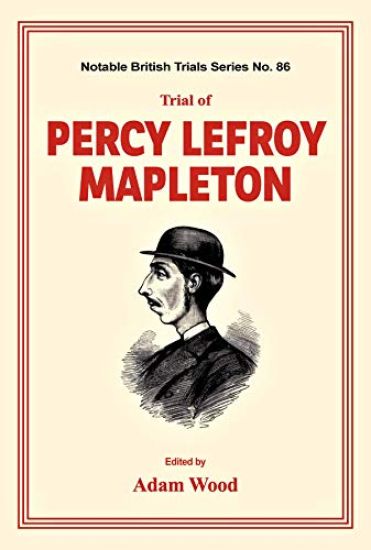
Trial of Percy Lefroy Mapleton

Trial of Percy Lefroy Mapleton

Adam Wood

Mango Books
2019
sidottu
At 3.20pm on the hot afternoon of 27th June 1881, the London Bridge to Brighton train pulled into Preston Park, a mile from its final destination. As the ticket collectors approached the carriages, one saw a thin, sickly looking man sitting in a first-class compartment beckoning him over. As the official arrived at the window, he saw that the passenger's face and neck were smeared with blood, and there was a clot beside an ear. There was blood between his fingers, blood upon his clothes, blood in the carriage and blood upon the train's footboard, which also bore the marks of bloodstained fingerprints. The carriage was otherwise empty.A terrible tale was told of being attacked and shot at by two other passengers, who had now disappeared, before falling into unconsciousness until arriving at Preston Park.As the passenger stepped onto the platform, it was noticed that a small chain was hanging out of his left shoe. One of the collectors stooped to pull on it, and a gold, white-faced watch emerged. The passenger had, he said, put it there for safekeeping. He was taken to Brighton for treatment, on the journey giving his name as Arthur Lefroy, of 4, Cathcart Road, Wallington, Surrey.So began the extraordinary story of Percy Lefroy Mapleton. During his return journey to south London accompanied by two railway police officers, a body was found by workers on the tracks in Balcombe Tunnel, 18 miles before Preston Park. Was this one of Lefroy's attackers, or was there something more sinister behind the discovery? The answer seemed to be given later that day when Lefroy absconded from his home and disappeared into thin air for eleven days.During this period, an inquest presided over by Coroner Wynne Baxter heard evidence from Scotland Yard's Divisional Surgeon Dr Thomas Bond and concluded that the man found in Balcombe Tunnel had indeed been murdered by Lefroy, and a warrant for his arrest was issued.A sketch of the wanted man was provided by someone who knew him; this, in turn, was developed into a wanted poster. When the likeness appeared in The Daily Telegraph of 1st July, it made history as the first time an image of a wanted person appeared in a national newspaper. As a result, with other newspapers subsequently publishing their own sketches of an increasingly-evil looking Lefroy, the public became hugely interested and false sightings of the fugitive were reported the length and breadth of the county. By the time he was finally arrested by Inspector Donald Swanson a week later, Lefroy was, in the public's eyes, already guilty, having been subjected to trial by the media.But was Lefroy telling the truth? He resolutely stuck to his story of being attacked by one or more fellow passengers, even when his solicitor suggested that the criminal psychiatrist Dr Forbes Winslow examine him in an attempt to prove insanity. There were no witnesses to any assault on the dead man, Mr Frederick Isaac Gold, and some witnesses stated that the train did indeed slow down just enough for potential attackers to jump off, as Lefroy had suggested.The jury at his trial had no such doubts, however, and after just ten minutes' deliberation found him Guilty. Dramatically, following the Judge's pronouncement of the death penalty Lefroy turned to the jury box and said: "Gentlemen of the Jury: Some day, when too late, you will learn that you have murdered me."In TRIAL OF PERCY LEFROY MAPLETON, No. 86 in the official Notable British Trials series, Adam Wood examines the reality of the events of 27th June 1881 and compares the polar-opposite lives of Lefroy and Frederick Gold, and considers the impact of The Daily Telegraph's decision to publish the likeness of a man who was, at that point, still far from being proved guilty.This book reproduces the testimony given at the trial, together with an introduction, a chronology and appendices.
Trial of Percy Lefroy Mapleton

Trial of Percy Lefroy Mapleton

Adam Wood

Mango Books
2019
pokkari
At 3.20pm on the hot afternoon of 27th June 1881, the London Bridge to Brighton train pulled into Preston Park, a mile from its final destination. As the ticket collectors approached the carriages, one saw a thin, sickly looking man sitting in a first-class compartment beckoning him over. As the official arrived at the window, he saw that the passenger's face and neck were smeared with blood, and there was a clot beside an ear. There was blood between his fingers, blood upon his clothes, blood in the carriage and blood upon the train's footboard, which also bore the marks of bloodstained fingerprints. The carriage was otherwise empty.A terrible tale was told of being attacked and shot at by two other passengers, who had now disappeared, before falling into unconsciousness until arriving at Preston Park.As the passenger stepped onto the platform, it was noticed that a small chain was hanging out of his left shoe. One of the collectors stooped to pull on it, and a gold, white-faced watch emerged. The passenger had, he said, put it there for safekeeping. He was taken to Brighton for treatment, on the journey giving his name as Arthur Lefroy, of 4, Cathcart Road, Wallington, Surrey.So began the extraordinary story of Percy Lefroy Mapleton. During his return journey to south London accompanied by two railway police officers, a body was found by workers on the tracks in Balcombe Tunnel, 18 miles before Preston Park. Was this one of Lefroy's attackers, or was there something more sinister behind the discovery? The answer seemed to be given later that day when Lefroy absconded from his home and disappeared into thin air for eleven days.During this period, an inquest presided over by Coroner Wynne Baxter heard evidence from Scotland Yard's Divisional Surgeon Dr Thomas Bond and concluded that the man found in Balcombe Tunnel had indeed been murdered by Lefroy, and a warrant for his arrest was issued.A sketch of the wanted man was provided by someone who knew him; this, in turn, was developed into a wanted poster. When the likeness appeared in The Daily Telegraph of 1st July, it made history as the first time an image of a wanted person appeared in a national newspaper. As a result, with other newspapers subsequently publishing their own sketches of an increasingly-evil looking Lefroy, the public became hugely interested and false sightings of the fugitive were reported the length and breadth of the county. By the time he was finally arrested by Inspector Donald Swanson a week later, Lefroy was, in the public's eyes, already guilty, having been subjected to trial by the media.But was Lefroy telling the truth? He resolutely stuck to his story of being attacked by one or more fellow passengers, even when his solicitor suggested that the criminal psychiatrist Dr Forbes Winslow examine him in an attempt to prove insanity. There were no witnesses to any assault on the dead man, Mr Frederick Isaac Gold, and some witnesses stated that the train did indeed slow down just enough for potential attackers to jump off, as Lefroy had suggested.The jury at his trial had no such doubts, however, and after just ten minutes' deliberation found him Guilty. Dramatically, following the Judge's pronouncement of the death penalty Lefroy turned to the jury box and said: "Gentlemen of the Jury: Some day, when too late, you will learn that you have murdered me."In TRIAL OF PERCY LEFROY MAPLETON, No. 86 in the official Notable British Trials series, Adam Wood examines the reality of the events of 27th June 1881 and compares the polar-opposite lives of Lefroy and Frederick Gold, and considers the impact of The Daily Telegraph's decision to publish the likeness of a man who was, at that point, still far from being proved guilty.This book reproduces the testimony given at the trial, together with an introduction, a chronology and appendices.