Kirjojen hintavertailu. Mukana 12 016 292 kirjaa ja 12 kauppaa.

Kirjahaku

Etsi kirjoja tekijän nimen, kirjan nimen tai ISBN:n perusteella.

3 kirjaa tekijältä Adolf Grünbaum

Collected Works, Volume I

Collected Works, Volume I

Adolf Grünbaum

Oxford University Press Inc
2013
sidottu
Adolf Grünbaum is one of the giants of 20th century philosophy of science. This volume is the first of three collecting his most essential and highly influential work. The essays collected in this first volume focus on three related areas. They discuss scientific rationality-the problem of what it takes for a theory to be called scientific, and ask whether it is plausible to draw a clear distinction between science and non-science as was famously proposed by Karl Popper. They delve into the debate between determinism and indeterminism, in both science and in the humanities. Grünbaum defends the position of the Humane Determinist, which then leads to a thorough criticism of the current theological approaches to ethics and morality-where Grünbaum defends an explicit Secular Humanism-as well as of prominent theistic interpretations of twentieth century physical cosmologies. The second volume is devoted to Grünbaum's writings on the Philosophy of Physics and Space-Time, and the third to his lectures on the Philosophy of Psychology and Psychoanalysis, including his 1985 Gifford Lectures, which are to be published for the first time.
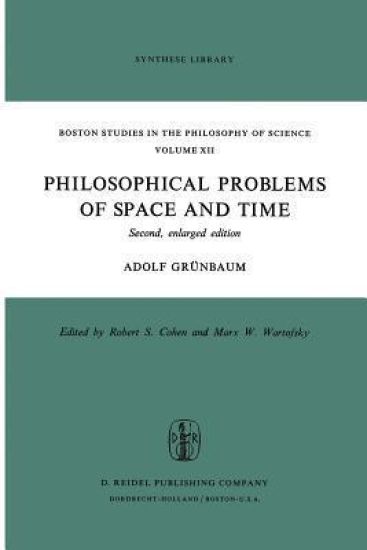
Philosophical Problems of Space and Time

Philosophical Problems of Space and Time

Adolf Grünbaum

Kluwer Academic Publishers
1973
sidottu
It is ten years since Adolf Griinbaum published the first edition of this book. It was promptly recognized to be one of the few major works in the philosophy of the natural sciences of this generation. In part, this is so because Griinbaum has chosen a problem basic both to philosophy and to the natural sciences - the nature of space and time; and in part, this is so because he so admirably exemplifies that Aristotelian devotion to the intimate and mutual dependence of actual science and philosophical understanding. More than this, however, the quality of his work derives from his achievement in combining detail with scope. The problems of space and time have been among the most difficult in contemporary and classical thought, and Griinbaum has been responsible to the full depth and complexity of these difficulties. This revised and enlarged second edition is a work in progress, in the tradition of reflective analysis of modern science of such figures as Ehrenfest and Reichenbach. In publishing this work among the Boston Studies in the Philosophy of Science, we hope to contribute to and encourage that broad tradition of natural philosophy which is marked by the close collaboration of philoso­ phers and scientists. To this end, we have published the proceedings of our Colloquia, of meetings and conferences here and abroad, as well as the works of single authors.
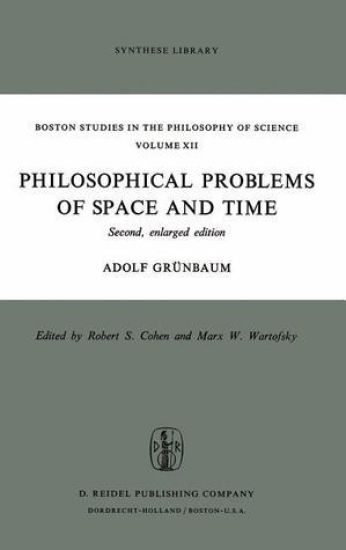
Philosophical Problems of Space and Time

Philosophical Problems of Space and Time

Adolf Grünbaum

Kluwer Academic Publishers
1973
nidottu
It is ten years since Adolf Griinbaum published the first edition of this book. It was promptly recognized to be one of the few major works in the philosophy of the natural sciences of this generation. In part, this is so because Griinbaum has chosen a problem basic both to philosophy and to the natural sciences - the nature of space and time; and in part, this is so because he so admirably exemplifies that Aristotelian devotion to the intimate and mutual dependence of actual science and philosophical understanding. More than this, however, the quality of his work derives from his achievement in combining detail with scope. The problems of space and time have been among the most difficult in contemporary and classical thought, and Griinbaum has been responsible to the full depth and complexity of these difficulties. This revised and enlarged second edition is a work in progress, in the tradition of reflective analysis of modern science of such figures as Ehrenfest and Reichenbach. In publishing this work among the Boston Studies in the Philosophy of Science, we hope to contribute to and encourage that broad tradition of natural philosophy which is marked by the close collaboration of philoso­ phers and scientists. To this end, we have published the proceedings of our Colloquia, of meetings and conferences here and abroad, as well as the works of single authors.