Kirjojen hintavertailu. Mukana 11 353 552 kirjaa ja 12 kauppaa.

Kirjahaku

Etsi kirjoja tekijän nimen, kirjan nimen tai ISBN:n perusteella.

12 kirjaa tekijältä Adrian Beard

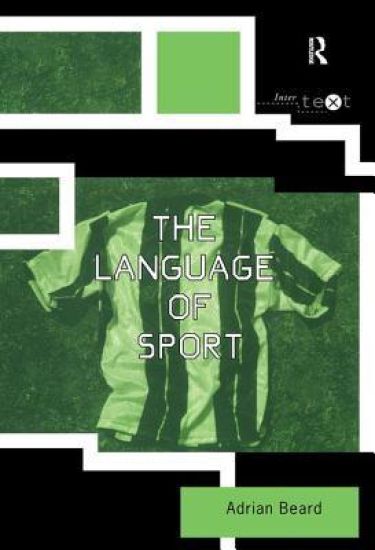
The Language of Sport

The Language of Sport

Adrian Beard

Routledge
1998
nidottu
The Language of Sport:* looks in detail at the language of sports-talk including commentary and 'new sportswriting'* explores linguistic representation of related issues such as gender, national/regional identity* examines the way sport sells itself as an agent of social cohesion and as a way to sell other products* includes BBC, ITV and radio transcripts of such sporting events as Euro '96
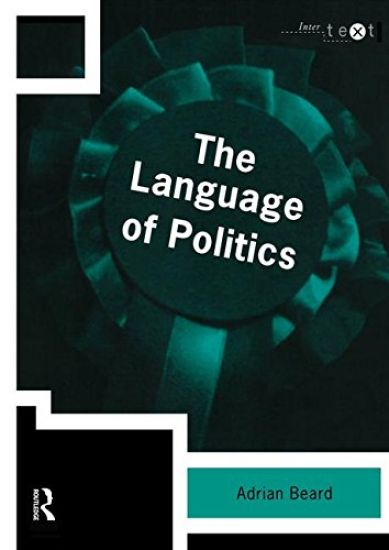
The Language of Politics

The Language of Politics

Adrian Beard

Routledge
1999
nidottu
The Language of Politics:* examines how both politicians and commentators describe political stances* explores some of the most common linguistic features to be found in political speeches* analyses electioneering through various written texts including manifestos, posters and pamphlets* looks at how politicians answer questions both in the media and in parliament* includes examples of political discourse from Britain, America and Australia* has a comprehensive glossary of terms.
Texts and Contexts

Texts and Contexts

Adrian Beard

Routledge
2001
nidottu
The idea of studying texts 'in context' has become a major new emphasis in contemporary literary studies. Texts and Contexts explores the idea of contexts and the way they affect texts, concentrating on:* the writer's context* the reader's context* the text's context* the language context* the meaning context.Through a series of units comprising texts, exercises and readings, Adrian Beard sets out a framework for studying texts and their contexts and shows how this approach can lead to a valuable new understanding of the changing and multiple meanings of any text. This accessible, enjoyable set of materials is ideal for any students meeting the idea of contexts for the first time.
Texts and Contexts

Texts and Contexts

Adrian Beard

Routledge
2001
sidottu
The idea of studying texts 'in context' has become a major new emphasis in contemporary literary studies. Texts and Contexts explores the idea of contexts and the way they affect texts, concentrating on:* the writer's context* the reader's context* the text's context* the language context* the meaning context.Through a series of units comprising texts, exercises and readings, Adrian Beard sets out a framework for studying texts and their contexts and shows how this approach can lead to a valuable new understanding of the changing and multiple meanings of any text. This accessible, enjoyable set of materials is ideal for any students meeting the idea of contexts for the first time.
The Language of Literature

The Language of Literature

Adrian Beard

Routledge
2003
sidottu
Routledge A Level English Guides equip AS and A2 Level students with the skills they need to explore, evaluate, and enjoy English.Books in the series are built around the various skills specified in the assessment objectives (AOs) for all AS and A2 Level English courses. Focusing on the AOs most relevant to their topic, the books help students to develop their knowledge and abilities through analysis of lively texts and contemporary data. Each book in the series covers a different area of language and literary study, and offers accessible explanations, examples, exercises, summaries, a glossary of key terms, and suggested answers.The Language of Literature:*looks at how writers use language to create literary texts*explores a wide variety of literary texts from Shakespeare to Helen Fielding, via Alexander Pope, William Blake, Mary Shelley, Charles Dickens, Oscar Wilde, Julian Barnes and Martin Amis*covers the key skills and topics, including structure, shapes and patterns, genre and sub-genre, narrative and narrators, representing talk, metaphor, allegory and intertextuality*offers a step-by-step guide to approaching literary texts and structuring a response*can be used as both a course stimulus and a revision tool.Written by an experienced teacher, author and AS and A2 Level examiner, The Language of Literature is an essential resource for all students of AS and A2 Level English Language, English Literature, and English Language and Literature.
The Language of Literature

The Language of Literature

Adrian Beard

Routledge
2003
nidottu
Routledge A Level English Guides equip AS and A2 Level students with the skills they need to explore, evaluate, and enjoy English.Books in the series are built around the various skills specified in the assessment objectives (AOs) for all AS and A2 Level English courses. Focusing on the AOs most relevant to their topic, the books help students to develop their knowledge and abilities through analysis of lively texts and contemporary data. Each book in the series covers a different area of language and literary study, and offers accessible explanations, examples, exercises, summaries, a glossary of key terms, and suggested answers.The Language of Literature:*looks at how writers use language to create literary texts*explores a wide variety of literary texts from Shakespeare to Helen Fielding, via Alexander Pope, William Blake, Mary Shelley, Charles Dickens, Oscar Wilde, Julian Barnes and Martin Amis*covers the key skills and topics, including structure, shapes and patterns, genre and sub-genre, narrative and narrators, representing talk, metaphor, allegory and intertextuality*offers a step-by-step guide to approaching literary texts and structuring a response*can be used as both a course stimulus and a revision tool.Written by an experienced teacher, author and AS and A2 Level examiner, The Language of Literature is an essential resource for all students of AS and A2 Level English Language, English Literature, and English Language and Literature.
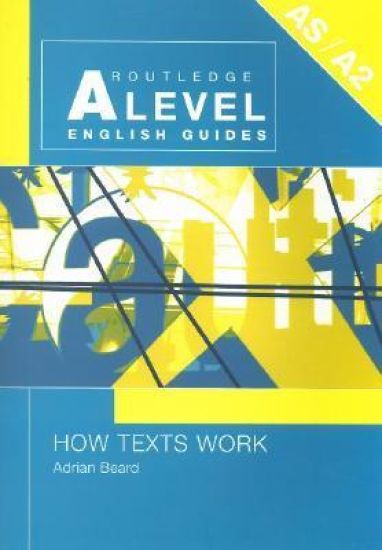
How Texts Work

How Texts Work

Adrian Beard

Routledge
2003
sidottu
How Texts Work: explores the ways in which we categorize texts reveals the limitations of some of the polarisations we use to categorize textsanalyzes a wide variety of texts from a range of genres and periods, from Ibsen's A Doll's House to an 18-30s brochure, Internet chatrooms and George Bush's September 11 speechoffers a step-by-step guide to approaching texts and structuring a response can be used as both a course stimulus and a revision tool.Written by an experienced teacher, author and AS and A2 level examiner, How Texts Work is an essential resource for all students of AS and A2 level English Language, English Literature, and English Language and Literature.
How Texts Work

How Texts Work

Adrian Beard

Routledge
2003
nidottu
How Texts Work: explores the ways in which we categorize texts reveals the limitations of some of the polarisations we use to categorize textsanalyzes a wide variety of texts from a range of genres and periods, from Ibsen's A Doll's House to an 18-30s brochure, Internet chatrooms and George Bush's September 11 speechoffers a step-by-step guide to approaching texts and structuring a response can be used as both a course stimulus and a revision tool.Written by an experienced teacher, author and AS and A2 level examiner, How Texts Work is an essential resource for all students of AS and A2 level English Language, English Literature, and English Language and Literature.
Language Change

Language Change

Adrian Beard

Routledge
2004
sidottu
The Intertext series has been specifically designed to meet the needs of contemporary English Language Studies. Working with Texts: A Core Introduction to Language Analysis (second edition 2001) is the foundation text, which is complemented by a range of 'satellite titles. These provide students with hands-on practical experience of textual analysis through special topics, and can be used individually or in conjunction with Working with Texts.Language Change:examines the way external factors have influenced and are influencing language change, focusing on how changing social contexts are reflected in language useexplores the attitudes, values and assumptions that shape the way we use languagelooks at how language change operates within different genres, such as problem pages, sports reports and recipesprovides lively examples from everyday communication, including letters, emails, postcards and text messagesincludes a unit on how new words are formed and features a full glossary.
Language Change

Language Change

Adrian Beard

Routledge
2004
nidottu
The Intertext series has been specifically designed to meet the needs of contemporary English Language Studies. Working with Texts: A Core Introduction to Language Analysis (second edition 2001) is the foundation text, which is complemented by a range of 'satellite titles. These provide students with hands-on practical experience of textual analysis through special topics, and can be used individually or in conjunction with Working with Texts.Language Change:examines the way external factors have influenced and are influencing language change, focusing on how changing social contexts are reflected in language useexplores the attitudes, values and assumptions that shape the way we use languagelooks at how language change operates within different genres, such as problem pages, sports reports and recipesprovides lively examples from everyday communication, including letters, emails, postcards and text messagesincludes a unit on how new words are formed and features a full glossary.
The Language of Sport

The Language of Sport

Adrian Beard

Routledge
2016
sidottu
The Language of Sport:* looks in detail at the language of sports-talk including commentary and 'new sportswriting'* explores linguistic representation of related issues such as gender, national/regional identity* examines the way sport sells itself as an agent of social cohesion and as a way to sell other products* includes BBC, ITV and radio transcripts of such sporting events as Euro '96
The Language of Politics

The Language of Politics

Adrian Beard

Routledge
2015
sidottu
The Language of Politics:* examines how both politicians and commentators describe political stances* explores some of the most common linguistic features to be found in political speeches* analyses electioneering through various written texts including manifestos, posters and pamphlets* looks at how politicians answer questions both in the media and in parliament* includes examples of political discourse from Britain, America and Australia* has a comprehensive glossary of terms.