Kirjojen hintavertailu. Mukana 11 699 587 kirjaa ja 12 kauppaa.

Kirjahaku

Etsi kirjoja tekijän nimen, kirjan nimen tai ISBN:n perusteella.

5 kirjaa tekijältä Adrian Clark

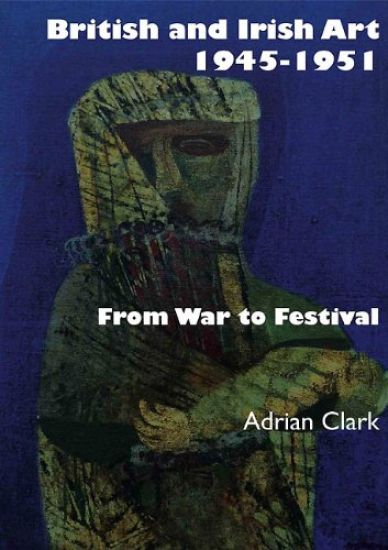
British and Irish Art 1945–1951

British and Irish Art 1945–1951

Adrian Clark

Hogarth Arts Ltd
2010
sidottu
This radical re-examination of one of the crucial periods of modern British and Irish art demolishes the idea that control of the art world passed after the War from rich individuals to faceless state institutions. Through detailed analysis of unpublished private letters and manuscripts, the machinations of committees, and contemporary newspaper reports, the author demonstrates that the public school and Oxbridge elite retained its hold upon the levers of power within the new state-run art institutions. This highly original book puts history back into the history of art. It approaches the British and Irish art worlds from the historical viewpoint, avoiding theories unsupported by facts. By studying the intricate mechanisms whereby artists turned oil on canvas into money - or not - the book explains how artists' reputations were made or broken. Individual artists discussed include Francis Bacon, Lucian Freud, Henry Moore, John Piper, Graham Sutherland, Gerard Dillon, Robert Colquhoun, Paul Nash and many more. Readers will be startled and intrigued to find how such artists fought to survive amid the network of powerful individuals, critics and gallery owners that controlled their destinies.
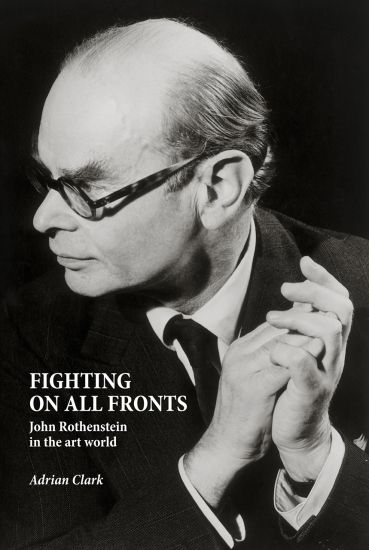
Fighting on All Fronts

Fighting on All Fronts

Adrian Clark

Unicorn Publishing Group
2018
sidottu
John Rothenstein, son of Sir William Rothenstein, the celebrated portrait painter, was born in 1901, four years after the Tate Gallery had been founded as the national gallery of British art. When Rothenstein took over as its fifth director in 1938, the Tate was in serious trouble: after 1917 when its remit was extended to include the national collection of modern foreign art, the confused dual purpose had placed an intolerable burden on those required to manage an institution still partly controlled by the National Gallery. Furthermore, it had no purchasing budget from the Government and was bound to accept often inappropriate pictures imposed on it by the Royal Academy under the terms of the infamous Chantrey Bequest. 26 years later when Rothenstein retired as Director in 1964, the Tate had acquired a Government grant, escaped the clutches of the National Gallery in 1955, and was firmly established both as the principal collection of modern art in the UK, and the best collection of British art in the world. Yet Rothenstein's career in the art world had never run a smooth course. After a childhood and early professional life dominated by the influence of his father, his curatorial posts in America, Leeds and Sheffield were not without incident, and at times it had looked as if his chosen career would stall. Adrian Clark's thoroughly researched account of the origins and professional life of John Rothenstein, covers his highs and lows and tries to give a balanced view and summary of the achievements of this remarkable human being.