Kirjojen hintavertailu. Mukana 11 342 296 kirjaa ja 12 kauppaa.

Kirjahaku

Etsi kirjoja tekijän nimen, kirjan nimen tai ISBN:n perusteella.

10 kirjaa tekijältä Adrian Daub

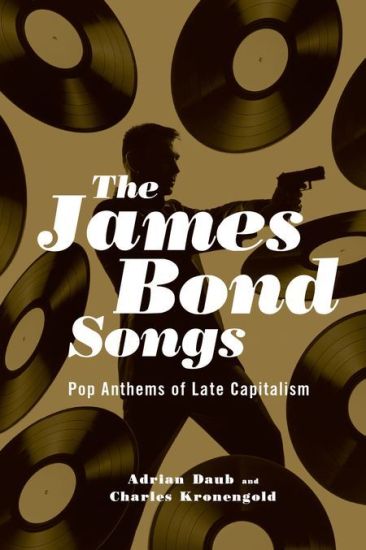
The James Bond Songs

The James Bond Songs

Adrian Daub

Oxford University Press Inc
2015
sidottu
Starting with 1964's Goldfinger, every James Bond film has followed the same ritual, and so has its audience: after an exciting action sequence the screen goes black and the viewer spends three long minutes absorbing abstract opening credits and a song that sounds like it wants to return to 1964. In The James Bond SongsR authors Adrian Daub and Charles Kronengold use the genre to trace not only a changing cultural landscape, but also evolving conceptionsof what a pop song is. They argue that the story of the Bond song is the story of the pop song more generally, and perhaps even the story of its end. Each chapter discusses a particular segment of the Bond canon and contextualizes it in its eras music and culture. But the book also asks how Bond and his music reflected and influenced our feelings about such topics as masculinity, race, money, and aging. Through these individual pieces the book presents the Bond song as the perfect anthem of late capitalism. The Bond songs want to talk about the fulfillment that comes from fast cars, shaken Martinis and mindless sex, but their unstablespeakers, subjects, and addressees actually undercut the logic of the lifestyle James Bond is sworn to defend. The book is an invitation to think critically about pop music, about genre, and about the political aspects of popular culture in the twentieth century and beyond.
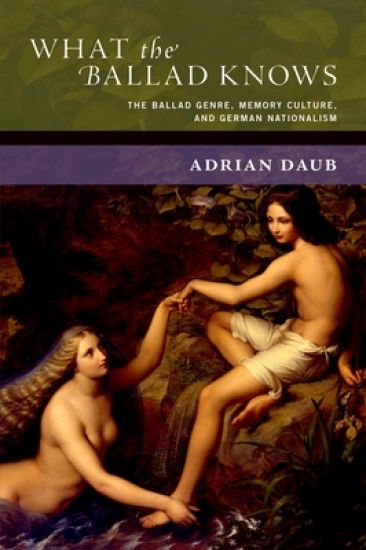
What the Ballad Knows

What the Ballad Knows

Adrian Daub

OXFORD UNIVERSITY PRESS INC
2022
sidottu
Over the course of the 19th century, ballads proliferated in German-speaking Europe in a truly remarkable range of contexts. Audiences were of course likely encounter balladry in the volumes of Goethe and Schiller, in various anthologies or illustrated editions. But they were just as likely to come across objects billed as ballads in recitation evenings by popular actors, in song-settings by Schubert and Loewe, in piano pieces by Chopin, in the opera house and the concert hall, in mass-produced drawings, paintings and even chinaware. Ballads were poems one could use - schoolteachers used them to train their students' memory (or punish them), women composers used them to assert their place in the musical canon, actors used them to bolster their income, mothers used them to put their children to sleep. Ballads intersected with gender and class, promising to democratize art, while in fact helping make distinctions. In What the Ballad Knows: The Ballad Genre, Memory Culture and German Nationalism, Adrian Daub tells the story of this itinerant genre across media, periods, regions and social strata and shows that, even though it was often positioned as an authentic product of "German spirit," the ballad frequently unsettled and subverted the national project. The popular imagination rooted these poems in pre-modern oral culture, among bards and peasants in the everyday life of common folk. But in fact nineteenth-century ballads were in the end all about modernity – modern modes of association, of attention, of dissemination.
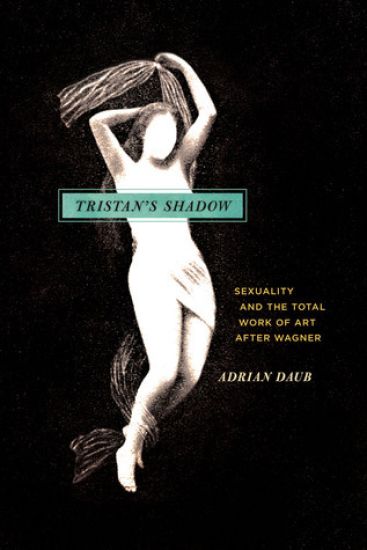
Tristan`s Shadow – Sexuality and the Total Work of Art after Wagner
Das Rheingold, Die Walkure, and Siegfried. Parsifal. Tristan und Isolde. Both revered and reviled, Richard Wagner conceived some of the nineteenth century's most important operatic productions - and created some of the most indelible characters ever to grace the stage. But over the course of his polarizing career, Wagner also composed nearly twenty volumes of writing on opera. His influential concept of Gesamtkunstwerk - the "total work of art" - famously and controversially offered a way to unify the different media of an opera into a coherent whole. Less well-known, however, are Wagner's strange theories on sexuality - like his ideas about erotic acoustics and the metaphysics of sexual difference. Drawing on the discourses of psychoanalysis, evolutionary biology, and other developing fields of study that informed Wagner's world, Adrian Daub traces the influence of Gesamtkunstwerk and eroticism from their classic expressions in Tristan und Isolde into the work of the generation of composers that followed, including Zemlinsky, d'Albert, Schreker, and Strauss. For decades after Wagner's death, Daub writes, these composers continued to grapple with his ideas and with his overwhelming legacy, trying in vain to write their way out from Tristan's shadow.
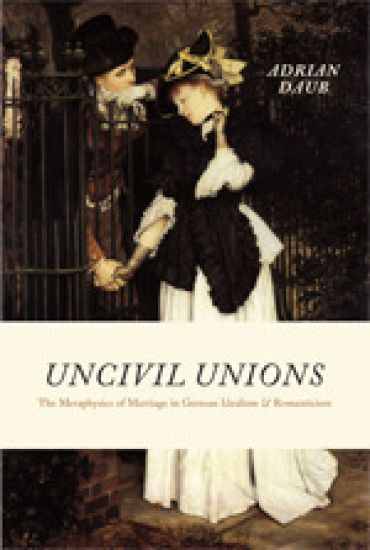
Uncivil Unions

Uncivil Unions

Adrian Daub

University of Chicago Press
2012
sidottu
"What a strange invention marriage is!" wrote Kierkegaard. "Is it the expression of that inexplicable erotic sentiment, that concordant elective affinity of souls, or is it a duty or a partnership...or is it a little of all that?" Like Kierkegaard a few decades later, many of Germany's most influential thinkers at the turn of the eighteenth century wondered about the nature of marriage but rejected the easy answers provided by biology and theology. In "Uncivil Unions", Adrian Daub presents a truly interdisciplinary look at the story of a generation of philosophers, poets, and intellectuals who turned away from theology, reason, common sense, and empirical observation to provide a purely metaphysical justification of marriage. Through close readings of philosophers like Fichte and Schlegel, and novelists like Sophie Mereau and Jean Paul, Daub charts the development of this new concept of marriage with an insightful blend of philosophy, cultural studies, and theory. The author delves deeply into the lives and work of the romantic and idealist poets and thinkers whose beliefs about marriage continue to shape ideas about gender, marriage, and sex to the present day.
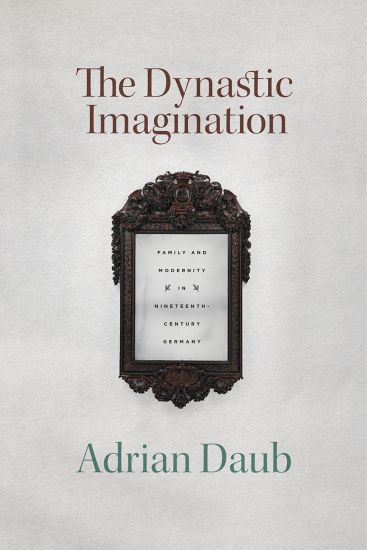
The Dynastic Imagination

The Dynastic Imagination

Adrian Daub

University of Chicago Press
2021
sidottu
Adrian Daub’s The Dynastic Imagination offers an unexpected account of modern German intellectual history through frameworks of family and kinship. Modernity aimed to brush off dynastic, hierarchical authority and to make society anew through the mechanisms of marriage, siblinghood, and love. It was, in other words, centered on the nuclear family. But as Daub shows, the dynastic imagination persisted, in time emerging as a critical stance by which the nuclear family’s conservatism and temporal limits could be exposed. Focusing on the complex interaction between dynasties and national identity-formation in Germany, Daub shows how a lingering preoccupation with dynastic modes of explanation, legitimation, and organization suffused German literature and culture. Daub builds this conception of dynasty in a syncretic study of the literature, sciences, and history of ideas into the twentieth century. As early modernism discovered a standpoint from which to critique the nuclear family, remnants of dynastic ideology kept their hold variously on Richard Wagner, Émile Zola, Stefan George, and Sigmund Freud. At every stage of cultural progression, Daub reveals how the relation of dynastic to nuclear families inflected modern intellectual history.
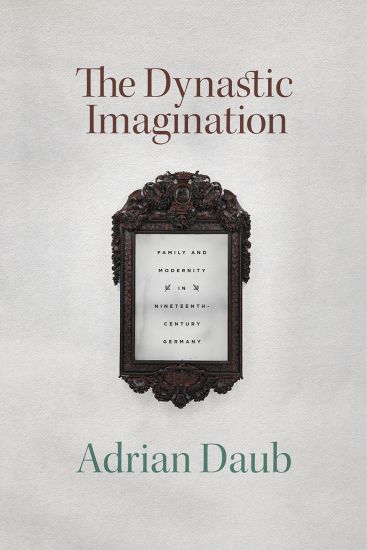
The Dynastic Imagination

The Dynastic Imagination

Adrian Daub

University of Chicago Press
2021
nidottu
Adrian Daub’s The Dynastic Imagination offers an unexpected account of modern German intellectual history through frameworks of family and kinship. Modernity aimed to brush off dynastic, hierarchical authority and to make society anew through the mechanisms of marriage, siblinghood, and love. It was, in other words, centered on the nuclear family. But as Daub shows, the dynastic imagination persisted, in time emerging as a critical stance by which the nuclear family’s conservatism and temporal limits could be exposed. Focusing on the complex interaction between dynasties and national identity-formation in Germany, Daub shows how a lingering preoccupation with dynastic modes of explanation, legitimation, and organization suffused German literature and culture. Daub builds this conception of dynasty in a syncretic study of the literature, sciences, and history of ideas into the twentieth century. As early modernism discovered a standpoint from which to critique the nuclear family, remnants of dynastic ideology kept their hold variously on Richard Wagner, Émile Zola, Stefan George, and Sigmund Freud. At every stage of cultural progression, Daub reveals how the relation of dynastic to nuclear families inflected modern intellectual history.
What Tech Calls Thinking

What Tech Calls Thinking

Adrian Daub

Farrar, Straus Giroux Inc
2020
nidottu
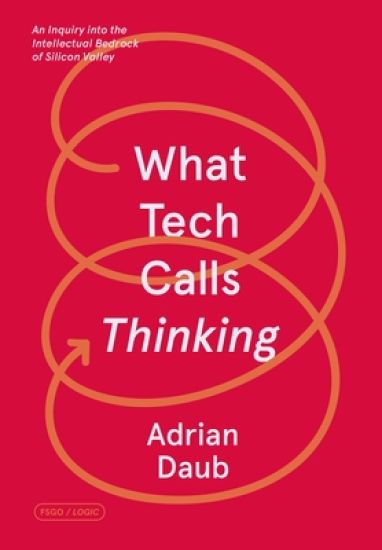
Adrian Daub’s What Tech Calls Thinking is a lively dismantling of the ideas that form the intellectual bedrock of Silicon Valley. Equally important to Silicon Valley’s world-altering innovation are the language and ideas it uses to explain and justify itself. And often, those fancy new ideas are simply old motifs playing dress-up in a hoodie. From the myth of dropping out to the war cry of “disruption,” Daub locates the Valley’s supposedly original, radical thinking in the ideas of Heidegger and Ayn Rand, the New Age Esalen Foundation in Big Sur, and American traditions from the tent revival to predestination. Written with verve and imagination, What Tech Calls Thinking is an intellectual refutation of Silicon Valley's ethos, pulling back the curtain on the self-aggrandizing myths the Valley tells about itself. FSG Originals × Logic dissects the way technology functions in everyday lives. The titans of Silicon Valley, for all their utopian imaginings, never really had our best interests at heart: recent threats to democracy, truth, privacy, and safety, as a result of tech’s reckless pursuit of progress, have shown as much. We present an alternate story, one that delights in capturing technology in all its contradictions and innovation, across borders and socioeconomic divisions, from history through the future, beyond platitudes and PR hype, and past doom and gloom. Our collaboration features four brief but provocative forays into the tech industry’s many worlds, and aspires to incite fresh conversations about technology focused on nuanced and accessible explorations of the emerging tools that reorganise and redefine life today.
The Cancel Culture Panic

The Cancel Culture Panic

Adrian Daub

STANFORD UNIVERSITY PRESS
2024
pokkari
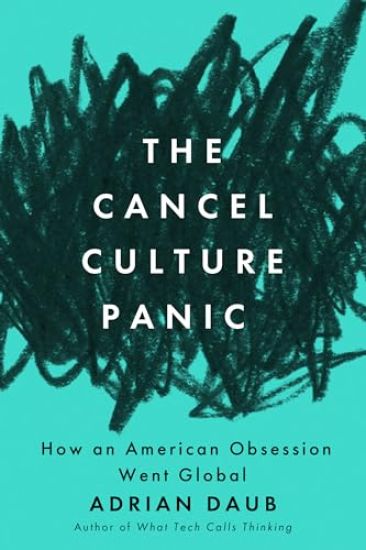
Fear of cancel culture has gripped the world, and it turns out to be an old fear in a new get-up. In this incisive new work, Adrian Daub analyzes the global spread of cancel culture discourse as a moral panic, showing that, though its object is fuzzy, talk of cancel culture in global media has become a preoccupation of an embattled liberalism. There are plenty of conservative voices who gin up worries about cancel culture to advance their agendas. But more remarkable perhaps is that it is centrist, even left-leaning, media that have taken up the rallying cry and really defined the outlines of what cancel culture is supposed to be. Media in Western Europe, South America, Russia, and Australia have devoted as much—in some cases more—attention to this supposedly American phenomenon than most US outlets. From French crusades against "le wokisme" via British fables of the "loony left" to a German obsession with campus anecdotes to a global revolt against "gender studies": countries the world over have developed culture war narratives in conflict with the US, and, above all, its universities—narratives that they themselves borrowed from the US. Who exactly is afraid of cancel culture? To trace how various global publics have been so quickly convinced that cancel culture exists and that it poses an existential problem, Daub compares the cancel culture panic to moral panics past, investigating the powerful hold that the idea of "being cancelled" has on readers around the world. A book for anyone wondering how institutions of higher learning in the US have become objects of immense interest and political lightning rods; not just for audiences and voters in the US, but worldwide.