Kirjojen hintavertailu. Mukana 11 627 220 kirjaa ja 12 kauppaa.

Kirjahaku

Etsi kirjoja tekijän nimen, kirjan nimen tai ISBN:n perusteella.

7 kirjaa tekijältä Adrian Greaves

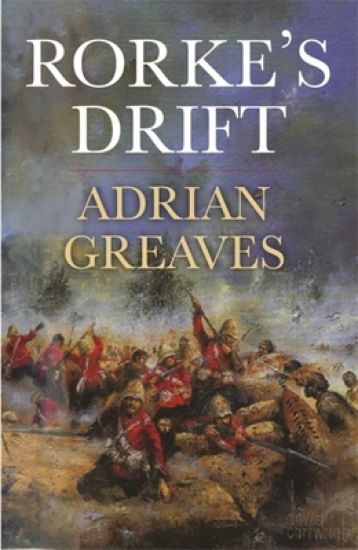
Rorke's Drift

Rorke's Drift

Adrian Greaves

ORION PUBLISHING CO
2003
pokkari
The story of the bravest battle ever fought.On 22nd January 1879 a force of 20,000 Zulus overwhelmed and destroyed the British invading force at Isandlwana, killing and ritually disemboweling over 1200 troops. That afternoon, the same Zulu force turned their attention on a small outpost at Rorke's Drift.The battle that ensued, one of the British Army's great epics, has since entered into legend. Throughout the night 85 men held off six full-scale Zulu attacks at the cost of only 27 casualties, forcing the Zulu army to withdraw. Eleven Victoria Crosses were awarded for bravery shown on that night, the largest number for any one engagement in history.But as Adrian Greaves's new research shows there are several things about the myth of Rorke's Drift that don't add up. While it was the scene of undoubted bravery, it was also the scene of some astonishing cases of cowardice, and there is increasing evidence to suggest that the legend of Rorke's Drift was created to divert attention from the appalling British mistakes which caused the earlier defeat at Isandlwana.
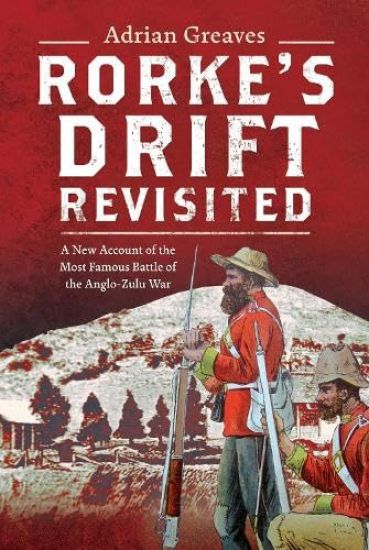
Rorke's Drift Revisited

Rorke's Drift Revisited

Adrian Greaves

PEN SWORD BOOKS LTD
2025
sidottu
Dr Adrian Greaves’ is widely acknowledged as a leading expert on the Anglo-Zulu War of 1879 and his previous account of Rorke’s Drift has become a standard work on that battle. However, by his own admission, it is hopelessly out of date as are other existing accounts. Rorke’s Drift Revisited is not merely a revised edition of that earlier work but a completely new account with much new research that challenges many misconceptions and myths. Explaining how previous accounts have been distorted by false reporting, false memory syndrome, ignorance of the site and archaeological evidence, the author presents fascinating fresh evidence and analysis. Among the more sensational revelations is that Lieutenant John Chard did not write the famous Chard Report, which has been the main primary source for the battle. He also shows that neither Lieutenant Ardendorff nor the missionary Reverend Otto Witt was there. Nor were the famous mealie-bag-and-biscuit-box barricades hastily erected, as per the film; they were carefully planned and built over several preceding days. Drawing on previously neglected eyewitness accounts as well as the latest archaeological evidence, there is a wealth of other new information and fresh perspectives. The shift in perceptions of the battle and its hold on the national psyche is also discussed. Uniquely, over a quarter of a century of physically revisiting Rorke’s Drift and associated sites as a tour leader allows him to give an accurate appraisal of the battlefield today.
The Battles of Hlobane and Khambula

The Battles of Hlobane and Khambula

Adrian Greaves

PEN SWORD BOOKS LTD
2026
sidottu
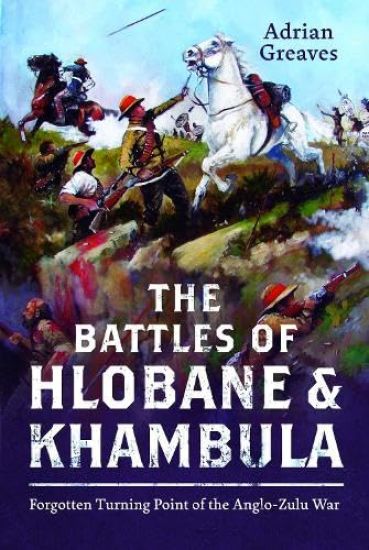
The two main Zulu War battles of Hlobane and Khambula were fought on consecutive days, 28 and 29 March 1879, with very different outcomes. The first, a bungled raid to deprive the Zulus of vital cattle, ended in a humiliating debacle due to poor planning and reconnaissance. The latter saw the outnumbered British first repulse the counterattack against their camp and then unleash their cavalry to turn the Zulu withdrawal into a bloody rout, thus sealing the first decisive British victory of the war. As Adrian Greaves contends in his exciting account, this change in fortunes made Khambula the most important battle of the war, since it persuaded both Lord Chelmsford and the Zulu king, Cetshwayo, that the British could defeat the Zulus. Yet, despite their importance, these linked encounters have been neglected by historians due mainly to their inaccessibility and dangerous terrain. Both battles are described in the fullest detail possible, drawing on eyewitness testimony and meticulous research and benefitting from the author’s twenty-five years’ experience of leading guided tours of the battlefields and surrounding terrain. He recounts tales of extraordinary courage but also exposes blunders and cowardice that tarnish some famous reputations. Colonel (later Field Marshal) Wood in particular comes out badly. This is an essential, eye-opening book for anyone with an interest in the Anglo-Zulu War.
Albert Speer - Escaping the Gallows

Albert Speer - Escaping the Gallows

Adrian Greaves

Pen Sword Military
2021
sidottu
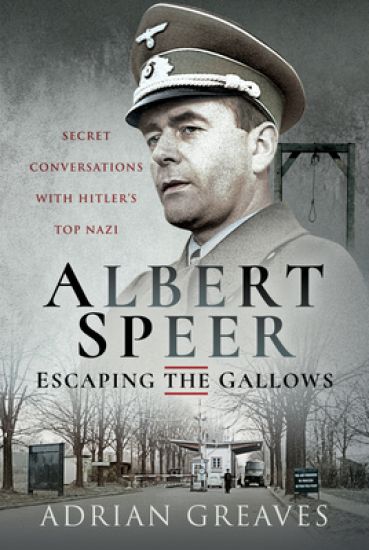
At the Nuremberg War Crimes Tribunal, Albert Speer, Hitler's one-time number two, persuaded the judges that he 'knew nothing' of the Holocaust and related atrocities. Narrowly escaping execution, he was sentenced to twenty years in Spandau Prison, Berlin. In 1961, the newly commissioned author, as the British Army Spandau Guard Commander, was befriended by Speer, who taught him German. Adrian Greaves' record of his conversations with Speer over a three year period make for fascinating reading. While the top Nazi admitted to Greaves his secret part in war crimes, after his 1966 release he determinedly denied any wrongdoing and became an intriguing and popular figure at home and abroad. Following Speer's death in 1981 evidence emerged of his complicity in Hitler's and the Nazi's atrocities. In this uniquely revealing book the author skilfully blends his own personal experiences and relationship with Speer with a succinct history of the Nazi movement and the horrors of the 1930s and 1940s. In so doing new light is thrown on the character of one of the 20th century's most notorious characters.
An Illustrated Tour of the 1879 Anglo-Zulu Battlefields
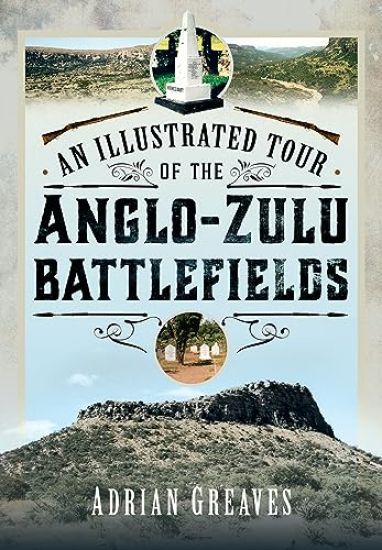
In 1878 southern Africa’s two most senior figures, army commander General Lord Chelmsford and the High Commissioner Sir Henry Bartle-Frere created a false threat of a Zulu invasion of British Natal. In an astonishing act of over-confidence and without any government permission, Frere and Chelmsford invaded Zululand with five independent columns of troops. Both leaders ignored the serious implications of their two recently failed expeditions against the Zulus’ neighbouring King Sekhukhune and his Pedi people. The Zulu war lasted only six months and witnessed two separate British invasions of Zululand – one catastrophic, one successful. This book gives the reader a general overview of the Anglo-Zulu war of 1879 with descriptive text, location photographs and illuminating map overviews of the twelve main battles including Isandlwana and Rorke’s Drift. The author’s unique maps are based on his own lecture notes and ‘battlefield map handouts’ as a Zulu War battlefield guide for over 25 years. These maps were avidly collected by his many groups and other guides; they clearly explain each battlefield’s layout and sequence of events but also included many little known details of each fierce and bloody engagement. At the suggestion of the Anglo Zulu War Historical Society, these maps are now reproduced in book form. While volumes have been written on the subject, this work gives us an even better insight into these gruelling and complex battles.
Forgotten Battles of the Zulu War

Forgotten Battles of the Zulu War

Adrian Greaves

PEN SWORD BOOKS LTD
2020
nidottu
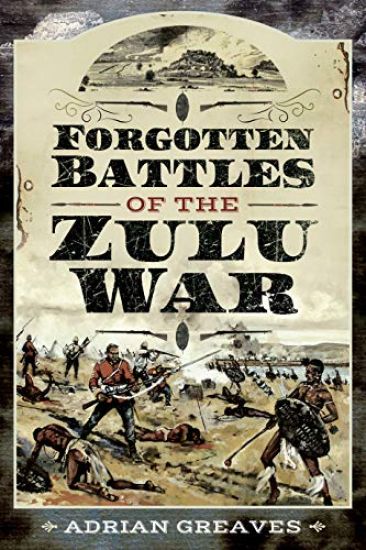
Adrian Greaves uses his exceptional knowledge of the Anglo-Zulu War to look beyond the two best known battles of Isandlwana and the iconic action at Rorkes Drift to other fiercely fought battles. He covers little recorded engagements and battles such as Nyezane which was fought on the same day as the slaughter of Imperial troops at Isandlwana but has been eclipsed by it. Like the battles at Hlobane and Gingindhlovu. The death of the Prince Imperial, which caused shock waves round Europe and had huge repercussions for those involved, is examined in detail. The defeat of the Zulu Army at Ulundi was the culmination of the war and the author reveals new and shocking details about this battle. There is a hint of ominous events to come in the slaughter of Colonel Austruthers Redcoat column by Boers as they marched from Ulundi to Pretoria. This was the opening salvo of the First Boer War. This hugely informative book will fascinate fans of this period of our Imperial history.
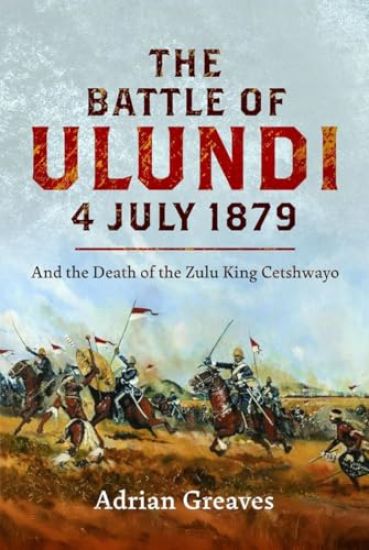
The Battle of Ulundi, 4 July 1879

The Battle of Ulundi, 4 July 1879

Adrian Greaves

PEN SWORD BOOKS LTD
2026
sidottu
In 1879 Britain was at the height of its power when her forces in South Africa unexpectedly invaded neighbouring Zululand. The Zulu king, Cetshwayo, fought back and swiftly defeated the invading troops, firstly at Isandlwana (the defence of Rorke’s Drift notwithstanding) then Ntombe and Hlobane. It was only at Khambula that the British scored their first significant victory, restoring their confidence sufficiently for a renewed invasion that brought the opposing armies to Ulundi for the decisive clash of the war. The Zulus were defeated after a savage battle yet the British press and public, used to victories, showed less interest in the fight itself than in the subsequent fate of Cetshwayo, who was subsequently captured. His kingdom was divided into thirteen quarrelling chiefdoms and his cattle seized, destroying Zululand’s economy. In 1882 Cetshwayo was taken to England to meet Queen Victoria, who demanded his return to Zululand but only to a single chiefdom. Adrian Greaves offers a detailed account of the Ulundi campaign and of the battle itself, laced with insights from his knowledge of the terrain. He then continues his fascinating narrative with the events of Cetshwayo’s capture and release, and the subsequent Zulu civil war in which he was again defeated in battle. The tragic conclusion sees the fugitive former king fleeing to British protection but dying shortly after from poison. He was buried at a point most difficult for his followers to reach – today a Zulu shrine.