Kirjahaku
Etsi kirjoja tekijän nimen, kirjan nimen tai ISBN:n perusteella.
7 kirjaa tekijältä Adrian Jarvis

AI and the Future of Leadership explores the profound implications of artificial intelligence for leadership theory and practice. As Artificial Intelligence technologies become increasingly embedded in organisational life, this book interrogates the readiness of current leadership models to adapt to an era of automation, algorithms, and accelerated change. Blending critical insight with real-world relevance, the book examines the promises and perils of AI in the workplace—from wellbeing and resistance to innovation and control. It highlights the limits of conventional leadership paradigms and proposes a new framework for ‘hybrid intelligence leadership’suited to the complexities of human–machine collaboration. Designed to stimulate debate and advance understanding, this book offers fresh perspectives for scholars and practitioners navigating the fast-evolving AI landscape. It equips readers to think strategically and ethically about leadership in organisations that are increasingly shaped by intelligent systems. It will appeal to academics, researchers, educators and advanced students in leadership, management, and organisational studies. It will also be of interest to professionals and policymakers seeking to understand how leadership must evolve to meet the demands of the AI age.
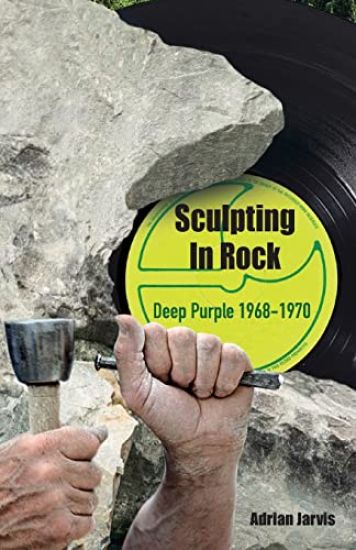
Deep Purple In Rock is, as its iconic cover suggests, a landmark in rock music. From its opening moments of mayhem to its final crash into incoherent noise, it is a fuzzbox fuelled masterpiece with not a single wasted moment. Its release was also a watershed moment for the band, a defiant and irrevocable statement that they were going in a different direction from that followed on their first three albums. It would be wrong, however, to suggest that the album came from nowhere. Not only was it one side in a musical debate that had been raging within the band, but its antecedents can be traced through both Deep Purple's earlier releases and those of some of the source bands from which the principal players were drawn. Sculpting In Rock takes up that challenge, exploring the roots of the album, placing it into its proper context to consider how it was produced as well as why it was produced. Part history, part essay, part memoir, the book is essential reading for any fan of Deep Purple, In Rock or the exciting, uncompromising, genre of which it is arguably the masterpiece.

NEC Arena Birmingham, November 9th 1993. Deep Purple were in crisis. No longer able to tolerate the presence of singer Ian Gillan, Ritchie Blackmore, the ace guitarist, made his displeasure known in a way that would have consequences none present could possibly have predicted. Blackmore's departure soon followed, and a merciful end seemed to have come for a band that had been riven with tensions for years. But then, after a brief dalliance with Joe Satriani, acknowledged six string maestro Steve Morse stepped in and a whole new age began. This book takes a critical look at the so-called 'Morse Era', charting the highs, the lows, the triumphs and the tragedies. It is a compelling story of albums, tours, musicians coming and musicians going, a story of a band that moved forward like few bands ever have, but who, nevertheless, could never completely escape from the shadow of that disastrous night at the NEC...

Steve Morse, guitar virtuoso (and pilot), may have broken out of relative obscurity courtesy of the classic British band Deep Purple, but he never went, so to speak, native. A full-blooded American, he was pancakes and maple syrup, not black pudding and fried egg.Morse first came to the attention of the music world through his band Dixie Dregs. He possibly entered the consciousness of those based in the UK courtesy of the BBC's Radio 1 Friday Rock Show that kicked off every week with his Dixie Dregs composition 'Take It Off The Top'. The mid-eighties saw Morse driving along arena band Kansas - darlings of US FM radio. By the mid-nineties he was ensconced in Deep Purple, helping re-build their career. His contributions to eight Deep Purple studio albums were immense. After nearly three decades, Morse's time with the band came to a sad end has he took the difficult decision to care for his ailing wife. In a career spanning half a century, Steve Morse's music has touched on European classical traditions, as well as blues, jazz, country and rock 'n' roll... genres that are unashamedly American. Consistently voted number one by guitar magazines, Morse is both a musician's musician as well as a fan's favourite.The conductor Paul Mann, who worked extensively with Deep Purple, said of Morse, 'He was born with that instrument in his hands. I know a lot of classical musicians who envy that kind of relationship with an instrument.' American virtuoso... and aviator. This is the story of the life and music of Steve Morse.

How can an internationally recognized show business star simply disappear? It is hard to imagine, and yet, that is exactly what happened to Rod Evans, the original lead singer with rock megastars Deep Purple. Following an ill-advised and failed comeback in 1980, he dropped out of the public eye and his whereabouts have remained a mystery ever since. No-one, it seems, has any idea where he is or what he has been doing.So, hardcore fan and experienced researcher, Adrian Jarvis, set himself a challenge: to find Rod Evans, or, at least, to fill in the nearly forty year gap in his biography and finally tell the whole story of his life. Jarvis's relentless search for clues involved him seeking out the local bands in which so many old rockers are ending their careers, as well as talking to some of Evans' former colleagues and connecting with Deep Purple's huge fan base.As he progressed, he began to realize that finding Rod Evans was not just about locating a missing person. It meant also asking 'why' Why was it important to him--and potentially, to many thousands of others around the world? Only by examining his own motives and exploring what, in a more general sense, it means to be a fan could he answer that crucial question. In the end, a fateful journey to New York offered the best chance of bringing his investigation to a successful conclusion...A book for anyone who has ever been a fan of a rock band, or, indeed, anything else, Chasing Shadows is part memoir, part history and part detective story. Sometimes funny, sometimes moving, always compelling, at its heart it is a puzzle that fascinates, frustrates, but, ultimately satisfies. The question remains: whatever happened to Rod Evans and where is he now?