Kirjojen hintavertailu. Mukana 12 016 292 kirjaa ja 12 kauppaa.

Kirjahaku

Etsi kirjoja tekijän nimen, kirjan nimen tai ISBN:n perusteella.

10 kirjaa tekijältä Adrian Little

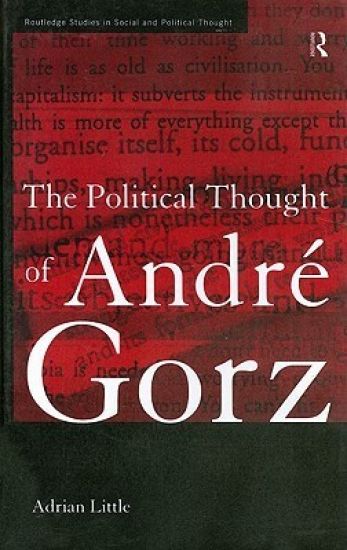
The Political Thought of Andre Gorz
Andre Gorz is one of the most important contemporary socialist thinkers. He has acquired a reputation as an iconoclastic theorist who poses radical questions about the future of the Left. This is the first full length assessment of his work which critically evaluates all of his writings from the 1950s to the 1990s.
Post-Industrial Socialism

Post-Industrial Socialism

Adrian Little

Routledge
1998
nidottu
Post-Industrial Socialism provides critical analysis of recent developments in leftist political thought. Adrian Little charts new directions in the economy and the effects they have had on traditional models of social welfare and orthodox approaches to social policy.In demonstrating the limitations of the welfare state and the associated concept of citizenship, this book suggests that we need to renew socialist welfare theory through the evaluation of universal welfare provision and a policy of breaking the link between work and income.
The Political Thought of Andre Gorz
Andre Gorz is one of the most important contemporary socialist thinkers. He has acquired a reputation as an iconoclastic theorist who poses radical questions about the future of the Left. This is the first full length assessment of his work which critically evaluates all of his writings from the 1950s to the 1990s.
The Politics of Community

The Politics of Community

Adrian Little

Edinburgh University Press
2002
nidottu
Community is one of the most widely used yet also one of the most complex concepts in modern political thought. This book provides an introduction to the concept, showing how philosophical ideas can be used in political practice. The aims of the book are: - to provide a critical analysis of the historical use of the concept of community in political philosophy and sociological theory - to demonstrate the problems that emanate from the division between communitarianism and liberalism - to contrast the orthodox views on communitarianism of conservative thinkers in the UK and USA with more radical and egalitarian perspectives - to consider possible new ways of thinking about notions of community in relation to social and economic policies - to show the relevance of community to debates about democracy, pluralism, difference and the future of the state and civil society While other books consider either the philosophical or the policy elements of community, this book is unique in drawing together these strands and demonstrating their links. As such it is an ideal textbook for undergraduate students, grounding abstract and quite difficult theory in contemporary situations.
Democratic Piety

Democratic Piety

Adrian Little

Edinburgh University Press
2008
sidottu
This book presents an innovative analysis of the nature of democratic theory, focusing on the prevalence of pious discourses of democracy in contemporary politics. Democracy is now promoted in religious terms to such an extent that it has become sacrosanct in Western political theory. Rather than accepting this situation, this book argues that such piety relies on unsophisticated political analysis that pays scant attention to the complex conditions of contemporary politics. Little contends that the importance of conflict is underplayed in much democratic theory and that it is more useful to think instead of democracy in terms of the centrality of political disagreement and its propensity to generate political violence. This argument is exemplified by the ways in which democracy and violence have been conceptualised in the war on terrorism. Fighting against democratic piety, this book contends that it is vital to understand the inevitable failure of democratic politics and thus promotes a theory of democracy founded on the idea of 'constitutive failure'. Key Features: o Challenges democratic piety through the application of key contemporary approaches in political theory: complexity theory, post-structuralism and the idea of radical democracy o Uses the work of theorists such as Jacques Ranciere, William Connolly, Chantal Mouffe, Judith Butler, Slavoj ae'iae'ek, Giorgio Agamben, Walter Benjamin and Alain Badiou to interrogate the discourses of democracy which characterise contemporary political debate o Grounds the theoretical analysis of democratic discourse with examples from contemporary politics including the war on terror, the process of indigenous reconciliation in Australia, the struggles for recognition of refugees and asylum seekers, the plight of the Sans-Papiers in France, and the problems in Northern Irish politics over the last ten years.
Temporal Politics

Temporal Politics

Adrian Little

EDINBURGH UNIVERSITY PRESS
2022
sidottu
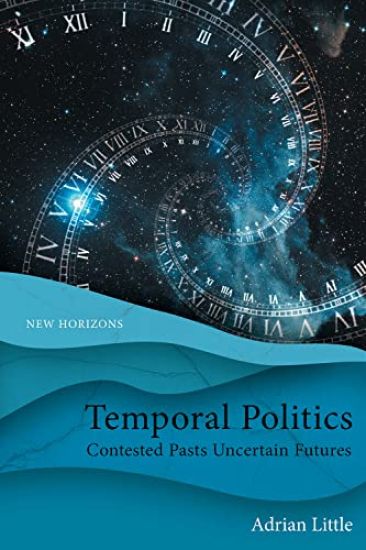
Adrian Little demonstrates the ways in which different conceptions of past, present and future contribute to the nature of political conflict in the world today. Reacting against narratives of political disillusionment and apathy, he focuses on how a new understanding of political temporality can inform our approach to political problems. Little develops a theory of temporality focused on material politics. His argument is formed around three major cases in which the nature of past, present and future is contested: Indigenous politics in settler colonies, the politics of bordering and migration and the debates over the future of democracy. He shows how to rethink ways in which we can act on intractable issues in politics beyond philosophical analysis. In doing so he brings together a theory of temporality with a model of political action derived from process philosophy to reinvigorate temporal understandings of the problems that political actors face.
Temporal Politics

Temporal Politics

Adrian Little

EDINBURGH UNIVERSITY PRESS
2024
nidottu
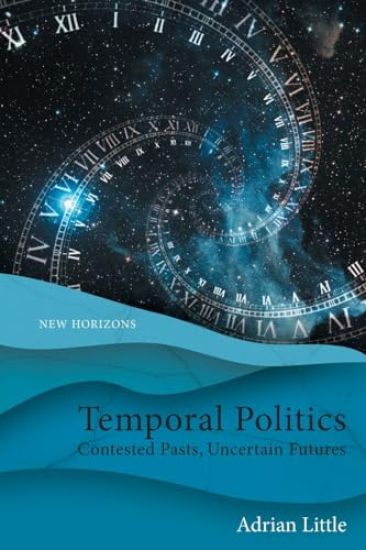
Adrian Little demonstrates how different conceptions of past, present and future contribute to the nature of political conflict in the world today. Reacting against narratives of political disillusionment and apathy, he focuses on how a new understanding of political temporality can inform our approach to political problems. He forms his argument around three major cases in which the nature of past, present and future is contested: Indigenous politics in settler colonies; the politics of bordering and migration; and debates over the future of democracy.
Enduring Conflict

Enduring Conflict

Adrian Little

Bloomsbury Academic
2014
sidottu
This unique text challenges the notion that absence of conflict is the foundation and norm of a stable political environment. Combining complexity theory and the notion of signature with case studies, it argues that political processes need to be understood within their social and cultural contexts. It thus develops the idea of enduring conflict, referring to both the enduring nature of political conflict and the endurance of people in conflict-ridden societies, looking at countries involved in conflict transformation, such as Northern Ireland, Cambodia, Indonesia, and South Africa. Examining debates around trauma, memory, and reconciliation, the work shows how conflicts are so socially and culturally ingrained and protracted that political agreements alone cannot bring substantive change. In addition, key texts, such as peace agreements, along with interviews of politicians, participants, and NGOs help identify the conditions under which notions like peace, democracy, and conflict resolution can even be conceived - let alone implemented. This innovative text is a significant contribution to the literature as it highlights the limitations of conflict resolution strategies and identifies the issues that pertain to conflicts throughout global politics. Written in an accessible manner, it will be highly attractive to students in conflict processes, peace studies, and international relations theory.
Enduring Conflict

Enduring Conflict

Adrian Little

Bloomsbury Academic
2014
nidottu
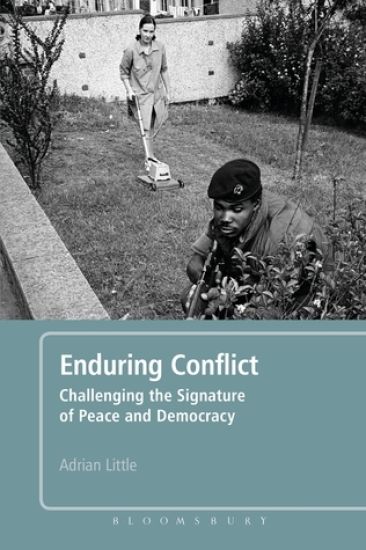
This unique text challenges the notion that absence of conflict is the foundation and norm of a stable political environment. Combining complexity theory and the notion of signature with case studies, it argues that political processes need to be understood within their social and cultural contexts. It thus develops the idea of enduring conflict, referring to both the enduring nature of political conflict and the endurance of people in conflict-ridden societies, looking at countries involved in conflict transformation, such as Northern Ireland, Cambodia, Indonesia, and South Africa. Examining debates around trauma, memory, and reconciliation, the work shows how conflicts are so socially and culturally ingrained and protracted that political agreements alone cannot bring substantive change. In addition, key texts, such as peace agreements, along with interviews of politicians, participants, and NGOs help identify the conditions under which notions like peace, democracy, and conflict resolution can even be conceived - let alone implemented. This innovative text is a significant contribution to the literature as it highlights the limitations of conflict resolution strategies and identifies the issues that pertain to conflicts throughout global politics. Written in an accessible manner, it will be highly attractive to students in conflict processes, peace studies, and international relations theory.