Kirjojen hintavertailu. Mukana 11 627 220 kirjaa ja 12 kauppaa.

Kirjahaku

Etsi kirjoja tekijän nimen, kirjan nimen tai ISBN:n perusteella.

7 kirjaa tekijältä Adrian Parr

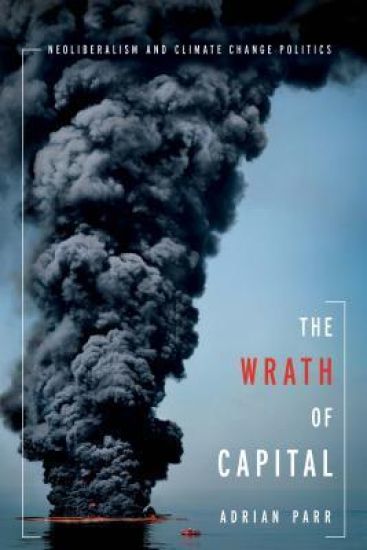
The Wrath of Capital

The Wrath of Capital

Adrian Parr

Columbia University Press
2012
sidottu
Although climate change has become the dominant concern of the twenty-first century, global powers refuse to implement the changes necessary to reverse these trends. Instead, they have neoliberalized nature and climate change politics and discourse, and there are indications of a more virulent strain of capital accumulation on the horizon. Adrian Parr calls attention to the problematic socioeconomic conditions of neoliberal capitalism underpinning the world's environmental challenges, and she argues that, until we grasp the implications of neoliberalism's interference in climate change talks and policy, humanity is on track to an irreversible crisis. Parr not only exposes the global failure to produce equitable political options for environmental regulation, but she also breaks down the dominant political paradigms hindering the discovery of viable alternatives. She highlights the neoliberalization of nature in the development of green technologies, land use, dietary habits, reproductive practices, consumption patterns, design strategies, and media. She dismisses the notion that the free market can solve debilitating environmental degradation and climate change as nothing more than a political ghost emptied of its collective aspirations. Decrying what she perceives as a failure of the human imagination and an impoverishment of political institutions, Parr ruminates on the nature of change and existence in the absence of a future. The sustainability movement, she contends, must engage more aggressively with the logic and cultural manifestations of consumer economics to take hold of a more transformative politics. If the economically powerful continue to monopolize the meaning of environmental change, she warns, new and more promising collective solutions will fail to take root.
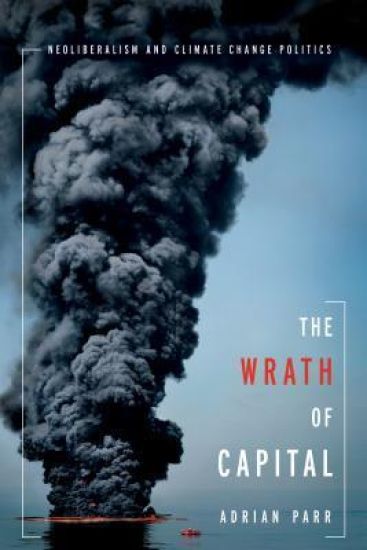
The Wrath of Capital

The Wrath of Capital

Adrian Parr

Columbia University Press
2014
pokkari
Although climate change has become the dominant concern of the twenty-first century, global powers refuse to implement the changes necessary to reverse these trends. Instead, they have neoliberalized nature and climate change politics and discourse, and there are indications of a more virulent strain of capital accumulation on the horizon. Adrian Parr calls attention to the problematic socioeconomic conditions of neoliberal capitalism underpinning the world's environmental challenges, and she argues that, until we grasp the implications of neoliberalism's interference in climate change talks and policy, humanity is on track to an irreversible crisis. Parr not only exposes the global failure to produce equitable political options for environmental regulation, but she also breaks down the dominant political paradigms hindering the discovery of viable alternatives. She highlights the neoliberalization of nature in the development of green technologies, land use, dietary habits, reproductive practices, consumption patterns, design strategies, and media. She dismisses the notion that the free market can solve debilitating environmental degradation and climate change as nothing more than a political ghost emptied of its collective aspirations. Decrying what she perceives as a failure of the human imagination and an impoverishment of political institutions, Parr ruminates on the nature of change and existence in the absence of a future. The sustainability movement, she contends, must engage more aggressively with the logic and cultural manifestations of consumer economics to take hold of a more transformative politics. If the economically powerful continue to monopolize the meaning of environmental change, she warns, new and more promising collective solutions will fail to take root.
Birth of a New Earth

Birth of a New Earth

Adrian Parr

Columbia University Press
2017
sidottu
In response to unprecedented environmental degradation, activists and popular movements have risen up to fight the crisis of climate change and the ongoing devastation of the earth. The environmental movement has undeniably influenced even its adversaries, as the language of sustainability can be found in corporate mission statements, government policy, and national security agendas. However, the price of success has been compromise, prompting soul-searching and questioning of the politics of environmentalism. Is it a revolutionary movement that opposes the current system? Or is it reformist, changing the system by working within it? In Birth of a New Earth, Adrian Parr argues that this is a false choice, calling for a shift from an opposition between revolution and incremental change to a renewed collective imagination. Parr insists that environmental destruction is at its core a problem of democratization and decolonization. It requires reckoning with militarism, market fundamentalism, and global inequality and mobilizing an alternative political vision capable of freeing the collective imagination in order to replace an apocalyptic mindset frozen by the spectacle of violence. Birth of a New Earth locates the emancipatory work of environmental politics in solidarities that can bring together different constituencies, fusing opposing political strategies and paradigms by working both inside and outside the prevailing system. She discusses experiments in food sovereignty, collaborative natural-resource management, and public-interest design initiatives that test new models of economic democratization. Ultimately, Parr proclaims, environmental politics is the refusal to surrender life to the violence of global capitalism, corporate governance, and militarism. This defiance can serve as the source for the birth of a new earth.
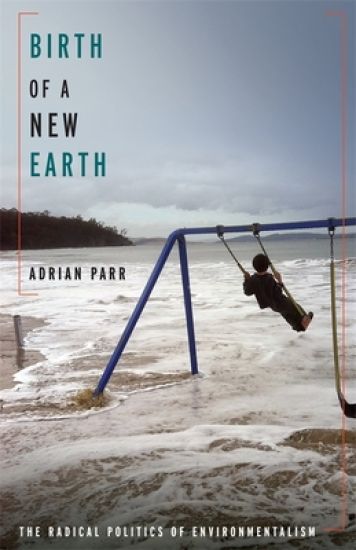
Birth of a New Earth

Birth of a New Earth

Adrian Parr

Columbia University Press
2017
pokkari
In response to unprecedented environmental degradation, activists and popular movements have risen up to fight the crisis of climate change and the ongoing devastation of the earth. The environmental movement has undeniably influenced even its adversaries, as the language of sustainability can be found in corporate mission statements, government policy, and national security agendas. However, the price of success has been compromise, prompting soul-searching and questioning of the politics of environmentalism. Is it a revolutionary movement that opposes the current system? Or is it reformist, changing the system by working within it? In Birth of a New Earth, Adrian Parr argues that this is a false choice, calling for a shift from an opposition between revolution and incremental change to a renewed collective imagination. Parr insists that environmental destruction is at its core a problem of democratization and decolonization. It requires reckoning with militarism, market fundamentalism, and global inequality and mobilizing an alternative political vision capable of freeing the collective imagination in order to replace an apocalyptic mindset frozen by the spectacle of violence. Birth of a New Earth locates the emancipatory work of environmental politics in solidarities that can bring together different constituencies, fusing opposing political strategies and paradigms by working both inside and outside the prevailing system. She discusses experiments in food sovereignty, collaborative natural-resource management, and public-interest design initiatives that test new models of economic democratization. Ultimately, Parr proclaims, environmental politics is the refusal to surrender life to the violence of global capitalism, corporate governance, and militarism. This defiance can serve as the source for the birth of a new earth.
Earthlings

Earthlings

Adrian Parr

Columbia University Press
2022
sidottu
Silver Medal, 2023 Nautilus Book Awards in the category of Ecology and EnvironmentAmid environmental catastrophe, it is vital to recall what unites all forms of life. We share characteristics and genetic material extending back billions of years. More than that, we all—from humans to plants to bacteria—share a planet. We are all Earthlings.Adrian Parr calls on us to understand ourselves as existing with and among the many forms of Earthling life. She argues that human survival requires us to recognize our interdependent relationships with the other species and systems that make up life on Earth. In a series of meditations, Earthlings portrays the wonder and beauty of life with deep feeling, vivid detail, and an activist spirit. Parr invites readers to travel among the trees of the Amazonian rainforest; take flight with birds and butterflies migrating through the skies; and plunge into the oceans with whales and polar bears—as well as to encounter bodies infected with deadly viruses and maimed by the violence of global capitalism.Combining poetic observation with philosophical contemplation and scientific evidence, Parr offers a moving vision of a world in upheaval and a potent manifesto for survival. Earthlings is both a joyful celebration of the magnificence of the biosphere and an urgent call for action to save it.
Earthlings

Earthlings

Adrian Parr

Columbia University Press
2022
pokkari
Silver Medal, 2023 Nautilus Book Awards in the category of Ecology and EnvironmentAmid environmental catastrophe, it is vital to recall what unites all forms of life. We share characteristics and genetic material extending back billions of years. More than that, we all—from humans to plants to bacteria—share a planet. We are all Earthlings.Adrian Parr calls on us to understand ourselves as existing with and among the many forms of Earthling life. She argues that human survival requires us to recognize our interdependent relationships with the other species and systems that make up life on Earth. In a series of meditations, Earthlings portrays the wonder and beauty of life with deep feeling, vivid detail, and an activist spirit. Parr invites readers to travel among the trees of the Amazonian rainforest; take flight with birds and butterflies migrating through the skies; and plunge into the oceans with whales and polar bears—as well as to encounter bodies infected with deadly viruses and maimed by the violence of global capitalism.Combining poetic observation with philosophical contemplation and scientific evidence, Parr offers a moving vision of a world in upheaval and a potent manifesto for survival. Earthlings is both a joyful celebration of the magnificence of the biosphere and an urgent call for action to save it.
Deleuze and Memorial Culture

Deleuze and Memorial Culture

Adrian Parr

Edinburgh University Press
2008
sidottu
Deleuze and Memorial Culture is a detailed study of contemporary forms of public remembrance. Adrian Parr considers the different character traumatic memory takes throughout the sphere of cultural production and argues that contemporary memorial culture has the power to put traumatic memory to work in a positive way. Drawing on the conceptual apparatus of Gilles Deleuze, she outlines the relevance of his thought to cultural studies and the wider phenomenon of traumatic theory and public remembrance. This approach is interdisciplinary, drawing on media criticism, psychoanalysis, cultural studies, urbanism, continental philosophy and political economy. A number of case studies are examined including the holocaust, the Vietnam Veterans Memorial in Washington DC, 9/11, the Amish shootings in Pennsylvania USA, the documentation and dissemination of US military abuses at Abu Ghraib prison, as well as the consumption and reification of trauma. This book offers a revision of trauma theory that presents trauma not simply as a definitive experience and implicitly negative, but an experience that can foster a sense of hope and optimism for the future.