Kirjojen hintavertailu. Mukana 11 717 486 kirjaa ja 12 kauppaa.

Kirjahaku

Etsi kirjoja tekijän nimen, kirjan nimen tai ISBN:n perusteella.

5 kirjaa tekijältä Adrian Poole

Tragedy

Tragedy

Adrian Poole

Oxford University Press
2005
nidottu
What do we mean by 'tragedy' in present-day usage? When we turn on the news, does a report of the latest atrocity have any connection with the masterpieces of Sophocles, Shakespeare and Racine? What has tragedy been made to mean by dramatists, story-tellers, critics, philosophers, politicians and journalists over the last two and a half millennia? Why do we still read, re-write, and stage these old plays? This book argues for the continuities between 'then' and 'now'. Addressing questions about belief, blame, mourning, revenge, pain, witnessing, timing and ending, Adrian Poole demonstrates the age-old significance of our attempts to make sense of terrible suffering. ABOUT THE SERIES: The Very Short Introductions series from Oxford University Press contains hundreds of titles in almost every subject area. These pocket-sized books are the perfect way to get ahead in a new subject quickly. Our expert authors combine facts, analysis, perspective, new ideas, and enthusiasm to make interesting and challenging topics highly readable.

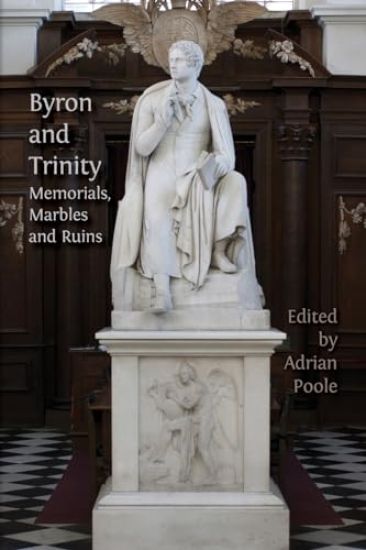
Byron and Trinity: Memorials, Marbles and Ruins

Byron and Trinity: Memorials, Marbles and Ruins

Adrian Poole

Open Book Publishers
2024
nidottu
This collection of essays reprints previously published writings about Trinity College Cambridge's most celebrated writer, Lord Byron, for the bicentennial commemoration of his death on 19 April 1824. Bringing together diverse contributions from a series of scholars, three of them fellows of Trinity College, it explores various aspects of Byron's life and writing. The collection draws out the relationships between 'memorials, marbles and ruins', themes always prominent in his thinking and feeling.The earliest essay reprinted here dates from the bicentenary of Byron's birth in 1788. Thirty-six years and two centuries later, this collection honours a figure of enduring, complex significance, with whom Trinity College is proud to be associated. It will be of value to scholars and students of Byron, as well as those interested in his life, in the bi-centenary year of his death.
Byron and Trinity: Memorials, Marbles and Ruins

Byron and Trinity: Memorials, Marbles and Ruins

Adrian Poole

Open Book Publishers
2024
sidottu
This collection of essays reprints previously published writings about Trinity College Cambridge's most celebrated writer, Lord Byron, for the bicentennial commemoration of his death on 19 April 1824. Bringing together diverse contributions from a series of scholars, three of them fellows of Trinity College, it explores various aspects of Byron's life and writing. The collection draws out the relationships between 'memorials, marbles and ruins', themes always prominent in his thinking and feeling.The earliest essay reprinted here dates from the bicentenary of Byron's birth in 1788. Thirty-six years and two centuries later, this collection honours a figure of enduring, complex significance, with whom Trinity College is proud to be associated. It will be of value to scholars and students of Byron, as well as those interested in his life, in the bi-centenary year of his death.
The Connell Guide To Shakespeare's Antony and Cleopatra
Writers, playwrights and philosophers have alike been fascinated by Shakespeare's Cleopatra. The contradictions in her character, said the writer Anna Jameson, fuse "into one brilliant impersonation of classical elegance, Oriental voluptuousness, and gipsy sorcery". When Henry James sought to suggest the charm cast over an impressionable but repressed American by a glamorous Parisian countess, it was Cleopatra's "infinite variety" to which he had recourse. There are two obvious reasons, says Adrian Poole, why the play has enjoyed a great leap in popularity and interest since the early 20th century. One is changing attitudes to gender and sexuality, and the relaxing of some of the taboos impeding the liberation of women from the confinements and distinctions in force at least since the Restoration. The other is changing conceptions of theatre. The advent of cinema encouraged lighter, swifter and more flexible forms of staging. One can scarcely think of a Shakespeare play that benefits more from such a liberation. But there are other less obvious reasons. One is the opposition between love and romance on the one hand and politics and war on the other - the play's complex re-working of some age-old myths about Venus and Mars. As our own media daily insist, at least in the anglophone world, the love-affairs of the top dogs are matters of public interest. The fate of all those men and women sacrificed "to solder up the rift" between Antony and Caesar does hang on what happens, or fails to happen, behind the scenes. No play conveys this better than Antony and Cleopatra.