Kirjojen hintavertailu. Mukana 12 016 292 kirjaa ja 12 kauppaa.

Kirjahaku

Etsi kirjoja tekijän nimen, kirjan nimen tai ISBN:n perusteella.

9 kirjaa tekijältä Adrian Wooldridge

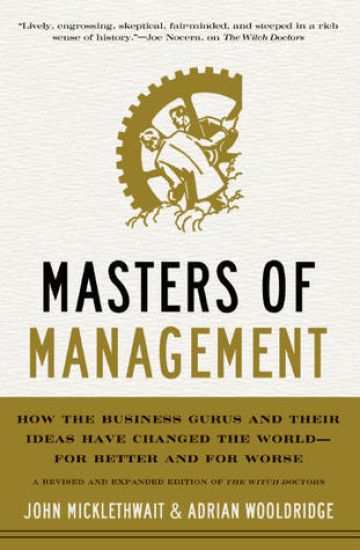
Masters of Management

Masters of Management

Adrian Wooldridge

HarperBusiness
2011
sidottu
Fifteen years ago, after, having completed a two-year research study, long-time Economist journalists and editors John Micklethwait and Adrian Wooldridge published an explosive critique of management theory and its legions of evangelists and followers. Their work became a bestseller, widely praised by reviewers and devoured by readers confused by the buzzwords and concepts created by the management industry. When the book was published, ideas about re-engineering, the search for excellence, quality, and chaos both energized and haunted the world of business, just as the long tail, black swans, the tipping point, the war for talent, and corporate responsibility do today. For decades, since the ascendance of MBA programs, the field of management has operated in a dubious space - as many of its framers clamor for respect within the academy while making millions pedalling ideas, some brilliant and some nonsensical, in speeches, consulting arrangements, and books. While the original book offered a damning critique, it also argued that much of management theory is valuable - making companies more efficient and productive, improving organizational life for workers, and providing sound ways for innovation while defending more entrenched plans. Updated to include the rise and fall of the Internet boom, the Great Recession of 2008, and the more recent developments in management theory, "Masters of Management" is a valuable crash course in the many ideas it dissects.
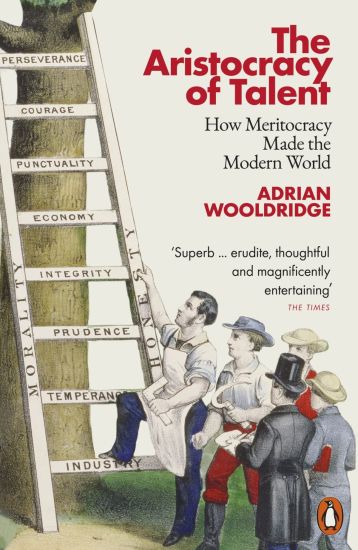
The Aristocracy of Talent

The Aristocracy of Talent

Adrian Wooldridge

PENGUIN BOOKS LTD
2023
pokkari
THE TIMES BOOK OF THE YEAR*Shortlisted for the 2021 Financial Times and McKinsey & Company Business Book of the Year Award*'This unique and fascinating history explains why the blame now being piled upon meritocracy for many social ills is misplaced-and that assigning responsibilities to the people best able to discharge them really is better than the time-honoured customs of corruption, patronage, nepotism and hereditary castes' Steven PinkerMeritocracy: the idea that people should be advanced according to their talents rather than their status at birth. For much of history this was a revolutionary thought, but by the end of the twentieth century it had become the world's ruling ideology. How did this happen, and why is meritocracy now under attack from both right and left?Adrian Wooldridge traces the history of meritocracy forged by the politicians and officials who introduced the revolutionary principle of open competition, the psychologists who devised methods for measuring natural mental abilities and the educationalists who built ladders of educational opportunity. He looks outside western cultures and shows what transformative effects it has had everywhere it has been adopted, especially once women were brought into the meritocractic system.Wooldridge also shows how meritocracy has now become corrupted and argues that the recent stalling of social mobility is the result of failure to complete the meritocratic revolution. Rather than abandoning meritocracy, he says, we should call for its renewal.
Measuring the Mind

Measuring the Mind

Adrian Wooldridge

Cambridge University Press
1994
sidottu
The central claim of Measuring the Mind is that, contrary to popular opinion, the psychologists who dominated educational policy-making between the wars were educational progressives and political radicals. They argued that education should reflect the requirements of children rather than the convenience of adults, and regarded intelligence testing as an instrument of child-centred education. These psychologists owed their political inspiration to the meritocratic ideal and lost popularity with the waning of this ideal after the war. Four main themes dominate the discussion: the emergence of educational psychology as a distinct discipline; the recent history of ideas about children's mental development; the role of experts in formulating educational policy; and the rise and fall of the measurement of merit.
The Aristocracy of Talent: How Meritocracy Made the Modern World
The Times (UK) book of the year Meritocracy: the idea that people should be advanced according to their talents rather than their birth. While this initially seemed like a novel concept, by the end of the twentieth century it had become the world's ruling ideology. How did this happen, and why is meritocracy now under attack from both right and left? In The Aristocracy of Talent, esteemed journalist and historian Adrian Wooldridge traces the history of meritocracy forged by the politicians and officials who introduced the revolutionary principle of open competition, the psychologists who devised methods for measuring natural mental abilities, and the educationalists who built ladders of educational opportunity. He looks outside western cultures and shows what transformative effects it has had everywhere it has been adopted, especially once women were brought into the meritocratic system. Wooldridge also shows how meritocracy has now become corrupted and argues that the recent stalling of social mobility is the result of failure to complete the meritocratic revolution. Rather than abandoning meritocracy, he says, we should call for its renewal.
The Aristocracy of Talent: How Meritocracy Made the Modern World
The Times (UK) book of the year--now in paperback Meritocracy: the idea that people should be advanced according to their talents rather than their birth. While this initially seemed like a novel concept, by the end of the twentieth century it had become the world's ruling ideology. How did this happen, and why is meritocracy now under attack from both right and left? In The Aristocracy of Talent, esteemed journalist and historian Adrian Wooldridge traces the history of meritocracy forged by the politicians and officials who introduced the revolutionary principle of open competition, the psychologists who devised methods for measuring natural mental abilities, and the educationalists who built ladders of educational opportunity. He looks outside western cultures and shows what transformative effects it has had everywhere it has been adopted, especially once women were brought into the meritocratic system. Wooldridge also shows how meritocracy has now become corrupted and argues that the recent stalling of social mobility is the result of failure to complete the meritocratic revolution. Rather than abandoning meritocracy, he says, we should call for its renewal.
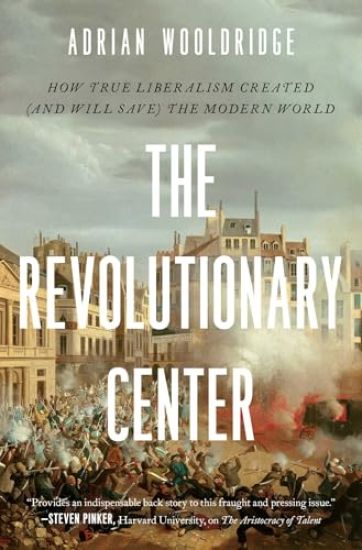
The Revolutionary Center: How True Liberalism Created (and Will Save) the Modern World
A cultural history of liberalism--one of our most widely used yet misunderstood terms--that reveals why the world urgently needs a more liberal mindset. So-called liberalism has been twisted out of shape by both the left- and right-wing who incorrectly conceive of it in ideological terms, without understanding what a liberal philosophy really entails. In untangling these misconceptions, Wooldridge reveals why the world desperately needs to adopt a proper liberal mindset. The cycles of history predict that without a return to liberalism, we face autocracy, fascism, and the societal stratification already visible in the world's structures of opposition: populists versus elitists, the ultra-woke versus the steadfastly traditional, and capitalist-triumphalists against capitalist-catastrophists. A call to arms amidst American economic stagnation and the global censorship of information, Adrian's new book guides us through liberalism's intellectual, cultural, and political histories to remind us of the true liberal's values: freedom through self-determinism, individual rights, healthy skepticism, thoughtful tolerance, and aversion to dogmatism. Adrian diagnoses areas of necessary improvement for today's passive liberals, who would do well to embody the flexible, moderate, and critical approaches of their Cold War predecessors. The West's success against Communist totalitarianism came from recognizing the need for a strong military defense while using open communication to explain what the West was defending. This energy must be applied to our understanding of overseas regimes and of Western capitalism at home. To avoid global catastrophe and uphold intellectual freedom and privacy, we must learn from the liberal past and look ahead, critiquing the structures we find ourselves in and those further afield
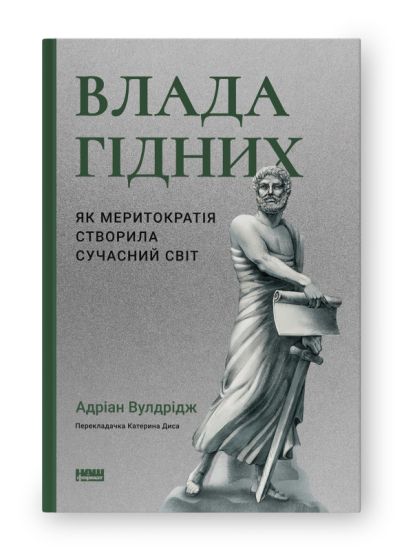
Vlada gidnikh. Jak meritokratija stvorila suchasnij svit
Scho daje zmogu najkrasche viznachiti, chi gidna ljudina obijmati vazhlivi posadi? Test na IQ, jak vvazhalo chimalo britanskikh i amerikanskikh naukovtsiv KHIKh i pochatku KHKh stolittja? Chi, mozhe, kilkadennij ispit, uchasniki jakogo mali podolati fizichni j rozumovi pereponi, jak uprodovzh stolit bulo v Kitaji? U riznij chas i v riznikh mistsjakh praviteli j tsili suspilstva vinakhodili ta viprobovuvali najriznomanitnishi varianti, schob doskonalo vtiliti printsipi meritokratiji - vladi najkraschikh, vladi gidnikh. Avtor prostezhuje istoriju meritokratiji vid chasiv vinajdennja v Starodavni chasi i do jiji sogodnishnoji krizi, schob vreshti postaviti kljuchovi pitannja - jake v neji majbutnje i chi je jij adekvatni alternativi?
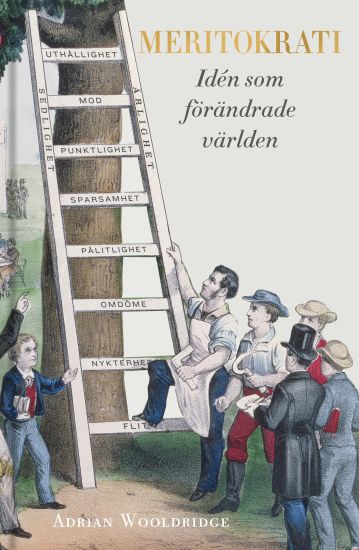
Meritokrati :idén som förändrade världen

Meritokrati :idén som förändrade världen

Adrian Wooldridge

Bokförlaget Stolpe
2022
sidottu
Är något mer självklart än att den bäste kandidaten ska ha jobbet? Tanken var en gång revolutionerande och revolutionär. I de börds- och skråsamhällen som präglat en stor del av mänsklighetens historia betydde härkomst, förbindelser, betalningsförmåga och grupptillhörighet mer än kompetens när ämbeten med makt skulle besättas.I dag ser vi med förvåning och förakt på det som tidigare generationer tog för givet. Adrian Wooldridge skildrar det skiftet, förebådat av filosofer som Platon och Konfucius, eftersträvat av huvudsakligen liberala och radikala reformatorer, och motarbetat av dem som betonade värdegemenskap och stabilitet i staters ledning.Wooldridge visar hur meritokratin ständigt riskerar att tappa udden, att försjunka till slutna elitvälden, där familj och förbindelser åter blir viktigare än intelligens och förmåga. Här synar han kritiken mot idén om meritokrati från såväl höger som vänster. Kan tanken på förmågans betydelse åter vinna den reformkraft den en gång hade?Adrian Wooldridge disputerade i Oxford och har under många år varit redaktör och kolumnist i The Economist. I denna långessä ger han en syntes av ett komplext skeende i en elegant framställning stundtals präglad av stilla ironi."en välskriven och omfattande framställning och analys av meritokratins utveckling och struktur" BTJ.