Kirjojen hintavertailu. Mukana 11 342 296 kirjaa ja 12 kauppaa.

Kirjahaku

Etsi kirjoja tekijän nimen, kirjan nimen tai ISBN:n perusteella.

40 kirjaa tekijältä Alain L Fymat

From the Heart to the Brain

From the Heart to the Brain

Alain L Fymat

Tellwell Talent
2019
pokkari
In the year following an unexpected coronary artery triple bypass grafts, Dr Fymat saw his medical and scientific productivity increase more than two-fold, largely contributing to the present collection of refereed articles of which he is the sole author. That productivity was also marked by highly provocative suggestions such as, for example, how to utilize nanomedicine as a precursor to precision medicine, disrupt cell mitoses to provoke cancer self-eradication, deliver theranostic drugs across the brain protective barriers to treat brain cancers (or glioblastomas), and positing that neurodegenerative disorders, Alzheimer disease in particular, are auto-immune diseases that may have gone rogue.
From the Heart to the Brain

From the Heart to the Brain

Alain L Fymat

Tellwell Talent
2019
sidottu
In the year following an unexpected coronary artery triple bypass grafts, Dr Fymat saw his medical and scientific productivity increase more than two-fold, largely contributing to the present collection of refereed articles of which he is the sole author. That productivity was also marked by highly provocative suggestions such as, for example, how to utilize nanomedicine as a precursor to precision medicine, disrupt cell mitoses to provoke cancer self-eradication, deliver theranostic drugs across the brain protective barriers to treat brain cancers (or glioblastomas), and positing that neurodegenerative disorders, Alzheimer disease in particular, are auto-immune diseases that may have gone rogue.
Alzhei... who?

Alzhei... who?

Alain L Fymat

Tellwell Talent
2019
pokkari
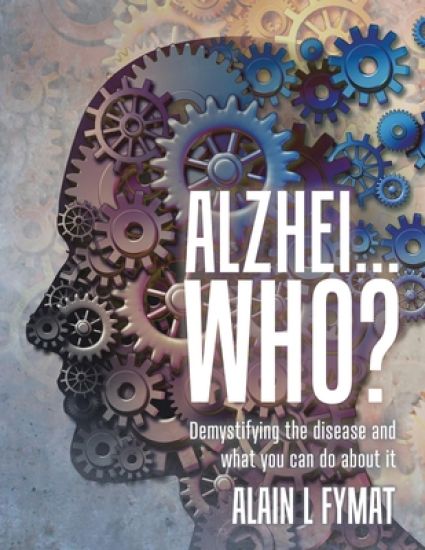
It is clear that our approach to identifying the root cause of Alzheimer's disease and curing it has not been successful so far despite decades of research, billions of dollars spent worldwide, 244 experimental drugs developed, and many clinical trials that have failed. What is happening? Have we got the cause of Alzheimer's all wrong? I believe so Instead of remaining focused on the primary endpoint of a cure, the emphasis had shifted to surrogate endpoints that had not been clinically demonstrated to correlate well with the disease. In this book, I identify the root cause of the disease and attempt to reorient our approach along a path that I am convinced will be more successful in leading us to a cure. I will provide the outlines of this new approach and even suggest the methodology to be followed. At the same time, I am also hoping to be able to co-opt the support I need from the general public, particularly those already afflicted by the disease or fearing they might succumb to it, as well as their families, friends, and caregivers. For them, I will also try to demystify the disease and describe ways they can do something about it in addition to seeking medical treatment.
Alzhei... who?

Alzhei... who?

Alain L Fymat

Tellwell Talent
2019
sidottu
It is clear that our approach to identifying the root cause of Alzheimer's disease and curing it has not been successful so far despite decades of research, billions of dollars spent worldwide, 244 experimental drugs developed, and many clinical trials that have failed. What is happening? Have we got the cause of Alzheimer's all wrong? I believe so Instead of remaining focused on the primary endpoint of a cure, the emphasis had shifted to surrogate endpoints that had not been clinically demonstrated to correlate well with the disease. In this book, I identify the root cause of the disease and attempt to reorient our approach along a path that I am convinced will be more successful in leading us to a cure. I will provide the outlines of this new approach and even suggest the methodology to be followed. At the same time, I am also hoping to be able to co-opt the support I need from the general public, particularly those already afflicted by the disease or fearing they might succumb to it, as well as their families, friends, and caregivers. For them, I will also try to demystify the disease and describe ways they can do something about it in addition to seeking medical treatment.
Parkin...ss..oo..nn

Parkin...ss..oo..nn

Alain L Fymat

Tellwell Talent
2020
sidottu
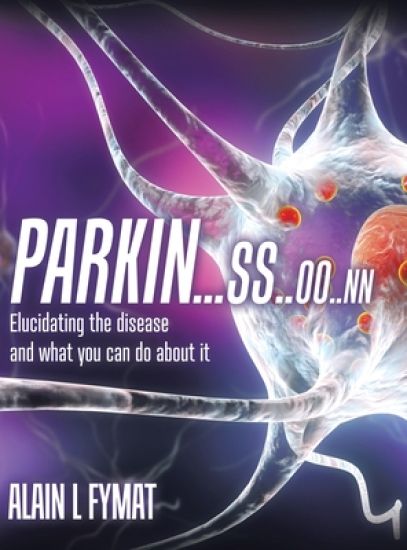
Despite decades of research, billions of dollars spent worldwide, the development of many drugs, many failed clinical trials, and the extensive publication of research and other articles on the subject, it is clear that our approach to solving Parkinson's disease is not really working. Indeed, presently, no drug can cure or stop this disease from progressing What is happening? Like in the case of Alzheimer's and other neurodegenerative diseases, Dr. Fymat believes we got the cause all wrong and, instead, of remaining focused on the primary end-point of a cure, the emphasis had shifted to surrogate often uncorrelated, end-points. In this book, he elucidates the disease and attempts to reorient our approach along a path he is convinced will be more successful in leading us to a cure. He breaks down barriers to make research accessible and focuses on the important aspects of the underlying research. He distills this information and conveys to Parkinson's patients and their caregivers the results of research, including his own, on this devastating disease. He also reports on his breakthrough as to the underlying root cause of the disease, provides the outlines of his new approach, and even suggests the methodology to be followed.
Parkin...ss..oo..nn

Parkin...ss..oo..nn

Alain L Fymat

Tellwell Talent
2020
pokkari
Despite decades of research, billions of dollars spent worldwide, the development of many drugs, many failed clinical trials, and the extensive publication of research and other articles on the subject, it is clear that our approach to solving Parkinson's disease is not really working. Indeed, presently, no drug can cure or stop this disease from progressing What is happening? Like in the case of Alzheimer's and other neurodegenerative diseases, Dr. Fymat believes we got the cause all wrong and, instead, of remaining focused on the primary end-point of a cure, the emphasis had shifted to surrogate often uncorrelated, end-points. In this book, he elucidates the disease and attempts to reorient our approach along a path he is convinced will be more successful in leading us to a cure. He breaks down barriers to make research accessible and focuses on the important aspects of the underlying research. He distills this information and conveys to Parkinson's patients and their caregivers the results of research, including his own, on this devastating disease. He also reports on his breakthrough as to the underlying root cause of the disease, provides the outlines of his new approach, and even suggests the methodology to be followed.
Lyme Disease

Lyme Disease

Alain L Fymat

Tellwell Talent
2020
sidottu
Lyme disease is a tick-borne bacterial infection affecting humans and animals. It can be very serious as it can involve the joints, the heart, and the nervous system. Known in Europe since the early-mid 20th century, it was identified in the U.S. only in 1975 after a mysterious outbreak of what appeared to be juvenile rheumatoid arthritis in children who lived in Lyme and Old Lyme, Connecticut, for which it was originally (mis)named. Although early recognition and treatment lead to resolution of the illness, there are many persons who live with debilitating symptoms and persistent infection. Yet, after these several past decades, Lyme and other tick-borne diseases remain poorly understood and often undiagnosed, misdiagnosed or over-treated. There still are controversies and challenges as to diagnosis and treatment This book elucidates these diseases and addresses the associated controversial and challenging issues. While the scientific evidence continues to evolve, it must be recognized that many in the greater medical community may not be sufficiently versed in it, giving rise to misconceptions about the disease. Beyond strongly encouraging patients to be actively involved in decisions affecting their medical care, I also describe ways they can do something about it in addition to seeking medical treatment.
Lyme Disease

Lyme Disease

Alain L Fymat

Tellwell Talent
2020
pokkari
Lyme disease is a tick-borne bacterial infection affecting humans and animals. It can be very serious as it can involve the joints, the heart, and the nervous system. Known in Europe since the early-mid 20th century, it was identified in the U.S. only in 1975 after a mysterious outbreak of what appeared to be juvenile rheumatoid arthritis in children who lived in Lyme and Old Lyme, Connecticut, for which it was originally (mis)named. Although early recognition and treatment lead to resolution of the illness, there are many persons who live with debilitating symptoms and persistent infection. Yet, after these several past decades, Lyme and other tick-borne diseases remain poorly understood and often undiagnosed, misdiagnosed or over-treated. There still are controversies and challenges as to diagnosis and treatment This book elucidates these diseases and addresses the associated controversial and challenging issues. While the scientific evidence continues to evolve, it must be recognized that many in the greater medical community may not be sufficiently versed in it, giving rise to misconceptions about the disease. Beyond strongly encouraging patients to be actively involved in decisions affecting their medical care, I also describe ways they can do something about it in addition to seeking medical treatment.
Dementia

Dementia

Alain L Fymat

Tellwell Talent
2020
pokkari
Dementia is an umbrella term for several brain diseases affecting memory, other cognitive abilities, and behavior. It causes a long-term gradual decrease in the ability to think and remember, interfering significantly with daily living activities. Other common symptoms include emotional problems, language difficulties, and decreased motivation. Although age is its strongest known risk factor, dementia is not a normal part of aging. With increasing lifespan in the developed world, dementia has emerged as an increasing public health concern. It was uncommon in pre-industrial times and relatively rare before the 20th century. Billions of dollars are spent each year in rising related healthcare costs, in addition to the financial and emotional burdens on families, friends, and care partners/givers. However, dementia is not an emerging disease It has been referred to in medical texts since Antiquity. It remains to this day one of the most misunderstood diseases in medicine. The causal etiology of many types of dementia, including the most prevalent Alzheimer's, still remains unclear so that many theories (rather hypotheses) have therefore been advanced. Whereas much is known about the disease and the underlying and contributing factors, and much has been published on the subject, we still do not understand the deep biology of the disease. We have so far failed to find a cure and continue to be limited to symptomatic treatments that have limited or no effect. What is going on? Have we got the cause of dementia all wrong? I believe so. Rather than remaining focused on the primary endpoint of a cure, we have meandered around and shifted the emphasis to surrogate endpoints even though the latter had not been clinically demonstrated to correlate well with the disease. More recently, I have posited that the root cause (not a risk factor) of Alzheimer's and other neurodegenerative diseases is but an autoimmune disease having gone rogue. In writing this book, following that discovery, I am attempting to reorient our approach along a path that I am convinced will be more successful in leading us to a cure. At the same time, I will also try to fend off this menacing disease and describe ways those already afflicted by the disease, or those fearing they might succumb to it, as well as their families, friends, and care partners/givers, can do something about it in addition to seeking medical treatment.
Dementia

Dementia

Alain L Fymat

Tellwell Talent
2020
sidottu
Dementia is an umbrella term for several brain diseases affecting memory, other cognitive abilities, and behavior. It causes a long-term gradual decrease in the ability to think and remember, interfering significantly with daily living activities. Other common symptoms include emotional problems, language difficulties, and decreased motivation. Although age is its strongest known risk factor, dementia is not a normal part of aging. With increasing lifespan in the developed world, dementia has emerged as an increasing public health concern. It was uncommon in pre-industrial times and relatively rare before the 20th century. Billions of dollars are spent each year in rising related healthcare costs, in addition to the financial and emotional burdens on families, friends, and care partners/givers. However, dementia is not an emerging disease It has been referred to in medical texts since Antiquity. It remains to this day one of the most misunderstood diseases in medicine. The causal etiology of many types of dementia, including the most prevalent Alzheimer's, still remains unclear so that many theories (rather hypotheses) have therefore been advanced. Whereas much is known about the disease and the underlying and contributing factors, and much has been published on the subject, we still do not understand the deep biology of the disease. We have so far failed to find a cure and continue to be limited to symptomatic treatments that have limited or no effect. What is going on? Have we got the cause of dementia all wrong? I believe so. Rather than remaining focused on the primary endpoint of a cure, we have meandered around and shifted the emphasis to surrogate endpoints even though the latter had not been clinically demonstrated to correlate well with the disease. More recently, I have posited that the root cause (not a risk factor) of Alzheimer's and other neurodegenerative diseases is but an autoimmune disease having gone rogue. In writing this book, following that discovery, I am attempting to reorient our approach along a path that I am convinced will be more successful in leading us to a cure. At the same time, I will also try to fend off this menacing disease and describe ways those already afflicted by the disease, or those fearing they might succumb to it, as well as their families, friends, and care partners/givers, can do something about it in addition to seeking medical treatment.
The Human Brain - Wonders and Disorders

The Human Brain - Wonders and Disorders

Alain L Fymat

Tellwell Talent
2021
pokkari
Our earliest recorded history of brain diseases dates back to the neolithic period (12,000 BCE) when trephination (or trepanation) was practiced by diverse societies. Although begun in prehistory, trephination did not disappear as human society progressed. Trephined skulls were found in ancient regions of the Middle East, Europe, and China. Even today, a different form of the world's oldest surgery (craniotomy) is sometimes performed by modern brain surgeons; for instance, to remove a brain tumor or treat an aneurysm. However, unlike trephination, which results in a permanent hole in the skull, the modern process requires the replacement of the removed bone fragment after the brain surgery is completed. As an entity, the brain was already known in Ancient Egypt as evidenced by an Egyptian hieroglyph dating back to 1700 BCE. A papyrus (acquired by Edwin Smith in Luxor in 1862), prepared a century later, is the world's oldest surviving surgical document. While it describes in exquisite details anatomical observations, examinations, diagnoses, treatments, and prognoses of 48 types of medical and brain problems, it did not reveal any Ancient Egyptian attempt at brain surgery. Skipping over the intervening centuries, I aim in this book to share with the reader not only the disorders of the human brain but also its wonders as fathomed during these modern times. I hope the journey will be an informative and enjoyable one.
The Human Brain - Wonders and Disorders

The Human Brain - Wonders and Disorders

Alain L Fymat

Tellwell Talent
2021
sidottu
Our earliest recorded history of brain diseases dates back to the neolithic period (12,000 BCE) when trephination (or trepanation) was practiced by diverse societies. Although begun in prehistory, trephination did not disappear as human society progressed. Trephined skulls were found in ancient regions of the Middle East, Europe, and China. Even today, a different form of the world's oldest surgery (craniotomy) is sometimes performed by modern brain surgeons; for instance, to remove a brain tumor or treat an aneurysm. However, unlike trephination, which results in a permanent hole in the skull, the modern process requires the replacement of the removed bone fragment after the brain surgery is completed. As an entity, the brain was already known in Ancient Egypt as evidenced by an Egyptian hieroglyph dating back to 1700 BCE. A papyrus (acquired by Edwin Smith in Luxor in 1862), prepared a century later, is the world's oldest surviving surgical document. While it describes in exquisite details anatomical observations, examinations, diagnoses, treatments, and prognoses of 48 types of medical and brain problems, it did not reveal any Ancient Egyptian attempt at brain surgery. Skipping over the intervening centuries, I aim in this book to share with the reader not only the disorders of the human brain but also its wonders as fathomed during these modern times. I hope the journey will be an informative and enjoyable one.
Cancer

Cancer

Alain L Fymat

Tellwell Talent
2021
pokkari
Cancer is one of the oldest diseases seen in human specimens, quite possibly the oldest, the quest for its cure having begun some 4,000 years ago. However, it was fleetingly rare, hidden by other illnesses such as cholera, dropsy, leprosy, plague, pneumonia, smallpox, and tuberculosis. As these diseases were vanquished, and as the human lifespan lengthens, cancer has emerged. Many diseases are lumped together under the denomination "cancer," because they share a fundamental biological feature, namely abnormal cell growth. However, cancer is not a single disease. It is a multiplicity of diseases caused by the uncontrolled growth of a single cell unleashed by mutations. Cancer cells can grow faster, flourish more profusely, adapt better, recover more rapidly, and repair faster than normal cells. They are in effect more perfect versions of normal cells, and can even become immortal We naively thought that cancer could be defeated by either preventing mutations from occurring in normal cells or else finding the means to eliminate the mutated cells without compromising normal growth. Unfortunately, this view did not take into account the pernicious genetic intertwining of normal and cancerous growths. Woven into our genome, the mutated genes are but distorted versions of the normal ones; they are braided together, and unbraiding them continues to be the most formidable undertaking. Fortunately, the vast majority of cancer cases are due to environmental risk factors, many of which being controllable lifestyle choices, and thus preventable. In developing cancer, individuals differ in both their inherited tendency and exposure to the environment. This book presents the nine major recent developments in cancer treatment, which provide great hope for the future. These include innate immunotherapy with neutrophil-mediated drug delivery for the suppression of postoperative malignant glioma recurrence; synthetic immunotherapy using either chimeric antigen receptor T-cells or programmed-death inhibitors; DNA origami/Trojan technique to foil drug resistance in solid tumors; enzyme mnk-2 conversion to overcome drug resistance in breast, lung and colon cancers; antiangiogenesis to cut off the blood vessels alimenting the cancer cells; self-eradication of cancer during meiosis; combating inflammation to limit tumor invasion, progression, and metastasis; electropermeabilizing the cancer cell membrane to deliver drugs to the cell's interior; and employing nanochemotherapy to deliver nanoparticles encapsulating cytotoxic drugs to tumors.
Cancer

Cancer

Alain L Fymat

Tellwell Talent
2021
sidottu
Cancer is one of the oldest diseases seen in human specimens, quite possibly the oldest, the quest for its cure having begun some 4,000 years ago. However, it was fleetingly rare, hidden by other illnesses such as cholera, dropsy, leprosy, plague, pneumonia, smallpox, and tuberculosis. As these diseases were vanquished, and as the human lifespan lengthens, cancer has emerged. Many diseases are lumped together under the denomination "cancer," because they share a fundamental biological feature, namely abnormal cell growth. However, cancer is not a single disease. It is a multiplicity of diseases caused by the uncontrolled growth of a single cell unleashed by mutations. Cancer cells can grow faster, flourish more profusely, adapt better, recover more rapidly, and repair faster than normal cells. They are in effect more perfect versions of normal cells, and can even become immortal We naively thought that cancer could be defeated by either preventing mutations from occurring in normal cells or else finding the means to eliminate the mutated cells without compromising normal growth. Unfortunately, this view did not take into account the pernicious genetic intertwining of normal and cancerous growths. Woven into our genome, the mutated genes are but distorted versions of the normal ones; they are braided together, and unbraiding them continues to be the most formidable undertaking. Fortunately, the vast majority of cancer cases are due to environmental risk factors, many of which being controllable lifestyle choices, and thus preventable. In developing cancer, individuals differ in both their inherited tendency and exposure to the environment. This book presents the nine major recent developments in cancer treatment, which provide great hope for the future. These include innate immunotherapy with neutrophil-mediated drug delivery for the suppression of postoperative malignant glioma recurrence; synthetic immunotherapy using either chimeric antigen receptor T-cells or programmed-death inhibitors; DNA origami/Trojan technique to foil drug resistance in solid tumors; enzyme mnk-2 conversion to overcome drug resistance in breast, lung and colon cancers; antiangiogenesis to cut off the blood vessels alimenting the cancer cells; self-eradication of cancer during meiosis; combating inflammation to limit tumor invasion, progression, and metastasis; electropermeabilizing the cancer cell membrane to deliver drugs to the cell's interior; and employing nanochemotherapy to deliver nanoparticles encapsulating cytotoxic drugs to tumors.