Kirjojen hintavertailu. Mukana 11 244 527 kirjaa ja 12 kauppaa.

Kirjahaku

Etsi kirjoja tekijän nimen, kirjan nimen tai ISBN:n perusteella.

8 kirjaa tekijältä Alain Locke

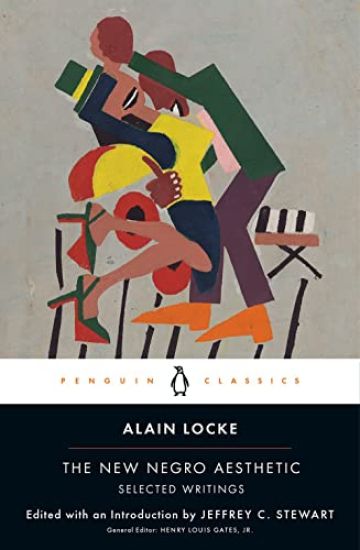
The New Negro Aesthetic

The New Negro Aesthetic

Alain Locke

Penguin Putnam Inc
2022
nidottu
Pulitzer Prize-winning biographer edits a collection of Alain Locke's influential essays on the importance of the Black artist and the Black imagination A Penguin Classic For months, the philosopher Alain Locke wrestled with the idea of the Negro as America's most vexing problem. He asked how shall Negroes think of themselves as he considered the new crop of poets, novelists, and short story writers who, in 1924, wrote about their experiences as Black people in America. He did not want to frame Harlem and Black writing as yet another protest against racism, nor did he want to focus on the sociological perspective on the Negro problem and Harlem as a site of crime, poverty, and dysfunction. He wanted to find new language and a new way for Black people to think of themselves. The essays and articles collected in this volume, by Locke's Pulitzer Prize-winning biographer, are the result of that new attitude and the struggle to instill the New Negro aesthetics, as Stewart calls it here, into the mind of the twentieth century. To be a New Negro poet, novelist, actor, musician, dancer, or filmmaker was to commit oneself to an arc of self-discovery of what and who the Negro was--would be--without fear that one would disappoint the white or Black bystander. In committing to that path, Locke asserted, one would uncover a being-in-the-world that was rich and bountiful in its creative possibilities, if Black people could turn off the noise of racism and see themselves for who they really are: a world of creative people who have transformed, powerfully and perpetually, the culture of wherever history or social forces landed them.
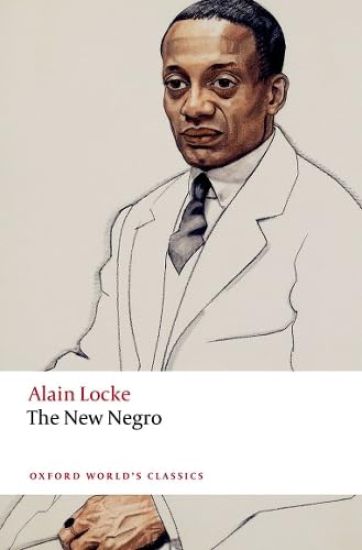
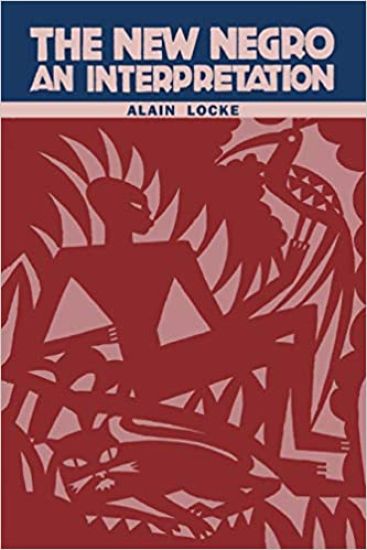
The New Negro

The New Negro

Alain Locke

Oxford University Press
2025
nidottu
'We have to-morrow Bright before us Like a flame' The New Negro: An Interpretation is a multidisciplinary anthology of poetry, fiction, essays, criticism, art, and philosophy woven together into a seamless statement of Black agency in the arts and humanities that became, upon its publication in 1925, an instant publishing success. Edited by Alain Locke, a man known as the father of the Harlem Renaissance, the text is a powerful, provocative, and affecting anthology of writers who shaped the Harlem Renaissance movement and who help us to consider the evolution of the African American in society. With works by Black voices such as Zora Neale Hurston, Countee Cullen, and W. E. B. DuBois, Locke constructed a vivid look at the changing African American, finding their place in the ever shifting sociocultural landscape that was 1920s America. With an introduction from Jeffrey C. Stewart, leading biographer of Locke, this collection explores the literary strength as well as the historical context of a monumental and fascinating time in the history of America.
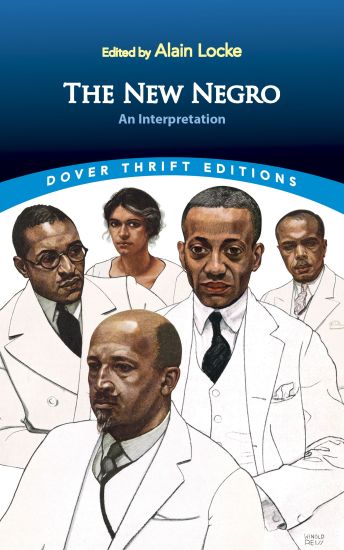
The New Negro: an Interpretation

The New Negro: an Interpretation

Alain Locke

Dover Publications Inc.
2021
nidottu
Edited by the first African American Rhodes Scholar, this landmark anthology of fiction, poetry, essays, drama, music, and illustration is widely regarded as the key text of the Harlem Renaissance. Exploring social, political, and artistic change, the works include Locke's titular tract, as well as contributions by Langston Hughes, Zora Neale Hurston, Claude McKay, Jean Toomer, James Weldon Johnson, and other luminaries.
The New Negro

The New Negro

Alain Locke

Mint Editions
2021
sidottu
The New Negro (1925) is an anthology by Alain Locke. Expanded from a March issue of Survey Graphic magazine, The New Negro compiles writing from such figures as Countee Cullen, Langston Hughes, Zora Neale Hurston, Jean Toomer, and Locke himself. Recognized as a foundational text of the Harlem Renaissance, the collection is organized around Locke’s writing on the function of art in reorganizing the conception of African American life and culture. Through self-understanding, creation, and independence, Locke’s New Negro came to represent a break from an inhumane past, a means toward meaningful change for a people held down for far too long. “[F]or generations in the mind of America, the Negro has been more of a formula than a human being—a something to be argued about, condemned or defended, to be ‘kept down,’ or ‘in his place,’ or ‘helped up,’ to be worried with or worried over, harassed or patronized, a social bogey or a social burden.” Identifying the representation of black Americans in the national imaginary as oppressive in nature, Locke suggests a way forward through his theory of the New Negro, who “wishes to be known for what he is, even in his faults and shortcomings, and scorns a craven and precarious survival at the price of seeming to be what he is not.” Throughout The New Negro, leading artists and intellectuals of the Harlem Renaissance offer their unique visions of who and what they are; voicing their concerns, portraying injustice, and illuminating the black experience, they provide a holistic vision of self-expression in all of its colors and forms. With a beautifully designed cover and professionally typeset manuscript, this edition of Alain Locke’s The New Negro is a classic of African American literature reimagined for modern readers.
The New Negro

The New Negro

Alain Locke

Graphic Arts Books
2021
pokkari
The New Negro (1925) is an anthology by Alain Locke. Expanded from a March issue of Survey Graphic magazine, The New Negro compiles writing from such figures as Countee Cullen, Langston Hughes, Zora Neale Hurston, Jean Toomer, and Locke himself. Recognized as a foundational text of the Harlem Renaissance, the collection is organized around Locke’s writing on the function of art in reorganizing the conception of African American life and culture. Through self-understanding, creation, and independence, Locke’s New Negro came to represent a break from an inhumane past, a means toward meaningful change for a people held down for far too long. “[F]or generations in the mind of America, the Negro has been more of a formula than a human being—a something to be argued about, condemned or defended, to be ‘kept down,’ or ‘in his place,’ or ‘helped up,’ to be worried with or worried over, harassed or patronized, a social bogey or a social burden.” Identifying the representation of black Americans in the national imaginary as oppressive in nature, Locke suggests a way forward through his theory of the New Negro, who “wishes to be known for what he is, even in his faults and shortcomings, and scorns a craven and precarious survival at the price of seeming to be what he is not.” Throughout The New Negro, leading artists and intellectuals of the Harlem Renaissance offer their unique visions of who and what they are; voicing their concerns, portraying injustice, and illuminating the black experience, they provide a holistic vision of self-expression in all of its colors and forms. With a beautifully designed cover and professionally typeset manuscript, this edition of Alain Locke’s The New Negro is a classic of African American literature reimagined for modern readers.