Kirjojen hintavertailu. Mukana 12 016 292 kirjaa ja 12 kauppaa.

Kirjahaku

Etsi kirjoja tekijän nimen, kirjan nimen tai ISBN:n perusteella.

28 kirjaa tekijältä Alan Axelrod

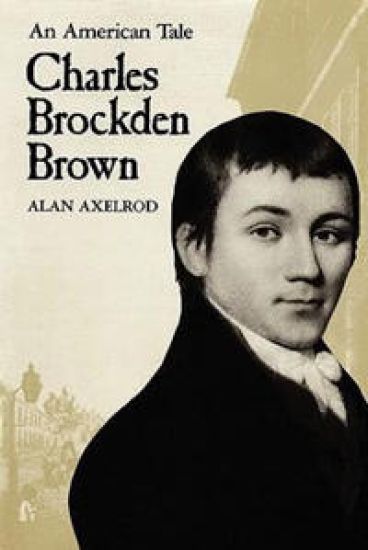
Charles Brockden Brown

Charles Brockden Brown

Alan Axelrod

University of Texas Press
1983
pokkari
Charles Brockden Brown: An American Tale is the first comprehensive literary, biographical, and cultural study of the novelist whom critic Leslie Fiedler has dubbed "the inventor of the American writer." The author of Wieland, Arthur Mervyn, Ormond, and Edgar Huntly, Charles Brockden Brown (1771-1810) is considered the first American professional author. He introduced Indian characters into American fiction. His keen interest in character delineation and abnormal psychology anticipates the stories of Poe, Hawthorne, and later masters of the psychological novel. Brown was eager to establish for himself an American identity as a writer, to become what Crèvecoeur called "the new man in the New World." It is especially this intimate identification of writer with country that makes Brown a telling precursor of our most characteristic authors from Poe, Hawthorne, and Cooper to Fitzgerald, Hemingway, and Faulkner. To understand its significance, Brown's work must be examined as both art and artifact. Accordingly, Charles Brockden Brown: An American Tale is literary history as well as criticism, embued with insights into a writer's sources and influences and the psychology of literary composition. It is also a fascinating examination of a nation's emotional and intellectual impact on a young man in search of his identity as creative artist.
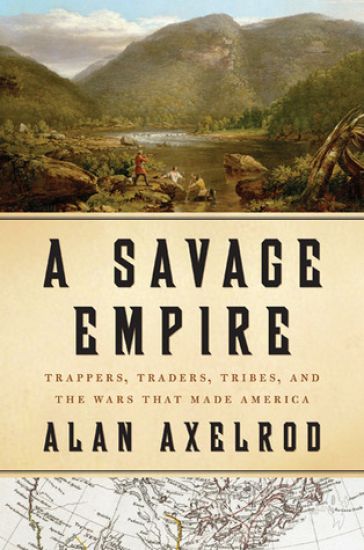
A Savage Empire: Trappers, Traders, Tribes, and the Wars That Made America
A surprising and sweeping history that reveals the fur trade to be the driving force behind conquest, colonization, and revolution in early America Combining the epic saga of Hampton Sides's Blood and Thunder with the natural history of Mark Kurlansky's Cod, popular historian Alan Axelrod reveals the astonishingly vital role a small animal--the beaver--played in the creation of our nation. The author masterfully relays a story often neglected by conventional histories: how lust for fur trade riches moved monarchs and men to launch expeditions of discovery, finance massive corporate enterprises, and wage war. Deftly weaving cultural and military narratives, the author chronicles how Spanish, Dutch, French, English, and Native American tribes created and betrayed alliances based on trapping and trade disputes, producing a surprisingly complex series of loyalties that endured throughout the Revolution and beyond.
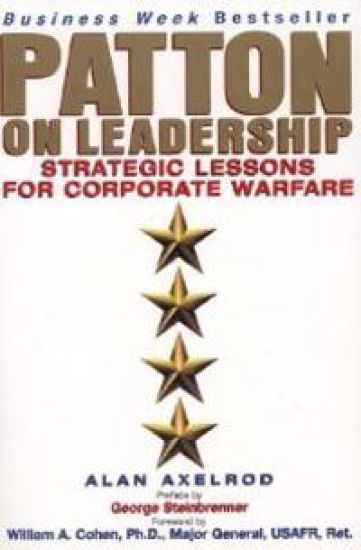
Patton on Leadership

Patton on Leadership

Alan Axelrod

Pearson Education Australia
2001
pokkari
Drawing on General George Patton s decisive moves and distinctive style, Alan Axelrod'sPatton on Leadership gives executives and managers straightforward, practical lessons in dynamic, results-oriented management. This guide covers how to develop a leadership attitude, communicate effectively, inspire others, and more, with period photographs of the Patton throughout his career. What can a civilian corporate leader learn from the combat tactics of General George S. Patton Jr.? Find out by reading Alan Axelrod s Patton on Leadership. He takes leadership wisdom of one of America s greatest and most colorful combat generals and applies it to contemporary civilian corporate organizations. Organized around Patton s quotations and writings, each being related to specific corporate situations, Axelrod presents an in-depth understanding into the general s leadership style and demonstrates that Patton s genius was being able to capitalize on his own intuitive notion of leadership. This book provides a perspective insight of a leadership methodology that may be a valuable asset to many corporate executives. Rutherford B. Johnson, commander, Georgia Chapter, George S. Patton Jr. Historical Society I have no doubt that the leadership skills and personal attitude practiced by General Patton can be used effectively in both corporate and government managerial positions. Current and future leaders would do well to master those skills and to practice the vital requisities of honesty and integrity for which General Patton was noted and without which, leadership is highly suspect. William A. Burke, Major General (Ret.)"
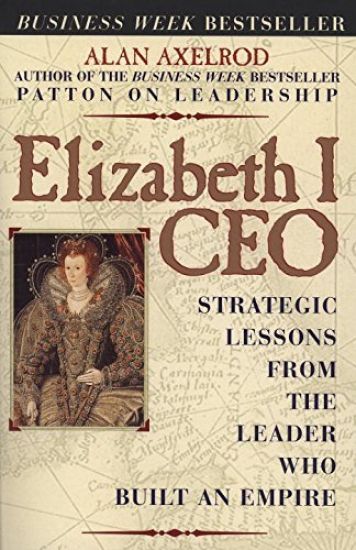
Elizabeth I CEO

Elizabeth I CEO

Alan Axelrod

Prentice Hall
2002
pokkari
Few leadership titles have been written on the lives of women. Alan Axelrod, noted historian and business management expert, reveals how Elizabeth I overcame daunting obstacles to win intense loyalty and lead England to greatness. The queen's long reign offers lessons on: developing a leadership attitude and image enhanced by personal dynamism; becoming an effective coach and mentor skilled at nurturing creativity; manipulating others--subtly and ethically--and knowing and anticipating the "enemy."How did Elizabeth meet the challenges that faced her, managing not only to stay alive and keep her imperiled nation afloat, but also to win the intense loyalty of her people and lead England to greatness? Historians and biographers have offered many explanations. Elizabeth I, CEO takes a fresh view, exploring issues that are relevant to leaders--especially business leaders--of today.
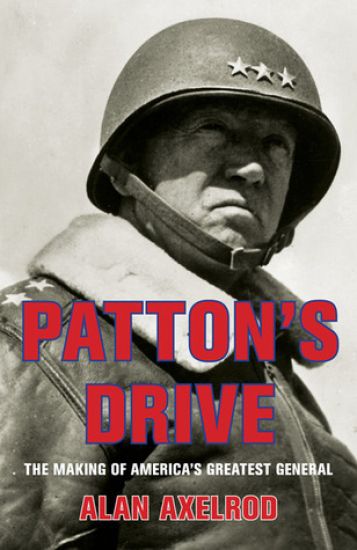
Patton's Drive

Patton's Drive

Alan Axelrod

The Lyons Press
2010
pokkari
Patton's Drive tells the story of how a young man born to war-who believed himself the literal incarnation of all great warriors past-became a modern American general: in terms of enemy killed or captured, territory taken, and people liberated, the greatest field commander of World War II.
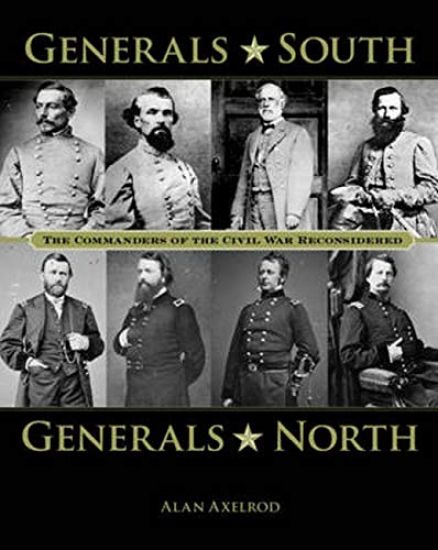
Generals South, Generals North

Generals South, Generals North

Alan Axelrod

The Lyons Press
2016
pokkari
Generals South, Generals North highlights twenty-four commanders—twelve each from the Confederacy and the Union. Best-selling author and military historian Alan Axelrod presents a biography of each, narrates the major engagements in which each fought (emphasizing tactical leadership and outcome produced), and explores each man’s ever-controversial reputation. His consequent rankings are based on both historical and modern-day sources.
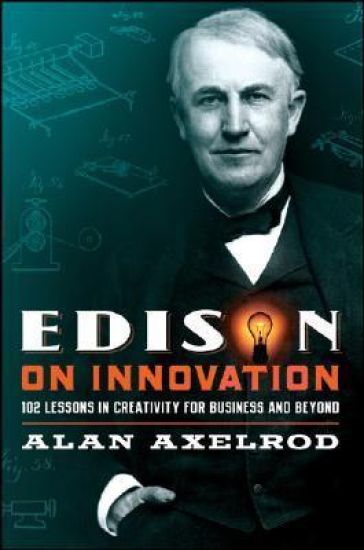
Edison on Innovation

Edison on Innovation

Alan Axelrod

Jossey-Bass Inc.,U.S.
2008
sidottu
In this fascinating exploration of one of the most celebrated and innovative minds, best-selling author Alan Axelrod cuts through the myths and reverence surrounding Edison’s “genius” to show how the inventor was, in fact, an ordinary man who created extraordinary work. While many of us believe that creativity, like genius, is something that just happens by chance or destiny, Edison’s life demonstrates that creativity of the very highest order can indeed be summoned up at will, and even reduced to a reliable working method and set of principles.
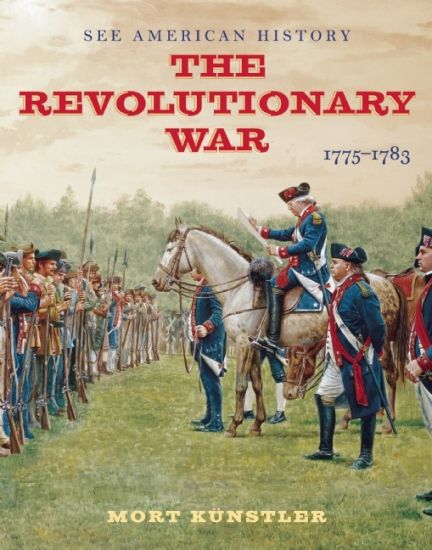
The Revolutionary War 1861-1865

The Revolutionary War 1861-1865

Alan Axelrod

Artabras
2016
sidottu
For the first title in this series, Kunstler's paintings bring history to life with vivid, high-action portrayals of the primary events that won Americans their freedom from Britain: the Boston Tea Party, the Siege of Yorktown, Paul Revere's ride, and the signing of the Declaration of Independence. The epic artworks faithfully chronicle these moments from history and encourage children to look again and again for special details--from the number of stars on George Washington's flag to the style of a soldier's uniform. Together with text by award-winning historian Alan Axelrod, these brilliantly explicit paintings engage a young reader's attention and introduce them to American history through the visual arts. Known for his vivid use of colour, light, and shadow, Kunstler is one of the most widely exhibited artists documenting American history today. His graphically detailed work and skillful portrayals have been lauded for its accuracy by historians and admired by curators in museums around the globe. From a frozen post-battle landscape to a weary Union soldier's facial expression, he captures, in beautifully rendered detail, the geographical setting and the human spirit in each painting. Adults and children alike will see the story of the American Revolution unfold before their very eyes.
Full Faith and Credit

Full Faith and Credit

Alan Axelrod

Abbeville Press Inc.,U.S.
2016
sidottu
Conservative, Liberal, Republican, Democrat, Libertarian, Socialist . . . Each has a laundry list for America on which the slow-motion cataclysm of unsustainable national debt is but a lonely bullet point among dozens of others. Full Faith and Credit zooms in on that point, liberates it from partisan programs and political orientations, expands it, explores it, and explains it. The book examines key dimensions of our national life—from a military-industrial complex more menacing than even Eisenhower could have imagined to a Tower of Babel tax code that covertly translates taxes into secret subsidies. With the aim of converting bystanders into informed advocates of change, Full Faith and Credit is rich with eye-opening data, surprising case studies, and you-can’t-make-this-stuff-up examples: For every official the United States public has elected, its government supports 5000 unelected employees.$1 billion is the cost to destroy $16 billion in ammunition unneeded by the U.S. military.$20,973,890,000 is the total taxpayer cost to the Treasury of gambling losses deducted by millionaires. With easy-to-follow graphs and charts, as well as 20 uproarious full-colour editorial cartoons drawn from the prior work of Pulitzer Prize–winning artist Michael Ramirez, Full Faith and Credit locates the tipping point of the $19.4 trillion (and counting) national debt crisis and offers ideas on how to fix it.
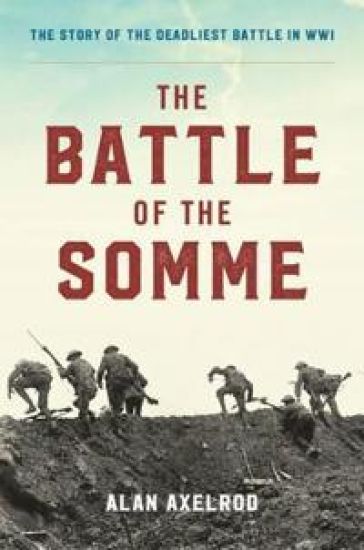
The Battle of the Somme

The Battle of the Somme

Alan Axelrod

The Lyons Press
2016
sidottu
Fought during 1916, the Battle of the Somme was conceived by the French and British as a great offensive to be waged against Germany even as France poured incredible numbers of men into the slaughterhouse that was the desperate defense of Verdun. The French general-in-chief, Joseph “Papa” Joffre, was especially anxious to go on the offensive. For the French high command cherished the belief, born in the era of Napoleon, that the success of French arms depended on attack and that defense was anathema to what the nationalistic philosopher Henri Bergson called the “élan vital” of the French people, a quality, he argued, that set the Gallic race apart from the rest of the world. After more than five months, the British eked out a penetration of some six miles into German territory. The cost had been 420,000 Britons killed or wounded (70,000 men per mile gained)—and most of these were from “Kitchener’s Army,” so-called Pals Battalions, working- and middle-class volunteers promised that they could fight alongside their friends, co-workers, and neighbors. This meant that the Somme, more than any other battle before or since, devastated the young male population of entire British towns, villages, and neighborhoods. French losses were just under 200,000. The Germans lost at least 650,000. Just as the French refused to give up ground at Verdun, the Germans held on stubbornly at the Somme—so stubbornly that General Ludendorff actually complained that his men “fought too doggedly, clinging too resolutely to the mere holding of ground, with the result that the losses were heavy.” The only thing “conclusive” about the Somme was the ineluctable fact of death. No battle ever fought in any conflict provided a stronger incentive for all sides to reach a negotiated peace—the “peace without victory” that Woodrow Wilson, still standing on the sidelines, urged the combatants to agree upon. Instead, the Kaiser, appalled both by Verdun and the Somme, relieved Falkenhayn and replaced him with Hindenburg and Ludendorff, who had achieved great success on the Eastern Front. The new commanders created two new defensive lines, both well behind the Somme front. On the one hand, it was a retreat. On the other, it was a commitment to draw the French and British farther east and invite them to sacrifice more of their soldiery. The modest advance the British made was but the prelude to additional slaughter.
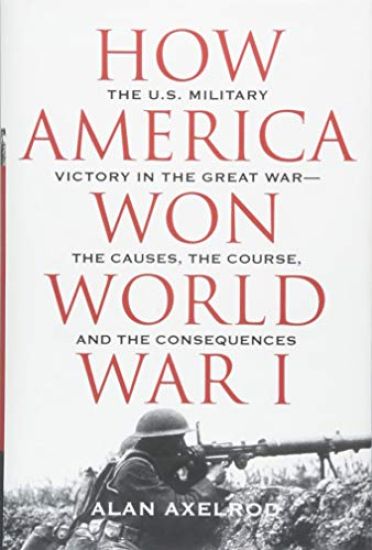
How America Won World War I

How America Won World War I

Alan Axelrod

The Lyons Press
2018
sidottu
Immediately after the armistice was signed in November, 1918, an American journalist asked Paul von Hindenburg who won the war against Germany. He was the chief of the German General Staff, co-architect with Erich Ludendorff of Germany’s Eastern Front victories and its nearly war-winning Western Front offensives, and he did not hesitate in his answer. “The American infantry,” he said. He made it even more specific, telling the reporter that the final death blow for Germany was delivered by “the American infantry in the Argonne.” The British and the French often denigrated the American contribution to the war, but they had begged for US entry into the conflict, and their stake in America’s victory was, if anything, even greater than that of the United States itself. But How America Won World War I will not litigate the points of view of Britain and France. The book will accepts as gospel the assessment of the top German leader whose job it had been to oppose the Americans directly - that the American infantry won the war - and this book will tell how the American infantry did it.
100 Turning Points in American History

100 Turning Points in American History

Alan Axelrod

The Lyons Press
2019
sidottu
Arnold J. Toynbee, the most famous professional historian of the twentieth century, is widely quoted as having declared that “History is just one damn thing after another.” This book argues that history is not about “things” at all but is all about turning points—the decisions, acts, innovations, errors, ideas, successes, and failures on which the shape of a nation’s life—our lives—depends. It presents the 100 points at which America’s path decisively turned on its way to where we find ourselves today. ? Columbus arrives in the New World ? The first slaves arrive in America ? Independence is declared ? The Indian Removal Act is passed ? Female suffragists meet in Seneca Falls ? Harpers Ferry is raided ? Fort Sumter falls ? A transcontinental railroad is completed ? Edison lights his first electric lamp ? Prohibition makes America a nation of lawbreakers ? FDR offers a “New Deal” ? The B-29 Enola Gay drops an atomic bomb on Hiroshima ? The Supreme Court decides Brown v. Board of Education ? Neil Armstrong sets foot on the moon ? President Nixon creates the EPA ? 9/11 … Obama … Sandy Hook … Russian election “meddling” … the Age of Trump … These and many more are the crucial “plot points” in our grand national story, and best-selling historian Alan Axelrod presents them here.
100 Turning Points in Military History

100 Turning Points in Military History

Alan Axelrod

The Lyons Press
2019
sidottu
The typical military history presents a chronicle of battles and wars and the commanders and troops who fought them. This book takes a different approach. It presents battles and wars and people aplenty, but they are not its ultimate subjects. This book is about the turning points that not only make military history dynamic but crucial to the story of humanity and civilization. This book is about the decisions, acts, innovations, errors, ideas, successes, and failures that shaped the evolution of military art and science—strategy, tactics, and technology—and, in doing so, shaped the course of world history. Here are the 100 points—from the birth of warfare in the Battle of Megiddo, 1457 BC, to the ongoing evolution of military history on its newest battlefield, cyberspace—at which the path of the warrior decisively turned on its long journey to where we find ourselves today.
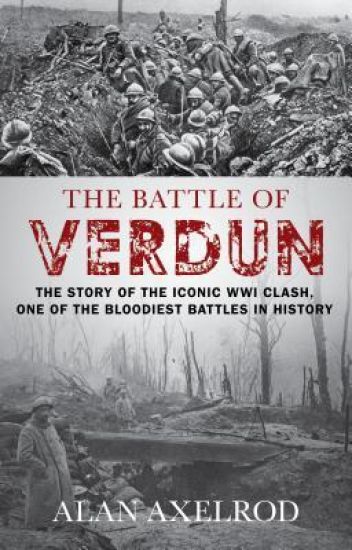
The Battle of Verdun

The Battle of Verdun

Alan Axelrod

The Lyons Press
2019
pokkari
The Great War ate men, machines, and money without mercy or remission. At the end of 1915, the German army chief of staff, Erich von Falkenhayn, believed he knew how to finally kill the beast and win the war. On Christmas day, 1915, Falkenhayn sent a letter to Kaiser Wilhelm II proposing a campaign to demoralize Britain, whose industrial might and maritime power were the foundation of the alliance against Germany, while also knocking France out of the war. He wrote that the “strain on France has reached breaking point …. If we succeed in opening the eyes of her people to the fact that in a military sense they have nothing more to hope for, that breaking point would be reached and England’s best sword knocked out of her hand.” His plan was to attack a single point the French perceived as so vital that they would be compelled “to throw in every man they have.” Falkenhayn concluded: “If they do so, the forces of France will bleed to death” or, as he put it later, the “French army would be bled white.” Falkenhayn’s target of choice was Verdun, a place that, throughout virtually all of the history of Europe, had been a fortress. Located within a loop of the Meuse River, it occupied a strategic blocking position in the Meuse River valley. As recently as the Franco-Prussian War of 1871, Verdun had been the last of the French fortified cities to hold out against the German onslaught. After that war, it had been vastly augmented, so that it was now a circle of detached forts surrounding a central citadel. The town of Verdun itself, also fortified, was likewise encircled by forts distributed in a five-mile radius. The combined massive complex guarded not only passage through the river valley region, but also dominated a key railroad junction leading to points south, southwest, west, and north in France. Along with the related, but separate, Battle of the Somme, Verdun was among the most deadly battles in history. To understand this struggle is to understand all of World War I, including the principal stated motive of Woodrow Wilson for bringing the United States into the “European War” in April 1917. For him, Verdun proved both France’s determination to win at all costs and the likelihood that, without help, it would be defeated nevertheless. The unparalleled barbarity of Verdun, a product of the Old World, convinced the American president that only the principal nation of the New World could finally alter the grim course of human destiny. While many, both in 1916 and in the decades that followed, saw Verdun as a bloody monument to the inescapable futility of war, Wilson saw in it a hope for fighting what he would call a “war to end all wars.”
In the Time of the Revolution

In the Time of the Revolution

Alan Axelrod

The Lyons Press
2020
sidottu
The American Revolution was a war, but it was also a time, a span of history, in which some people fought, but most just lived. They thought, acted, worked, raised families, worshipped, built, sold, bought, and tried to live as best they could in a time of hope, anxiety, despair, loss, gain, and, above all, disruption. In the Time of the Revolution is a popular, single-volume history of the American Revolution, 1775 to 1783, an intensely active, exciting, and critical span of time in North America. It began with a lopsided skirmish at Lexington, Massachusetts, culminated militarily in a major amphibious campaign mounted by a large Franco-American army against British army and naval forces at Yorktown, Virginia in 1781, and then passed through two more years of desultory combat and cruel fights between diehard Loyalists and vengeful Patriots before ending in the Treaty of Paris. During these eight years in an America that was a collection of young towns on the edge of a vast wilderness, the break-up with the mother country was the central fact of life.
100 Turning Points in American History

100 Turning Points in American History

Alan Axelrod

The Lyons Press
2022
pokkari
Arnold J. Toynbee, the most famous professional historian of the twentieth century, is widely quoted as having declared that “History is just one damn thing after another.” This book argues that history is not about “things” at all but is all about turning points—the decisions, acts, innovations, errors, ideas, successes, and failures on which the shape of a nation’s life—our lives—depends. It presents the 100 points at which America’s path decisively turned on its way to where we find ourselves today. ? Columbus arrives in the New World? The first slaves arrive in America ? Independence is declared ? The Indian Removal Act is passed? Female suffragists meet in Seneca Falls? Harpers Ferry is raided? Fort Sumter falls? A transcontinental railroad is completed? Edison lights his first electric lamp? Prohibition makes America a nation of lawbreakers? FDR offers a “New Deal” ? The B-29 Enola Gay drops an atomic bomb on Hiroshima? The Supreme Court decides Brown v. Board of Education? Neil Armstrong sets foot on the moon? President Nixon creates the EPA? 9/11 … Obama … Sandy Hook … Russian election “meddling” … the Age of Trump … These and many more are the crucial “plot points” in our grand national story, and best-selling historian Alan Axelrod presents them here.
100 Turning Points in Military History

100 Turning Points in Military History

Alan Axelrod

The Lyons Press
2021
pokkari
Arnold J. Toynbee, the most famous professional historian of the twentieth century, is widely quoted as having declared that “History is just one damn thing after another.” This book argues that history is not about “things” at all but is all about turning points—the decisions, acts, innovations, errors, ideas, successes, and failures on which the shape of a nation’s life—our lives—depends. It presents the 100 points at which America’s path decisively turned on its way to where we find ourselves today. ? Columbus arrives in the New World? The first slaves arrive in America ? Independence is declared ? The Indian Removal Act is passed? Female suffragists meet in Seneca Falls? Harpers Ferry is raided? Fort Sumter falls? A transcontinental railroad is completed? Edison lights his first electric lamp? Prohibition makes America a nation of lawbreakers? FDR offers a “New Deal” ? The B-29 Enola Gay drops an atomic bomb on Hiroshima? The Supreme Court decides Brown v. Board of Education? Neil Armstrong sets foot on the moon? President Nixon creates the EPA? 9/11 … Obama … Sandy Hook … Russian election “meddling” … the Age of Trump … These and many more are the crucial “plot points” in our grand national story, and best-selling historian Alan Axelrod presents them here.
In the Time of the Revolution

In the Time of the Revolution

Alan Axelrod

ROWMAN LITTLEFIELD
2022
pokkari
The American Revolution was a war, but it was also a time, a span of history, in which some people fought, but most just lived. They thought, acted, worked, raised families, worshipped, built, sold, bought, and tried to live as best they could in a time of hope, anxiety, despair, loss, gain, and, above all, disruption. In the Time of the Revolution is a popular, single-volume history of the American Revolution, 1775 to 1783, an intensely active, exciting, and critical span of time in North America. It began with a lopsided skirmish at Lexington, Massachusetts, culminated militarily in a major amphibious campaign mounted by a large Franco-American army against British army and naval forces at Yorktown, Virginia in 1781, and then passed through two more years of desultory combat and cruel fights between diehard Loyalists and vengeful Patriots before ending in the Treaty of Paris. During these eight years in an America that was a collection of young towns on the edge of a vast wilderness, the break-up with the mother country was the central fact of life.
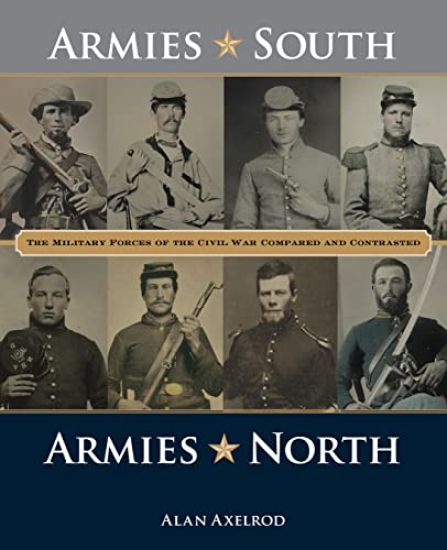
Armies South, Armies North

Armies South, Armies North

Alan Axelrod

ROWMAN LITTLEFIELD
2022
pokkari
An argument settler--and starter--for Civil War buffs who want to know which side had the better soldiers: Armies South, Armies North definitively compares the military forces of both sides. Civil War buffs are always arguing over which side had the better soldiers. Armies South/Armies North by Alan Axelrod helps readers reconsider their understanding of America’s most harrowing war. Axelrod is the author of more than one hundred books with a passion for military history and leadership. Each chapter of his new book compares the military forces with both quantitative and qualitative measures. Axelrod analyzes the equipment, the leadership and strategies, and the men who fought in each army, with additional focus on lesser known flash points during the war.
American Treaties and Alliances

American Treaties and Alliances

Alan Axelrod

CQ Press
2000
sidottu
Whether studying a particular time period, a general subject area, or a specific treaty or alliance, American Treaties and Alliances is the new one-stop resource. ''Organized both thematically and chronologically, and illustrated with maps and tables throughout, this reference helps students and researchers find the particular information they need, or explore whole issue areas, such as human rights and genocide, and the pertinent treaties throughout our history. Most useful to students researching foreign policy, the documents in American Treaties and Alliances are arranged by the following subjects: ''''Settlement, Union, Expansion, and Boundaries ''Wars and Military Alliances ''Diplomacy and International Organizations ''Trade, Commerce, and Transportation ''Human and Political Rights ''Science and Environment ''''