Kirjojen hintavertailu. Mukana 11 244 527 kirjaa ja 12 kauppaa.

Kirjahaku

Etsi kirjoja tekijän nimen, kirjan nimen tai ISBN:n perusteella.

12 kirjaa tekijältä Alan Butler

The Manya: A Way to Be

The Manya: A Way to Be

Alan Butler

Createspace Independent Publishing Platform
2017
nidottu
Back in 1991 writer, researcher and broadcaster Alan Butler found himself in the worst circumstances his life had ever known. Lost in a relationship that was doomed to failure, suffering from a chronic back condition and incapacitated by agoraphobia it began to seem as though the morning would never come and that anxiety and doubt would always be present. Then one night Alan had a dream. The experience was so vivid and seemed so absolutely real that Alan felt obliged to rise from his bed and to start writing immediately. What emerged was the Manya, the most extraordinary book Alan Butler has ever produced. Once the book was finished it was as if the clouds slowly began to part. The simple advice that the Manya contained about life offered Alan a very different view, not only of his own circumstances but regarding every facet of the world and its apparent troubles. For a long time Alan never considered publishing this extraordinary little book but he was eventually prevailed upon to do so. Now in its third edition the Manya continues to give to others what that original dream gave to a very troubled individual. Alan Butler states that he is no guru, simply a person who looked for help and guidance and was lucky enough to be given it. The Manya is not a religion but sound advice that comes from the core of spirituality that exists all around us if only we choose to see it. Alan has always avoided offering any explanation regarding the Manya because the book speaks to different people in different ways. If it influences you as it did him and has so many other people, it might just change your life beyond measure.
Intervention: How Humanity from the Future Has Changed Its Own Past
Alan Butler provides scientific evidence for time travel not only being real, but having already happened. Many key events in the history of humankind show evidence of having been intended by human beings from the future, who took specific actions that would steer the world in a particular direction. This 'intervention' theory is based on sound mathematical and scientific arguments, consistent with Einstein's demonstration of the possibility of time travel. Time travellers - some of them anonymous, some celebrated in history - have made alterations to our planetary and global environment (the creation of the Moon, the extinction of the dinosaurs) that were necessary to allow us to exist and to develop as an intelligent species. They have also left us markers that show what steps we need to take to progress further. All these interventions were placed retroactively within the 'timeline' for future generations, not for those immediately affected. Key interventions include: The creation of the Moon If the Moon did not exist, nor would we. The author demonstrates that the Moon was built to make it possible for the Earth to become an incubator of life. The metal revolution The development of humanity's mastery over metal is a mystery, since the required temperatures for smelting metal exceeded anything that Neolithic man would have needed for any purpose. So how and why did smelting start? Add to that the fact that the first usable metal, bronze, is an alloy of copper and the much rarer tin and we begin to see the scale of the puzzle. Intervention supplies a convincing answer. The megalithic yard Neolithic peoples created a sophisticated, fully integrated system of measurements based on the actual size and mass of the Earth - a 'marker' for future scientific developments, surfacing again, apparently out of the blue, in 18th-century Washington, DC. But the most spectacular revelation lies in our future. By looking at the mathematics underlying many of the inventions, we discover, with unexpected precision, when our first contact with our future selves will happen. This will occur within the lifetime of most readers of this extraordinary book.
The Dawn of Genius

The Dawn of Genius

Alan Butler

Watkins Publishing
2014
pokkari
The modern world looks back towards Ancient Greece for the start of its philosophy, for the origins of its science and even for the foundations of its excursion into democracy. But is this either correct or fair? Was there something long, long before the City States of Greece flirted with geometry, astronomy and inclusive politics from which Greece itself developed, merely as a pale reflection? Alan Butler has put together his most exhaustive and yet most compelling presentation of how we came to be what we are today. The Dawn Genius explores the genius that was the Minoan civilization and shows how accounts of the fabled Atlantis were actually memories of a worldwide catastrophe that occurred around 1600 BC. The Dawn of Genius puts back into the place the missing pieces of the puzzle that is Europe prior to a massive watershed in population and culture that took place after 2000 BC. A cataclysmic volcanic eruption in the Eastern Mediterranean destroyed an almost totally forgotten infrastructure that encompassed an entire continent, and opened Europe to an unparalleled invasion of much less sophisticated people from the East. The book recreates the culture and religion and scientific knowledge that was shattered in an instant and which plunged the world into a dark age from which it has taken over 3,000 years to emerge. This is probably the most comprehensive explanation of mysteries from a truly ancient world that has ever been written. Those interested in exploring the genuine origins of the modern world are certain to be enthralled.
Who Built The Moon?

Who Built The Moon?

Alan Butler

Watkins Publishing
2007
nidottu
The authors ofCivilization Onereturn, bringing new evidence about the Moon that will shake up our world. Christopher Knight and Alan Butler realized that the ancient system of geometry they presented in their earlier, breakthrough study works as perfectly for the Moon as it does the Earth. On further investigation, they found a consistent sequence of beautiful integer numbers when looking at every major aspect of the Moon--no such pattern emerges for any other planet or moon in the solar system. In addition, Knight and Butler discovered that the Moon possesses few or no heavy metals and has no core-something that should not be possible. Their persuasive conclusion- if higher life only developed on Earth because the Moon is exactly what it is and where it is, it becomes unreasonable to cling to the idea that the Moon is a natural object. The only question that remains is, who built it?
Sheep – The remarkable story of the humble animal that built the modern world.
What was the most important step in civilization? Alan Butler's answer is that it was when we began capturing wild sheep, domesticating and breeding them. Sheep were the mainstay of ancient cultures, by far the most important of the domesticated animals. Able to survive almost anywhere, over-wintering successfully, they provided not just milk, meat and skin, but warm clothing. This is why so many of the earliest gods and their myths are sheep related, from the Egyptian Ra (ram) to the later Christian Lamb of God. But sheep have not only sustained us for thousands of years. Sheep farming also underpinned the growth of European nation states, international trade and modern economies. In effect sheep built the modern world. The demands of the woollen textile industry both drove and financed the Industrial Revolution. The British Empire was founded on wool. The space needed for sheep drove millions off the land, many of whom took them to Australasia and the Americas. With over a billion sheep in the world today the humanity-sheep relationship represents the most successful example of mammalian symbiosis on the planet. The story of the sheep is the story of humanity, a surprisingly exciting and gripping tale that deserves to be told. Spanning a vast period of time, it includes some of the most famous names that have been left to us by history, and many that deserve to better recognised.
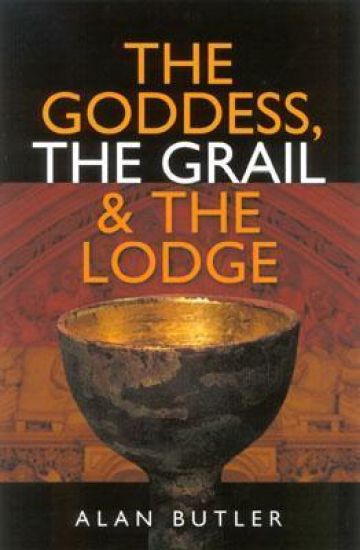
Goddess, the Grail and the Lodge
We're only just beginning to realize that Bronze Age people knew far more about astronomy and engineering than we have given them credit for. Reading like a thriller, The Goddess, the Grail and the Lodge shows what Grail Knowledge really was and is.
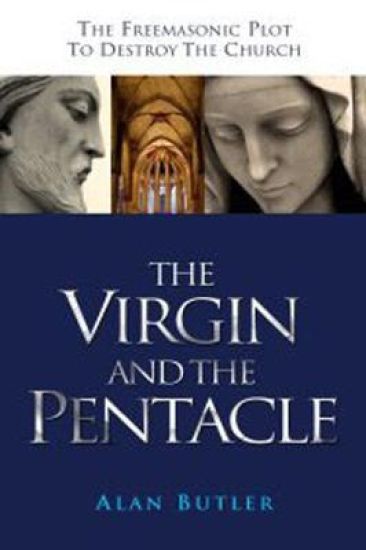
Virgin and the Pentacle

Virgin and the Pentacle

Alan Butler

John Hunt Publishing
2005
nidottu
Starting from what was, at its time, the most important vision of the Virgin Mary ever to take place in Western Europe, The Virgin and the Pentacle gradually uncovers a virtually unknown war that has been taking place across 1,700 years. This is the story of the battle between the orthodox Catholic Church and Freemasonry, itself the most modern manifestation of a much older religious conflict between patriarchal and matriarchal views of the godhead. Erupting occasionally in violence it is strikingly seen in the opposing visions of the Virgin Mary in the 19th century, which defined the conflicting theological parameters and led to the doctrine of the Immaculate Conception in the 1850s. Underpinning Freemasonic practice is a fraternity that has been active in Europe and beyond since the 4th century. At the heart of the Craft is a very specific social, economic and religious imperative, known only to the highest aspirants. The Virgin and the Pentacle cuts through the accusations that have been showered upon Freemasonry and shows what it's true objectives have been from the start. Reading like a whodunit, it is a story of dirty tricks that have included false visions, subterfuge and even murder. The conclusions are stunning and far reaching.