Kirjojen hintavertailu. Mukana 12 390 323 kirjaa ja 12 kauppaa.

Kirjahaku

Etsi kirjoja tekijän nimen, kirjan nimen tai ISBN:n perusteella.

5 kirjaa tekijältä Alan C. Carey

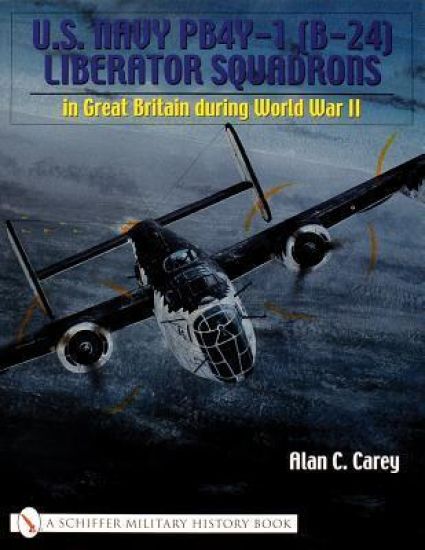
U.S. Navy PB4Y-1 (B-24) Liberator Squadrons

U.S. Navy PB4Y-1 (B-24) Liberator Squadrons

Alan C. Carey

Schiffer Publishing Ltd
2003
nidottu
Alan Carey’s new book, his fifth on USN and USMC bomber units of the Second World War, is the story of U.S. Navy Fleet Air Wing Seven (FAW-7) and the men who flew the Navy version of the Consolidated B-24 Liberator bomber out of Dunkeswell and Upottery, England during World War II. Navy PB4Y-1 Liberator squadrons were unlike their counterparts in the U.S. Army’s 8th Air Force, who battled their way through thick flak and swarms of German fighters while flying to and from targets in continental Europe. The job of U.S. Navy PB4Y-1 Liberator aircrews was to keep German U-boats from successfully operating in the Bay of Biscay and the English Channel by going out day after day, often in miserable weather conditions, on unrelenting search and destroy missions. During the war, FAW-7 Liberators were responsible for the sinking of five U-boats and damaging many more.
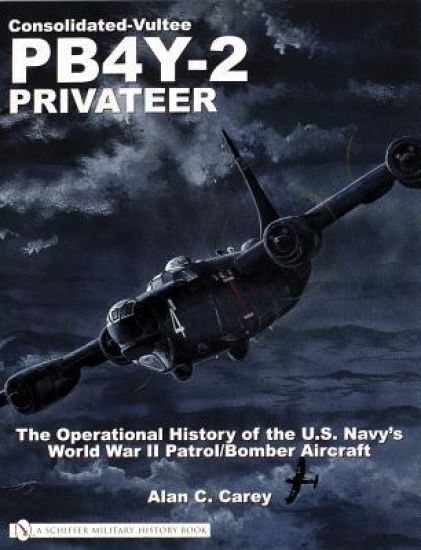
Consolidated-Vultee PB4Y-2 Privateer

Consolidated-Vultee PB4Y-2 Privateer

Alan C. Carey

Schiffer Publishing Ltd
2005
nidottu
Consolidated-Vultee Aircraft Corporation’s (Convair) attempt to make a few design changes to its famous B-24 Liberator for the U.S. Navy in 1942 eventually evolved into the PB4Y-2 Privateer, a 70,000-pound patrol bomber equipped with state-of-the-art electronics gear, armed with twelve .50-caliber machine guns, and the capability to deliver bombs, depth charges, and guided missiles. Beginning with the development and production of the aircraft, this book presents an in-depth examination of the patrol bomber’s entire operational history from 1942 to the present. Containing over 260 photographs and line art, the book covers the PB4Y-2’s service with the U.S. Navy, French Aéronavale, Republic of China Air Force, various countries of Latin America, and finally as a slurry bomber for aerial fire fighting companies.
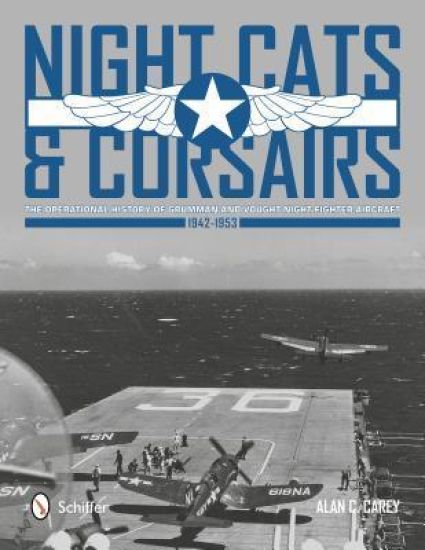
Night Cats and Corsairs

Night Cats and Corsairs

Alan C. Carey

Schiffer Publishing Ltd
2014
sidottu
The threat of enemy aircraft striking American naval forces at night with impunity during World War II led the Navy to seek fighter aircraft capable of stopping this threat. Trace the history of radar-equipped night fighter aircraft produced for the U.S. Navy and Marine Corps by the American aircraft companies Grumman and Vought before the arrival of jets with nocturnal capabilities. World War II squadrons operated night variants of the Vought F4U-2 Corsair and Grumman F6F-3/5N Hellcat while post-war night fighter units were equipped with the Grumman F7F-3N Tigercat and/or Vought F4U-5N/NL. Night Cats and Corsairs contains never before published color and black and white photographs covering the night variants of the F6F Hellcat, F7F Tigercat, F4U-2 and F4U-5N/NL Corsairs.
We Flew Alone 2nd Edition

We Flew Alone 2nd Edition

Alan C. Carey

Schiffer Publishing Ltd
2017
nidottu
This revised and expanded second edition covers USN and USMC squadrons that operated the Consolidated B-24 Liberator heavy bomber as the PB4Y-1 in the Pacific from early 1943 through September 1944 in the Central Pacific. Combat air crews consisted of eleven young men typically ages 18 to 26 led by a patrol plane commander in his early to mid-twenties. They flew alone on single-plane patrols often lasting ten or more hours. Alone on patrol there were no witnesses when an aircraft failed to return to base; they simply vanished, leaving little if any clues about their fate. Other aircrews sent to look for the missing would occasionally spot a deflated life raft floating or dye marker spreading across the water—evidence marking where a four-engine bomber and its crew had gone down.
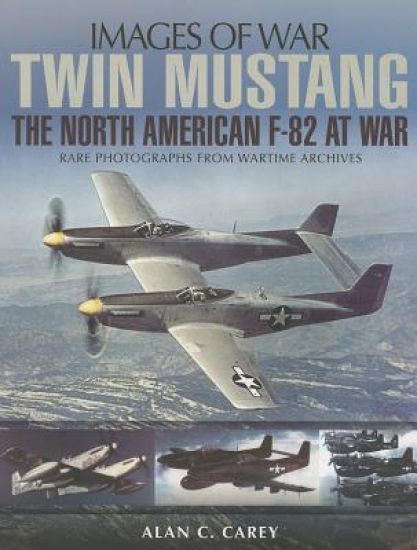
Twin Mustang: The North American F-82 at War

Twin Mustang: The North American F-82 at War

Alan C. Carey

Pen Sword Aviation
2014
nidottu
One of the most unusual and remarkable American fighter aircraft, the F-82 Twin Mustang was the last mass production propeller-driven fighter acquired by the U.S. Air Force. Originally intended as a very long-range fighter escort for the Boeing B-29 Superfortress during World War II, it arrived too late to see combat and evolved into a night and all-weather fighter during the post-war years. Combat operations in the Korean War followed, along with a host of other dynamic episodes of deployment. This work traces the developmental, operational, and combat history of this unique American fighter and features 120 photographs and illustrations, many of which have never been published before. Seven chapters, all extensively illustrated, cover the aircraft's development, descriptions of the variants and sub-types, details of initial entry into service, three chapters covering the F-82's service in the Korean War, and a final chapter detailing the type's removal from the Korean War Theatre in February 1952, to see out its operational days in the Alaskan Air Defence Command. An appendix section follows, featuring tables of the different variants, an illustrated list of known nose art applied to F-82s, and an entry of losses suffered in the Korean War. All these additional details bring new points of interest to the popular Images of War format, making for a richer, more informative reading experience. Focussing on an overlooked type, deployed in a conflict often side-lined within mainstream war histories, this publication offers a much deserved platform upon which to appreciate this dynamic and immensely interesting aircraft.