Kirjojen hintavertailu. Mukana 12 016 292 kirjaa ja 12 kauppaa.

Kirjahaku

Etsi kirjoja tekijän nimen, kirjan nimen tai ISBN:n perusteella.

15 kirjaa tekijältä Alan Clarke

Designing Computer-Based Learning Materials
First published in 2001, this volume demonstrates how computer-based learning has the potential to provide a highly motivating learning experience, that it also has the potential to achieve exactly the opposite, and that the difference between these two extremes is the quality of the learning design.The challenge for the learning designer isn’t a simple one. You are being asked to prepare interactive learning for someone you can’t see and with whom the only interaction you are likely to have is via limited written communication. Fortunately help is at hand in Alan Clarke’s Designing Computer-Based Learning Materials.Dr. Clarke offers a definitive guide to each of the many elements involved in good design. This book explores the principles of adult learning, and relates to the potential, features and impact of computer-based learning.This is not a ‘how to…’ book, but rather one seeking to help you understand the different elements which go into computer-based learning. If you are commissioning material, it will help you to understand the contractors’ constraints. If you are designing materials yourself, it will allow you to avoid many of the errors it is all too easy to make when developing them.Computer-based learning materials are not all the same: their range reflects the variety of learners that use them and purposes they are used for; the different learning environments that are available to people; the different subjects that they wish to learn and the level to which they wish to take them.In the face of such a complex task, involving so many factors and variables, it is essential that the learning designer understands what is involved and uses a rigorous process for envisioning, planning, designing, implementing and testing their solution. This is a book about learning design and not about software production and, as such, it provides any aspiring designers with the fundamentals of producing the highly motivating learning experience, which should be their objective.
Designing Computer-Based Learning Materials
First published in 2001, this volume demonstrates how computer-based learning has the potential to provide a highly motivating learning experience, that it also has the potential to achieve exactly the opposite, and that the difference between these two extremes is the quality of the learning design.The challenge for the learning designer isn’t a simple one. You are being asked to prepare interactive learning for someone you can’t see and with whom the only interaction you are likely to have is via limited written communication. Fortunately help is at hand in Alan Clarke’s Designing Computer-Based Learning Materials.Dr. Clarke offers a definitive guide to each of the many elements involved in good design. This book explores the principles of adult learning, and relates to the potential, features and impact of computer-based learning.This is not a ‘how to…’ book, but rather one seeking to help you understand the different elements which go into computer-based learning. If you are commissioning material, it will help you to understand the contractors’ constraints. If you are designing materials yourself, it will allow you to avoid many of the errors it is all too easy to make when developing them.Computer-based learning materials are not all the same: their range reflects the variety of learners that use them and purposes they are used for; the different learning environments that are available to people; the different subjects that they wish to learn and the level to which they wish to take them.In the face of such a complex task, involving so many factors and variables, it is essential that the learning designer understands what is involved and uses a rigorous process for envisioning, planning, designing, implementing and testing their solution. This is a book about learning design and not about software production and, as such, it provides any aspiring designers with the fundamentals of producing the highly motivating learning experience, which should be their objective.
How to Use Technology Effectively in Post-Compulsory Education
The use of technology within the lifelong learning sector brings many benefits to learners, teachers and managers. Aimed at trainee and practising teachers, this book contains clear, practical guidance on how to use technology and e-learning effectively to enhance all aspects of teaching and learning in the post-compulsory sector.Alan Clarke explains the technologies that are available and how to use them from whiteboards and virtual learning environments to digital photographs, podcasts and e-portfolios. Each chapter is fully aligned with the new LLUK standards and includes teaching strategies, practical examples and case studies to show how these work in practice. Chapters include guidance on: using e-portfolios, blogs and wikis to present and share information with colleagues and encourage reflection motivating students and promoting collaboration using mobile devices, discussion groups and forums how to use ICT to develop literacy and numeracy skills ways to keep up to date with new and emerging technologies using technology safely and securely.Including a wide range of activities, questions for reflective practice and links to further sources of information, this essential textbook will help trainee and practising teachers in post-compulsory education to understand the major ILT tools and use them confidently and effectively in their teaching.
How to Use Technology Effectively in Post-Compulsory Education
The use of technology within the lifelong learning sector brings many benefits to learners, teachers and managers. Aimed at trainee and practising teachers, this book contains clear, practical guidance on how to use technology and e-learning effectively to enhance all aspects of teaching and learning in the post-compulsory sector.Alan Clarke explains the technologies that are available and how to use them from whiteboards and virtual learning environments to digital photographs, podcasts and e-portfolios. Each chapter is fully aligned with the new LLUK standards and includes teaching strategies, practical examples and case studies to show how these work in practice. Chapters include guidance on: using e-portfolios, blogs and wikis to present and share information with colleagues and encourage reflection motivating students and promoting collaboration using mobile devices, discussion groups and forums how to use ICT to develop literacy and numeracy skills ways to keep up to date with new and emerging technologies using technology safely and securely.Including a wide range of activities, questions for reflective practice and links to further sources of information, this essential textbook will help trainee and practising teachers in post-compulsory education to understand the major ILT tools and use them confidently and effectively in their teaching.
Evaluation Research

Evaluation Research

Alan Clarke

SAGE Publications Inc
1999
sidottu
Providing students and practitioners with a comprehensive introduction to evaluation research, this book shows how social research methods and methodologies can be applied in a variety of evaluation contexts. The author: - illustrates the contribution both quantitative and qualitative methods can make to evaluation; - stresses the important part played by theory in the evaluation enterprise; - introduces some of the conceptual, methodological and practical problems encountered when undertaking this type of applied research, especially in the areas of criminal justice, health care and education.
Evaluation Research

Evaluation Research

Alan Clarke

SAGE Publications Inc
1999
nidottu
Providing students and practitioners with a comprehensive introduction to evaluation research, this book shows how social research methods and methodologies can be applied in a variety of evaluation contexts. The author: - illustrates the contribution both quantitative and qualitative methods can make to evaluation; - stresses the important part played by theory in the evaluation enterprise; - introduces some of the conceptual, methodological and practical problems encountered when undertaking this type of applied research, especially in the areas of criminal justice, health care and education.
Managing and Developing Communities, Festivals and Events
The different stages of a festival's evolution provide a plethora of opportunities for us to better understand our culture, the relationships we build, what we value in our culture and our communities, and how we socialize and interact with one another. Managing and Developing Community Festivals and Events brings together community festival and event research from nine different countries. It critically explores how festivals and their communities develop and impact upon one another. The chapters focus on a wide range of festivals such as food and culinary festivals, art events, religious pilgrimage and feast festivals, as well as a variety of diverse themes such as joy, civil unrest, preservation of cultures and authenticity.
The Sociology of Healthcare

The Sociology of Healthcare

Alan Clarke

Routledge
2015
sidottu
The Sociology of Healthcare, Second Edition explores the impact of current social changes on health, illness and healthcare, and provides an overview of the fundamental concerns in these areas. This new edition features a brand new chapter entitled End of Life which will help health and social care workers to respond with confidence to one of the most difficult and challenging areas of care. The End of Life chapter includes information on changing attitudes to death, theories of death and dying, and palliative care. All chapters have been thoroughly updated to address diversity issues such as gender, ethnicity and disability. In addition, expanded and updated chapters include Childhood and Adolescence and Health Inequalities.The text is further enhanced through the use of case studies that relate theory to professional practice, and discussion questions to aid understanding. Links to websites direct the reader to further information on health, social wellbeing and government policies. This book is essential reading for all students of healthcare including nursing, medicine, midwifery and health studies and for those studying healthcare as part of sociology, social care and social policy degrees.In an age when health policy follows an individualist model of personal responsibility this book by Alan Clarke demonstrates with a vast array of evidence, just how much there is such a thing as society. An excellent overall book.Dr. Stephen Cowden, Senior Lecturer in Social Work, Coventry University
The Sociology of Healthcare

The Sociology of Healthcare

Alan Clarke

Routledge
2010
nidottu
The Sociology of Healthcare, Second Edition explores the impact of current social changes on health, illness and healthcare, and provides an overview of the fundamental concerns in these areas. This new edition features a brand new chapter entitled ?End of Life? which will help health and social care workers to respond with confidence to one of the most difficult and challenging areas of care. The ?End of Life? chapter includes information on changing attitudes to death, theories of death and dying, and palliative care. All chapters have been thoroughly updated to address diversity issues such as gender, ethnicity and disability. In addition, expanded and updated chapters include ?Childhood and Adolescence? and ?Health Inequalities?. The text is further enhanced through the use of case studies that relate theory to professional practice, and discussion questions to aid understanding. Links to websites direct the reader to further information on health, social wellbeing and government policies. This book is essential reading for all students of healthcare including nursing, medicine, midwifery and health studies and for those studying healthcare as part of sociology, social care and social policy degrees.?In an age when health policy follows an individualist model of ?personal responsibility? this book by Alan Clarke demonstrates with a vast array of evidence, just how much there is such a thing as society. An excellent overall book.?Dr. Stephen Cowden, Senior Lecturer in Social Work, Coventry University
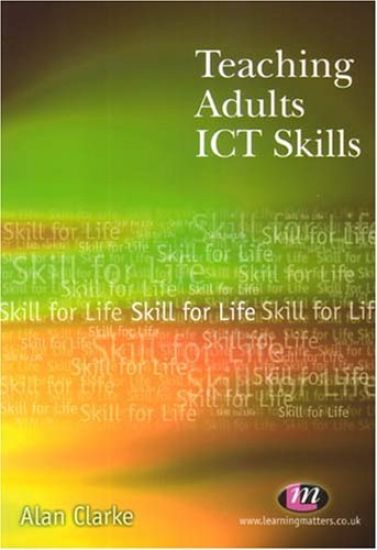
Teaching Adults ICT Skills

Teaching Adults ICT Skills

Alan Clarke

Learning Matters Ltd
2006
nidottu
ICT has been formally identified as an essential life skill. This text provides teachers and trainers with the skills to develop successful ICT learning programmes in line with the new ICT Skill for Life Standard. It focuses on improving the quality of provision through extending the range of teaching and learning strategies, meeting individual needs while using participative methods, and motivating the learner. All aspects of a successful ICT programme are covered, from how to assess learners at the start of a course to ways of enhancing teachers' and trainers' professional development.
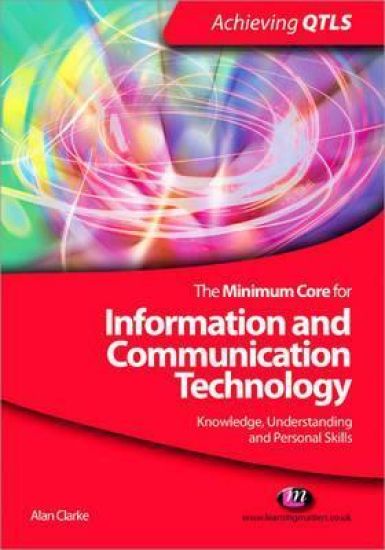
The Minimum Core for Information and Communication Technology: Knowledge, Understanding and Personal Skills
The teacher training framework, introduced in September 2007, requires all teachers in the post-16 sector to possess knowledge, understanding and personal skills to at least level 2 in the minimum core for ICT. Coverage and assessment of the minimum core have to be embedded in all Certificate and Diploma courses leading to QTLS and ATLS status. This book is a practical guide to ICT for trainee teachers in the Lifelong Learning Sector. It enables trainee teachers to identify and develop their own ICT skills and to support their students in ICT.
Storm Clouds Over the Horizon

Storm Clouds Over the Horizon

Alan Clarke

Strategic Book Publishing Rights Agency, LLC
2020
pokkari
Jack Baker is a self-employed painter and decorator in his late twenties who also does occasional small plumbing jobs. Abandoned by his mother at birth, Jack was brought up by foster parents.When working in a large country house, he comes across a sports trophy engraved with a name that re-ignites a deep-held desire to try to find his birth family, something he failed to achieve in an earlier attempt.Using a different approach this time, he makes contact with a half-brother. Unknown to Jack, his relative has a shady past involving convictions for minor crimes, which inadvertently draw in Jack. The connection with his half sibling leads to a complicated series of events involving a corrupt Member of Parliament and his equally corrupt nephew.The police use Jack to further their investigations into the MP and his nephew. It turns out that both men's crimes are far more serious than originally thought. Russian spies are only part of his troubles as Jack becomes involved in a complicated series of events that threaten his life.About the Author: Born in London, Alan Clarke has lived throughout the UK. The retired technical writer currently resides in West Cumbria in the Lake District of England. He was inspired to write this story by a friend who has been searching for his birth relatives for many years. This is his eighth novel.