Kirjojen hintavertailu. Mukana 11 501 295 kirjaa ja 12 kauppaa.

Kirjahaku

Etsi kirjoja tekijän nimen, kirjan nimen tai ISBN:n perusteella.

12 kirjaa tekijältä Alan Clements

Principles of Computer Hardware

Principles of Computer Hardware

Alan Clements

Oxford University Press
2006
nidottu
Computer technology pervades almost every aspect of our life: from the cars that we drive, to the mobile phones that we use to communicate; from the digital cameras that capture images of the world around us, to the laser printers that turn image into picture. Yet at the heart of these enabling technologies lie fundamental components and systems, without the understanding of which such technologies would never have been developed. Principles of Computer Hardware explores the fundamentals of computer structure, architecture, and programming that underpin the array of computerized technologies around which our lives are now built. The book opens with an introduction to the fundamental concepts upon which computers are constructed - gates, circuits, logic - and computer arithmetic, the 'language' through which computers communicate. It then reveals how computers are structured and how they operate, taking us step-wise from the instruction set architecture, the bringing together of instructions through assembly language programming, and on to the heart of the computer, the central processing unit. The book then builds on these foundations to consider how the hardware interfaces with its surroundings, introducing us to topics such as computer memory; operating systems and the interface between hardware and software; and computer peripherals and computer communications - the interface with the outside world. Always putting educational value first, Principles of Computer Hardware uses the 68K processor as a powerful teaching and learning tool, putting substance firmly before style. With the clarity of explanation and captivating style for which Alan Clements is renowned, the book draws the student in to the heart of the subject, to foster an in-depth understanding from which more specialised study can then extend. The learning experience is enriched still further with a free CD-ROM, providing resources to enable students to engage with the subject in a hands-on manner: · A Windows-based simulator for the student to explore the design of digital circuits · Windows and DOS-based 68K simulators for students to investigate the operation of the 68K processor · An ARM simulator for students to write programs for a RISC processor, and run them on a PC Online Resource Centre: For lecturers (password protected): · Figures from the book available to download, to facilitate lecture preparation · Solutions to problems featured in the book, to aid formative learning · Multiple choice question test bank, to facilitate assessment of students' learning
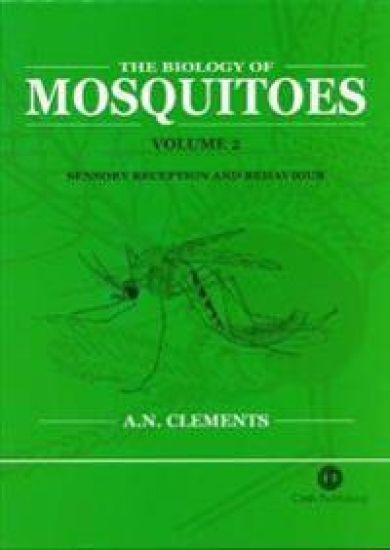
Biology of Mosquitoes, Volume 2

Biology of Mosquitoes, Volume 2

Alan Clements

CABI Publishing
1999
sidottu
Mosquitoes are important as transmitters of widespread major diseases and as nuisance insects. They are also one of the most studied and well-known group of insects, both in the laboratory and in the field. The first volume in The Biology of Mosquitoes series is a key reference work and has received excellent reviews. This second title in the three volume series focuses on the functioning of the mosquito sense organs that provide them with information about the environment and that enable the adult females to find and attack their vertebrate hosts. It also reviews knowledge of the circadian rhythms and other internal mechanisms that regulate the onset and timing of different behaviours. This integrated review of the sensory mechanisms and behaviour of mosquitoes provides a unique insight into their biology. The contents, which are fully up-to-date, include much important work from the past which is often overlooked.
Biology of Mosquitoes, Volume 1

Biology of Mosquitoes, Volume 1

Alan Clements

CABI Publishing
1992
sidottu
A detailed account of the embryology, growth and metamorphosis of mosquitoes, the nutrition of larvae and adults, and egg production by the adult females. Physiological adaptations of larvae to their aquatic environment are also described. Written in a manner to be comprehensible to any informed biologist, the book has received glowing reviews.
Wisdom for the World

Wisdom for the World

Alan Clements

Buddha Sasana Foundation (Aka) Bsf
2019
pokkari
The Venerable Sayadaw U Pandita of Burma (also known as Myanmar), was one of the foremost authorities on vipassana (insight) meditation and a pioneer of the Western mindfulness movement. With thousands of students in centers worldwide, Burma's most senior Buddhist monk also trained hundreds of leading meditation teachers in both the East and West. Yet, despite all of this, and numerous influential books compiled from his public talks, he rarely gave interviews. In Wisdom for the World: The Requisites of Reconciliation, he breaks his silence to reveal some of his most compelling insights, delivered as his final teaching for the people of the world and his native country, Burma. Over 9 consecutive nights before he passed away in April 2016 at the age of 95, the Venerable Sayadaw weighed in on some of the most critical issues facing Burma and the world today through exceptionally rare and remarkable conversations with his first Western student, journalist, and friend of nearly 40 years, Alan Clements. Covering topics from religious extremism to systemic oppression, and the requisites for surmounting them, the Venerable Sayadaw deftly elaborated on the Mahasi Sayadaw system of mindfulness meditation and its application in our troubled world. "More important than victory of others is to be victorious over oneself," he says, illuminating the difference between right and wrong mindfulness and calling for a worldwide revolution in Spiritual Intelligence, or "SQ" (a key component of his teachings over the past 15 years). As the principle spiritual adviser to many of the leading figures in Burma's decades long non-violent democratic revolution, Wisdom for the World speaks a final time to those leaders and fosters hope for a country still convulsing from decades of dictatorship. Here, this beloved teacher elucidates the role of reconciliation in calming the turmoil of conflict faced by so many in the world today. With forbearance, wisdom and compassion, the Venerable Sayadaw outlines the theory and practice of gaining mindful control of one's own mind so that we may all move towards a more peaceful society. Essentially, Wisdom for the World provides the timeless psychological and spiritual guidance - the mindful intelligence - for anyone desiring to surmount intolerance, hatred and discrimination, in whatever form they take.Alan Clements Clements was among the first Westerners to ordain as a Buddhist monk in Burma, where he lived in a monastery practicing mindfulness meditation for nearly five years, before being expelled from the country in 1984 by the dictatorship, with no reason given. Leaving the monastic life, Clements returned to the West, becoming a spiritual maverick, journalist, and human rights activist engaged in Burma's nonviolent struggle for freedom while speaking up for political prisoners worldwide. Clements co-authored The Voice of Hope with Burma's Aung San Suu Kyi - the former political prisoner and Nobel Peace Laureate. In addition, his books include, Burma: The Next Killing Fields, and Revolution of the Spirit, both with forewords by the Dalai Lama and endorsed by 8 Noble Peace Laureates and former President Jimmy Carter. He's also written Instinct for Freedom and A Future To Believe In: 108 Reflections on the Art and Activism of Freedom. Clements has been interviewed on ABC National, Talk to America, CBC, VOA, BBC, the New York Times, Time and Newsweek magazines, the Sydney Morning Herald, Utne Reader, Yoga Journal, and scores of other media worldwide. He also delivered a keynote at Amnesty International's 30th Year Anniversary at the John Ford Theater in LA. You can learn more about Alan's work on his website: www.AlanClements.com. Contributing editor Fergus Harlow is a long time assistant to Alan Clements and World Dharma.
Wisdom for the World

Wisdom for the World

Alan Clements

Buddha Sasana Foundation (Aka) Bsf
2019
sidottu
The Venerable Sayadaw U Pandita of Burma (also known as Myanmar), was one of the foremost authorities on vipassana (insight) meditation and a pioneer of the Western mindfulness movement. With thousands of students in centers worldwide, Burma's most senior Buddhist monk also trained hundreds of leading meditation teachers in both the East and West. Yet, despite all of this, and numerous influential books compiled from his public talks, he rarely gave interviews. In Wisdom for the World: The Requisites of Reconciliation, he breaks his silence to reveal some of his most compelling insights, delivered as his final teaching for the people of the world and his native country, Burma. Over 9 consecutive nights before he passed away in April 2016 at the age of 95, the Venerable Sayadaw weighed in on some of the most critical issues facing Burma and the world today through exceptionally rare and remarkable conversations with his first Western student, journalist, and friend of nearly 40 years, Alan Clements. Covering topics from religious extremism to systemic oppression, and the requisites for surmounting them, the Venerable Sayadaw deftly elaborated on the Mahasi Sayadaw system of mindfulness meditation and its application in our troubled world. "More important than victory of others is to be victorious over oneself," he says, illuminating the difference between right and wrong mindfulness and calling for a worldwide revolution in Spiritual Intelligence, or "SQ" (a key component of his teachings over the past 15 years). As the principle spiritual adviser to many of the leading figures in Burma's decades long non-violent democratic revolution, Wisdom for the World speaks a final time to those leaders and fosters hope for a country still convulsing from decades of dictatorship. Here, this beloved teacher elucidates the role of reconciliation in calming the turmoil of conflict faced by so many in the world today. With forbearance, wisdom and compassion, the Venerable Sayadaw outlines the theory and practice of gaining mindful control of one's own mind so that we may all move towards a more peaceful society. Essentially, Wisdom for the World provides the timeless psychological and spiritual guidance - the mindful intelligence - for anyone desiring to surmount intolerance, hatred and discrimination, in whatever form they take.Alan Clements Clements was among the first Westerners to ordain as a Buddhist monk in Burma, where he lived in a monastery practicing mindfulness meditation for nearly five years, before being expelled from the country in 1984 by the dictatorship, with no reason given. Leaving the monastic life, Clements returned to the West, becoming a spiritual maverick, journalist, and human rights activist engaged in Burma's nonviolent struggle for freedom while speaking up for political prisoners worldwide. Clements co-authored The Voice of Hope with Burma's Aung San Suu Kyi - the former political prisoner and Nobel Peace Laureate. In addition, his books include, Burma: The Next Killing Fields, and Revolution of the Spirit, both with forewords by the Dalai Lama and endorsed by 8 Noble Peace Laureates and former President Jimmy Carter. He's also written Instinct for Freedom and A Future To Believe In: 108 Reflections on the Art and Activism of Freedom. Clements has been interviewed on ABC National, Talk to America, CBC, VOA, BBC, the New York Times, Time and Newsweek magazines, the Sydney Morning Herald, Utne Reader, Yoga Journal, and scores of other media worldwide. He also delivered a keynote at Amnesty International's 30th Year Anniversary at the John Ford Theater in LA. You can learn more about Alan's work on his website: www.AlanClements.com. Contributing editor Fergus Harlow is a long time assistant to Alan Clements and World Dharma.
Computer Organization & Architecture : Themes and Variations

Computer Organization & Architecture : Themes and Variations

Alan Clements

CENGAGE Learning Custom Publishing
2012
sidottu
COMPUTER ORGANIZATION AND ARCHITECTURE: THEMES AND VARIATIONS stresses the structure of the complete system (CPU, memory, buses and peripherals) and reinforces that core content with an emphasis on divergent examples. This approach to computer architecture is an effective arrangement that provides sufficient detail at the logic and organizational levels appropriate for EE/ECE departments as well as for Computer Science readers. The text goes well beyond the minimal curriculum coverage and introduces topics that are important to anyone involved with computer architecture in a way that is both thought provoking and interesting to all.
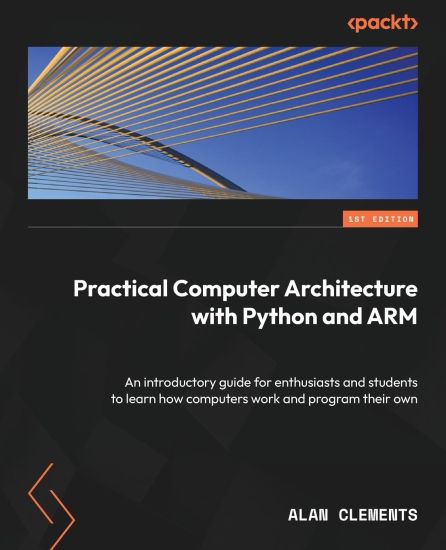
Computer Architecture with Python and ARM

Computer Architecture with Python and ARM

Alan Clements

PACKT PUBLISHING LIMITED
2023
nidottu
Learn computer architecture with Python and ARM, simulating assembly program execution and designing a computer simulator Purchase of the print or Kindle book includes a free PDF eBook Key Features Build a computer simulator with Python: Learn computer architecture by designing and constructing a simulator Python for architecture: Use Python to simulate and execute assembly language instructions ARM programming on Raspberry Pi: Explore ARM assembly language and run programs on Raspberry Pi Book DescriptionThis comprehensive guide offers a unique and immersive learning experience by combining Python programming with ARM architecture. Starting with an introduction to computer architecture and the flow of data within a computer system, you’ll progress to building your own interpreter using Python. You’ll see how this foundation enables the simulation of computer operations and learn ways to enhance a simulator by adding new instructions and displaying improved results. As you advance, you’ll explore the TC1 Assembler and Simulator Program to gain insights into instruction analysis and explore practical examples of simulators. This will help you build essential skills in understanding complex computer instructions, strengthening your grasp of computer architecture. Moreover, you’ll be introduced to the Raspberry Pi operating system, preparing you to delve into the detailed language of the ARM computer. This includes exploring the ARM instruction set architecture, data-processing instructions, subroutines, and the stack. With clear explanations, practical examples, and coding exercises, this resource will enable you to design and construct your own computer simulator, simulate assembly language programs, and leverage the Raspberry Pi for ARM programming.What you will learn Master the core principles of computer architecture Understand the role of registers, memory, and data flow in computers Discover how to design and implement a computer simulator using Python Simulate and execute assembly language programs on the simulator Enhance the simulator using new instructions for improved output Analyze complex computer instructions for deeper architectural understanding Explore the ARM instruction set and data processing on the Raspberry Pi Develop proficiency in writing, assembling, and running ARM code on the Raspberry Pi Who this book is forThis book is for university students studying computer science, particularly those enrolled in a computer architecture module. With its practical approach and succinct explanations, it is also suitable for hobbyists, enthusiasts, and self-learners seeking a deeper understanding of computer systems. The book assumes foundational knowledge of number bases, binary arithmetic, and Boolean logic concepts. While it primarily caters to the computer science field, this book is less geared toward electrical or electronics engineering.
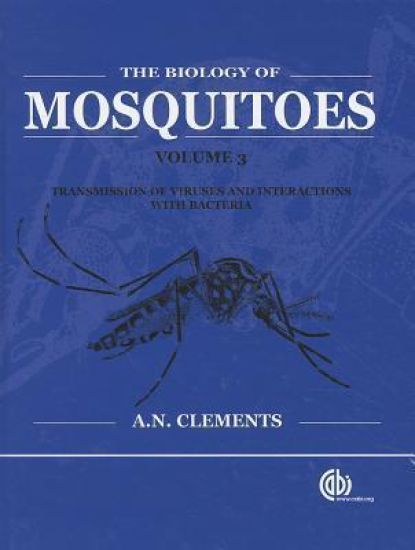
Biology of Mosquitoes, Volume 3

Biology of Mosquitoes, Volume 3

Alan Clements

CABI Publishing
2011
sidottu
The great importance of mosquitoes lies in their role as transmitters of pathogens and parasites, and in their use as experimental animals well suited to laboratory investigations into aspects of biochemistry, physiology and behaviour. The largest part of this latest volume of The Biology of Mosquitoes concerns interactions between mosquitoes and viruses and the transmission of arboviruses to their vertebrate hosts, while the remainder concerns symbiotic interactions between mosquitoes and bacteria. The introduction provides a timely review of the first major development in mosquito taxonomy for several decades. Further chapters describe the interactions between mosquitoes and the viruses that infect them, the transmission and epidemiology of seven very important arboviruses, and the biology of bacteria that are important control agents or of great biological interest. Like the earlier volumes, Volume 3 combines recent information with earlier important findings from field and laboratory to provide the broadest coverage available on the subject.