Kirjojen hintavertailu. Mukana 11 342 296 kirjaa ja 12 kauppaa.

Kirjahaku

Etsi kirjoja tekijän nimen, kirjan nimen tai ISBN:n perusteella.

6 kirjaa tekijältä Alan Cole

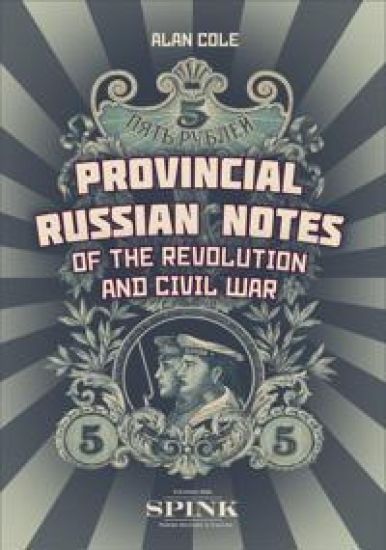
Provincial Russian Notes of the Revolution and Civil War 1917-1923 by Alan M Cole
Of his many fascinations, research collecting of obsolete foreign paper currency for 50 years has led Alan Cole to specialise in the dynamics which are the substance of this book. A reader of histories, he is aware that the fortunes of nations fluctuate and that their progress can be interpreted in a variety of ways. His method in this work is to focus on locations across the grand Russian landmass, moving slowly from west to east in three different phases: Europe to the Urals, Siberia and Central Asia, then Baikalia and the Far East. For each of the cities or towns he identifies, he relates and illustrates paper currency emitted as the Bolshevik Revolution threatened or as a direct consequence of regional civil wars which followed. Russian numismatists and cataloguers may have covered much of this ground. However, the purpose of the present work is to introduce a geographical and historical approach to the infant Soviet Union for the benefit of an English-reading public, and especially those of a note-collecting mind. The five hundred colour images, most not hitherto seen or imagined in Britain, are from the author’s own collection. Their introduction and explanations (some challengeable perhaps) all arise from his own reading and enquiry. The author hopes this book will encourage collecting interests as well as a greater enthusiasm to discover Russia’s history and culture.
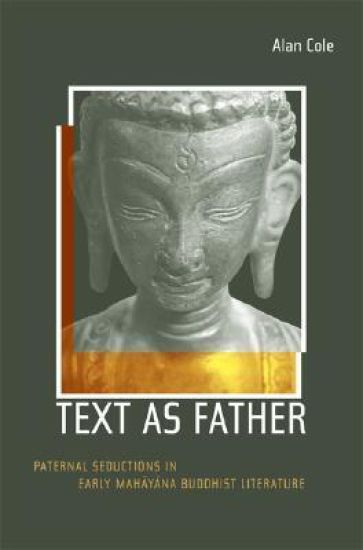
Text as Father

Text as Father

Alan Cole

University of California Press
2005
sidottu
This beautifully written work sheds new light on the origins and nature of Mahayana Buddhism with close readings of four well-known texts--the Lotus Sutra, Diamond Sutra, Tathagatagarbha Sutra, and Vimalakirtinirdesa. Treating these sutras as literary works rather than as straightforward philosophic or doctrinal treatises, Alan Cole argues that these writings were carefully sculpted to undermine traditional monastic Buddhism and to gain legitimacy and authority for Mahayana Buddhism as it was veering away from Buddhism's older oral and institutional forms. His sophisticated and sustained analysis of the narrative structures and seductive literary strategies used in these sutras suggests that they were specifically written to encourage devotion to the written word instead of other forms of authority, be they human, institutional, or iconic.
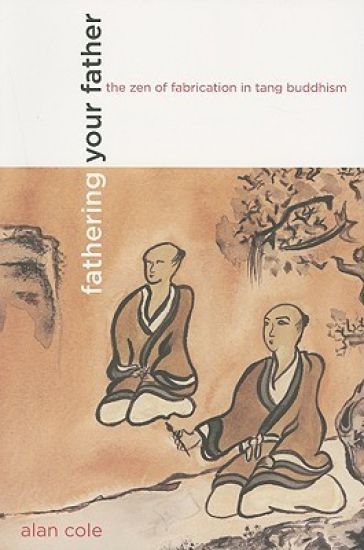
Fathering Your Father

Fathering Your Father

Alan Cole

University of California Press
2009
pokkari
This book offers a provocative rereading of the early history of Chan Buddhism (Zen). Working from a history-of-religions point of view that asks how and why certain literary tropes were chosen to depict the essence of the Buddhist tradition to Chinese readers, this analysis focuses on the narrative logics of the early Chan genealogies - the seventh-and eighth-century lineage texts that claimed that certain high-profile Chinese men were descendents of Bodhidharma and the Buddha. This book argues that early Chan's image of the perfect-master-who-owns-tradition was constructed for reasons that have little to do with Buddhist practice, new styles of enlightened wisdom, or 'orthodoxy', and much more to do with politics, property, geography, and, of course, new forms of writing.
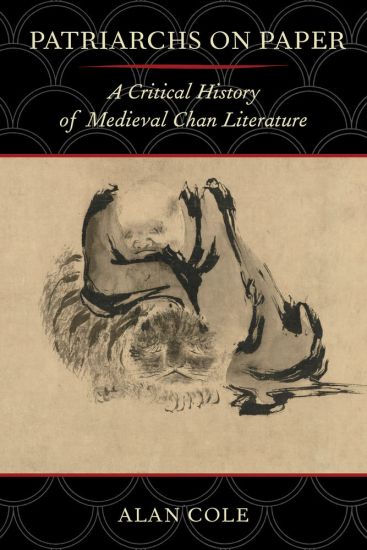
Patriarchs on Paper

Patriarchs on Paper

Alan Cole

University of California Press
2016
sidottu
The truth of Chan Buddhism - better known as "Zen" - is regularly said to be beyond language, and yet Chan authors - medieval and modern - produced an enormous quantity of literature over the centuries. To make sense of this well-known paradox, Patriarchs on Paper explores several genres of Chan literature that appeared during the Tang and Song dynasties (c. 600-1300), including genealogies, biographies, dialogues, poems, monastic handbooks, and koans. Working through this diverse body of literature, Alan Cole details how Chan authors developed several strategies to evoke images of a perfect Buddhism in which wonderfully simple masters transmitted Buddhism's final truth to one another, suddenly and easily, and, of course, independent of literature and the complexities of the Buddhist monastic system. Chan literature, then, reveled in staging delightful images of a Buddhism free of Buddhism, tempting the reader, over and over, with the possibility of finding behind the thick facade of real Buddhism-with all its rules, texts, doctrines, and institutional solidity-an ethereal world of pure spirit. Patriarchs on Paper charts the emergence of this kind of "fantasy Buddhism" and details how it interacted with more traditional forms of Chinese Buddhism in order to show how Chan's illustrious ancestors were created in literature in order to further a wide range of real-world agendas.
Patriarchs on Paper

Patriarchs on Paper

Alan Cole

University of California Press
2016
pokkari
The truth of Chan Buddhism - better known as "Zen" - is regularly said to be beyond language, and yet Chan authors - medieval and modern - produced an enormous quantity of literature over the centuries. To make sense of this well-known paradox, Patriarchs on Paper explores several genres of Chan literature that appeared during the Tang and Song dynasties (c. 600-1300), including genealogies, biographies, dialogues, poems, monastic handbooks, and koans. Working through this diverse body of literature, Alan Cole details how Chan authors developed several strategies to evoke images of a perfect Buddhism in which wonderfully simple masters transmitted Buddhism's final truth to one another, suddenly and easily, and, of course, independent of literature and the complexities of the Buddhist monastic system. Chan literature, then, reveled in staging delightful images of a Buddhism free of Buddhism, tempting the reader, over and over, with the possibility of finding behind the thick facade of real Buddhism-with all its rules, texts, doctrines, and institutional solidity-an ethereal world of pure spirit. Patriarchs on Paper charts the emergence of this kind of "fantasy Buddhism" and details how it interacted with more traditional forms of Chinese Buddhism in order to show how Chan's illustrious ancestors were created in literature in order to further a wide range of real-world agendas.
Fetishizing Tradition

Fetishizing Tradition

Alan Cole

State University of New York Press
2016
pokkari
Describes how religious tradition is established as available within a text, free from ritual and observance, in Buddhism and Christianity.This innovative work documents the literary gesture that "fetishizes tradition," making long-standing religious traditions appear present and available through the reading experience. Taking as examples Paul's Letter to the Romans, the Gospel of Mark, the Sutra on the Land of Bliss (Sukhavativyuha), and the Platform Sutra of the Sixth Patriarch (Liuzu tanjing), Alan Cole shows how these texts invite readers into the fantasy that they can leave behind tradition's established rites, rituals, sacrifices, institutions, and festivals in order to take up just the text and its narrative as the key to salvation. Ironically, then, one's salvation is determined by how one receives the (new) message of salvation. Crucial to making these more virtual forms of tradition appear plausible is the reconstruction of tradition's "truth-fathers"-God or the Buddha, as the case may be-so that they appear to endorse the legitimacy of these new ways of being traditional. Relying on a wide body of critical theory, this book presents an intriguing way to rethink key elements in Christian and Buddhist thought.