Kirjojen hintavertailu. Mukana 11 717 486 kirjaa ja 12 kauppaa.

Kirjahaku

Etsi kirjoja tekijän nimen, kirjan nimen tai ISBN:n perusteella.

3 kirjaa tekijältä Alan G. Smith

Human Rights and Choice in Poverty

Human Rights and Choice in Poverty

Alan G. Smith

Praeger Publishers Inc
1997
sidottu
This interdisciplinary study applies human rights theory to the problems of rural poverty in the Third World. Considering the interdependence of minimal food and health security with minimal assurance of basic freedoms, political scientist Alan G. Smith traces the linkage to the need of the food-insecure to seek clientelistic dependencies on better-off neighbors—relationships that often operate to restrict freedom of choice. In contrast to conventional rural development aid, which can introduce new client dependency if pursued alone, Smith stresses the need to find other forms of aid that would provide the option of assured minimal survival while avoiding the constraints imposed by dependency. Arguing for bolstering bottom-up human rights momentum, he suggests the transfer of appropriate tools into the hands of the target group. Recipients would make use of them to enhance autonomous food-crop production, thereby making client dependency a matter of choice rather than necessity.Smith illustrates the Third World predicament of food insecurity leading to infringement of rights by drawing together empirical evidence from Bangladesh, Botswana, and Tanzania. He further argues that respect for human rights involves a duty on the part of advantaged nations to address the Third World predicament with practical measures fully consistent with human rights, and for each of these three country cases, Smith recommends direct locally specific minimalist aid. His model, its practical illustration, and recommendations should be valuable to academics and students in the fields of rural sociology, anthropology, and political science—especially those focusing on human rights, poverty, and Third World development—as well as bureaucrats and consultants in the development aid field.
A Comparative Introduction to Political Science

A Comparative Introduction to Political Science

Alan G. Smith

Rowman Littlefield
2016
sidottu
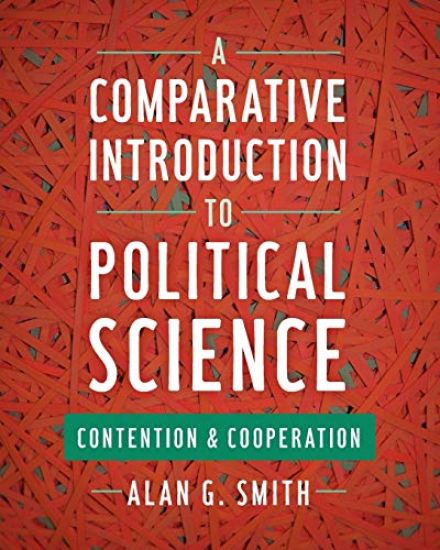
When are legislators inclined to cast votes in cooperation with their parties, and when do they go their own way? When and why do nations contend with each other, and when are they more likely to cooperate? Thematically arranged around the interplay of contention and cooperation, A Comparative Introduction to Political Science encourages students to explore causal factors and consequences related to political phenomena to become knowledgeable and resourceful citizens of their nations and the world. Alan Smith covers how patterns of contention and cooperation—and the resulting government policies—may be affected by such factors as the surrounding political framework, the distribution of influence, and political motivation, including values as well as material interests. To expose students to the politics of specific nations, each chapter concludes with two country case studies that illuminate the theme of the chapter. Students emerge with a sense of what is going on in the world today. Pedagogically, the book employs careful sequencing of topics and concepts for clarity and to introduce politics in a natural, logical, synchronized way. At times Smith goes beyond sharp, night-and-day terminological distinctions to add accessible, ordinary language-based terminology that better captures the real-world spectrum between the extremes. A Comparative Introduction to Political Science: Contention and Cooperation provides a comprehensive teaching and learning package including these ancillaries: ·Test Bank. Available for adopters to download, the Test Bank provides multiple-choice, true/false, and essay questions for each chapter. ·Testing Software. This customizable test bank is available as a Word file or in Respondus 4.0—a powerful tool for creating and managing exams that can be printed out or published directly to the most popular learning management systems. Exams can be created offline or moved from one LMS to another. Respondus LE is available for free and can be used to automate the process of creating printed tests. Respondus 3.5, available for purchase or via a school site license, prepares tests to be uploaded to an LMS. Click here: http://www.respondus.com/products/testbank/search.php to submit your request. ·Companion Website. The open-access Companion Website is designed to engage students with the material and reinforce what they’ve learned in the classroom. For each chapter, flash cards and self-quizzes help students master the content and apply that knowledge to real-life situations. Students can access the Companion Website from their computers, tablets, or mobile devices. ·eBook. The full-color eBook allows students to access this textbook anytime, anywhere. The eBook includes the entire print edition rendered in vibrant color and features direct links to the Companion Website. ·PowerPoint Slides. For every chapter, art slides of all figures and tables are available for adopters to download.
A Comparative Introduction to Political Science

A Comparative Introduction to Political Science

Alan G. Smith

Rowman Littlefield
2016
nidottu
When are legislators inclined to cast votes in cooperation with their parties, and when do they go their own way? When and why do nations contend with each other, and when are they more likely to cooperate? Thematically arranged around the interplay of contention and cooperation, A Comparative Introduction to Political Science encourages students to explore causal factors and consequences related to political phenomena to become knowledgeable and resourceful citizens of their nations and the world. Alan Smith covers how patterns of contention and cooperation—and the resulting government policies—may be affected by such factors as the surrounding political framework, the distribution of influence, and political motivation, including values as well as material interests. To expose students to the politics of specific nations, each chapter concludes with two country case studies that illuminate the theme of the chapter. Students emerge with a sense of what is going on in the world today. Pedagogically, the book employs careful sequencing of topics and concepts for clarity and to introduce politics in a natural, logical, synchronized way. At times Smith goes beyond sharp, night-and-day terminological distinctions to add accessible, ordinary language-based terminology that better captures the real-world spectrum between the extremes. A Comparative Introduction to Political Science: Contention and Cooperation provides a comprehensive teaching and learning package including these ancillaries: ·Test Bank. Available for adopters to download, the Test Bank provides multiple-choice, true/false, and essay questions for each chapter. ·Testing Software. This customizable test bank is available as a Word file or in Respondus 4.0—a powerful tool for creating and managing exams that can be printed out or published directly to the most popular learning management systems. Exams can be created offline or moved from one LMS to another. Respondus LE is available for free and can be used to automate the process of creating printed tests. Respondus 3.5, available for purchase or via a school site license, prepares tests to be uploaded to an LMS. Click here: http://www.respondus.com/products/testbank/search.php to submit your request. ·Companion Website. The open-access Companion Website is designed to engage students with the material and reinforce what they’ve learned in the classroom. For each chapter, flash cards and self-quizzes help students master the content and apply that knowledge to real-life situations. Students can access the Companion Website from their computers, tablets, or mobile devices. ·eBook. The full-color eBook allows students to access this textbook anytime, anywhere. The eBook includes the entire print edition rendered in vibrant color and features direct links to the Companion Website. ·PowerPoint Slides. For every chapter, art slides of all figures and tables are available for adopters to download.