Kirjojen hintavertailu. Mukana 11 342 296 kirjaa ja 12 kauppaa.

Kirjahaku

Etsi kirjoja tekijän nimen, kirjan nimen tai ISBN:n perusteella.

11 kirjaa tekijältä Alan Gallay

Colonial and Revolutionary America

Colonial and Revolutionary America

Alan Gallay

Routledge Member of the Taylor and Francis Group
2010
nidottu
Colonial and Revolutionary America takes a regional approach to understanding the peoples and colonies of early America. It places early America into an Atlantic and comparative context, with emphasis on the impact of trade, warfare, migration, and the vast cultural exchange that took place among American Indians, Africans, and Europeans. Political, social, economic, and cultural history are interwoven to provide a holistic picture that connects local developments to the larger historical forces that shaped the lives of all.
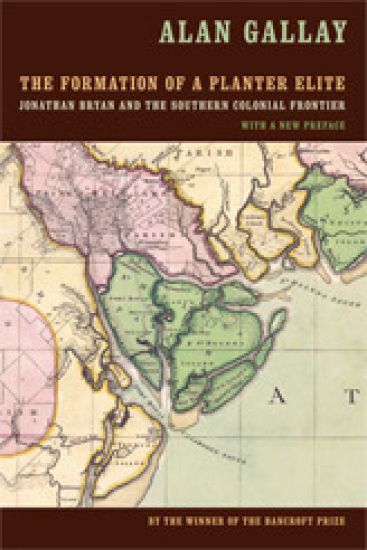
The Formation of a Planter Elite

The Formation of a Planter Elite

Alan Gallay

University of Georgia Press
2007
pokkari
Jonathan Bryan (1708–88) rose from the obscurity of the southern frontier to become one of colonial Georgia’s richest, most powerful men. Along the way he made such influential friends as George Whitefield and James Oglethorpe. Bryan’s contemporaries, in terms of their large holdings of land and slaves, were markedly traditional and conservative. As Alan Gallay shows, Bryan was different. Paternalistic and relatively open minded, Bryan contemplated religious, social, political, and economic ideas that other planters refused to consider. Of equal importance, he explored the geographic areas that lay beyond the reach and understanding of his contemporaries. Through the career of a remarkable individual--which spanned the founding of Georgia, the Revolution, and the birth of the new republic--Gallay chronicles the rise of the plantation slavery system in the colonial South.
The Formation of a Planter Elite

The Formation of a Planter Elite

Alan Gallay

University of Georgia Press
2017
sidottu
Jonathan Bryan (1708–88) rose from the obscurity of the southern frontier to become one of colonial Georgia’s richest, most powerful men. Along the way he made such influential friends as George Whitefield and James Oglethorpe. Bryan’s contemporaries, in terms of their large holdings of land and slaves, were markedly traditional and conservative. As Alan Gallay shows, Bryan was different. Paternalistic and relatively open minded, Bryan contemplated religious, social, political, and economic ideas that other planters refused to consider. Of equal importance, he explored the geographic areas that lay beyond the reach and understanding of his contemporaries. Through the career of a remarkable individual--which spanned the founding of Georgia, the Revolution, and the birth of the new republic--Gallay chronicles the rise of the plantation slavery system in the colonial South.
Colonial and Revolutionary America
Colonial and Revolutionary America takes a regional approach to understanding the peoples and colonies of early America. It places early America into an Atlantic and comparative context, with emphasis on the impact of trade, warfare, migration, and the vast cultural exchange that took place among American Indians, Africans, and Europeans. Political, social, economic, and cultural history are interwoven to provide a holistic picture that connects local developments to the larger historical forces that shaped the lives of all.
Colonial Wars of North America, 1512-1763 (Routledge Revivals)
First published in 1996, this encyclopedia is a comprehensive reference resource that pulls together a vast amount of material on a rich historical era, presenting it in a balanced way that offers hard-to-find facts and detailed information. The volume was the first encyclopedic account of the United States' colonial military experience. It features 650 essays by more than 130 historians, archaeologists, anthropologists, geographers, and other scholarly experts on a variety of topics that cover all of colonial America's diverse peoples. In addition to wars, battles, and treaties, analytical essays explore the diplomatic and military history of over 50 Native American groups, as well as Dutch, English, French, Spanish, and Swiss colonies. It's the first source to consult for the political activities of an Indian nation, the details about the disposition of forces in a battle, or the significance of a fort to its size, location, and strength. In addition to its reference capabilities, the book's detailed material has been, and will continue to be highly useful to students as a supplementary text and as a handy source for reporters and papers.
Colonial Wars of North America, 1512-1763 (Routledge Revivals)
First published in 1996, this encyclopedia is a comprehensive reference resource that pulls together a vast amount of material on a rich historical era, presenting it in a balanced way that offers hard-to-find facts and detailed information. The volume was the first encyclopedic account of the United States' colonial military experience. It features 650 essays by more than 130 historians, archaeologists, anthropologists, geographers, and other scholarly experts on a variety of topics that cover all of colonial America's diverse peoples. In addition to wars, battles, and treaties, analytical essays explore the diplomatic and military history of over 50 Native American groups, as well as Dutch, English, French, Spanish, and Swiss colonies. It's the first source to consult for the political activities of an Indian nation, the details about the disposition of forces in a battle, or the significance of a fort to its size, location, and strength. In addition to its reference capabilities, the book's detailed material has been, and will continue to be highly useful to students as a supplementary text and as a handy source for reporters and papers.
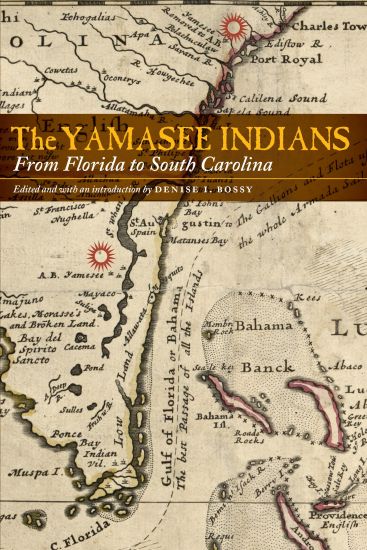
The Yamasee Indians

The Yamasee Indians

Alan Gallay

University of Nebraska Press
2018
sidottu
2019 William L. Proctor Award from the Historic St. Augustine Research Institute The Yamasee Indians are best known for their involvement in the Indian slave trade and the eighteenth-century war (1715–54) that took their name. Yet their significance in colonial history is far larger than that. Denise I. Bossy brings together archaeologists of South Carolina and Florida with historians of the Native South, Spanish Florida, and British Carolina for the first time to answer elusive questions about the Yamasees’ identity, history, and fate. Until now scholarly works have rarely focused on the Yamasees themselves. In southern history, the Yamasees appear only sporadically outside of slave raiding or the Yamasee War. Their culture and political structures, the complexities of their many migrations, their kinship networks, and their survival remain largely uninvestigated. The Yamasees’ relative obscurity in scholarship is partly a result of their geographic mobility. Reconstructing their past has posed a real challenge in light of their many, often overlapping migrations. In addition, the campaigns waged by the British (and the Americans after them) to erase the Yamasees from the South forced Yamasee survivors to camouflage their identities bit by bit.The Yamasee Indians recovers the complex history of these peoples. In this critically important new volume, historians and archaeologists weave together the fractured narratives of the Yamasees through probing questions about their mobility, identity, and networks.
The Yamasee Indians

The Yamasee Indians

Alan Gallay

University of Nebraska Press
2022
pokkari
2019 William L. Proctor Award from the Historic St. Augustine Research Institute The Yamasee Indians are best known for their involvement in the Indian slave trade and the eighteenth-century war (1715–54) that took their name. Yet their significance in colonial history is far larger than that. Denise I. Bossy brings together archaeologists of South Carolina and Florida with historians of the Native South, Spanish Florida, and British Carolina for the first time to answer elusive questions about the Yamasees’ identity, history, and fate. Until now scholarly works have rarely focused on the Yamasees themselves. In southern history, the Yamasees appear only sporadically outside of slave raiding or the Yamasee War. Their culture and political structures, the complexities of their many migrations, their kinship networks, and their survival remain largely uninvestigated. The Yamasees’ relative obscurity in scholarship is partly a result of their geographic mobility. Reconstructing their past has posed a real challenge in light of their many, often overlapping migrations. In addition, the campaigns waged by the British (and the Americans after them) to erase the Yamasees from the South forced Yamasee survivors to camouflage their identities bit by bit.The Yamasee Indians recovers the complex history of these peoples. In this critically important new volume, historians and archaeologists weave together the fractured narratives of the Yamasees through probing questions about their mobility, identity, and networks.
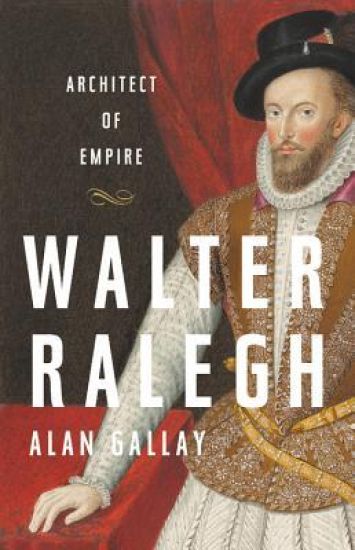
Walter Ralegh

Walter Ralegh

Alan Gallay

Basic Books
2019
sidottu
Sir Walter Ralegh was the favourite of Queen Elizabeth, who showered him estates, jewels, monopolies, and political appointments earning him the reputation of "the most hated man in England." A man of many talents, he helped convince Elizabeth she should be empress of a great empire, on the condition that he be the one to shape her realm from the first. In Walter Ralegh, eminent historian Alan Gallay tells the fascinating story of how Ralegh helped create the largest empire the world has ever seen.A courtier, buccaneer, soldier, explorer, and statesman -- as well as a poet, historian, naval strategist, and scientist -- Ralegh is best known in the US for trying, and failing, to found Roanoke, the first English colony in America. But that event does not even begin to suggest the world-historical import of his adventures. Inspired by the mystical religious philosophy of hermeticism, Ralegh (popularly, and mistakenly, spelt "Raleigh") believed that England could build an empire without the conquest of native peoples, an empire in which English settlers and American Indians would live together, or, alternatively, where natives became allies and England would not interfere with their way of life. Playing a lead role in England's simultaneous attempt to colonise North America, South America, and Ireland, Ralegh shaped the English Empire at its birth, motivated by the wild idealism that the answer to English fears of national decline resided in the Americas, where natives blessed by God would reveal the mysteries of the universe.In the end, colonialism left a legacy of brutal exploitation far different from Ralegh's idealisations. Examining Ralegh's life, Gallay reveals that Elizabethans had complex and often contrary views on colonisation, seeing it as a means of achieving transcendence or, just as often, of achieving wealth and glory through war and subjugation. From Ralegh's introduction of the potato to Ireland to his creation of the most famous medicine of seventeenth-century England, from his failed colonial experiment on Roanoke island to his search for El Dorado, Gallay chronicles Ralegh's legendary life and offers a new origin story for the English Empire.
Walter Ralegh Lib/E: Architect of Empire
From a Bancroft Prize-winning historian, a biography of the famed poet, courtier, and colonizer, showing how he laid the foundations of the English EmpireSir Walter Ralegh was a favorite of Queen Elizabeth. She showered him with estates and political appointments. He envisioned her becoming empress of a universal empire. She gave him the opportunity to lead the way. In Walter Ralegh, Alan Gallay shows that, while Ralegh may be best known for founding the failed Roanoke colony, his historical importance vastly exceeds that enterprise. Inspired by the mystical religious philosophy of hermeticism, Ralegh led English attempts to colonize in North America, South America, and Ireland. He believed that the answer to English fears of national decline resided overseas -- and that colonialism could be achieved without conquest. Gallay reveals how Ralegh launched the English Empire and an era of colonization that shaped Western history for centuries after his death
Walter Ralegh: Architect of Empire
From a Bancroft Prize-winning historian, a biography of the famed poet, courtier, and colonizer, showing how he laid the foundations of the English EmpireSir Walter Ralegh was a favorite of Queen Elizabeth. She showered him with estates and political appointments. He envisioned her becoming empress of a universal empire. She gave him the opportunity to lead the way. In Walter Ralegh, Alan Gallay shows that, while Ralegh may be best known for founding the failed Roanoke colony, his historical importance vastly exceeds that enterprise. Inspired by the mystical religious philosophy of hermeticism, Ralegh led English attempts to colonize in North America, South America, and Ireland. He believed that the answer to English fears of national decline resided overseas -- and that colonialism could be achieved without conquest. Gallay reveals how Ralegh launched the English Empire and an era of colonization that shaped Western history for centuries after his death