Kirjojen hintavertailu. Mukana 11 244 527 kirjaa ja 12 kauppaa.

Kirjahaku

Etsi kirjoja tekijän nimen, kirjan nimen tai ISBN:n perusteella.

7 kirjaa tekijältä Alan Gilchrist

Seeing Black and White

Seeing Black and White

Alan Gilchrist

Oxford University Press Inc
2006
sidottu
Most people are surprised to learn that seeing has not yet been explained by science. Incredibly, scientists cannot even explain why some surfaces appear to be black while others appear to be white. The physical difference between a surface that appears to be black and one that appears to be white results from the percentage ot light that the object reflects, known as reflectance. A white surface reflects 30 times more light into the eye than a black surface. The amount of light reflected by a surface into the eye is, however, a product of more than its own reflectance; it is also a product of the intensity of illumination it receives. A sheet of white paper lying within a shadow can easily reflect the same absolute amount of light as a sheet of black paper lying outside the shadow. Thus, there is essentially no correlation between the amount of light reflected by a suface and its physical shade: a black paper in a bright light and a white paper in shadow reflect identical light to the eye. Still, the black paper appears to be black and the white paper appears to be white. How can it be? Somehow the visual system must use the surrounding context. But how? Good thinkers have struggled with this problem for over a thousand years, and the last 150 years have witnessed a sustained assault on the problem. In this volume, Alan Gilchrist, one of the leading researchers in achromatic perception, reviews the history of the scientific development of lightness theory from the nineteenth century until the present and outlines and critiques all the main theories of lightness, laying out the strengths and weaknesses of each. Based on thirty years of research, Gilchrist presents his own argument that previous models of lightness perception are too good because they fail to capture the errors and illusions present in human perception. These errors may contain crucial clues in the sense that the overall pattern of errors is the signature of the human visual system.

The Foetal Circulation

The Foetal Circulation

Alan Gilchrist

Authorhouse UK
2018
pokkari
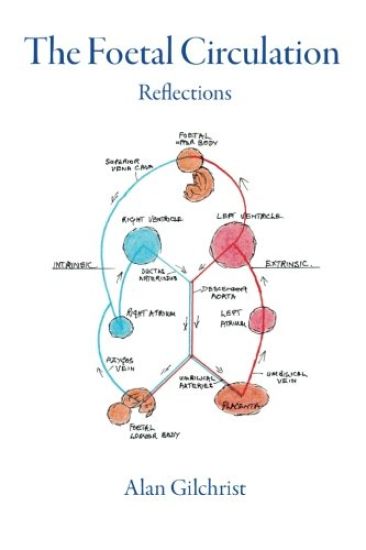
It is in 3 parts, with generous illustrations throughout. The first part gives a brief account of the authors discovery of a foetal heart in 1965, which is followed by descriptions of his dissections of foetal lambs and the valuable information they give. The second part covers the authors comprehensive account of the human foetal circulation, which he divides into three sections: for the upper body, lower body and placenta. The structure and function of the lung are compared with those of the placenta. Details of the foramen ovale are given, and the importance of the 3rd heart sound made by the valve. In part 3 the author gives his own ideas of the birth changes. He insists that it is the foetus which is delivered, and that the baby is born after delivery when the first deep breath is taken, which changes the hidden foetal features into those of the baby. He has suggestions for the management of delay in the onset of breathing. He shows why there has been discord between the orthodox accounts and his own. He suggests research in the chick embryo, which has a circulation similar to that of the human foetus.
The Foetal Circulation

The Foetal Circulation

Alan Gilchrist

Authorhouse UK
2019
pokkari
This little book first appeared on the public stage to a small audience in 2011. The 2019 6th edition now bows out for the last time. There had to be further editions after the first when the author, his most severe critic, introduced new ideas and corrected the errors of the previous ones. But running through them all has been the strong thread of his conviction that the placental supply for the foetus feeds the left atrium, not the right, and that it is the foetus which is delivered: the baby is born after the delivery when the first deep breath is taken. In this final edition the author shows the correct supply for the left atrium by some fundamental facts of physiology and by direct observations of the foetus: human and sheep, which demolish the long-established orthodox accounts. One of his glaring errors in the 4th version was to deny the lungs a pulmonary circulation. In this present edition he not only corrects himself, but uncovers the full pathway of this circulation, which shows the course taken by the arterial supply and the venous return. There is a comprehensive valuable account of the foramen ovale, which, like many of the other aspects of this work, are entirely new. The unique characteristics of the foetal heart sounds are described, which any lady in the later months of pregnancy may hear with a Doppler monitor, and which confirm that the placental flow enters the left atrium. The invisible birth changes which have never been seen, are guessed at in full detail. The work is generously illustrated with diagrams, drawings and photos from the hands of the author.