Kirjojen hintavertailu. Mukana 12 044 855 kirjaa ja 12 kauppaa.

Kirjahaku

Etsi kirjoja tekijän nimen, kirjan nimen tai ISBN:n perusteella.

27 kirjaa tekijältä Alan Jacobs

Original Sin: A Cultural History
Essayist and biographer Alan Jacobs introduces us to the world of original sin, which he describes as not only a profound idea but a necessary one. As G. K. Chesterton explains, "Only with original sin can we at once pity the beggar and distrust the king."Do we arrive in this world predisposed to evil? St. Augustine passionately argued that we do; his opponents thought the notion was an insult to a good God. Ever since Augustine, the church has taught the doctrine of original sin, which is the idea that we are not born innocent, but as babes we are corrupt, guilty, and worthy of condemnation. Thus started a debate that has raged for centuries and done much to shape Western civilization.Perhaps no Christian doctrine is more controversial; perhaps none is more consequential. Blaise Pascal claimed that "but for this mystery, the most incomprehensible of all, we remain incomprehensible to ourselves." Chesterton affirmed it as the only provable Christian doctrine. Modern scholars assail the idea as baleful and pernicious. But whether or not we believe in original sin, the idea has shaped our most fundamental institutions--our political structures, how we teach and raise our young, and, perhaps most pervasively of all, how we understand ourselves. In Original Sin, Alan Jacobs takes readers on a sweeping tour of the idea of original sin, its origins, its history, and its proponents and opponents. And he leaves us better prepared to answer one of the most important questions of all: Are we really, all of us, bad to the bone?
The Narnian

The Narnian

Alan Jacobs

HARPERCOLLINS PUBLISHERS INC
2008
nidottu
A journey into the imagination of C.S. Lewis explores the themes and life events that contributed to The Chronicles of Narnia, the most enduring classics of children's literature C.S. Lewis was one of the intellectual giants of the 20th century and arguably the most influential Christian writer of his day. Yet among his poetry, literary history and criticism, novels and Christian apologetics stands a unique, delightfully imaginative children's series called The Chronicles of Narnia, which have become enduring classics. Alan Jacobs takes this imaginary world of Narnia and uses the themes and stories found within to explore the imaginative life of C.S. Lewis. Not just a conventional, straightforward biography of Lewis, Jacobs instead seeks a more elusive quarry: an understanding of the way Lewis's experiences, both direct and literary, formed themselves into patterns--themes that then shaped his thought and writings, especially the stories of Narnia.
The Year of Our Lord 1943

The Year of Our Lord 1943

Alan Jacobs

Oxford University Press Inc
2018
sidottu
By early 1943, it had become increasingly clear that the Allies would win the Second World War. Around the same time, it also became increasingly clear to many Christian intellectuals on both sides of the Atlantic that the soon-to-be-victorious nations were not culturally or morally prepared for their success. A war won by technological superiority merely laid the groundwork for a post-war society governed by technocrats. These Christian intellectuals-- Jacques Maritain, T. S. Eliot, C. S. Lewis, W. H. Auden, and Simone Weil, among others--sought both to articulate a sober and reflective critique of their own culture and to outline a plan for the moral and spiritual regeneration of their countries in the post-war world. In this book, Alan Jacobs explores the poems, novels, essays, reviews, and lectures of these five central figures, in which they presented, with great imaginative energy and force, pictures of the very different paths now set before the Western democracies. Working mostly separately and in ignorance of one another's ideas, the five developed a strikingly consistent argument that the only means by which democratic societies could be prepared for their world-wide economic and political dominance was through a renewal of education that was grounded in a Christian understanding of the power and limitations of human beings. The Year of Our Lord 1943 is the first book to weave together the ideas of these five intellectuals and shows why, in a time of unprecedented total war, they all thought it vital to restore Christianity to a leading role in the renewal of the Western democracies.
The Pleasures of Reading in an Age of Distraction

The Pleasures of Reading in an Age of Distraction

Alan Jacobs

Oxford University Press Inc
2011
sidottu
Is reading under threat? No, says Alan Jacobs--but people do need help iand encouragemnt to enjoy it to the full. Jacobs's experience as a lecturer and many-time author suggests that many readers lack confidence; they wonder whether they are reading well, with proper focus and attentiveness, with due discretion and discernment. Many have absorbed the puritanical message that reading is, first and foremost, good for you--the intellectual equivalent of eating your Brussels sprouts. For such people, indeed for all readers, Jacobs offers some simple, powerful, and much needed advice: read at whim, read what gives you delight, and do so without shame, whether it be Stephen King or the King James Version of the Bible. He offers an insightful, accessible, and playfully irreverent guide for aspiring readers. Each chapter focuses on one aspect of approaching literary fiction, poetry, or nonfiction, and the book explores everything from the invention of silent reading, reading responsively, rereading, and reading on electronic devices. Invitingly written, with equal measures of wit and erudition, The Pleasures of Reading in an Age of Distraction will appeal to all readers, whether they be novices looking for direction or old hands seeking to recapture the pleasures of reading they first experienced as children.
A Theology Of Reading

A Theology Of Reading

Alan Jacobs

Routledge
2019
sidottu
If the whole of the Christian life is to be governed by the ?law of love??the twofold love of God and one's neighbor?what might it mean to read lovingly? That is the question that drives this unique book. Jacobs pursues this challenging task by alternating largely theoretical, theological chapters?drawing above all on Augustine and Mikhail Bakhtin?
How to Think: A Survival Guide for a World at Odds
"Absolutely splendid . . . essential for understanding why there is so much bad thinking in political life right now." --David Brooks, New York TimesHow to Think is a contrarian treatise on why we're not as good at thinking as we assume--but how recovering this lost art can rescue our inner lives from the chaos of modern life. As a celebrated cultural critic and a writer for national publications like The Atlantic and Harper's, Alan Jacobs has spent his adult life belonging to communities that often clash in America's culture wars. And in his years of confronting the big issues that divide us--political, social, religious--Jacobs has learned that many of our fiercest disputes occur not because we're doomed to be divided, but because the people involved simply aren't thinking. Most of us don't want to think. Thinking is trouble. Thinking can force us out of familiar, comforting habits, and it can complicate our relationships with like-minded friends. Finally, thinking is slow, and that's a problem when our habits of consuming information (mostly online) leave us lost in the spin cycle of social media, partisan bickering, and confirmation bias. In this smart, endlessly entertaining book, Jacobs diagnoses the many forces that act on us to prevent thinking--forces that have only worsened in the age of Twitter, "alternative facts," and information overload--and he also dispels the many myths we hold about what it means to think well. (For example: It's impossible to "think for yourself.") Drawing on sources as far-flung as novelist Marilynne Robinson, basketball legend Wilt Chamberlain, British philosopher John Stuart Mill, and Christian theologian C.S. Lewis, Jacobs digs into the nuts and bolts of the cognitive process, offering hope that each of us can reclaim our mental lives from the impediments that plague us all. Because if we can learn to think together, maybe we can learn to live together, too.
The Book of Common Prayer

The Book of Common Prayer

Alan Jacobs

Princeton University Press
2019
pokkari
How The Book of Common Prayer became one of the most influential works in the English languageWhile many of us are familiar with such famous words as “Dearly beloved, we are gathered together here. . .” or “Ashes to ashes, dust to dust,” we may not know that they originated in The Book of Common Prayer, which first appeared in 1549. Like the words of the King James Bible and Shakespeare, the language of this prayer book has saturated English culture and letters. Here Alan Jacobs tells its story. He shows how The Book of Common Prayer—from its beginnings as a means of social and political control in the England of Henry VIII to its worldwide presence today—became a venerable work whose cadences express the heart of religious life for millions.
Paradise Lost

Paradise Lost

Alan Jacobs

PRINCETON UNIVERSITY PRESS
2025
sidottu
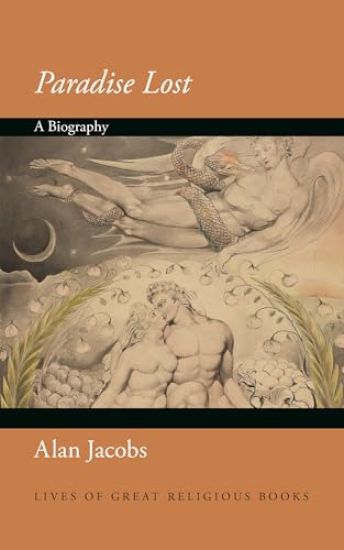
The life and times of Milton’s epic poem about Satan’s revolt against God and humanity’s expulsion from paradiseJohn Milton’s Paradise Lost has secured its place in the pantheon of epic poems, but unlike almost all other works in the pantheon, it is intimately associated with religious doctrine and its implications for how we live our lives. For more than three centuries, it has been a flashpoint for arguments not just about Christianity but also about governance, rebellion and obedience, sexual politics, and what makes poetry great. Alan Jacobs tells the story of Milton’s enduring poem, shedding light on its composition and reception and explaining why it resonates so powerfully with us today.Composed through dictation after Milton went blind in 1652, Paradise Lost centers on an ancient biblical answer to the eternal question of how evil came into the world. It has proved impossible to disentangle the defense or critique of the poem from attitudes toward Christianity itself. Does Christian theology entail monarchy or democracy? Are relations between the sexes thwarted by pompous and tyrannical men or by vain and disobedient women? Jacobs traces how generations of readers have grappled with these and other questions, along the way revealing how Milton’s poem influenced novelists like Mary Shelley and Philip Pullman and has served as the inspiration for paintings, operas, comic books, and video games.An essential companion to Milton’s poetic masterpiece, this book shows why Paradise Lost continues to serve as a mirror reflecting our own complex attitudes about power and authority, justice and revolt, and sin and salvation.
Wayfaring

Wayfaring

Alan Jacobs

William B Eerdmans Publishing Co
2010
nidottu
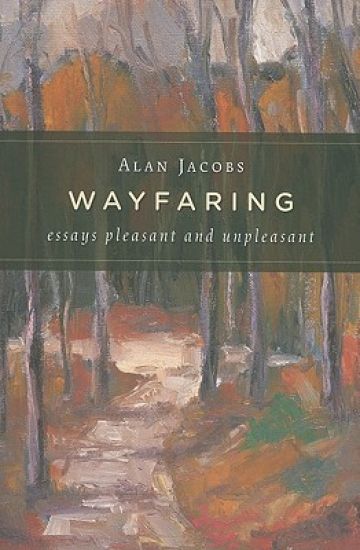
Alan Jacobs is fond of the essay because it lets a writer do something that more formal pieces of writing cannot: follow the -vagaries of the mind, - let the writing follow its own path, encountering surprises and fresh insights along the way. In this new collection, Jacobs offers essays for companionable wayfaring. To be a Christian, he says, is to be a wayfarer, to move hopefully towards a cherished goal. These essays are a wayfarer's notes, a record of ideas and experiences encountered on the pilgrim path. Gathered here are pieces serious and comic, eloquent and interesting. Jacobs muses on the usefulness and dangers of blogging, the art of dictionary making, the world of Harry Potter, and an appreciation of trees. He also includes several book reviews, including a wickedly witty poem. With Wayfaring, Jacobs continues his tradition of exploring Christian theology and experience by way of the essay, bringing serious musings within reach of us all.
A Theology Of Reading

A Theology Of Reading

Alan Jacobs

Westview Press Inc
2001
nidottu
If the whole of the Christian life is to be governed by the "law of love"—the twofold love of God and one's neighbor—what might it mean to read lovingly? That is the question that drives this unique book. Through theological reflection interspersed with readings of literary texts (Shakespeare and Cervantes, Nabokov and Nicholson Baker, George Eliot and W. H. Auden and Dickens), Jacobs pursues an elusive quarry: the charitable reader.
What Became of Wystan?

What Became of Wystan?

Alan Jacobs

University of Arkansas Press
1998
sidottu
In this lucid and balanced treatise Alan Jacobs reveals the true parameters of Auden's change after the poet's move to America in 1939. By carefully examining poems that represent transitional moments in Auden's thinking, Jacobs identifies the points at which the tectonic plates of the poet's intellect clashed and the buckles and rifts these pressures caused in Auden's body of work.
What Became of Wystan?

What Became of Wystan?

Alan Jacobs

University of Arkansas Press
1999
nidottu
In this lucid and balanced treatise Alan Jacobs reveals the true parameters of Auden's change after the poet's move to America in 1939. By carefully examining poems that represent transitional moments in Auden's thinking, Jacobs identifies the points at which the tectonic plates of the poet's intellect clashed and the buckles and rifts these pressures caused in Auden's body of work.
The Gnostic Gospels – Sacred Texts

The Gnostic Gospels – Sacred Texts

Alan Jacobs

Watkins Publishing
2016
sidottu
The selections made in this volume shed light on these esoteric doctrines revealing intimate conversations between Jesus and his Disciples. The Gospel of Mary Magdalene throws new light on his relationship with this favourite disciple. The Gospel of Thomas contains concentrated mini-parables, containing deep inward and symbolic meaning, many of which are not found in the New Testament. The texts chosen are relevant to many of the perplexities of contemporary life and deal with the questions of good and evil, sin and suffering and the path to salvation.
How To Think

How To Think

Alan Jacobs

Profile Books Ltd
2018
pokkari
How to Think is a contrarian treatise on why we're not as good at thinking as we assume - but how recovering this lost art can rescue our inner lives from the chaos of modern life. Most of us don't want to think, writes the American essayist Alan Jacobs. Thinking is trouble. It can force us out of familiar, comforting habits, and it can complicate our relationships with like-minded friends. Finally, thinking is slow, and that's a problem when our habits of consuming information (mostly online) leave us lost in the echo chamber of social media, where speed and factionalism trump accuracy and nuance. In this clever, witty book, Jacobs diagnoses the many forces that prevent thought - forces that have only worsened in the age of Twitter, such as "alternative facts," and information overload. He also dispels the many myths we hold about what it means to think well. (For example: it's impossible to "think for yourself.") Drawing on sources as far-flung as the novelist Marilynne Robinson, the basketball legend Wilt Chamberlain, the British philosopher John Stuart Mill and the Christian theologian C.S. Lewis, Jacobs digs into the nuts and bolts of the cognitive process, offering hope that each of us can reclaim our mental lives from the whirlpool of what now passes for public debate. After all, if we can learn to think together, perhaps we can learn to live together.
Native American Wisdom - Sacred Texts

Native American Wisdom - Sacred Texts

Alan Jacobs

Watkins Publishing
2018
nidottu
Although there are major differences in the lifestyles of the numerous Native American nations, they share fundamental beliefs. The spiritual wisdom of these people is based on a love and reverence for Nature, a belief in a Supreme Being and a spirit world that interacts with human activity. Organized in alphabetical order and grouped around the main Native American Nations from Apache to Zuni, including the Sioux, Eskimo, Cherokee and many more, the evocative words that Alan Jacobs has selected from all the major tribes express the love and respect they feel for their environment and our place within it.
Socrates Without Tears

Socrates Without Tears

Alan Jacobs

John Hunt Publishing
2011
nidottu
SOCRATES WITHOUT TEARS is a beautifully written Novella which reveals the exciting discovery of the long lost Dialogues of Socrates by his devoted pupil Aeschines. They give us a totally different picture of Socrates' great wisdom told with amusement and irony. It shows Socrates connection with Eastern Non Dual Thought and portrays the mildly camp atmosphere of the Symposium in graphic form .It will appeal to all seekers after truth in a palatable form and as the title says 'without tears'.
Principal Upanishads

Principal Upanishads

Alan Jacobs

O Books
2003
nidottu
The "Upanishads" are the sacred writings of Hinduism. They are perhaps the greatest of all the books in the history of world religions. Their origins predate recorded history, being revealed to the Rishis of the Vedic civilization some 5000 to 10,000 years ago. Many see them as the kernel of the mystical, philosophical truths that are the basis of the Higher World religion of Hinduism, their cradle, of which Buddhism is a successor and Judaism is an offshoot. With Islam and Christianity being offshoots of Judaism, this makes them the foundational documents for understanding and practising religion today. Much of the original text of the "Upanishads" is archaic and occasionally corrupted, but it does convey a moral and ethical thrust that is abundantly clear. Alan Jacobs uses modern free verse to convey the essential meaning and part of the original text. He omits Sanskrit words as far as possible and the commentary provided is contemporary rather than ancient.
Bhagavad Gita, The

Bhagavad Gita, The

Alan Jacobs

O Books
2003
nidottu
The "Bhagavad Gita" is a sacred scripture of epic dimensions and is the key sacred text of Hinduism. It means the "song of God" and is often called the "Song Celestial". Alan Jacobs uses contemporary free verse based on innovative metaphors to provide a clear meaning for today's readers. It is mandala poetry - each verse being a mandala for meditation.