Kirjojen hintavertailu. Mukana 11 699 587 kirjaa ja 12 kauppaa.

Kirjahaku

Etsi kirjoja tekijän nimen, kirjan nimen tai ISBN:n perusteella.

50 kirjaa tekijältä Alan Jones

Soul Making

Soul Making

Alan Jones

HarperOne
1989
nidottu
A leading spiritual writer invites Christians to discover "the desert way of believing"--experiencing the "barren yet beautiful terrain" of the heart, where we find the clearest wellsprings of faith and the possibility of revelation, conversion, and transformation.
Chemistry: An Introduction for Medical and Health Sciences
Chemistry: An Introduction for Medical and Health Sciences provides students and practitioners with a clear, readable introduction to the chemical terms and concepts that are relevant to their study and practice. Assuming little prior knowledge of the subject the book describes and explains the chemistry underlying many of the most commonly prescribed drugs and medicines. It also includes information on chemical aspects of digestion and nutrition, oxidation, radioactivity and an overview of how chemicals fight disease. Excellent pedagogy including learning objectives, diagnostic tests and questions in each chapter and a comprehensive glossaryExperienced author team with many years experience of teaching chemistry to non-chemists
Keeping Parrots

Keeping Parrots

Alan Jones

THE CROWOOD PRESS LTD
2021
nidottu
Parrots are considered to be one of the most intelligent types of bird and it is their innate characteristics that have made them popular to keep as pets since the Roman times, although parrot-keeping reached its peak only in the last century. Their popularity can be attributed to their colourful plumage, their intelligence and flair for mimicry, their playful behaviour and ability to bond with human beings. Naturally they require a considerable amount of dedicated care, attention and psychological stimulation in order to lead happy, balanced and contented lives. It is therefore essential that parrot owners are aware of their pet's needs, day-to-day requirements and their responsibilities as owners. This new paperback edition for 2021 covers the day to day care of your parrot; how to create the right environment for your parrot; dietary needs and the importance of feeding a balance diet; practical advice on grooming and feather plucking; common disease in parrots; recognising the symptoms; managing behaviour and effective training. Finally, there is a chapter on breeding parrots; incubation and hand rearing.
Passion for Pilgrimage

Passion for Pilgrimage

Alan Jones

Morehouse Publishing
1999
pokkari
The Christian spiritual journey is a pilgrimage to wholeness, a search for home that is in God. In this classic work on contemporary spiritual living, Alan Jones explores the various parts of the pilgrimage home. Using literature, art, and biblical texts as illustrations, he explores our search for light and love, repentance, and forgiveness in the context of the Passion and Easter stories.An excellent book for group study during Lent and Easter, this new edition includes study questions at the end of each chapter. Passio for Pilgrimage is also provocative reading for individuals at any time of the year who want to understand the Christian journey more deeply.
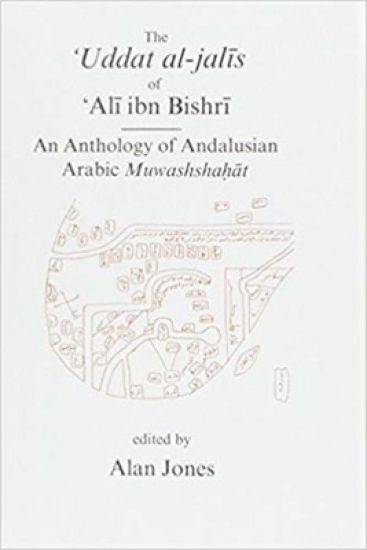
Uddat al-Jalis of Ibn Bishri

Uddat al-Jalis of Ibn Bishri

Alan Jones

Gibb Memorial Trust
1992
sidottu
This is an anthology of outstanding literary importance, probably the most valuable work of Arabic poetry to surface this century. It contains the largest and best collection of Andalusian Muwashshat , 354 in all, of which over 280 are not known from any other source. Arabic text.
The Qur'an

The Qur'an

Alan Jones

Gibb Memorial Trust
2007
nidottu
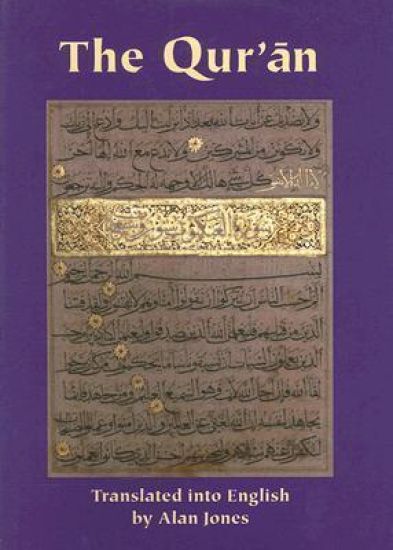
The Qur'an is the sacred book of Islam. For Muslims it is the word of God revealed in Arabic by the archangel Gabriel to the Prophet Muhammad, and thence to mankind. Originally it was delivered orally: traditional sources indicate that Muhammad always recited his message. He was a preacher; he delivered good news; and he warned; thus, the Qur'an is a collection of sermons, exhortations, guidance, warnings and pieces of encouragement. This new translation is unique. The result of decades of study of the text, of the traditional Muslim authorities and of the works of other scholars, special thought has been given to what the text would have meant to its original hearers. The traditional verse structure has been maintained, and where necessary verses have been further divided into sections to indicate where there are natural points for pause, and to emphasize the original oral nature of the text. This is the first translation of the Qur'an to adopt such an approach. The oral nature of the text presents problems for the translator, for recitation frequently gives the text a dimension that does not come across in silent reading. Some previous translators have introduced bridging phrases drawn from past commentators, resulting in interruptions to the flow of the text. Alan Jones's approach underlines the need for a sympathetic response to the oral and aural structures of the Arabic of the Qur'an. An introductory note to each sura provides some background material on the contents of the sura and its dating, and the notes are kept to a minimum. The translation is preceded by a brief Introduction describing the religion and culture of the Arabian peninsula, and the land and its peoples, in the years before Muhammad's birth. There is an account of his life: his early years in Mecca, the hijra, the migration to Medina, and his years there. And there is an account of the Qur'an and the transmission of the text. Alan Jones is a specialist in early Arabic literature, and the author of Early Arabic Poetry, two books of translations and commentary on pre-Islamic poetry. He has been a lecturer and teacher of Arabic at Oxford University for 43 years; now retired he is at work on a commentary to accompany this new translation of the Qur'an. A Festschrift, Islamic Reflections, Arabic Musings was published by Oxbow on behalf of the Gibb Memorial Trust, in his honour.
The Qur'an

The Qur'an

Alan Jones

Gibb Memorial Trust
2007
sidottu
The Qur'an is the sacred book of Islam. For Muslims it is the word of God revealed in Arabic by the archangel Gabriel to the Prophet Muhammad, and thence to mankind. Originally it was delivered orally: traditional sources indicate that Muhammad always recited his message. He was a preacher; he delivered good news; and he warned; thus, the Qur'an is a collection of sermons, exhortations, guidance, warnings and pieces of encouragement. This new translation is unique. The result of decades of study of the text, of the traditional Muslim authorities and of the works of other scholars, special thought has been given to what the text would have meant to its original hearers. The traditional verse structure has been maintained, and where necessary verses have been further divided into sections to indicate where there are natural points for pause, and to emphasize the original oral nature of the text. This is the first translation of the Qur'an to adopt such an approach. The oral nature of the text presents problems for the translator, for recitation frequently gives the text a dimension that does not come across in silent reading. Some previous translators have introduced bridging phrases drawn from past commentators, resulting in interruptions to the flow of the text. Alan Jones's approach underlines the need for a sympathetic response to the oral and aural structures of the Arabic of the Qur'an. An introductory note to each sura provides some background material on the contents of the sura and its dating, and the notes are kept to a minimum. The translation is preceded by a brief Introduction describing the religion and culture of the Arabian peninsula, and the land and its peoples, in the years before Muhammad's birth. There is an account of his life: his early years in Mecca, the hijra, the migration to Medina, and his years there. And there is an account of the Qur'an and the transmission of the text. Alan Jones is a specialist in early Arabic literature, and the author of Early Arabic Poetry, two books of translations and commentary on pre-Islamic poetry. He has been a lecturer and teacher of Arabic at Oxford University for 43 years; now retired he is at work on a commentary to accompany this new translation of the Qur'an. A Festschrift, Islamic Reflections, Arabic Musings was published by Oxbow on behalf of the Gibb Memorial Trust, in his honour.

Arabic Through the Qur'an

Arabic Through the Qur'an

Alan Jones

The Islamic Texts Society
2005
sidottu
Written by Prof Alan Jones, professor of Arabic at Oxford University, this work aims at teaching Arabic using only the vocabulary in the Qur'an. In forty lessons and starting with the alphabet, 'Arabic Through the Qur'an' covers the whole of Arabic grammar. Each lesson is followed by exercises and a key to the exercises is available at the end of the book. 'Arabic Through the Qur'an' gives the student a thorough understanding of Arabic grammar and a substantial vocabulary from the Qur'an including many of the often repeated verses. 'Arabic Through the Qur'an' is an indispensable aid both to those wanting to learn Arabic in order to be able to read the Qur'an and to Arabic students at university level.
Arabic Through the Qur'an

Arabic Through the Qur'an

Alan Jones

The Islamic Texts Society
2005
nidottu
Written by Prof Alan Jones, professor of Arabic at Oxford University, this work aims at teaching Arabic using only the vocabulary in the Qur'an. In forty lessons and starting with the alphabet, 'Arabic Through the Qur'an' covers the whole of Arabic grammar. Each lesson is followed by exercises and a key to the exercises is available at the end of the book. 'Arabic Through the Qur'an' gives the student a thorough understanding of Arabic grammar and a substantial vocabulary from the Qur'an including many of the often repeated verses. 'Arabic Through the Qur'an' is an indispensable aid both to those wanting to learn Arabic in order to be able to read the Qur'an and to Arabic students at university level.
Principles, Process and Practice of Professional Number Juggling
Principles, Process and Practice of Professional Number Juggling (Volume 1 of the Working Guides to Estimating & Forecasting series) sets the scene of TRACEability and good estimate practice that is followed in the other volumes in this series of five working guides. It clarifies the difference between an Estimating Process, Procedure, Approach, Method and Technique. It expands on these definitions of Approach (Top-down, Bottom-up and‘Ethereal’) and Method (Analogy, Parametric and ‘Trusted Source’) and discusses how these form the basis of all other means of establishing an estimate.This volume also underlines the importance of ‘data normalisation’ in any estimating procedure, and demonstrates that the Estimating by Analogy Method, in essence, is a simple extension of Data Normalisation. The author looks at simple measures of assessing the maturity or health of an estimate, and offers a means of assessing a spreadsheet for any inherent risks or errors that may be introduced by failing to follow good practice in spreadsheet design and build.This book provides a taster of the more numerical techniques covered in the remainder of the series by considering how an estimator can potentially exploit Benford’s Law (traditionally used in Fraud Detection) to identify systematic bias from third party contributors. It will be a valuable resource for estimators, engineers, accountants, project risk specialists as well as students of cost engineering.
Risk, Opportunity, Uncertainty and Other Random Models
Risk, Opportunity, Uncertainty and Other Random Models (Volume V in the Working Guides to Estimating and Forecasting series) goes part way to debunking the myth that research and development cost are somewhat random, as under certain conditions they can be observed to follow a pattern of behaviour referred to as a Norden-Rayleigh Curve, which unfortunately has to be truncated to stop the myth from becoming a reality! However, there is a practical alternative in relation to a particular form of PERT-Beta Curve.However, the major emphasis of this volume is the use of Monte Carlo Simulation as a general technique for narrowing down potential outcomes of multiple interacting variables or cost drivers. Perhaps the most common of these in the evaluation of Risk, Opportunity and Uncertainty. The trouble is that many Monte Carlo Simulation tools are ‘black boxes’ and too few estimators and forecasters really appreciate what is happening inside the ‘black box’. This volume aims to resolve that and offers tips into things that might need to be considered to remove some of the uninformed random input that often creates a misinformed misconception of ‘it must be right!’Monte Carlo Simulation can be used to model variable determine Critical Paths in a schedule, and is key to modelling Waiting Times and cues with random arisings. Supported by a wealth of figures and tables, this is a valuable resource for estimators, engineers, accountants, project risk specialists as well as students of cost engineering.
Learning, Unlearning and Re-Learning Curves

Learning, Unlearning and Re-Learning Curves

Alan Jones

TAYLOR FRANCIS LTD
2025
nidottu
Learning, Unlearning and Re-learning Curves (Volume IV of the Working Guides to Estimating & Forecasting series) focuses in on Learning Curves, and the various tried and tested models of Wright, Crawford, DeJong, Towill-Bevis and others. It explores the differences and similarities between the various models and examines the key properties that Estimators and Forecasters can exploit.A discussion about Learning Curve Cost Drivers leads to the consideration of a little used but very powerful technique of Learning Curve modelling called Segmentation, which looks at an organisation’s complex learning curve as the product of multiple shallower learning curves. Perhaps the biggest benefit is that it simplifies the calculations in Microsoft Excel where there is a change in the rate of learning observed or expected. The same technique can be used to model and calibrate discontinuities in the learning process that result in setbacks and uplifts in time or cost. This technique is compared with other, better known techniques such as Anderlohr’s. Equivalent Unit Learning is another, relative new technique that can be used alongside traditional completed unit learning to give an early warning of changes in the rates of learning. Finally, a Learning Curve can be exploited to estimate the penalty of collaborative working across multiple partners. Supported by a wealth of figures and tables, this is a valuable resource for estimators, engineers, accountants, project risk specialists, as well as students of cost engineering.
Best Fit Lines & Curves

Best Fit Lines & Curves

Alan Jones

TAYLOR FRANCIS LTD
2025
nidottu
Best Fit Lines and Curves, and Some Mathe-Magical Transformations (Volume III of the Working Guides to Estimating & Forecasting series) concentrates on techniques for finding the Best Fit Line or Curve to some historical data allowing us to interpolate or extrapolate the implied relationship that will underpin our prediction. A range of simple ‘Moving Measures’ are suggested to smooth the underlying trend and quantify the degree of noise or scatter around that trend. The advantages and disadvantages are discussed and a simple way to offset the latent disadvantage of most Moving Measure Techniques is provided. Simple Linear Regression Analysis, a more formal numerical technique that calculates the line of best fit subject to defined ‘goodness of fit’ criteria. Microsoft Excel is used to demonstrate how to decide whether the line of best fit is a good fit, or just a solution in search of some data. These principles are then extended to cover multiple cost drivers, and how we can use them to quantify 3-Point Estimates.With a deft sleight of hand, certain commonly occurring families of non-linear relationships can be transformed mathe-magically into linear formats, allowing us to exploit the powers of Regression Analysis to find the Best Fit Curves. The concludes with an exploration of the ups and downs of seasonal data (Time Series Analysis). Supported by a wealth of figures and tables, this is a valuable resource for estimators, engineers, accountants, project risk specialists as well as students of cost engineering.
Probability, Statistics and Other Frightening Stuff
Probability, Statistics and Other Frightening Stuff (Volume II of the Working Guides to Estimating & Forecasting series) considers many of the commonly used Descriptive Statistics in the world of estimating and forecasting. It considers values that are representative of the ‘middle ground’ (Measures of Central Tendency), and the degree of data scatter (Measures of Dispersion and Shape) around the ‘middle ground’ values.A number of Probability Distributions and where they might be used are discussed, along with some fascinating and useful ‘rules of thumb’ or short-cut properties that estimators and forecasters can exploit in plying their trade. With the help of a ‘Correlation Chicken’, the concept of partial correlation is explained, including how the estimator or forecaster can exploit this in reflecting varying levels of independence and imperfect dependence between an output or predicted value (such as cost) and an input or predictor variable such as size.Under the guise of ‘Tails of the unexpected’ the book concludes with two chapters devoted to Hypothesis Testing (or knowing when to accept or reject the validity of an assumed estimating relationship), and a number of statistically-based tests to help the estimator to decide whether to include or exclude a data point as an ‘outlier’, one that appears not to be representative of that which the estimator is tasked to produce. This is a valuable resource for estimators, engineers, accountants, project risk specialists as well as students of cost engineering.
We Have an Idea!

We Have an Idea!

Alan Jones

Austin Macauley Publishers
2024
nidottu
Children are the heroes of this book Although they are in school to be taught by the adults, they are the ones who really know how to get things done. They are the ones who care for their environment, who can identify a problem, and, above all, who know how to get things moving They are unwavering in their determination and ability to act Parents and teachers will find opportunities within the text to promote children's recognition of rhyme, ability to make predictions and understanding of figurative language and the use of idioms as a way of communicating meaning.
Principles, Process and Practice of Professional Number Juggling
Principles, Process and Practice of Professional Number Juggling (Volume 1 of the Working Guides to Estimating & Forecasting series) sets the scene of TRACEability and good estimate practice that is followed in the other volumes in this series of five working guides. It clarifies the difference between an Estimating Process, Procedure, Approach, Method and Technique. It expands on these definitions of Approach (Top-down, Bottom-up and‘Ethereal’) and Method (Analogy, Parametric and ‘Trusted Source’) and discusses how these form the basis of all other means of establishing an estimate.This volume also underlines the importance of ‘data normalisation’ in any estimating procedure, and demonstrates that the Estimating by Analogy Method, in essence, is a simple extension of Data Normalisation. The author looks at simple measures of assessing the maturity or health of an estimate, and offers a means of assessing a spreadsheet for any inherent risks or errors that may be introduced by failing to follow good practice in spreadsheet design and build.This book provides a taster of the more numerical techniques covered in the remainder of the series by considering how an estimator can potentially exploit Benford’s Law (traditionally used in Fraud Detection) to identify systematic bias from third party contributors. It will be a valuable resource for estimators, engineers, accountants, project risk specialists as well as students of cost engineering.
Learning, Unlearning and Re-Learning Curves
Learning, Unlearning and Re-learning Curves (Volume IV of the Working Guides to Estimating & Forecasting series) focuses in on Learning Curves, and the various tried and tested models of Wright, Crawford, DeJong, Towill-Bevis and others. It explores the differences and similarities between the various models and examines the key properties that Estimators and Forecasters can exploit.A discussion about Learning Curve Cost Drivers leads to the consideration of a little used but very powerful technique of Learning Curve modelling called Segmentation, which looks at an organisation’s complex learning curve as the product of multiple shallower learning curves. Perhaps the biggest benefit is that it simplifies the calculations in Microsoft Excel where there is a change in the rate of learning observed or expected. The same technique can be used to model and calibrate discontinuities in the learning process that result in setbacks and uplifts in time or cost. This technique is compared with other, better known techniques such as Anderlohr’s. Equivalent Unit Learning is another, relative new technique that can be used alongside traditional completed unit learning to give an early warning of changes in the rates of learning. Finally, a Learning Curve can be exploited to estimate the penalty of collaborative working across multiple partners. Supported by a wealth of figures and tables, this is a valuable resource for estimators, engineers, accountants, project risk specialists, as well as students of cost engineering.