Kirjojen hintavertailu. Mukana 11 388 460 kirjaa ja 12 kauppaa.

Kirjahaku

Etsi kirjoja tekijän nimen, kirjan nimen tai ISBN:n perusteella.

12 kirjaa tekijältä Alan Knight

The Mexican Revolution

The Mexican Revolution

Alan Knight

Oxford University Press
2016
nidottu
The Mexican Revolution defined the sociopolitical experience of those living in Mexico in the twentieth century. Its subsequent legacy has provoked debate between those who interpret the ongoing myth of the Revolution and those who adopt the more middle-of-the-road reality of the regime after 1940. Taking account of these divergent interpretations, this Very Short Introduction offers a succinct narrative and analysis of the Revolution. Using carefully considered sources, Alan Knight addresses the causes of the upheaval, before outlining the armed conflict between 1910 and 1920, explaining how a durable regime was consolidated in the 1920s, and summing up the social reforms of the Revolution, which culminated in the radical years of the 1930s. Along the way, Knight places the conflict alongside other 'great' revolutions, and compares Mexico with the Latin American countries that avoided the violent upheaval. ABOUT THE SERIES: The Very Short Introductions series from Oxford University Press contains hundreds of titles in almost every subject area. These pocket-sized books are the perfect way to get ahead in a new subject quickly. Our expert authors combine facts, analysis, perspective, new ideas, and enthusiasm to make interesting and challenging topics highly readable.
Mexico: Volume 1, From the Beginning to the Spanish Conquest
This book is the first in a three-volume history of Mexico, a major work that conveys the full sweep of Mexican history in all its social, economic, and political diversity. Volume 1 charts the development of Mesoamerica from roughly 25,000 BC down to the Spanish Conquest in 1519–21. Analysing the principal periods and ethnic groups - Olmec, Zapotec, Maya, Toltec, Teotihuacano, and Aztec - Alan Knight seeks to explain the basic processes of pre-conquest history: the formation of states and social hierarchies, the rise and fall of empires, the role of religion, 'markets', migration and ecology, patterns of settlement and consequent regional differentiation. Clear, comprehensive, and gracefully written, Knight's analysis illustrates the rich diversity of Mesoamerican history, while locating that history within a broader, comparative framework of historical change. The book concludes with the trauma of the conquest, the destruction of the Aztec empire, and the birth of colonial New Spain.
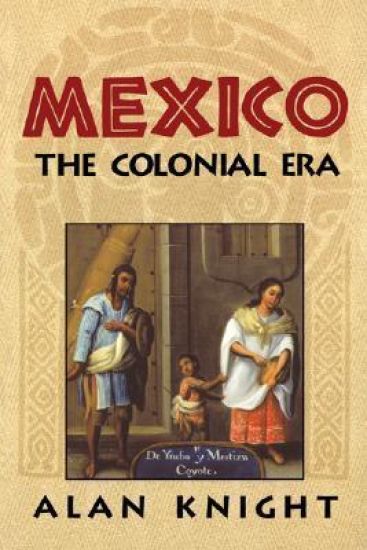
Mexico: Volume 2, The Colonial Era

Mexico: Volume 2, The Colonial Era

Alan Knight

Cambridge University Press
2002
sidottu
This book is the second in a three-volume history of Mexico, a major work that conveys the full sweep of Mexican history in all its social, economic, and political diversity. Focusing on the period from 1521 to 1821, Volume 2 offers a comprehensive narrative and analysis of colonial Mexico following the Spanish conquest. In explaining colonial patterns of development, Alan Knight pays particular attention to the political economy of the colony: the formation and growth of the hacienda and its impact on the Indian peasantry; the dynamics of the colonial state and its relationship to the church; the role of trade, demography, warfare and taxation; and contrasting patterns of regional development, of class and ethnic conflict, and of popular protest in both city and countryside. The book concludes with an analysis of the accumulating tensions of the Bourbon era and of the bloody struggle for Mexican independence.
Mexico: Volume 1, From the Beginning to the Spanish Conquest
This book is the first in a three-volume history of Mexico, a major work that conveys the full sweep of Mexican history in all its social, economic, and political diversity. Volume 1 charts the development of Mesoamerica from roughly 25,000 BC down to the Spanish Conquest in 1519–21. Analysing the principal periods and ethnic groups - Olmec, Zapotec, Maya, Toltec, Teotihuacano, and Aztec - Alan Knight seeks to explain the basic processes of pre-conquest history: the formation of states and social hierarchies, the rise and fall of empires, the role of religion, ‘markets’, migration and ecology, patterns of settlement and consequent regional differentiation. Clear, comprehensive, and gracefully written, Knight’s analysis illustrates the rich diversity of Mesoamerican history, while locating that history within a broader, comparative framework of historical change. The book concludes with the trauma of the conquest, the destruction of the Aztec empire, and the birth of colonial New Spain.
Mexico: Volume 2, The Colonial Era

Mexico: Volume 2, The Colonial Era

Alan Knight

Cambridge University Press
2002
pokkari
This book is the second in a three-volume history of Mexico, a major work that conveys the full sweep of Mexican history in all its social, economic, and political diversity. Focusing on the period from 1521 to 1821, Volume 2 offers a comprehensive narrative and analysis of colonial Mexico following the Spanish conquest. In explaining colonial patterns of development, Alan Knight pays particular attention to the political economy of the colony: the formation and growth of the hacienda and its impact on the Indian peasantry; the dynamics of the colonial state and its relationship to the church; the role of trade, demography, warfare and taxation; and contrasting patterns of regional development, of class and ethnic conflict, and of popular protest in both city and countryside. The book concludes with an analysis of the accumulating tensions of the Bourbon era and of the bloody struggle for Mexican independence.
The Mexican Revolution, Volume 1

The Mexican Revolution, Volume 1

Alan Knight

University of Nebraska Press
1990
pokkari
The Mexican Revolution was like no other: it was fueled by no vanguard party, no coherent ideology, no international ambitions; and ultimately it served to reinforce rather than to subvert many of the features of the old regime it overthrew. Alan Knight argues that a populist uprising brought about the fall of longtime dictator Porfirio Díaz in 1910. It was one of those "relatively rare episodes in history when the mass of the people profoundly influenced events." In this first of two volumes Knight shows how urban liberals joined in uneasy alliance with agrarian interests to install Francisco Madero as president and how his attempts to bring constitutional democracy to Mexico were doomed by counter-revolutionary forces. The Mexican Revolution illuminates on all levels, local and national, the complex history of an era. Rejecting fashionable Marxist and revisionist interpretations, it comes as close as any work can to being definitive.
The Mexican Revolution, Volume 2

The Mexican Revolution, Volume 2

Alan Knight

University of Nebraska Press
1990
pokkari
Volume 2 of The Mexican Revolution begins with the army counter-revolution of 1913, which ended Francisco Madero's liberal experiment and installed Victoriano Huerta's military rule. After the overthrow of the brutal Huerta, Venustiano Carranza came to the forefront, but his provisional government was opposed by Pancho Villa and Emiliano Zapata, who come powefully to life in Alan Knight's book. Knight offers a fresh interpretation of the great schism of 1914-15, which divided the revolution in its moment of victory, and which led to the final bout of civil war between the forces of Villa and Carranza. By the end of this brilliant study of a popular uprising that deteriorated into political self-seeking and vengeance, nearly all the leading players have been assassinated. In the closing pages, Alan Knight ponders the essential question: what had the revolution changed? His two-volume history, at once dramatic and scrupulously documented, goes against the grain of traditional assessments of the "last great revolution."
Rethinking Corporate Sustainability - If Only We Ran the Planet Like a Shop!
A can-do, positive narrative on sustainable development. This narrative might come across as simplistic, but it is well informed through real life experiences and contrasts. It draws on the combined emotional and technical intelligence developed by being confronted with: a child making brass door handles in squalor in India;the memory of another child's face when the toy they dreamed for was out of stock; the sight of a beautifully laid-out garden centre ready for the Easter rush; the destruction of a tropical forest thatsupplied the timber for the garden benches or seeing an over-weight child enjoying a second burger for lunch in the UK. Its purpose is to build first-hand experiences through humour, metaphors, and clarity to help business leaders and others value and embrace the sustainability challenge. Here are 9 of my positive thoughts on the matter...
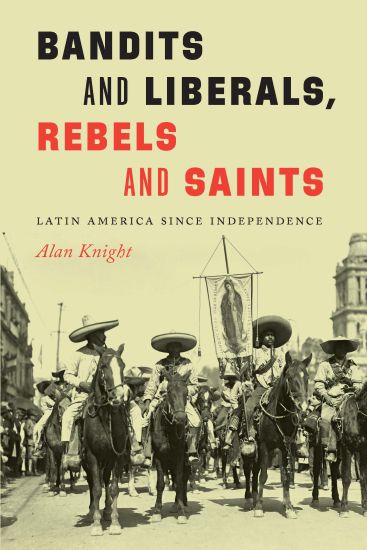
Bandits and Liberals, Rebels and Saints

Bandits and Liberals, Rebels and Saints

Alan Knight

University of Nebraska Press
2022
sidottu
In Bandits and Liberals, Rebels and Saints Alan Knight offers a distinct perspective on several overarching themes in Latin American history, spanning approximately two centuries, from 1800 to 2000. Knight’s approach is ambitious and comparative-sometimes ranging beyond Latin America and combining relevant social theory with robust empirical detail. He tries to offer answers to big questions while challenging alternative answers and approaches, including several recently fashionable ones. While the individual essays and the book as a whole are roughly chronological, the approach is essentially thematic, with chapters devoted to major contentious themes in Latin American history across two centuries: the sociopolitical roots and impact of banditry; the character and evolution of liberalism; religious conflict; the divergent historical trajectories of Peru and Mexico; the nature of informal empire and internal colonialism; and the region’s revolutionary history-viewed through the twin prisms of British perceptions and comparative global history.
Bandits and Liberals, Rebels and Saints

Bandits and Liberals, Rebels and Saints

Alan Knight

University of Nebraska Press
2022
pokkari
In Bandits and Liberals, Rebels and Saints Alan Knight offers a distinct perspective on several overarching themes in Latin American history, spanning approximately two centuries, from 1800 to 2000. Knight’s approach is ambitious and comparative-sometimes ranging beyond Latin America and combining relevant social theory with robust empirical detail. He tries to offer answers to big questions while challenging alternative answers and approaches, including several recently fashionable ones. While the individual essays and the book as a whole are roughly chronological, the approach is essentially thematic, with chapters devoted to major contentious themes in Latin American history across two centuries: the sociopolitical roots and impact of banditry; the character and evolution of liberalism; religious conflict; the divergent historical trajectories of Peru and Mexico; the nature of informal empire and internal colonialism; and the region’s revolutionary history-viewed through the twin prisms of British perceptions and comparative global history.