Kirjojen hintavertailu. Mukana 11 244 527 kirjaa ja 12 kauppaa.

Kirjahaku

Etsi kirjoja tekijän nimen, kirjan nimen tai ISBN:n perusteella.

2 kirjaa tekijältä Alan M. Jacobs

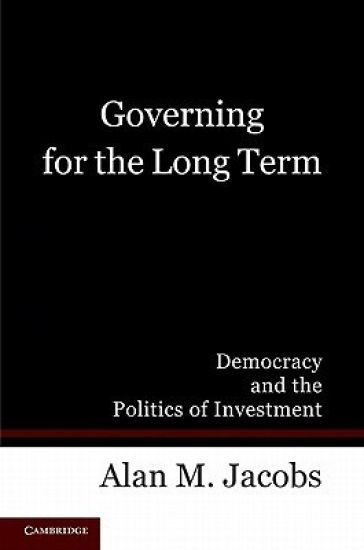
Governing for the Long Term

Governing for the Long Term

Alan M. Jacobs

Cambridge University Press
2011
pokkari
In Governing for the Long Term, Alan M. Jacobs investigates the conditions under which elected governments invest in long-term social benefits at short-term social cost. Jacobs contends that, along the path to adoption, investment-oriented policies must surmount three distinct hurdles to future-oriented state action: a problem of electoral risk, rooted in the scarcity of voter attention; a problem of prediction, deriving from the complexity of long-term policy effects; and a problem of institutional capacity, arising from interest groups' preferences for distributive gains over intertemporal bargains. Testing this argument through a four-country historical analysis of pension policymaking, the book illuminates crucial differences between the causal logics of distributive and intertemporal politics and makes a case for bringing trade-offs over time to the center of the study of policymaking.
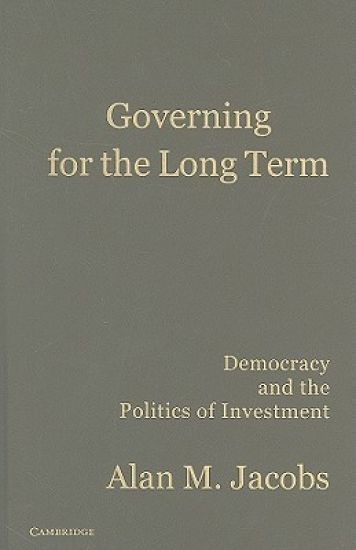
Governing for the Long Term

Governing for the Long Term

Alan M. Jacobs

Cambridge University Press
2011
sidottu
In Governing for the Long Term, Alan M. Jacobs investigates the conditions under which elected governments invest in long-term social benefits at short-term social cost. Jacobs contends that, along the path to adoption, investment-oriented policies must surmount three distinct hurdles to future-oriented state action: a problem of electoral risk, rooted in the scarcity of voter attention; a problem of prediction, deriving from the complexity of long-term policy effects; and a problem of institutional capacity, arising from interest groups' preferences for distributive gains over intertemporal bargains. Testing this argument through a four-country historical analysis of pension policymaking, the book illuminates crucial differences between the causal logics of distributive and intertemporal politics and makes a case for bringing trade-offs over time to the center of the study of policymaking.