Kirjojen hintavertailu. Mukana 11 244 527 kirjaa ja 12 kauppaa.

Kirjahaku

Etsi kirjoja tekijän nimen, kirjan nimen tai ISBN:n perusteella.

5 kirjaa tekijältä Alan MacEachern

The Miramichi Fire

The Miramichi Fire

Alan MacEachern

McGill-Queen's University Press
2020
sidottu
On 7 October 1825, a massive forest fire swept through northeastern New Brunswick, devastating entire communities. When the smoke cleared, it was estimated that the fire had burned across six thousand square miles, one-fifth of the colony. The Miramichi Fire was the largest wildfire ever to occur within the British Empire, one of the largest in North American history, and the largest along the eastern seaboard. Yet despite the international attention and relief efforts it generated, and the ruin it left behind, the fire all but disappeared from public memory by the twentieth century. A masterwork in historical imagination, The Miramichi Fire vividly reconstructs nineteenth-century Canada's greatest natural disaster, meditating on how it was lost to history. First and foremost an environmental history, the book examines the fire in the context of the changing relationships between humans and nature in colonial British North America and New England, while also exploring social memory and the question of how history becomes established, warped, and forgotten. Alan MacEachern explains how the imprecise and conflicting early reports of the fire's range, along with the quick rebound of the forests and economy of New Brunswick, led commentators to believe by the early 1900s that the fire's destruction had been greatly exaggerated. As an exercise in digital history, this book takes advantage of the proliferation of online tools and sources in the twenty-first century to posit an entirely new reading of the past. Resurrecting one of Canada's most famous and yet unexamined natural disasters, The Miramichi Fire traverses a wide range of historical and scientific literatures to bring a more complete story into the light.
The Miramichi Fire

The Miramichi Fire

Alan MacEachern

McGill-Queen's University Press
2020
nidottu
On 7 October 1825, a massive forest fire swept through northeastern New Brunswick, devastating entire communities. When the smoke cleared, it was estimated that the fire had burned across six thousand square miles, one-fifth of the colony. The Miramichi Fire was the largest wildfire ever to occur within the British Empire, one of the largest in North American history, and the largest along the eastern seaboard. Yet despite the international attention and relief efforts it generated, and the ruin it left behind, the fire all but disappeared from public memory by the twentieth century. A masterwork in historical imagination, The Miramichi Fire vividly reconstructs nineteenth-century Canada's greatest natural disaster, meditating on how it was lost to history. First and foremost an environmental history, the book examines the fire in the context of the changing relationships between humans and nature in colonial British North America and New England, while also exploring social memory and the question of how history becomes established, warped, and forgotten. Alan MacEachern explains how the imprecise and conflicting early reports of the fire's range, along with the quick rebound of the forests and economy of New Brunswick, led commentators to believe by the early 1900s that the fire's destruction had been greatly exaggerated. As an exercise in digital history, this book takes advantage of the proliferation of online tools and sources in the twenty-first century to posit an entirely new reading of the past. Resurrecting one of Canada's most famous and yet unexamined natural disasters, The Miramichi Fire traverses a wide range of historical and scientific literatures to bring a more complete story into the light.
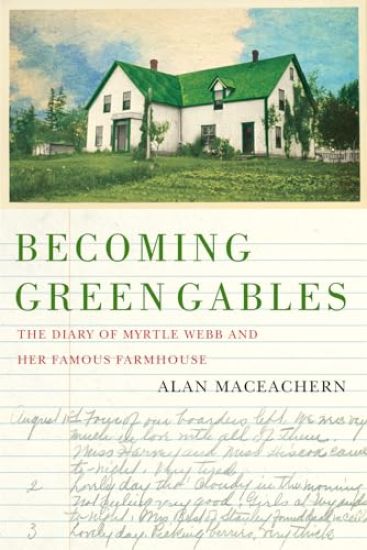
Becoming Green Gables

Becoming Green Gables

Alan MacEachern

MCGILL-QUEEN'S UNIVERSITY PRESS
2024
sidottu
In 1909 Myrtle and Ernest Webb took possession of an ordinary farm in Cavendish, Prince Edward Island. Ordinary but for one thing: it was already becoming known as inspiration for Anne of Green Gables, the novel written by Myrtle’s cousin Lucy Maud Montgomery and published to international acclaim a year earlier. The Webbs welcomed visitors to “Green Gables” and soon took in summer boarders, making their home the heart of PEI’s tourist trade. In the 1930s the farm was made the centrepiece of a new national park – and still the family lived there for another decade, caretakers of their own home.During these years Myrtle kept a diary. When she first picked up the pencil in 1924, she was a forty-year-old homemaker running a household of eight. By the time she set the pencil down in 1954, she was a seventy-year-old widow, no longer resident in what was now the most famous house in Canada. Becoming Green Gables tells the story of Myrtle Webb and her family, and the making of Green Gables. Alan MacEachern reproduces a selection of the diary’s daily entries, using them as springboards to examine topics ranging from the adoption of modern conveniences to the home front hosting of soldiers in wartime and visits from “Aunt Maud” herself.While the foundation of Becoming Green Gables is the Webbs’ own story, it is also a history of their famous home, their community, the nation, and the world in which they lived.
Becoming Green Gables

Becoming Green Gables

Alan MacEachern

MCGILL-QUEEN'S UNIVERSITY PRESS
2024
nidottu
In 1909 Myrtle and Ernest Webb took possession of an ordinary farm in Cavendish, Prince Edward Island. Ordinary but for one thing: it was already becoming known as inspiration for Anne of Green Gables, the novel written by Myrtle’s cousin Lucy Maud Montgomery and published to international acclaim a year earlier. The Webbs welcomed visitors to “Green Gables” and soon took in summer boarders, making their home the heart of PEI’s tourist trade. In the 1930s the farm was made the centrepiece of a new national park – and still the family lived there for another decade, caretakers of their own home.During these years Myrtle kept a diary. When she first picked up the pencil in 1924, she was a forty-year-old homemaker running a household of eight. By the time she set the pencil down in 1954, she was a seventy-year-old widow, no longer resident in what was now the most famous house in Canada. Becoming Green Gables tells the story of Myrtle Webb and her family, and the making of Green Gables. Alan MacEachern reproduces a selection of the diary’s daily entries, using them as springboards to examine topics ranging from the adoption of modern conveniences to the home front hosting of soldiers in wartime and visits from “Aunt Maud” herself.While the foundation of Becoming Green Gables is the Webbs’ own story, it is also a history of their famous home, their community, the nation, and the world in which they lived.
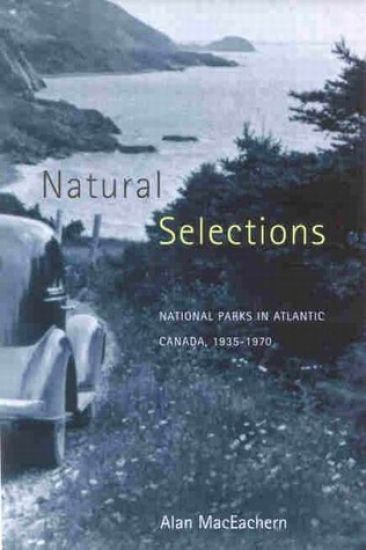
Natural Selections

Natural Selections

Alan MacEachern

McGill-Queen's University Press
2001
sidottu
Natural Selections traces the history of the first four parks in Atlantic Canada through the selection, expropriation, development, and management stages. Alan MacEachern shows how the Parks Branch's preconceptions about the landscape and people of the region shaped the parks created there. In doing so he details the evolution of the park system, from the conservation movement early in the century to the rise of the ecology movement. MacEachern analyzes Parks Canada's efforts to fulfill its twin mandates of preservation and use, arguing that the agency never favoured one over the other but oscillated between more or less interventionist in ensuring both. Touching on a wide range of matters - from landscape aesthetics to tourism promotion, from DDT to Martin Luther King - Natural Selections expands our understanding of the relation between nature and culture in the twentieth century.