Kirjojen hintavertailu. Mukana 12 364 980 kirjaa ja 12 kauppaa.

Kirjahaku

Etsi kirjoja tekijän nimen, kirjan nimen tai ISBN:n perusteella.

5 kirjaa tekijältä Alan McIntosh, Jennifer Pontius

Science and the Global Environment

Science and the Global Environment

Alan McIntosh; Jennifer Pontius

Elsevier Science Publishing Co Inc
2016
nidottu
Case Studies for Integrating Science and the Global Environment is designed to help students of the environment and natural resources make the connections between their training in science and math and today’s complex environmental issues. The book provides an opportunity for students to apply important skills, knowledge, and analytical tools to understand, evaluate, and propose solutions to today’s critical environmental issues. The heart of the book includes four major content areas: water resources; the atmosphere and air quality; ecosystem alteration; and global resources and human needs. Each of these sections features in-depth case studies covering a range of issues for each resource, offering rich opportunities to teach how various scientific disciplines help inform the issue at hand. Case studies provide readers with experience in interpreting real data sets and considering alternate explanations for trends shown by the data. This book helps prepare students for careers that require collaboration with stakeholders and co-workers from various disciplines.
Critical Skills for Environmental Professionals

Critical Skills for Environmental Professionals

Jennifer Pontius; Alan McIntosh

Springer Nature Switzerland AG
2019
sidottu
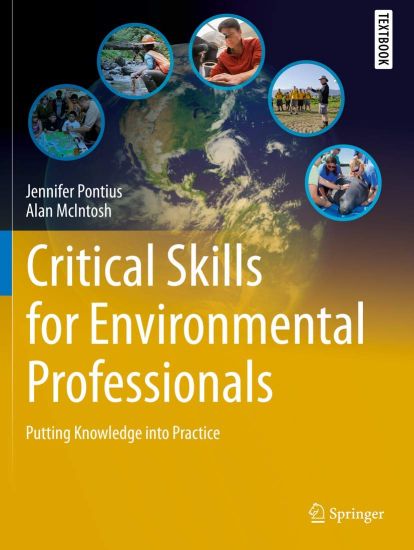
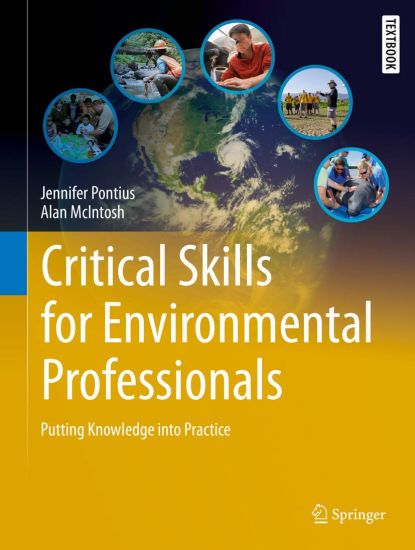
This textbook focuses on a set of skills-based learning outcomes common among undergraduate environmental programs. It covers critical scientific skills and ways of thinking that bridge the gap between the knowledge-based content of introductory environmental textbooks and the professional skills students of the environment need to succeed in both their academic programs and professional careers. This emphasis on skills is gaining more traction among academic programs across the country as they shift focus from knowledge delivery to learning outcomes and professional competencies. The book features clear methodological frameworks, engaging practice exercises, and a range of assessment case studies suitable for use across academic levels. For introductory levels, this text uses guided practice exercises to expose students to the skills they will need to master. At the capstone level, this text allows students to apply the knowledge they have gained to real-world issues and toevaluate their competency in key programmatic learning outcomes. A detailed answer key with rubrics customized for specific questions and sample answers at various competency levels is available to verified course instructors. Access to these answer key resources can be obtained by contacting the Springer Textbook Team at [email protected]
Critical Skills for Environmental Professionals

Critical Skills for Environmental Professionals

Jennifer Pontius; Alan McIntosh

Springer Nature Switzerland AG
2020
nidottu
This textbook focuses on a set of skills-based learning outcomes common among undergraduate environmental programs. It covers critical scientific skills and ways of thinking that bridge the gap between the knowledge-based content of introductory environmental textbooks and the professional skills students of the environment need to succeed in both their academic programs and professional careers. This emphasis on skills is gaining more traction among academic programs across the country as they shift focus from knowledge delivery to learning outcomes and professional competencies. The book features clear methodological frameworks, engaging practice exercises, and a range of assessment case studies suitable for use across academic levels. For introductory levels, this text uses guided practice exercises to expose students to the skills they will need to master. At the capstone level, this text allows students to apply the knowledge they have gained to real-world issues and toevaluate their competency in key programmatic learning outcomes. A detailed answer key with rubrics customized for specific questions and sample answers at various competency levels is available to verified course instructors. Access to these answer key resources can be obtained by contacting the Springer Textbook Team at [email protected]
Environmental Problem Solving in an Age of Climate Change

Environmental Problem Solving in an Age of Climate Change

Jennifer Pontius; Alan McIntosh

Springer International Publishing AG
2024
sidottu
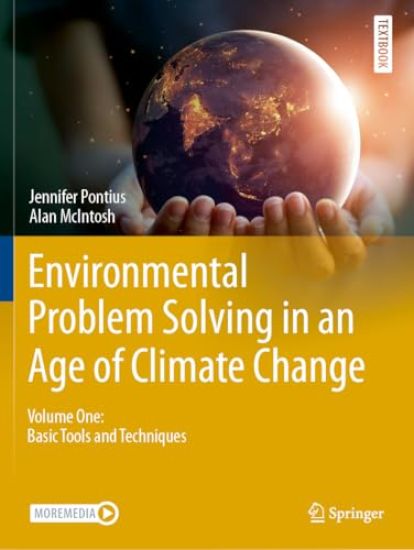
This textbook provides an opportunity for undergraduate students studying the environment to work on addressing real-world environmental problems and practice the disciplinary and professional skills necessary to tackle complex issues. Each of the 12 units that comprise the heart of this workbook-style text focus on a specific environmental challenge directly or indirectly tied to climate change. Students are guided through activities that require them to review relevant environmental content knowledge, practice an array of learning outcome-based skills, evaluate potential solutions, and advocate for action. An important feature of the book is its problem-based approach, using climate change as a common lens through which to view an array of current environmental challenges. Showing students how they might apply their core knowledge and disciplinary skills to identify possible solutions demonstrates the utility of science to inform decision making and builds student competency in learning outcomes common across environmental academic programs. Designed to provide problem-area options to match student interests (from sea turtle conservation to climate migrants to urban heat islands), instructors can choose among units to best engage students, or work through units sequentially to scaffold instruction while building student capacity. Each unit contains activities that focus on: (1) Discovery, where students are guided through exploration to build their knowledge of the issue and prepare a formal Problem Statement;(2) Analysis, where students dig into relevant data and begin to evaluate potential solutions; and(3) Solutions, where students practice their problem solving, decision making and environmental communication skills. Environmental Problem Solving in an Age of Climate Change underscores the pervasive nature of climate change as a commonfactor in all environmental issues. The book demonstrates how sustainable solutions require the efforts of many people working on smaller, more tangible issues to tackle the grand challenge that climate change presents.
Environmental Problem Solving in an Age of Climate Change

Environmental Problem Solving in an Age of Climate Change

Jennifer Pontius; Alan McIntosh

Springer International Publishing AG
2025
nidottu
This textbook provides an opportunity for undergraduate students studying the environment to work on addressing real-world environmental problems and practice the disciplinary and professional skills necessary to tackle complex issues. Each of the 12 units that comprise the heart of this workbook-style text focus on a specific environmental challenge directly or indirectly tied to climate change. Students are guided through activities that require them to review relevant environmental content knowledge, practice an array of learning outcome-based skills, evaluate potential solutions, and advocate for action. An important feature of the book is its problem-based approach, using climate change as a common lens through which to view an array of current environmental challenges. Showing students how they might apply their core knowledge and disciplinary skills to identify possible solutions demonstrates the utility of science to inform decision making and builds student competency in learning outcomes common across environmental academic programs. Designed to provide problem-area options to match student interests (from sea turtle conservation to climate migrants to urban heat islands), instructors can choose among units to best engage students, or work through units sequentially to scaffold instruction while building student capacity. Each unit contains activities that focus on: (1) Discovery, where students are guided through exploration to build their knowledge of the issue and prepare a formal Problem Statement;(2) Analysis, where students dig into relevant data and begin to evaluate potential solutions; and(3) Solutions, where students practice their problem solving, decision making and environmental communication skills. Environmental Problem Solving in an Age of Climate Change underscores the pervasive nature of climate change as a commonfactor in all environmental issues. The book demonstrates how sustainable solutions require the efforts of many people working on smaller, more tangible issues to tackle the grand challenge that climate change presents.