Kirjojen hintavertailu. Mukana 11 458 660 kirjaa ja 12 kauppaa.

Kirjahaku

Etsi kirjoja tekijän nimen, kirjan nimen tai ISBN:n perusteella.

23 kirjaa tekijältä Alan McPherson

The Invaded

The Invaded

Alan McPherson

Oxford University Press Inc
2016
nidottu
In 1912 the United States sent troops into a Nicaraguan civil war, solidifying a decades-long era of military occupations in Latin America driven by the desire to rewrite the political rules of the hemisphere. In this definitive account of the resistance to the three longest occupations-in Nicaragua, Haiti, and the Dominican Republic-Alan McPherson analyzes these events from the perspective of the invaded themselves, showing why people resisted and why the troops eventually left. Confronting the assumption that nationalism primarily drove resistance, McPherson finds more concrete-yet also more passionate-motivations: hatred for the brutality of the marines, fear of losing land, outrage at cultural impositions, and thirst for political power. These motivations blended into a potent mix of anger and resentment among both rural and urban occupied populations. Rejecting the view that Washington withdrew from Latin American occupations for moral reasons, McPherson details how the invaded forced the Yankees to leave, underscoring day-to-day resistance and the transnational network that linked New York, Havana, Mexico City, and other cities. Political culture, he argues, mattered more than military or economic motives, as U.S. marines were determined to transform political values and occupied peoples fought to conserve them. Occupiers tried to speed up the modernization and centralization of these poor, rural societies and, ironically, to build nationalism where they found it lacking. Based on rarely seen documents in three languages and five countries, this lively narrative recasts the very nature of occupation as a colossal tragedy, doomed from the outset to fail. In doing so, it offers broad lessons for today's invaders and invaded.
The Invaded

The Invaded

Alan McPherson

Oxford University Press Inc
2014
sidottu
In his 1933 inaugural address, President Franklin Delano Roosevelt stated: "In the field of world policy I would dedicate this nation to the policy of the good neighbor--the neighbor who resolutely respects himself and, because he does so, respects the rights of others." Later that year, he declared, "The definite policy of the United States from now on is one opposed to armed intervention." Why was there a need for Roosevelt to institute the Good Neighbor policy in the Western hemisphere? McPherson answers this question by looking at the United States' military interventions in Latin America, the longest ever US occupations in the Western hemisphere. In his first book, Alan McPherson examined the roots of anti-Americanism in Latin America during the Cuban Revolution, Panama riots, and US intervention in the Dominican Republic from 1958 to 1966 and delving deeply into the impact of the love-hate ambivalence on US foreign relations. In this new book, he moves backwards in time to explore American occupations of Nicaragua (1912-33), Haiti (1915-34), and the Dominican Republic (1916-24). McPherson proposes not only that opposition to U.S. intervention was more widespread than commonly acknowledged but that anti-imperial movements in the Caribbean basin were primarily responsible for bringing about the end of U.S. occupation, rather than domestic concerns such as the Great Depression or the American public's lack of stamina for overseas imperial ventures. Studying the qualities of the resisters-urban and rural, female and male, peasants and caudillos (local strongmen)-and the US Marines who occupied their countries, McPherson forms nuanced understandings of the movements, as well as the support they received from Mexico, Cuba, France, and the United States-and posits that the strength of the resistance led to the about-face in US foreign policy. He also looks at the massive movements of opposition to occupations within the US, especially after the First World War, highlighting the divisions between expansionists, including the US military and Wall Street, and those who wished to respect the autonomy of small nations, including the NAACP and the State Department. This broad and nuanced work serves as a much-needed contribution to transnational history, US history, and Latin American history, while shedding historical light on the resistance to US occupations.
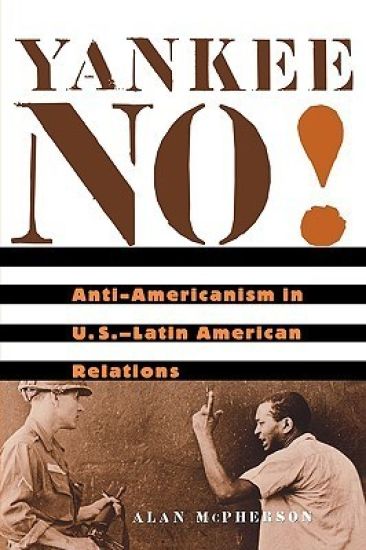
Yankee No!

Yankee No!

Alan McPherson

Harvard University Press
2006
nidottu
In 1958, angry Venezuelans attacked Vice President Richard Nixon in Caracas, opening a turbulent decade in Latin American–U.S. relations. In Yankee No! Alan McPherson sheds much-needed light on the controversial and pressing problem of anti-U.S. sentiment in the world.Examining the roots of anti-Americanism in Latin America, McPherson focuses on three major crises: the Cuban Revolution, the 1964 Panama riots, and U.S. intervention in the Dominican Republic. Deftly combining cultural and political analysis, he demonstrates the shifting and complex nature of anti-Americanism in each country and the love–hate ambivalence of most Latin Americans toward the United States. When rising panic over “Yankee hating” led Washington to try to contain foreign hostility, the government displayed a surprisingly coherent and consistent response, maintaining an ideological self-confidence that has outlasted a Latin American diplomacy torn between resentment and admiration of the United States.However, McPherson warns, U.S. leaders run a great risk if they continue to ignore the deeper causes of anti-Americanism. Written with dramatic flair, Yankee No! is a timely, compelling, and carefully researched contribution to international history.
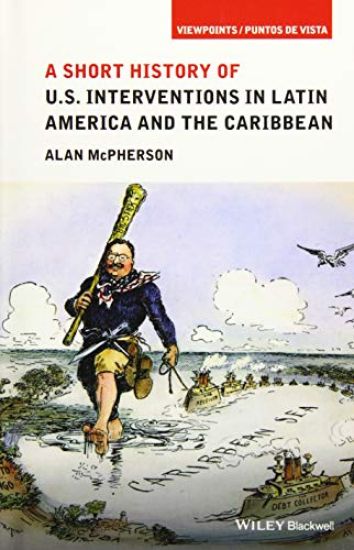
A Short History of U.S. Interventions in Latin America and the Caribbean
A Short History of U.S. Interventions in Latin America and the Caribbean presents a concise account of the full sweep of U.S. military invasions and interventions in Central America, South America, and the Caribbean from 1800 up to the present day. Engages in debates about the economic, military, political, and cultural motives that shaped U.S. interventions in Cuba, Nicaragua, Puerto Rico, Haiti, the Dominican Republic, Panama, Guatemala, Mexico, and elsewhereDeals with incidents that range from the taking of Florida to the Mexican War, the War of 1898, the Veracruz incident of 1914, the Bay of Pigs, and the 1989 invasion of PanamaFeatures also the responses of Latin American countries to U.S. involvementFeatures unique coverage of 19th century interventions as well as 20th century incidents, and includes a series of helpful maps and illustrations
A Short History of U.S. Interventions in Latin America and the Caribbean
A Short History of U.S. Interventions in Latin America and the Caribbean presents a concise account of the full sweep of U.S. military invasions and interventions in Central America, South America, and the Caribbean from 1800 up to the present day. Engages in debates about the economic, military, political, and cultural motives that shaped U.S. interventions in Cuba, Nicaragua, Puerto Rico, Haiti, the Dominican Republic, Panama, Guatemala, Mexico, and elsewhereDeals with incidents that range from the taking of Florida to the Mexican War, the War of 1898, the Veracruz incident of 1914, the Bay of Pigs, and the 1989 invasion of PanamaFeatures also the responses of Latin American countries to U.S. involvementFeatures unique coverage of 19th century interventions as well as 20th century incidents, and includes a series of helpful maps and illustrations
The World and U2

The World and U2

Alan McPherson

Rowman Littlefield
2015
sidottu
The Irish rock band U2, and especially its frontman Bono, are among the most effective activists ever. U2 has convinced wealthy governments to forgive tens of billions of dollars in loans while spreading its activist messages to billions of people, helping save millions of lives. So how did four boys from one of the poorest countries in the West achieve this? Who and what influenced them? What strategies did they use to succeed as much as they did as activists, and how did those strategies change over time? In particular, how did lead singer Bono make the leap into superstar lobbying? And, with so much attention on him, how has he handled critics who have taken to task his work on behalf of developing countries? In The World and U2: One Band’s Remaking of Global Activism, Alan McPherson trains a historian’s eye on the evolution and influence of the band’s activism from its formation in 1976 to its most recent album and concert tour. Throughout its nearly four decades, the band has held up a mirror to the increasing selfishness in the world while at the same time working to fill the void left by those who have abandoned the world’s poor to their plight. From raising awareness about war and human rights in the 1980s to engaging in direct action in the 1990s to moving mountains of cash for the planet’s poorest in the twenty-first century, the band, and especially Bono, have both raised the bar and set the example for other celebrity activists. But it is also a success that has brought a greater scrutiny to bear on U2’s activism and initiated a healthy debate about the merits of Western development aid. The World and U2: One Band’s Remaking of Global Activism tells this story of U2’s successful storming of the world’s philanthropic stage. It will enchant the band’s fans, engage its critics, and offer lessons—and warnings—to activists seeking to change things for the better.
Ghosts of Sheridan Circle

Ghosts of Sheridan Circle

Alan McPherson

THE UNIVERSITY OF NORTH CAROLINA PRESS
2022
pokkari
On September 21, 1976, a car bomb killed Orlando Letelier, the former Chilean ambassador to the United States, along with his colleague Ronni Moffitt. The murder shocked the world, especially because of its setting--Sheridan Circle, in the heart of Washington, D.C. Letelier's widow and her allies immediately suspected the secret police of Chilean dictator Augusto Pinochet, who eliminated opponents around the world. Because U.S. political leaders saw the tyrant as a Cold War ally, they failed to warn him against assassinating Letelier and hesitated to blame him afterward. Government investigators and diplomats, however, pledged to find the killers, defying a monstrous, secretive regime. Was justice attainable? Finding out would take nearly two decades. With interviews from three continents, never-before-used documents, and recently declassified sources that conclude that Pinochet himself ordered the hit and then covered it up, Alan McPherson has produced the definitive history of one of the Cold War's most consequential assassinations. The Letelier car bomb forever changed counterterrorism, human rights, and democracy. This page-turning real-life political thriller combines a police investigation, diplomatic intrigue, courtroom drama, and survivors' tales of sorrow and tenacity.
The Breach

The Breach

Alan McPherson

THE UNIVERSITY OF NORTH CAROLINA PRESS
2025
sidottu
A president defying Congress. Disrespect for the law. Attacks on the press. Evasion in the courts. The privatization of war. Quid pro quos with foreign nations. The mounting dangers to American democracy have long been with us. But all these perils first emerged together during the Iran-Contra scandal of the Reagan-Bush era. This opaque foreign policy mess has receded from history, a minor speedbump at the triumphant end of the Cold War. With American democracy in increasing jeopardy from the inside, however, Iran-Contra must be reassessed as a major step down that dark path. In this gripping blow-by-blow account of the 1980s efforts to trade arms with Iran illegally, fund rebels in Central America despite a congressional prohibition, and dodge political and legal consequences once the truth emerged, Alan McPherson argues for the salience of six democracy-degrading behaviors throughout the fiasco. At the time, many warned of the broad attack on democratic norms, yet no one paid a real price or learned a lesson. Those failures left the country more divided than ever before, and ill-equipped for more severe assaults to come.
The Breach

The Breach

Alan McPherson

THE UNIVERSITY OF NORTH CAROLINA PRESS
2025
pokkari
A president defying Congress. Disrespect for the law. Attacks on the press. Evasion in the courts. The privatization of war. Quid pro quos with foreign nations. The mounting dangers to American democracy have long been with us. But all these perils first emerged together during the Iran-Contra scandal of the Reagan-Bush era. This opaque foreign policy mess has receded from history, a minor speedbump at the triumphant end of the Cold War. With American democracy in increasing jeopardy from the inside, however, Iran-Contra must be reassessed as a major step down that dark path. In this gripping blow-by-blow account of the 1980s efforts to trade arms with Iran illegally, fund rebels in Central America despite a congressional prohibition, and dodge political and legal consequences once the truth emerged, Alan McPherson argues for the salience of six democracy-degrading behaviors throughout the fiasco. At the time, many warned of the broad attack on democratic norms, yet no one paid a real price or learned a lesson. Those failures left the country more divided than ever before, and ill-equipped for more severe assaults to come.
Indian Battle Sites in Indiana

Indian Battle Sites in Indiana

Alan McPherson

Createspace Independent Publishing Platform
2014
nidottu
Indian Battle Sites in Indiana is a historical guide to the most notable Native and Euro-American military conflicts that took place in the wilds of Indiana during the 1700s and early 1800s. The pages herein are mostly filled with words from those who were there engaged in combat for possession of the land. This regional anthology provides insight into a transitional time of upheaval and contest between two vastly different cultures of the Old and New Worlds.
Intimate Ties, Bitter Struggles

Intimate Ties, Bitter Struggles

Alan McPherson

Potomac Books Inc
2006
sidottu
Over the last sixty years, the relationship between the United States and Latin America has been marred by ideological conflict, imbalances of power, and economic disparity. The U.S.-sponsored coup in Guatemala, the near lynching of Vice President Richard Nixon in Venezuela, and the disastrous Bay of Pigs invasion are a few reminders of the sometimes dramatic confrontations between North and South. Yet this relationship has also been characterized by accelerating economic and cultural interdependence that is significantly altering the old paradigm of U.S. hegemony and Latin American resistance. Alan McPherson uses multinational sources to survey and analyze the history of this relationship. Intimate Ties, Bitter Struggles reflects the most up-to-date research on state-to-state interactions and recognizes the influence of culture and non-state actors on international relations. Major topics include the debate over economic dependency, the U.S. response to revolutions in Latin America during the Cold War, military interventions and covert operations, human rights, migration, the North American Free Trade Agreement and economic integration, the Iran-Contra affair, the war on drugs, and Latinos in the United States. The author's concise narrative and selection of primary–source documents offer an ideal introduction to U.S.–Latin American relations for students and for anyone with an interest in understanding the dynamic interplay between these hemispheric neighbors.
Intimate Ties, Bitter Struggles

Intimate Ties, Bitter Struggles

Alan McPherson

Potomac Books Inc
2006
pokkari
Over the last sixty years, the relationship between the United States and Latin America has been marred by ideological conflict, imbalances of power, and economic disparity. The U.S.-sponsored coup in Guatemala, the near lynching of Vice President Richard Nixon in Venezuela, and the disastrous Bay of Pigs invasion are a few reminders of the sometimes dramatic confrontations between North and South. Yet this relationship has also been characterized by accelerating economic and cultural interdependence that is significantly altering the old paradigm of U.S. hegemony and Latin American resistance. Alan McPherson uses multinational sources to survey and analyze the history of this relationship. Intimate Ties, Bitter Struggles reflects the most up-to-date research on state-to-state interactions and recognizes the influence of culture and non-state actors on international relations. Major topics include the debate over economic dependency, the U.S. response to revolutions in Latin America during the Cold War, military interventions and covert operations, human rights, migration, the North American Free Trade Agreement and economic integration, the Iran-Contra affair, the war on drugs, and Latinos in the United States. The author's concise narrative and selection of primary–source documents offer an ideal introduction to U.S.–Latin American relations for students and for anyone with an interest in understanding the dynamic interplay between these hemispheric neighbors.
National Trees of the Nations

National Trees of the Nations

Alan McPherson

Createspace Independent Publishing Platform
2018
nidottu
For a variety of reasons, over half of the world's nations have officially or traditionally chosen a tree to symbolize their unique national identity and heritage. This reference work presents informative reading and eye-pleasing images about these arboreal representatives that aspire to instill pride and unite citizens of over 100 countries. As citizens of Planet Earth, we should applaud these National Tree symbols as fitting tribute to represent the diverse history, culture, and ideals of these nations.