Kirjojen hintavertailu. Mukana 11 342 296 kirjaa ja 12 kauppaa.

Kirjahaku

Etsi kirjoja tekijän nimen, kirjan nimen tai ISBN:n perusteella.

6 kirjaa tekijältä Alan S. Blinder

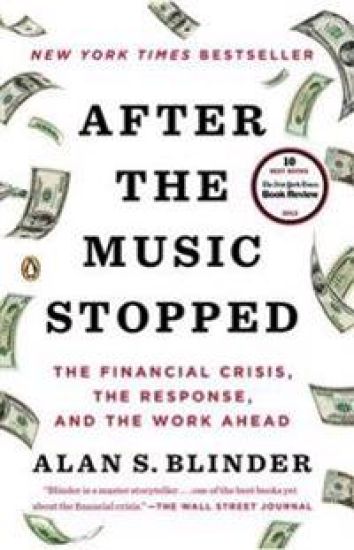
After the Music Stopped

After the Music Stopped

Alan S. Blinder

Penguin Books Ltd
2016
nidottu
Alan S. Blinder-esteemed Princeton professor, Wall Street Journal columnist, and former vice chairman of the Federal Reserve Board under Alan Greenspan-is one of our wisest and most clear-eyed economic thinkers. In After the Music Stopped, he delivers a masterful narrative of how the worst economic crisis in postwar American history happened, what the government did to fight it, and what we must do to recover from it. With bracing clarity, Blinder chronicles the perfect storm of events beginning in 2007, from the bursting of the housing bubble to the implosion of the bond bubble, and how events in the U.S. spread throughout the interconnected global economy. Truly comprehensive and eminently readable, After the Music Stopped is the essential book about the financial crisis.
Hard Heads, Soft Hearts

Hard Heads, Soft Hearts

Alan S. Blinder

Perseus Books
1988
pokkari
A hard-headed liberal economist, Alan Blinder clearly shows how economic policy is made in America and how good policies often make bad politics. He discusses liberal-conservative divisiveness and shows how it often prevents sound economic advice from being heeded. Blinder offers his own nonpartisan vision for the future of our economic society and challenges law-makers--Democrats and Republicans--to do better.
Central Banking in Theory and Practice
Alan S. Blinder offers the dual perspective of a leading academic macroeconomist who served a stint as Vice-Chairman of the Federal Reserve Board-one who practiced what he had long preached and then returned to academia to write about it. He tells central bankers how they might better incorporate academic knowledge and thinking into the conduct of monetary policy, and he tells scholars how they might reorient their research to be more attuned to reality and thus more useful to central bankers.Based on the 1996 Lionel Robbins Lectures, this readable book deals succinctly, in a nontechnical manner, with a wide variety of issues in monetary policy. The book also includes the author's suggested solution to an age-old problem in monetary theory: what it means for monetary policy to be "neutral."
The Quiet Revolution

The Quiet Revolution

Alan S. Blinder

Yale University Press
2004
sidottu
Although little noticed, the face of central banking has changed significantly over the past ten to fifteen years, says the author of this enlightening book. Alan S. Blinder, a former vice chairman of the Federal Reserve System and member of President Clinton’s Council of Economic Advisers, shows that the changes, though quiet, have been sufficiently profound to constitute a revolution in central banking.Blinder considers three of the most significant aspects of the revolution. The first is the shift toward transparency: whereas central bankers once believed in secrecy and even mystery, greater openness is now considered a virtue. The second is the transition from monetary policy decisions made by single individuals to decisions made by committees. The third change is a profoundly different attitude toward the markets, from that of stern schoolmarm to one of listener. With keenness and balance, the author examines the origins of these changes and their pros and cons.
A Monetary and Fiscal History of the United States, 1961–2021
From the New York Times bestselling author, the fascinating story of U.S. economic policy from Kennedy to Biden—filled with lessons for todayIn this book, Alan Blinder, one of the world’s most influential economists and one of the field’s best writers, draws on his deep firsthand experience to provide an authoritative account of sixty years of monetary and fiscal policy in the United States. Spanning twelve presidents, from John F. Kennedy to Joe Biden, and eight Federal Reserve chairs, from William McChesney Martin to Jerome Powell, this is an insider’s story of macroeconomic policy that hasn’t been told before—one that is a pleasure to read, and as interesting as it is important.Focusing on the most significant developments and long-term changes, Blinder traces the highs and lows of monetary and fiscal policy, which have by turns cooperated and clashed through many recessions and several long booms over the past six decades. From the fiscal policy of Kennedy’s New Frontier to Biden’s responses to the pandemic, the book takes readers through the stagflation of the 1970s, the conquest of inflation under Jimmy Carter and Paul Volcker, the rise of Reaganomics, and the bubbles of the 2000s before bringing the story up through recent events—including the financial crisis, the Great Recession, and monetary policy during COVID-19.A lively and concise narrative that is sure to become a classic, A Monetary and Fiscal History of the United States, 1961–2021 is filled with vital lessons for anyone who wants to better understand where the economy has been—and where it might be headed.
A Monetary and Fiscal History of the United States, 1961–2021
From the New York Times bestselling author, the fascinating story of U.S. economic policy from Kennedy to Biden—filled with lessons for todayIn this book, Alan Blinder, one of the world’s most influential economists and one of the field’s best writers, draws on his deep firsthand experience to provide an authoritative account of sixty years of monetary and fiscal policy in the United States. Spanning twelve presidents, from John F. Kennedy to Joe Biden, and eight Federal Reserve chairs, from William McChesney Martin to Jerome Powell, this is an insider’s story of macroeconomic policy that hasn’t been told before—one that is a pleasure to read, and as interesting as it is important.Focusing on the most significant developments and long-term changes, Blinder traces the highs and lows of monetary and fiscal policy, which have by turns cooperated and clashed through many recessions and several long booms over the past six decades. From the fiscal policy of Kennedy’s New Frontier to Biden’s responses to the pandemic, the book takes readers through the stagflation of the 1970s, the conquest of inflation under Jimmy Carter and Paul Volcker, the rise of Reaganomics, and the bubbles of the 2000s before bringing the story up through recent events—including the financial crisis, the Great Recession, and monetary policy during COVID-19.A lively and concise narrative that is sure to become a classic, A Monetary and Fiscal History of the United States, 1961–2021 is filled with vital lessons for anyone who wants to better understand where the economy has been—and where it might be headed.