Kirjojen hintavertailu. Mukana 12 390 323 kirjaa ja 12 kauppaa.

Kirjahaku

Etsi kirjoja tekijän nimen, kirjan nimen tai ISBN:n perusteella.

8 kirjaa tekijältä Alan Sica

Weber, Irrationality, and Social Order

Weber, Irrationality, and Social Order

Alan Sica

University of California Press
2018
pokkari
Despite immediate appearances, this book is not primarily a hermeneutical exercise in which the superiority of one interpretation of canonical texts is championed against others. Its origin lies elsewhere, near the overlap of history, psychoanalysis, aesthetics, and social theory of the usual kind. Weber, Pareto, Freud, W. I. Thomas, Max Scheler, Karl Mannheim, and many others of similar stature long ago wondered and wrote much about the interplay between societal rationalization and individual rationality, between collective furor and private psychopathology—in short, about the strange and worrisome union of “character and social structure” (to recall Gerth and Mills). Pondering the history of social thought in this century can lead to the unpleasant realization that such large-scale questions slipped away, especially from sociologists, sometime before World War II. Or, if not entirely lost, they were so transformed in range and rhetoric that a gap opened between contemporary theorizing and its European background. Perhaps this partly explains Weber’s continuing appeal. By dealing with him, one might again broach topics long at odds with “social science” of the last forty years.—From the Preface This title is part of UC Press's Voices Revived program, which commemorates University of California Press’s mission to seek out and cultivate the brightest minds and give them voice, reach, and impact. Drawing on a backlist dating to 1893, Voices Revived makes high-quality, peer-reviewed scholarship accessible once again using print-on-demand technology. This title was originally published in 1988.
Weber, Irrationality, and Social Order

Weber, Irrationality, and Social Order

Alan Sica

University of California Press
2024
sidottu
Despite immediate appearances, this book is not primarily a hermeneutical exercise in which the superiority of one interpretation of canonical texts is championed against others. Its origin lies elsewhere, near the overlap of history, psychoanalysis, aesthetics, and social theory of the usual kind. Weber, Pareto, Freud, W. I. Thomas, Max Scheler, Karl Mannheim, and many others of similar stature long ago wondered and wrote much about the interplay between societal rationalization and individual rationality, between collective furor and private psychopathology—in short, about the strange and worrisome union of “character and social structure” (to recall Gerth and Mills). Pondering the history of social thought in this century can lead to the unpleasant realization that such large-scale questions slipped away, especially from sociologists, sometime before World War II. Or, if not entirely lost, they were so transformed in range and rhetoric that a gap opened between contemporary theorizing and its European background. Perhaps this partly explains Weber’s continuing appeal. By dealing with him, one might again broach topics long at odds with “social science” of the last forty years.—From the Preface This title is part of UC Press's Voices Revived program, which commemorates University of California Press’s mission to seek out and cultivate the brightest minds and give them voice, reach, and impact. Drawing on a backlist dating to 1893, Voices Revived makes high-quality, peer-reviewed scholarship accessible once again using print-on-demand technology. This title was originally published in 1988.
Max Weber and the New Century

Max Weber and the New Century

Alan Sica

Transaction Publishers
2003
sidottu
The most profound and enduring social theorist of sociology's classical period, Max Weber speaks as cogently to concerns of the new century as he did to those of the past. Over the past seventy years, those special ideas that have become identified as "Weberian" have become especially pertinent to those who would analyze today's socioeconomic and cultural life. They offer the possibility of a more acute understanding of our immediate future than reliance on the ideas of any other social theorist in the pantheon. Alan Sica demonstrates Weber's preeminent position and lasting vitality within social theory by applying them to topics of contemporary concern. The result will appeal to experts and novices alike.Max Weber and the New Century documents the continuing usefulness of Weber's unrivalled social thought. Sica offers a series of linked studies that treat Weber's concept of rationalization as expressed in different cultural forms, the role of Weberian ideas in contemporary historiography, the uses of Weber's image in the popular imagination, the rhetorical structure of Economy and Society, and Weber's relationship to modern philosophical thought. Conceptually and practically, this volume is a companion piece to the author's forthcoming Max Weber: A Comprehensive Bibliography--a 3,600-item bibliography of works by and about Weber in English--which, for the first time, will allow scholars to explore the universe of Weberian analysis.Max Weber and the New Century is a valuable addition to the library of social scientists, historians, philosophers, economists, and students of intellectual history. It shows that Weber--the scholar as much as his ideas--continues to inspire fruitful social and cultural analyses.
Max Weber

Max Weber

Alan Sica

Transaction Publishers
2003
sidottu
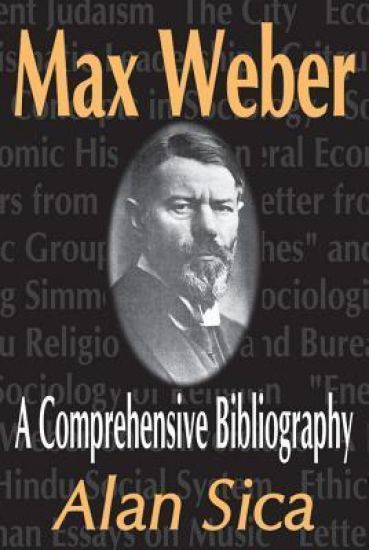
The most profound and enduring social theorist of sociology's classical period, Max Weber speaks as cogently to concerns of the new century as he did to those of the past. In Max Weber and the New Century, Alan Sica demonstrated Weber's preeminent position and lasting vitality within social theory by applying his ideas to a broad range of topics of contemporary concern. Max Weber: A Comprehensive Bibliography is a companion volume that offers some 4,600 bibliographic listings of work on Weber, making it the most complete guide to the literature in English and a testament to the continued vitality of Weber's thought.Sica's work supersedes all previous bibliographical efforts covering the Weber literature, both in the quantity and accuracy of its references, and the clarity and convenience of its format. In order to demonstrate the enormous variety of Weberiana in English, Sica has adopted a liberal criterion for inclusion, rather than a critical one, choosing to mix the best with what may be more routine work. Following a preface in which previous bibliographies and bibliographic problems are discussed, the volume opens with a series of five specialized bibliographies. The first lists Weber's works in English translation. The second lists reviews of Weber's major works including those translated into English, while the third covers reviews of recent books and other work on Weber. The fourth section contains a selection of dissertations and theses relating to Weber or his ideas. The fifth includes primary and secondary sources treating Weber on rationality and rationalization processes. The last and largest section offers a comprehensive Weber bibliography of works in English.This large-scale endeavor attempts to identify with accuracy and completeness the entire universe of Weber scholarship in English. It will be an essential scholarly tool for sociologists, historians, economists, and students of cultural and intellectual history.
Max Weber

Max Weber

Alan Sica

Routledge
2017
nidottu
The most profound and enduring social theorist of sociology's classical period, Max Weber speaks as cogently to concerns of the new century as he did to those of the past. In Max Weber and the New Century, Alan Sica demonstrated Weber's preeminent position and lasting vitality within social theory by applying his ideas to a broad range of topics of contemporary concern. Max Weber: A Comprehensive Bibliography is a companion volume that offers some 4,600 bibliographic listings of work on Weber, making it the most complete guide to the literature in English and a testament to the continued vitality of Weber's thought.Sica's work supersedes all previous bibliographical efforts covering the Weber literature, both in the quantity and accuracy of its references, and the clarity and convenience of its format. In order to demonstrate the enormous variety of Weberiana in English, Sica has adopted a liberal criterion for inclusion, rather than a critical one, choosing to mix the best with what may be more routine work. Following a preface in which previous bibliographies and bibliographic problems are discussed, the volume opens with a series of five specialized bibliographies. The first lists Weber's works in English translation. The second lists reviews of Weber's major works including those translated into English, while the third covers reviews of recent books and other work on Weber. The fourth section contains a selection of dissertations and theses relating to Weber or his ideas. The fifth includes primary and secondary sources treating Weber on rationality and rationalization processes. The last and largest section offers a comprehensive Weber bibliography of works in English.This large-scale endeavor attempts to identify with accuracy and completeness the entire universe of Weber scholarship in English. It will be an essential scholarly tool for sociologists, historians, economists, and students of cultural and intellectual history.
Max Weber and the New Century
The most profound and enduring social theorist of sociology's classical period, Max Weber speaks as cogently to concerns of the new century as he did to those of the past. Over the past seventy years, those special ideas that have become identified as "Weberian" have become especially pertinent to those who would analyze today's socioeconomic and cultural life. They offer the possibility of a more acute understanding of our immediate future than reliance on the ideas of any other social theorist in the pantheon. Alan Sica demonstrates Weber's preeminent position and lasting vitality within social theory by applying them to topics of contemporary concern. The result will appeal to experts and novices alike.Max Weber and the New Century documents the continuing usefulness of Weber's unrivalled social thought. Sica offers a series of linked studies that treat Weber's concept of rationalization as expressed in different cultural forms, the role of Weberian ideas in contemporary historiography, the uses of Weber's image in the popular imagination, the rhetorical structure of Economy and Society, and Weber's relationship to modern philosophical thought. Conceptually and practically, this volume is a companion piece to the author's forthcoming Max Weber: A Comprehensive Bibliography--a 3,600-item bibliography of works by and about Weber in English--which, for the first time, will allow scholars to explore the universe of Weberian analysis.Max Weber and the New Century is a valuable addition to the library of social scientists, historians, philosophers, economists, and students of intellectual history. It shows that Weber--the scholar as much as his ideas--continues to inspire fruitful social and cultural analyses.
Book Matters

Book Matters

Alan Sica

AldineTransaction
2016
sidottu
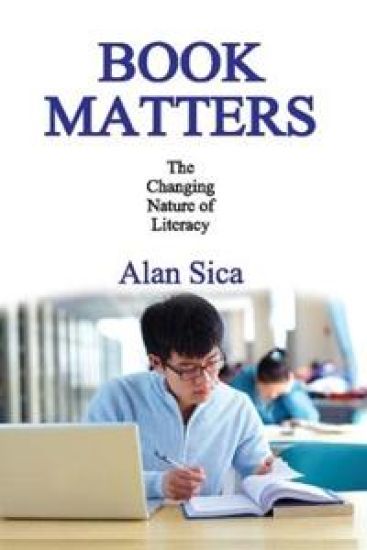
Scholars have been puzzling over the "future of the book" since Marshall McLuhan's famous maxim "the medium is the message" in the early 1950s. McLuhan famously argued that electronic media was creating a global village in which books would become obsolete. Such views were ahead of their time, but today they are all too relevant as declining sales, even among classic texts, have become a serious matter in academic publishing.Does anyone still read long and complex works, either from the past or the present? Is the role of a professional reader and reviewer of manuscripts still relevant? Book Matters closely analyses these questions and others. Alan Sica surmises that the concentration span required for studying and discussing complex texts has slipped away, as undergraduate classes are becoming inundated by shorter, easier-to-teach scholarly and literary works. He considers such matters in part from the point of view of a former editor of scholarly journals. In an engaging style, he gives readers succinct analyses of books and ideas that once held the interest of millions of discerning readers, such as Simone de Beavoir's Second Sex and the works of David Graham Phillips and C. Wright Mills, among others.Book Matters is not a nostalgic cry for lost ideas, but instead a stark reminder of just how aware and analytically illuminating certain scholars were prior to the Internet, and how endangered the book is in this era of pixelated communication.
Book Matters

Book Matters

Alan Sica

AldineTransaction
2016
nidottu
Scholars have been puzzling over the "future of the book" since Marshall McLuhan's famous maxim "the medium is the message" in the early 1950s. McLuhan famously argued that electronic media was creating a global village in which books would become obsolete. Such views were ahead of their time, but today they are all too relevant as declining sales, even among classic texts, have become a serious matter in academic publishing. Does anyone still read long and complex works, either from the past or the present? Is the role of a professional reader and reviewer of manuscripts still relevant? Book Matters closely analyses these questions and others. Alan Sica surmises that the concentration span required for studying and discussing complex texts has slipped away, as undergraduate classes are becoming inundated by shorter, easier-to-teach scholarly and literary works. He considers such matters in part from the point of view of a former editor of scholarly journals. In an engaging style, he gives readers succinct analyses of books and ideas that once held the interest of millions of discerning readers, such as Simone de Beavoir's Second Sex and the works of David Graham Phillips and C. Wright Mills, among others. Book Matters is not a nostalgic cry for lost ideas, but instead a stark reminder of just how aware and analytically illuminating certain scholars were prior to the Internet, and how endangered the book is in this era of pixelated communication.