Kirjojen hintavertailu. Mukana 11 244 527 kirjaa ja 12 kauppaa.

Kirjahaku

Etsi kirjoja tekijän nimen, kirjan nimen tai ISBN:n perusteella.

17 kirjaa tekijältä Alan Sinfield

Faultlines: Cultural Materialism and the Politics of Dissident Reading
If we come to consciousness within a language that is complicit with the social order, how can we conceive, let alone organize, resistance? This key question in the politics of reading and subcultural practice informs Alan Sinfield's book on writing in early modern England. New historicism has often shown people trapped in a web of language and culture; through agile and well-informed discussions of writing by Shakespeare, Sidney, Donne, and Marlowe, Sinfield reassesses the scope of dissidence and control. The early modern state, Christianity, and the cultural apparatus, despite an ideology of unity and explicit violence, could not but allow space to challenging voices. Disruptions in concepts of hierarchy, nationality, gender and sexuality force their way into literary texts. Sinfield is often provocative. He `rewrites' Julius Caesar to produce a different politics, compares Sidney's idea of poetry to Leonid Brezhnev's, and reinstates the concept of character in the face of post-structuralist theory. He keeps the current politics of literary study always in view, especially in a substantial chapter on Shakespeare in the United States. Sinfield subjects interactions between class, ethnicity, sexuality, and the professional structures of the humanities to a detailed and hard-hitting critique, and argues for new commitments to collectivities and subcultures. This is a controversial, lucid, informed, and timely book by a leading exponent of cultural materialism.
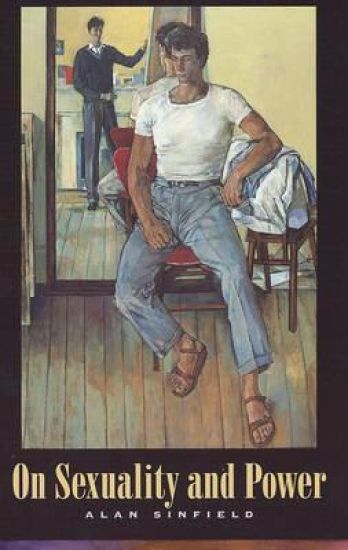
On Sexuality and Power

On Sexuality and Power

Alan Sinfield

Columbia University Press
2004
sidottu
It is widely supposed that the most suitable partner will be someone very much like oneself; gay fiction and cinema are often organized around this assumption. Nonetheless, power differentials are remarkably persistent-as well as sexy. What are the personal and political implications of this insight? Sinfield argues that hierarchies in interpersonal relations are continuous with the main power differentials of our social and political life (gender, class, age, and race); therefore it is not surprising that they govern our psychic lives. Recent writing enables an exploration of their positive potential, especially in fantasy, as well as their danger. On Sexuality and Power focuses on the writing of the last thirty years, revisiting also Whitman, Wilde, Mann, Forster, and Genet, and reassessing the very idea of a gay canon.
On Sexuality and Power

On Sexuality and Power

Alan Sinfield

Columbia University Press
2004
pokkari
It is widely supposed that the most suitable partner will be someone very much like oneself; gay fiction and cinema are often organized around this assumption. Nonetheless, power differentials are remarkably persistent-as well as sexy. What are the personal and political implications of this insight? Sinfield argues that hierarchies in interpersonal relations are continuous with the main power differentials of our social and political life (gender, class, age, and race); therefore it is not surprising that they govern our psychic lives. Recent writing enables an exploration of their positive potential, especially in fantasy, as well as their danger. On Sexuality and Power focuses on the writing of the last thirty years, revisiting also Whitman, Wilde, Mann, Forster, and Genet, and reassessing the very idea of a gay canon.
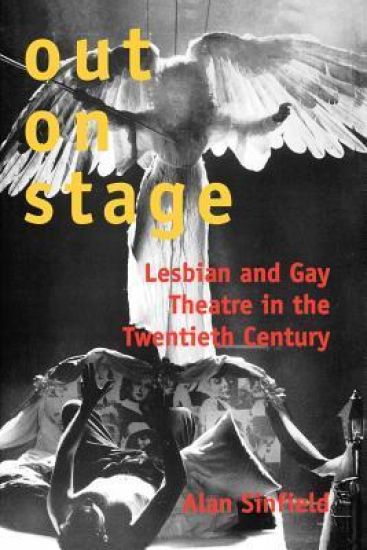
Out on Stage

Out on Stage

Alan Sinfield

Yale University Press
2012
pokkari
This intriguing and authoritative book tracks stage representations of lesbians and gay men from Oscar Wilde to the present day. Alan Sinfield argues that, despite and because of censorship and discretion, twentieth-century theater has been viewed as a gay space. When we attune ourselves to the idioms of the different decades, theater emerges as an important place for the circulation of images of homosexuality and for the exploration of concepts of gender and sexuality.Sinfield examines scores of British and American plays and playwrights, including works by Wilde, Maugham, Coward, Hellman, O'Neill, Rattigan, Williams, Le Roi Jones, and Orton. He locates plays in the contexts in which they were produced and viewed, whether it be West End and Broadway or more bohemian little club theaters, Off-Broadway, and fringe. He discusses many women writers—from Djuna Barnes and Agatha Christie to Lorraine Hansberry and Caryl Churchill—and analyzes the implications of homosexuality in their work. He explains why in the 1950s British and American plays began to differ in their representations of gays, how the 1960s produced an exuberant cultivation of "kinky" humor and gay political activism in theaters, and what impact AIDS has had on theatrical productions. Sinfield concludes with provocative questions about the direction of new theater writing, asserting that representations in theater continue to challenge notions of our sexual potential.
Macbeth

Macbeth

Alan Sinfield

Red Globe Press
1992
nidottu
A new collection of recent essays by the most important scholars, critics and theorists of today, with a lively and accessible introduction by Alan Sinfield. In diverse ways, Macbeth is approached as a play where provocative ideas about gender language and political structures are exposed and tested. This New Casebook is full of exciting ideas about Macbeth and is a convenient way to assess recent critical developments through the work of the best current commentators on Shakespeare.
Cultural Politics - Queer Reading

Cultural Politics - Queer Reading

Alan Sinfield

Routledge
2005
sidottu
Following a first edition that generated wide-spread debate, Cultural Politics – Queer Reading is a bold study of the future of critical theory and the role of gender, ethnicity and cultures within academic literary studies.An illuminating introduction to the second edition revisits the book's agenda for a new form of cultural critique and a truly political lesbian and gay studies. Sinfield renews his call for an 'Englit' that incorporates ongoing study of the cultures of ethnicity, gender and sexuality.Challenging the assumptions that have shaped the study of English literature, Sinfield engages provocatively with topics such as the gendering of literary culture, the sexual politics of psychoanalysis during the Cold War and the history of cultural materialism. He discusses such key figures as William Shakespeare, Christopher Marlowe, Walt Whitman, Arthur Miller, Holly Hughes, Audre Lorde and Jeanette Winterson.This influential investigation of the principles and practice that may form dissident reading, forms compelling argument for intellectual allegiances beyond the academy.
Cultural Politics - Queer Reading

Cultural Politics - Queer Reading

Alan Sinfield

Routledge
2005
nidottu
Following a first edition that generated wide-spread debate, Cultural Politics – Queer Reading is a bold study of the future of critical theory and the role of gender, ethnicity and cultures within academic literary studies.An illuminating introduction to the second edition revisits the book's agenda for a new form of cultural critique and a truly political lesbian and gay studies. Sinfield renews his call for an 'Englit' that incorporates ongoing study of the cultures of ethnicity, gender and sexuality.Challenging the assumptions that have shaped the study of English literature, Sinfield engages provocatively with topics such as the gendering of literary culture, the sexual politics of psychoanalysis during the Cold War and the history of cultural materialism. He discusses such key figures as William Shakespeare, Christopher Marlowe, Walt Whitman, Arthur Miller, Holly Hughes, Audre Lorde and Jeanette Winterson.This influential investigation of the principles and practice that may form dissident reading, forms compelling argument for intellectual allegiances beyond the academy.
Shakespeare, Authority, Sexuality

Shakespeare, Authority, Sexuality

Alan Sinfield

Routledge
2006
sidottu
Shakespeare, Authority, Sexuality is a powerful reassessment of cultural materialism as a way of understanding textuality, history and culture, by one of the founding figures of this critical movement. Alan Sinfield examines cultural materialism both as a body of ongoing argument and as it informs particular works by Shakespeare and his contemporaries, especially in relation to sexuality in early-modern England and queer theory. The book has several interlocking preoccupations:theories of textuality and reading the political location of Shakespearean plays and the organisation of literary culture today the operation of state power in the early-modern period and the scope for dissidence the sex/gender system in that period and the application of queer theory in history. These preoccupations are explored in and around a range of works by Shakespeare and his contemporaries. Throughout the book Sinfield re-presents cultural materialism, framing it not as a set of propositions, as has often been done, but as a cluster of unresolved problems. His brilliant, lucid and committed readings demonstrate that the ‘unfinished business’ of cultural materialism - and Sinfield’s work in particular - will long continue to produce new questions and challenges for the fields of Shakespeare and Renaissance Studies.
Shakespeare, Authority, Sexuality

Shakespeare, Authority, Sexuality

Alan Sinfield

Routledge
2006
nidottu
Shakespeare, Authority, Sexuality is a powerful reassessment of cultural materialism as a way of understanding textuality, history and culture, by one of the founding figures of this critical movement. Alan Sinfield examines cultural materialism both as a body of ongoing argument and as it informs particular works by Shakespeare and his contemporaries, especially in relation to sexuality in early-modern England and queer theory. The book has several interlocking preoccupations:theories of textuality and reading the political location of Shakespearean plays and the organisation of literary culture today the operation of state power in the early-modern period and the scope for dissidence the sex/gender system in that period and the application of queer theory in history. These preoccupations are explored in and around a range of works by Shakespeare and his contemporaries. Throughout the book Sinfield re-presents cultural materialism, framing it not as a set of propositions, as has often been done, but as a cluster of unresolved problems. His brilliant, lucid and committed readings demonstrate that the ‘unfinished business’ of cultural materialism - and Sinfield’s work in particular - will long continue to produce new questions and challenges for the fields of Shakespeare and Renaissance Studies.
Literature in Protestant England, 1560-1660 (Routledge Revivals)
The hardline, uncompromising theology preached by the English Church in the 16th and 17th Centuries had disturbing effects on the literature of the period. This study, originally published in 1983, assesses the importance of the prevailing religious climate to the work of several major writers, both in and out of sympathy with the contemporary protestantism. It is argued that the accepted view of the period as essentially 'Christian-Humanist' obscures the harsher aspects of a Calvinism which throws into relief the agonies of a writer like Donne, the acceptances of one like George Herbert.Many writers rejected more or less explicitly the Christian dogma, through the heroic assertion of human potential in Shakespearean and other dramatic characters, the nihilism of Marlowe, or the secular rationalism of Bacon and Hobbes. Milton is central to this complex weft of belief and rejection, piety and atheism, acceptance of predestination and determination to accept fate, that characterises the period.Finally, Sinfield shows how this protestantism disintegrated under the strain of internal contradictions and external pressures, and in the process helped to stimulate secularism. In this original and clearly written book, scholarship is deployed unobstrusively to place many major works in an unaccustomed and stimulating perspective.
Literature in Protestant England, 1560-1660 (Routledge Revivals)
The hardline, uncompromising theology preached by the English Church in the 16th and 17th Centuries had disturbing effects on the literature of the period. This study, originally published in 1983, assesses the importance of the prevailing religious climate to the work of several major writers, both in and out of sympathy with the contemporary protestantism. It is argued that the accepted view of the period as essentially 'Christian-Humanist' obscures the harsher aspects of a Calvinism which throws into relief the agonies of a writer like Donne, the acceptances of one like George Herbert.Many writers rejected more or less explicitly the Christian dogma, through the heroic assertion of human potential in Shakespearean and other dramatic characters, the nihilism of Marlowe, or the secular rationalism of Bacon and Hobbes. Milton is central to this complex weft of belief and rejection, piety and atheism, acceptance of predestination and determination to accept fate, that characterises the period.Finally, Sinfield shows how this protestantism disintegrated under the strain of internal contradictions and external pressures, and in the process helped to stimulate secularism. In this original and clearly written book, scholarship is deployed unobstrusively to place many major works in an unaccustomed and stimulating perspective.
Dramatic Monologue (Routledge Revivals)
First published in 1977, this book looks at the versatile literary form of dramatic monologue. Although it is often associated with Browning and other poets writing between 1830 and 1930, the concept has been employed by diverse poets of multiple periods such as Ovid, Chaucer, Donne, Blake, Wordsworth, Philip Larkin and Ted Hughes. In this study, Alan Sinfield demonstrates and analyses the range and adaptability of the form through detailed examples. He shows that the technique maintains a shifting and uncertain balance between the voices of the poet and of his created speaker; when extended, as in Maud, Amours de Voyage, The Ring and the Book, and The Wasteland, the use of dramatic monologue raises questions of personality and perception. In the second part of the text, the author discusses the origins of Victorian and Modernist dramatic monologue in the dramatic complaint and the Ovidian verse epistle of earlier periods, offering a new interpretation of the value of dramatic monologue to Browning and Tennyson. Through his writing, Alan Sinfield successfully highlights the eternal vibrance of the form.
Dramatic Monologue (Routledge Revivals)
First published in 1977, this book looks at the versatile literary form of dramatic monologue. Although it is often associated with Browning and other poets writing between 1830 and 1930, the concept has been employed by diverse poets of multiple periods such as Ovid, Chaucer, Donne, Blake, Wordsworth, Philip Larkin and Ted Hughes. In this study, Alan Sinfield demonstrates and analyses the range and adaptability of the form through detailed examples. He shows that the technique maintains a shifting and uncertain balance between the voices of the poet and of his created speaker; when extended, as in Maud, Amours de Voyage, The Ring and the Book, and The Wasteland, the use of dramatic monologue raises questions of personality and perception. In the second part of the text, the author discusses the origins of Victorian and Modernist dramatic monologue in the dramatic complaint and the Ovidian verse epistle of earlier periods, offering a new interpretation of the value of dramatic monologue to Browning and Tennyson. Through his writing, Alan Sinfield successfully highlights the eternal vibrance of the form.
Faultlines

Faultlines

Alan Sinfield

University of California Press
1992
pokkari
If we come to consciousness within a language that is complicit with the social order, how can we conceive, let alone organize, resistance to that social order? This key question in the politics of reading and subcultural practice informs Alan Sinfield's book on writing in early-modern England. New historicism has often shown people trapped in a web of language and culture. In lively discussions of writings by Shakespeare, Marlowe, Sidney, and Donne, Sinfield reassesses the scope of dissidence and control. The early-modern state, Christianity, and the cultural apparatus, despite an ideology of unity and explicit violence, could not but allow space to challenging voices. Sinfield shows that disruptions in concepts of hierarchy, nationality, gender, and sexuality force their way into literary texts. Sinfield is often provocative. He 'rewrites' Julius Caesar to produce a different politics, compares Sidney's idea of poetry to Leonid Brezhnev's, and reinstates the concept of character in the face of post-structuralist theory. He keeps the current politics of literary study in view, especially in a substantial chapter on Shakespeare in the U.S.Sinfield subjects interactions between class, ethnicity, sexuality, and the professional structures of the humanities to a detailed and hard-hitting critique, and argues for new commitments to collectivities and subcultures.
Cultural Politics - Queer Reading

Cultural Politics - Queer Reading

Alan Sinfield

University of Pennsylvania Press
1994
nidottu
Was Shakespeare gay? Is The Merchant of Venice anti-Semitic? How does mainstream reading differ from that of subcultural groups? In this lively and readable book, Alan Sinfield challenges the assumptions of English literature and investigates the principles and practices that may inform lesbian and gay reading.
Literature, Politics and Culture in Postwar Britain

Literature, Politics and Culture in Postwar Britain

Alan Sinfield

Continuum International Publishing Group Ltd.
2004
nidottu
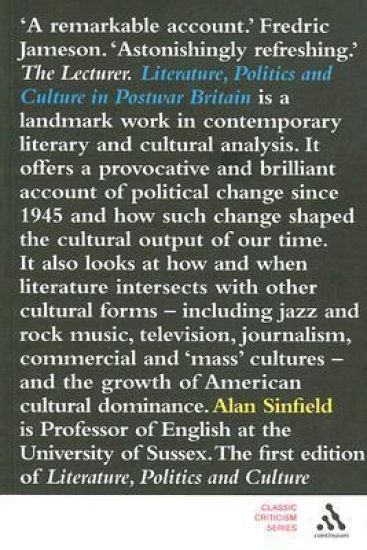
Alan Sinfield (1941-) is Professor of English at the University of Sussex. The publication of Literature, Politics and Culture in Postwar Britain in 1989 firmly established him as one of our foremost writers on literature and a leading critic of postwar culture and society. Literature, Politics and Culture in Postwar Britain is a landmark work in contemporary literary and cultural analysis. It offers a provocative and brilliant account of political change since 1945 and how such change shaped the cultural output of our time. It also looks at how and when literature intersects with other cultural forms, and the growth of American cultural dominance. This edition includes a new foreword by the author, specially written for the Impact edition.
Literature, Politics and Culture in Postwar Britain

Literature, Politics and Culture in Postwar Britain

Alan Sinfield

Continuum International Publishing Group Ltd.
2007
nidottu
"Literature, Politics and Culture in Postwar Britain" is a landmark work in contemporary literary and cultural analysis. It offers a provocative and brilliant account of political change since 1945, and how such change shaped the cultural output of our time. It also looks at how and when literature intersects with other cultural forms - including jazz and rock music, television, journalism, commercial and "mass" cultures - and the growth of American cultural dominance. This edition includes a new foreword by the author.