Kirjojen hintavertailu. Mukana 11 627 362 kirjaa ja 12 kauppaa.

Kirjahaku

Etsi kirjoja tekijän nimen, kirjan nimen tai ISBN:n perusteella.

6 kirjaa tekijältä Alan Sked

The Decline and Fall of the Habsburg Empire, 1815-1918
A new and revised edition of Alan Sked’s groundbreaking book which examines how the Habsburg Empire survived the revolutionary turmoil of 1848.‘The Year of Revolutions', saw the whole of Europe convulsed in turmoil and revolt. Yet the Habsburg Empire survived. As state after state succumbed to the violent winds of change that were sweeping the continent. How did the Habsburg Empire survive? How was the army able hold together while the rest of the empire collapsed in civil war, and how was it able to seize the political initiative In this new edition, Alan Sked reflects on the changed understanding of the period which resulted from the first appearance of this book, and widens the discussion to look at the Habsburg Empire alongside the decline of the Russian and German Empires, arguing that it is possible to understand their decline from a broad European perspective, as opposed to the overly narrow focus of recent explanations. Alan Sked makes us look at familiar events with new eyes in this radical, vigorously written classic which is essential reading for anyone interested in the history of nineteenth-century Europe.

Britain's Decline

Britain's Decline

Alan Sked

Blackwell Publishers
1987
nidottu
Contemporary Britain is often held to be in decline and yet the nature of this decline is elusive. Is it social and moral, characterized by rising crime rates, urban unrest and sexual permissiveness? Or is it political and economic, and when in fact did it set in? Alan Sked examines the many competing explanations for Britain's decline and reaches some intriguing and original conclusions.
The Decline and Fall of the Habsburg Empire, 1815-1918
A new and revised edition of Alan Sked’s groundbreaking book which examines how the Habsburg Empire survived the revolutionary turmoil of 1848.‘The Year of Revolutions', saw the whole of Europe convulsed in turmoil and revolt. Yet the Habsburg Empire survived. As state after state succumbed to the violent winds of change that were sweeping the continent. How did the Habsburg Empire survive? How was the army able hold together while the rest of the empire collapsed in civil war, and how was it able to seize the political initiative In this new edition, Alan Sked reflects on the changed understanding of the period which resulted from the first appearance of this book, and widens the discussion to look at the Habsburg Empire alongside the decline of the Russian and German Empires, arguing that it is possible to understand their decline from a broad European perspective, as opposed to the overly narrow focus of recent explanations. Alan Sked makes us look at familiar events with new eyes in this radical, vigorously written classic which is essential reading for anyone interested in the history of nineteenth-century Europe.

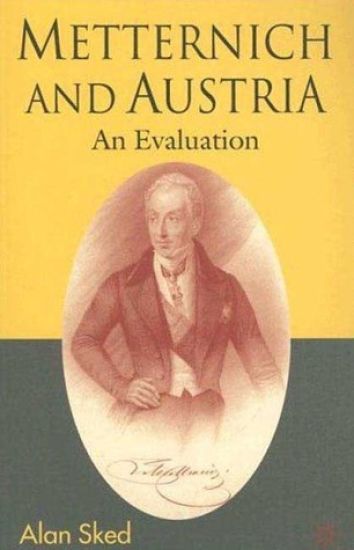
Metternich and Austria

Metternich and Austria

Alan Sked

Red Globe Press
2007
sidottu
This is the first serious appraisal of Metternich's role in the Austrian Empire and beyond. Covering both domestic and international affairs, Sked presents a fresh and convincing description of Metternich's era and argues that despite his battered historical reputation, Metternich was the leading diplomat in Europe over four decades.
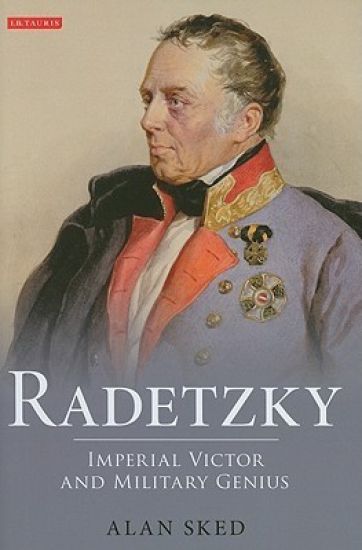
Radetzky

Radetzky

Alan Sked

I.B. Tauris
2010
sidottu
History remembers Wellington's defeat of Napoleon, but has forgotten the role of Field Marshal Radetzky in the battles which led to Napoleon's abdication and first exile in 1814. As Chief of Staff to the allied coalition of 1813-14, Radetzky determined the shape of the most decisive campaigns of the Napoleonic Wars by creating the strategy that defeated the Corsican in Germany and then France. Neither Russia nor Prussia had been able to overcome Napoleon in battle and it took the brilliant diplomacy of Metternich and the military genius of Radetzky to ensure victory over the Emperor. In short, the Austrian contribution decisively tipped the balance against Napoleon - a fact which has always been overlooked by historians. It was Radetzky, too, at the age of eighty-two, who defeated the Italians in 1848 and 1849 and thus saved Europe once again from the prospect of international war and revolution. The wars Radetzky fought - and won - throughout his extensive military career were of the greatest possible significance in European history, yet today, he is almost forgotten - remembered only in the music of the Radetzky March, dedicated to him by Johann Strauss the elder. In this, the first biography of Radetzky to be published in English, Alan Sked paints a vivid picture of an exceptional, yet neglected commander of genius in a book which will be fascinating reading for enthusiasts of military and modern European history.