Kirjojen hintavertailu. Mukana 12 016 292 kirjaa ja 12 kauppaa.

Kirjahaku

Etsi kirjoja tekijän nimen, kirjan nimen tai ISBN:n perusteella.

9 kirjaa tekijältä Alan Stewart

Shakespeare's Letters

Shakespeare's Letters

Alan Stewart

Oxford University Press
2008
sidottu
Shakespeare's plays are stuffed with letters - 111 appear on stage in all but five of his dramas. But for modern actors, directors, and critics they are frequently an awkward embarrassment. Alan Stewart shows how and why Shakespeare put letters on stage in virtually all of his plays. By reconstructing the very different uses to which letters were put in Shakespeare's time, and recapturing what it meant to write, send, receive, read, and archive a letter, it throws new light on some of his most familiar dramas. Early modern letters were not private missives sent through an anonymous postal system, but a vital - sometimes the only - means of maintaining contact and sending news between distant locations. Penning a letter was a serious business in a period when writers made their own pen and ink; letter-writing protocols were strict; letters were dispatched by personal messengers or carriers, often received and read in public - and Shakespeare exploited all these features to dramatic effect. Surveying the vast range of letters in Shakespeare's oeuvre, the book also features sustained new readings of Hamlet, King Lear, Antony and Cleopatra, The Merchant of Venice and Henry IV Part One.
The Oxford History of Life Writing: Volume 2. Early Modern
The Oxford History of Life-Writing: Volume2. Early Modern explores life-writing in England between 1500 and 1700, and argues that this was a period which saw remarkable innovations in biography, autobiography, and diary-keeping that laid the foundations for our modern life-writing. The challenges wrought by the upheavals and the sixteenth-century English Reformation and seventeenth-century Civil Wars moulded British and early American life-writing in unique and lasting ways. While classical and medieval models continued to exercise considerable influence, new forms began to challenge them. The English Reformation banished the saints' lives that dominated the writings of medieval Catholicism, only to replace them with new lives of Protestant martyrs. Novel forms of self-accounting came into existence: from the daily moral self-accounting dictated by strands of Calvinism, to the daily financial self-accounting modelled on the new double-entry book-keeping. This volume shows how the most ostensibly private journals were circulated to build godly communities; how women found new modes of recording and understanding their disrupted lives; how men started to compartmentalize their lives for public and private consumption. The volume doesn't intend to present a strict chronological progression from the medieval to the modern, nor to suggest the triumphant rise of the fact-based historical biography. Instead, it portrays early modern England as a site of multiple, sometimes conflicting possibilities for life-writing, all of which have something to teach us about how the period understood both the concept of a 'life' and what it mean to 'write' a life.
Close Readers

Close Readers

Alan Stewart

Princeton University Press
2014
pokkari
Humanism, in both its rhetoric and practice, attempted to transform the relationships between men that constituted the fabric of early modern society. So argues Alan Stewart in this ground-breaking investigation into the impact of humanism in sixteenth-century England. Here the author shows that by valorizing textual skills over martial prowess, humanism provided a new means of upward mobility for the lowborn but humanistically trained scholar: he could move into a highly intimate place in a nobleman's household that was previously not open to him. Because of its novelty and secrecy, the intimacy between master and scholar was vulnerable to accusations of another type of intimacy--sodomy. In comparing the ways both humanism and sodomy signaled a new economy of social relations capable of producing widespread anxiety, Stewart contributes to the foray of modern gay scholarship into Renais-sance art and literature. The author explores the intriguing relationship between humanism and sodomy in a series of case studies: the Medici court of the 1470s, the allegations against monks in the campaign to suppress the English monasteries, the institutionalized beating of young boys, the treacherous circle of the doomed Sir Thomas Seymour, and the closet secretaries of Elizabeth's final years. Stewart's documentation comes from a wide range of underused materials, from schoolboys' grammar books to political writings, enabling him to reconstruct frequently misunderstood events in their original contexts. Originally published in 1997. The Princeton Legacy Library uses the latest print-on-demand technology to again make available previously out-of-print books from the distinguished backlist of Princeton University Press. These editions preserve the original texts of these important books while presenting them in durable paperback and hardcover editions. The goal of the Princeton Legacy Library is to vastly increase access to the rich scholarly heritage found in the thousands of books published by Princeton University Press since its founding in 1905.
Close Readers

Close Readers

Alan Stewart

Princeton University Press
2016
sidottu
Humanism, in both its rhetoric and practice, attempted to transform the relationships between men that constituted the fabric of early modern society. So argues Alan Stewart in this ground-breaking investigation into the impact of humanism in sixteenth-century England. Here the author shows that by valorizing textual skills over martial prowess, humanism provided a new means of upward mobility for the lowborn but humanistically trained scholar: he could move into a highly intimate place in a nobleman's household that was previously not open to him. Because of its novelty and secrecy, the intimacy between master and scholar was vulnerable to accusations of another type of intimacy--sodomy. In comparing the ways both humanism and sodomy signaled a new economy of social relations capable of producing widespread anxiety, Stewart contributes to the foray of modern gay scholarship into Renais-sance art and literature. The author explores the intriguing relationship between humanism and sodomy in a series of case studies: the Medici court of the 1470s, the allegations against monks in the campaign to suppress the English monasteries, the institutionalized beating of young boys, the treacherous circle of the doomed Sir Thomas Seymour, and the closet secretaries of Elizabeth's final years. Stewart's documentation comes from a wide range of underused materials, from schoolboys' grammar books to political writings, enabling him to reconstruct frequently misunderstood events in their original contexts. Originally published in 1997. The Princeton Legacy Library uses the latest print-on-demand technology to again make available previously out-of-print books from the distinguished backlist of Princeton University Press. These editions preserve the original texts of these important books while presenting them in durable paperback and hardcover editions. The goal of the Princeton Legacy Library is to vastly increase access to the rich scholarly heritage found in the thousands of books published by Princeton University Press since its founding in 1905.
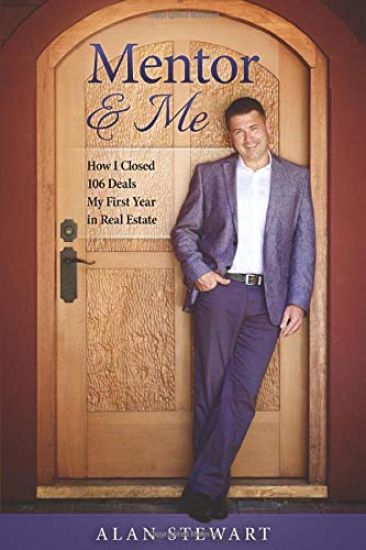
Mentor & Me: How I Closed 106 Deals My First Year in Real Estate
Whether you are considering a career in real estate, just getting started or looking for inspiration on how to take your real estate career to the next level, Mentor & Me is a must read.The book is an entertaining and informative look at the start of an remarkable real estate career and offers insights and lessons Alan Stewart has learned since he started in real estate sales with a bang. In 2004, with the help of his young team, Alan was recognized as the Real Estate Board of Greater Vancouver's Rookie of the Year for closing 106 transactions in a community of only 2500 people.A firm believer in the power of mentoring and the importance of learning from the experiences of others, Alan Stewart delivers an honest and compelling fable, loosely based on one of his real life mentors, Ryan Campbell. While not all the lessons in the book can be credited to Mr. Campbell, his impact on Alan's life and business is undeniable.Alan Stewart's practical and timeless advice will inspire you to: Understand what separates great agents from the rest of the packDefine what makes YOU special and uniquePlan, nurture and reap the rewards of your "referral garden"Prepare thoughtful offers that protect and meet the needs of buyersImplement cooperative "third party negotiating" techniques for dealing with agentsPrepare and deliver a compelling Comparative Market Analysis that will help win every listing presentation.Alan Stewart is an award winning Realtor(R) and Broker who has been recognized as an industry leader on a provincial and national level, speaking on various panels and sitting on the Royal LePage National Advisory Council. He is a regular commentator and contributor to various national and local media outlets including the Globe and Mail and Global TV. Alan's passion for the industry shines through in his energetic and inspiring keynote presentations and training sessions.
The Cradle King

The Cradle King

Alan Stewart

Pimlico
2009
pokkari
As the son of Mary Queen of Scots, born into her 'bloody nest', James had the most precarious of childhoods. Even before his birth, his life was threatened: it was rumoured that his father, Henry, had tried to make the pregnant Mary miscarry by forcing her to witness the assassination of her supposed lover, David Riccio. By the time James was one year old, Henry was murdered, possibly with the connivance of Mary; Mary was in exile in England; and James was King of Scotland. By the age of five, he had experienced three different regents as the ancient dynasties of Scotland battled for power and made him a virtual prisoner in Stirling Castle. In fact, James did not set foot outside the confines of Stirling until he was eleven, when he took control of his country. But even with power in his hands, he would never feel safe. For the rest of his life, he would be caught up in bitter struggles between the warring political and religious factions who sought control over his mind and body. Yet James believed passionately in the divine right of kings, as many of his writings testify. He became a seasoned political operator, carefully avoiding controversy, even when his mother Mary was sent to the executioner by Elizabeth I. His caution and politicking won him the English throne on Elizabeth's death in 1603 and he rapidly set about trying to achieve his most ardent ambition: the Union of the two kingdoms. Alan Stewart's impeccably researched new biography makes brilliant use of original sources to bring to life the conversations and the controversies of the Jacobean age. From James's 'inadvised' relationships with a series of favourites and Gentlemen of the Bedchamber to his conflicts with a Parliament which refused to fit its legislation to the Monarch's will, Stewart lucidly untangles the intricacies of James's life. In doing so, he uncovers the extent to which Charles I's downfall was caused by the cracks that appeared in the monarchy during his father's reign.
Philip Sidney

Philip Sidney

Alan Stewart

Pimlico
2011
pokkari
Courtier, poet, soldier, diplomat - Philip Sidney was one of the most promising young men of his age. Son of Elizabeth I's deputy in Ireland, nephew and heir to her favourite, Leicester, he was tipped for high office - and even to inherit the throne. But Sidney soon found himself caught up in the intricate politics of Elizabeth's court and forced to become as Machiavellian as everyone around him if he was to achieve his ambitions. Against a backdrop of Elizabethan intrigue and the battle between Protestant and Catholic for predominance in Europe, Alan Stewart tells the riveting story of Philip Sidney's struggle to suceed. Seeing that his continental allies had a greater sense of his importance that his English contamporaries, Philip turned his attention to Europe. He was made a French baron at seventeen, corresponded with leading foreign scholars, considered marriage proposals from two princesses and, at the time of his tragically early death, was being openly spoken of as the next ruler of the Netherlands.
Gathering the Clans

Gathering the Clans

Alan Stewart

Phillimore Co Ltd
2004
nidottu
Scottish ancestry is easy to trace on the Internet, because Scotland is leading the world in making its family history records available on-line. So now, wherever you live, it is easy to grow a Scottish family tree! All the main records are already on-line: births, marriages and deaths (from 1855), old parish registers (some back as far as 1553), wills and inventories (from 1500) and ten-yearly census returns (1841-1901). In the near future, church, land, poor relief, taxation and heraldry records are expected to become available too.Whether new to family history, or to Scottish research, or to the use of the Internet for either, everyone will find this book a comprehensive and easy-to-follow guide. As well as dealing with the records of those who left Scotland for a better life in North America, Australasia, or even England and Wales, the author explains the sources for ancestors who joined the forces, how DNA can help research, and the benefits of joining a family history society.Appendices provide lists of useful websites, details of charges for access to on-line records and much information unavailable elsewhere. This book will be welcomed wherever Scottish ancestry is traced, and as much by professional genealogists as by amateurs and beginners!