Kirjojen hintavertailu. Mukana 12 016 292 kirjaa ja 12 kauppaa.

Kirjahaku

Etsi kirjoja tekijän nimen, kirjan nimen tai ISBN:n perusteella.

19 kirjaa tekijältä Alasdair Roberts

Four Crises of American Democracy

Four Crises of American Democracy

Alasdair Roberts

Oxford University Press Inc
2017
sidottu
Since 2008, there has been a flood of literature worrying about the state of democracy in the United States and abroad. Observers complain that democratic institutions are captured by special interests, incompetent in delivering basic services, or overwhelmed by selfish voters. Lurking in the background is the global resurgence of authoritarianism, a wave bolstered by the Western democracies' apparent mishandling of the global financial crisis. In Four Crises of Democracy, Alasdair Roberts locates the recent bout of democratic malaise in the US in historical context. Malaise is a recurrent condition in American politics, but each bout can have distinctive characteristics. Roberts focuses on four "crises of democracy," explaining how they differed and how government evolved in response to each crisis. The "crisis of representation" occurred in the late nineteenth and early twentieth centuries, and was centered on the question of whether the people really controlled their government. This period was dominated by fears of plutocracy and debates about the rights of African Americans, women and immigrants. The "crisis of mastery" spanned the years 1917-1948, and was preoccupied with building administrative capabilities so that government could improve its control of economic and international affairs. The "crisis of discipline," beginning in the 1970s, was triggered by the perception that voters and special interests were overloading governments with unreasonable demands. In the final part of his analysis, Roberts asks whether the United States is entering a "crisis of anticipation," in which the question is whether democracies can handle long-term problems like global warming effectively. Democratic institutions are often said to be rigid and slow to change in response to new circumstances. But Roberts suggests that history shows otherwise. Preceding crises have always produced substantial changes in the architecture of American government. The essential features of the democratic model-societal openness, decentralization, and pragmatism-give it the edge over authoritarian alternatives. A powerful account of how successive crises have shaped American democracy, Four Crises of Democracy will be essential reading for anyone interested in the forces driving the current democratic malaise in the US and throughout the world.
The Logic of Discipline

The Logic of Discipline

Alasdair Roberts

Oxford University Press Inc
2010
sidottu
The era of economic liberalization, spanning 1978 to 2008, is often regarded as a period in which government was simply dismantled. In fact, government was reconstructed to meet the needs of a globalized economy. Central banking, fiscal control, tax collection, regulation, port and airport management, infrastructure development-in all of these areas, radical reforms were made to the architecture of government. A common philosophy shaped all of these reforms: the logic of discipline. It was premised on deep skepticism about the ability of democratic processes to make sensible policy choices. It sought to impose constraints on elected officials and citizens, often by shifting power to technocrat-guardians who were shielded from political influence. It placed great faith in the power of legal changes--new laws, treaties, and contracts--to produce significant alterations in the performance of governmental systems Even before the global economic crisis of 2007-2009, the logic of discipline was under assault. Faced with many failed reform projects, advocates of discipline realized that they had underestimated the complexity of governmental change. Opponents of discipline emphasized the damage to democratic values that followed from the empowerment of new groups of technocrat-guardians. The financial crisis did further damage to the logic of discipline, as governments modified their attitudes about central bank independence and fiscal control, and global financial and trade flows declined. It was the market that now appeared to behave myopically and erratically--and which now insisted that governments should abandon precepts about the role of government that it had once insisted were inviolable. A sweeping account of neoliberal governmental restructuring across the world, The Logic of Discipline offers a powerful analysis of how this undemocratic model is unraveling in the face of a monumental--and ongoing--failure of the market.
The Logic of Discipline

The Logic of Discipline

Alasdair Roberts

Oxford University Press Inc
2011
nidottu
The era of economic liberalization, spanning 1978 to 2008, is often regarded as a period in which government was simply dismantled. In fact, government was reconstructed to meet the needs of a globalized economy. Central banking, fiscal control, tax collection, regulation, port and airport management, infrastructure development-in all of these areas, radical reforms were made to the architecture of government. A common philosophy shaped all of these reforms: the logic of discipline. It was premised on deep skepticism about the ability of democratic processes to make sensible policy choices. It sought to impose constraints on elected officials and citizens, often by shifting power to technocrat-guardians who were shielded from political influence. It placed great faith in the power of legal changes--new laws, treaties, and contracts--to produce significant alterations in the performance of governmental systems. Even before the global economic crisis of 2007-2009, the logic of discipline was under assault. Faced with many failed reform projects, advocates of discipline realized that they had underestimated the complexity of governmental change. Opponents of discipline emphasized the damage to democratic values that followed from the empowerment of new groups of technocrat-guardians. The financial crisis did further damage to the logic of discipline, as governments modified their attitudes about central bank independence and fiscal control, and global financial and trade flows declined. It was the market that now appeared to behave myopically and erratically--and which now insisted that governments should abandon precepts about the role of government that it had once insisted were inviolable. A sweeping account of neoliberal governmental restructuring across the world, The Logic of Discipline offers a powerful analysis of how this undemocratic model is unraveling in the face of a monumental--and ongoing--failure of the market.
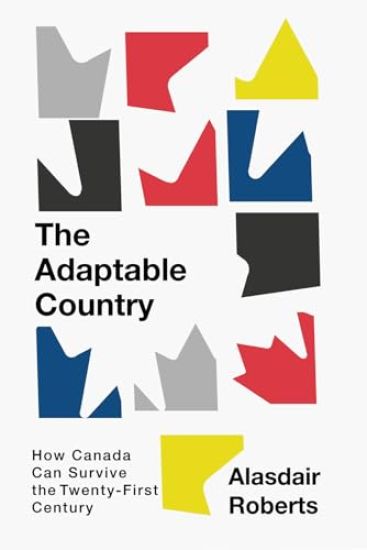
The Adaptable Country

The Adaptable Country

Alasdair Roberts

MCGILL-QUEEN'S UNIVERSITY PRESS
2024
nidottu
Shifting geopolitics, regional conflicts, climate change, and technology shocks: these are just some of the factors that will make the twenty-first century dangerous for Canada. Adaptability, the capacity to anticipate and manage dangers, is essential for the country to survive and thrive. But Canada is not as adaptable as it once was.In The Adaptable Country Alasdair Roberts explains what this vital ability means and why we are currently falling short. Politicians, he argues, are overloaded and fixated on the next election. Governments no longer launch big projects to think about the future. Leaders have stopped meeting regularly to discuss national priorities. Technological changes have undermined journalism and the ability of citizens to talk civilly about public affairs. The public service has become less agile because of a decades-long buildup of controls and watchdogs. While in many ways Canada is a better country than it was a generation ago, it is also more complex and harder to govern.The Adaptable Country outlines straightforward reforms to improve adaptability and reminds us about the bigger picture: in a turbulent world, authoritarian rule is a tempting path to security. Canada’s challenge is to show how political systems built to respect diversity and human rights can also respond nimbly to existential threats.
Blacked Out

Blacked Out

Alasdair Roberts

Cambridge University Press
2008
pokkari
Nearly forty years ago the US Congress passed the landmark Freedom of Information Act (FOIA) giving the public the right to government documents. This 'right to know' has been used over the past decades to challenge overreaching Presidents and secretive government agencies. The example of transparency in government has served as an example to nations around the world spawning similar statutes in fifty-nine countries. This 2006 book examines the evolution of the move toward openness in government. It looks at how technology has aided the disclosure and dissemination of information. The author tackles the question of whether the drive for transparency has stemmed the desire for government secrecy and discusses how many governments ignore or frustrate the legal requirements for the release of key documents. Blacked Out is an important contribution during a time where profound changes in the structure of government are changing access to government documents.
America's First Great Depression

America's First Great Depression

Alasdair Roberts

Cornell University Press
2012
sidottu
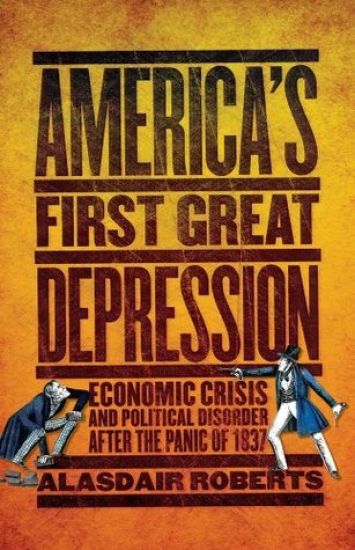
For a while, it seemed impossible to lose money on real estate. But then the bubble burst. The financial sector was paralyzed and the economy contracted. State and federal governments struggled to pay their domestic and foreign creditors. Washington was incapable of decisive action. The country seethed with political and social unrest. In America's First Great Depression, Alasdair Roberts describes how the United States dealt with the economic and political crisis that followed the Panic of 1837. As Roberts shows, the two decades that preceded the Panic had marked a democratic surge in the United States. However, the nation's commitment to democracy was tested severely during this crisis. Foreign lenders questioned whether American politicians could make the unpopular decisions needed on spending and taxing. State and local officials struggled to put down riots and rebellion. A few wondered whether this was the end of America's democratic experiment. Roberts explains how the country's woes were complicated by its dependence on foreign trade and investment, particularly with Britain. Aware of the contemporary relevance of this story, Roberts examines how the country responded to the political and cultural aftershocks of 1837, transforming its political institutions to strike a new balance between liberty and social order, and uneasily coming to terms with its place in the global economy.
America's First Great Depression

America's First Great Depression

Alasdair Roberts

Cornell University Press
2013
pokkari
For a while, it seemed impossible to lose money on real estate. But then the bubble burst. The financial sector was paralyzed and the economy contracted. State and federal governments struggled to pay their domestic and foreign creditors. Washington was incapable of decisive action. The country seethed with political and social unrest. In America's First Great Depression, Alasdair Roberts describes how the United States dealt with the economic and political crisis that followed the Panic of 1837. As Roberts shows, the two decades that preceded the Panic had marked a democratic surge in the United States. However, the nation's commitment to democracy was tested severely during this crisis. Foreign lenders questioned whether American politicians could make the unpopular decisions needed on spending and taxing. State and local officials struggled to put down riots and rebellion. A few wondered whether this was the end of America's democratic experiment. Roberts explains how the country's woes were complicated by its dependence on foreign trade and investment, particularly with Britain. Aware of the contemporary relevance of this story, Roberts examines how the country responded to the political and cultural aftershocks of 1837, transforming its political institutions to strike a new balance between liberty and social order, and uneasily coming to terms with its place in the global economy.
The Collapse of Fortress Bush

The Collapse of Fortress Bush

Alasdair Roberts

New York University Press
2008
sidottu
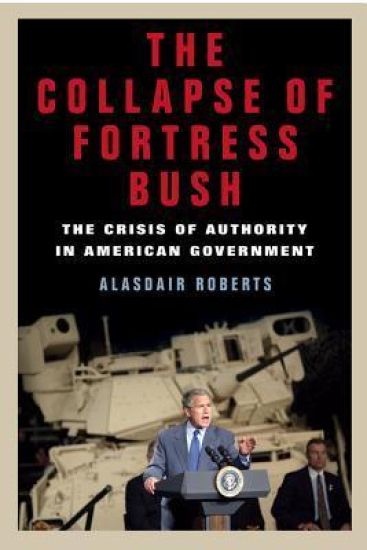
When the Bush presidency began to collapse, pundits were quick to tell a tale of the "imperial presidency" gone awry, a story of secretive, power-hungry ideologues who guided an arrogant president down the road to ruin. But the inside story of the failures of the Bush administration is both much more complex and alarming, says leading policy analyst Alasdair Roberts. In the most comprehensive, balanced view of the Bush presidency to date, Roberts portrays a surprisingly weak president, hamstrung by bureaucratic, constitutional, cultural and economic barriers and strikingly unable to wield authority even within his own executive branch. The Collapse of Fortress Bush shows how the president fought—and lost—key battles with the defense and intelligence communities. From Homeland Security to Katrina, Bush could not coordinate agencies to meet domestic threats or disasters. Either the Bush administration refused to exercise authority, was thwarted in the attempt to exercise authority, or wielded authority but could not meet the test of legitimacy needed to enact their goals. Ultimately, the vaunted White House discipline gave way to public recriminations among key advisers. Condemned for secretiveness, the Bush administration became one of the most closely scrutinized presidencies in the modern era. Roberts links the collapse of the Bush presidency to deeper currents in American politics and culture, especially a new militarism and the supremacy of the Reagan-era consensus on low taxes, limited government, and free markets. Only in this setting was it possible to have a "total war on terrorism" in which taxes were reduced, private consumption was encouraged, and businesses were lightly regulated. A balanced, incisive account by a skilled observer of U.S. government, The Collapse of Fortress Bush turns the spotlight from the powerful cabal that launched the war in Iraq to tell a much more disturbing story about American power and the failure of executive leadership.
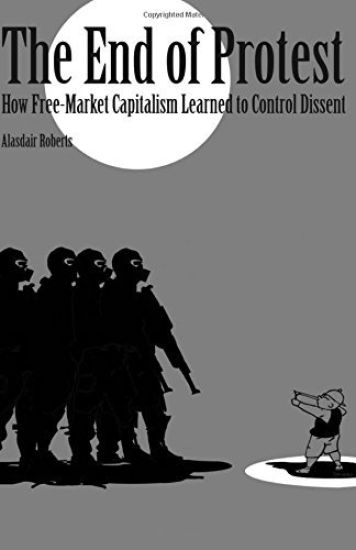
The End of Protest

The End of Protest

Alasdair Roberts

Cornell University Press
2016
pokkari
The United States has just gone through the worst economic crisis in a generation. Why wasn't there more protest, as there was in other countries? During the United States' last great era of free-market policies, before World War II, economic crises were always accompanied by unrest. "The history of capitalism," the economist Joseph Schumpeter warned in 1942, "is studded with violent bursts and catastrophes." In The End of Protest, Alasdair Roberts explains how, in the modern age, governments learned to unleash market forces while also avoiding protest about the market's failures. Roberts argues that in the last three decades, the two countries that led the free-market revolution—the United States and Britain—have invented new strategies for dealing with unrest over free market policies. The organizing capacity of unions has been undermined so that it is harder to mobilize discontent. The mobilizing potential of new information technologies has also been checked. Police forces are bigger and better equipped than ever before. And technocrats in central banks have been given unprecedented power to avoid full-scale economic calamities. Tracing the histories of economic unrest in the United States and Great Britain from the nineteenth century to the present, The End of Protest shows that governments have always been preoccupied with the task of controlling dissent over free market policies. But today's methods pose a new threat to democratic values. For the moment, advocates of free-market capitalism have found ways of controlling discontent, but the continued effectiveness of these strategies is by no means certain.
Strategies for Governing

Strategies for Governing

Alasdair Roberts

Cornell University Press
2020
sidottu
With the fields of public administration and public management suffering a crisis of relevance, Alasdair Roberts offers a provocative assessment of their shortfalls. The two fields, he finds, no longer address urgent questions of governance in a turbulent and dangerous world. Strategies for Governing offers a new path forward for research, teaching, and practice. Leaders of states, Roberts writes, are constantly reinventing strategies for governing. Experts in public administration must give advice on the design as well as execution of strategies that effective, robust, and principled. Strategies for Governing challenges us to reinvigorate public administration and public management, preparing the fields for the challenges of the twenty-first century.
Strategies for Governing

Strategies for Governing

Alasdair Roberts

Cornell University Press
2020
pokkari
With the fields of public administration and public management suffering a crisis of relevance, Alasdair Roberts offers a provocative assessment of their shortfalls. The two fields, he finds, no longer address urgent questions of governance in a turbulent and dangerous world. Strategies for Governing offers a new path forward for research, teaching, and practice. Leaders of states, Roberts writes, are constantly reinventing strategies for governing. Experts in public administration must give advice on the design as well as execution of strategies that effective, robust, and principled. Strategies for Governing challenges us to reinvigorate public administration and public management, preparing the fields for the challenges of the twenty-first century.
Can Government Do Anything Right?

Can Government Do Anything Right?

Alasdair Roberts

Polity Press
2018
sidottu
Across the Western world, people are angry about the inability of government to perform basic functions competently. With widespread evidence of policy failures at home and ill-conceived wars and interventions abroad, it is hardly surprising that politicians are distrusted and government is derided as a sprawling, wasteful mess. But what exactly is government supposed to do, and is the track record of Western governments really so awful? In this compelling book, leading scholar of public policy and management, Alasdair Roberts, explores what government does well and what it does badly. Political leaders, he explains, have always been obliged to wrestle with shifting circumstances and contending priorities, making the job of governing extraordinarily difficult. The performance of western democracies in recent decades is, admittedly, far from perfect but - as Roberts ably shows - it is also much better than you might think.
Can Government Do Anything Right?

Can Government Do Anything Right?

Alasdair Roberts

Polity Press
2018
nidottu
Across the Western world, people are angry about the inability of government to perform basic functions competently. With widespread evidence of policy failures at home and ill-conceived wars and interventions abroad, it is hardly surprising that politicians are distrusted and government is derided as a sprawling, wasteful mess. But what exactly is government supposed to do, and is the track record of Western governments really so awful? In this compelling book, leading scholar of public policy and management, Alasdair Roberts, explores what government does well and what it does badly. Political leaders, he explains, have always been obliged to wrestle with shifting circumstances and contending priorities, making the job of governing extraordinarily difficult. The performance of western democracies in recent decades is, admittedly, far from perfect but - as Roberts ably shows - it is also much better than you might think.
Superstates

Superstates

Alasdair Roberts

JOHN WILEY AND SONS LTD
2022
sidottu
In this century, the world will conduct an extraordinary experiment in government. In 2050, forty percent of the planet's population will live in just four places: India, China, the European Union, and the United States. These are superstates – polities that are distinguished from normal countries by expansiveness, population, diversity, and complexity. How should superstates be governed? What must their leaders do to hold these immense polities together in the face of extraordinary strains and shocks? Alasdair Roberts looks to history for answers. Superstates, he contends, wrestle with the same problems of leadership, control, and purpose that plagued empires for centuries. But they also bear heavier burdens than empires – including the obligation to improve life for ordinary people and respect human rights. One axiom of history was that empires always died. Size and complexity led to fragility, and imperial rulers improvised constantly to put off the day of reckoning. Leaders of superstates are doing the same today, pursuing radically different strategies for governing at scale that have profound implications for democracy and human rights. History shows that there are ways to govern these sprawling and diverse polities well. But this requires a different way of thinking about the art and methods of statecraft.
Superstates

Superstates

Alasdair Roberts

JOHN WILEY AND SONS LTD
2022
nidottu
In this century, the world will conduct an extraordinary experiment in government. In 2050, forty percent of the planet's population will live in just four places: India, China, the European Union, and the United States. These are superstates – polities that are distinguished from normal countries by expansiveness, population, diversity, and complexity. How should superstates be governed? What must their leaders do to hold these immense polities together in the face of extraordinary strains and shocks? Alasdair Roberts looks to history for answers. Superstates, he contends, wrestle with the same problems of leadership, control, and purpose that plagued empires for centuries. But they also bear heavier burdens than empires – including the obligation to improve life for ordinary people and respect human rights. One axiom of history was that empires always died. Size and complexity led to fragility, and imperial rulers improvised constantly to put off the day of reckoning. Leaders of superstates are doing the same today, pursuing radically different strategies for governing at scale that have profound implications for democracy and human rights. History shows that there are ways to govern these sprawling and diverse polities well. But this requires a different way of thinking about the art and methods of statecraft.
Midges

Midges

Alasdair Roberts

Birlinn Ltd
2021
nidottu
Whether resident or tourist, no-one is spared from the bloodlust of Scotland’s most savage insect . . . The midge does not like sunlight and thrives in the wet, so the Scottish summertime brings perfect climatic conditions for this ruthless wee beastie. This fascinating and amusing anthology of anecdotes and information about the minuscule marauder ranges from the eighteenth century to the present, covering such topics as Bonnie Prince Charlie, Queen Victoria, kilts and camping. It also includes a section on remedies and repellents, so locals and visitors can tray and enjoy the pleasures of Scotland without the pain. And if the new midge-eating machines are as good as claimed, midges may soon be a thing of the past.
Library of Aethers

Library of Aethers

Alasdair Roberts

Boatwhistle Books
2024
nidottu
From his earliest recordings in the 1990s, it was clear that Alasdair Roberts was not only a powerful performer, but also a profoundly original songwriter. In the years since then, he has honed his craft across a series of albums that comprise a richly idiosyncratic body of work. Distinctive as they are musically, Alasdair’s songs are equally notable for their articulate, poetic and often moving lyrical qualities – now starkly symbolic, now allusively ornate. This book aims to showcase those qualities, with a selection of lyrics from across Alasdair’s songwriting catalogue. The lyrics are augmented by newly written notes by Alasdair, with original illustrations by Annabel Wright, plus a foreword by the acclaimed poet Robin Robertson, and several entertaining appendices.
Tales of the Morar Highlands

Tales of the Morar Highlands

Alasdair Roberts

BIRLINN GENERAL
2026
nidottu
Beyond Fort William, on the road to the Isles, lies Morar, the 'Highlands of the Highlands' and centre of the 'Rough Bounds', that wild, desolate, but uniquely beautiful part of Scotland that was once the homeland of the Clan Macdonald of Clanranald, Lords of the Isles. Inspired by bards, writers and images of the past, Alasdair Roberts has collected and revitalised a huge number of traditional tales which transport the reader to the heart of this remote and beguiling landscape. Tales of the Morar Highlands is a book packed with extraordinary incident and remarkable characters, from mysterious loch monsters and fugitive princes to lords, priests and smugglers, as well as the ordinary people who have made this fascinating part of Scotland their home for thousands of years.