Kirjojen hintavertailu. Mukana 11 244 527 kirjaa ja 12 kauppaa.

Kirjahaku

Etsi kirjoja tekijän nimen, kirjan nimen tai ISBN:n perusteella.

8 kirjaa tekijältä Alastair Hamilton

The Apocryphal Apocalypse

The Apocryphal Apocalypse

Alastair Hamilton

Oxford University Press
1999
sidottu
This is the first study of the reception of the apocryphal Second Book of Esdras (4 Ezra) from the fifteenth to the eighteenth century. Professor Hamilton discusses the concepts of biblical apocrypha and canonicity in connection with the increasingly critical attitude to religious authority which developed with the humanists and intensified with the Reformation. The Book owed its initial success to Hebraists such as Pico della Mirandola and Bibliander. It was used to account for the origins of Jewish Kabbalah and to prophesy political and religious events: the fall of the Ottoman empire, or the destruction of the papacy. Anabaptists, dissident Protestants of various persuasions, Rosicrucians and Paracelsians consulted it not only as a work of prophecy but, it is argued, as an emblem of dissent, rejected by the official Churches. At the same time more sober scholars, both Protestants and Catholics, scrutinized 2 Esdras with greater objectivity, endeavouring to date it correctly and establish its authorship. This study also investigates the interaction between their views and those of the Book's enthusiastic supporters.
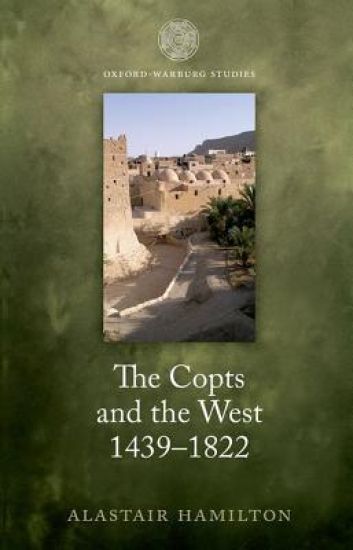
The Copts and the West, 1439-1822

The Copts and the West, 1439-1822

Alastair Hamilton

Oxford University Press
2014
nidottu
In seventeenth-century Europe the Copts, or the Egyptian members of the Church of Alexandria, were widely believed to hold the key to an ancient wisdom and an ancient theology. Their language was thought to lead to the deciphering of the hieroglyphs and their Church to retain traces of early Christian practices as well as early Egyptian customs. Now available in paperback for the first time, this first, full-length study of the subject, discusses the attempts of Catholic missionaries to force the Church of Alexandria into union with the Church of Rome and the slow accumulation of knowledge of Coptic beliefs, undertaken by Catholics and Protestants. It ends with a survey of the study of the Coptic language in the West and of the uses to which it was put by Biblical scholars, antiquarians, theologians, and Egyptologists.
The Copts and the West, 1439-1822

The Copts and the West, 1439-1822

Alastair Hamilton

Oxford University Press
2006
sidottu
In seventeenth-century Europe the Copts, or the Egyptian members of the Church of Alexandria, were widely believed to hold the key to an ancient wisdom and an ancient theology. Their language was thought to lead to the deciphering of the hieroglyphs and their Church to retain traces of early Christian practices as well as early Egyptian customs. This book, the first full-length study of the subject, discusses the attempts of Catholic missionaries to force the Church of Alexandria into union with the Church of Rome and the slow accumulation of knowledge of Coptic beliefs, undertaken by Catholics and Protestants. It ends with a survey of the study of the Coptic language in the West and of the uses to which it was put by Biblical scholars, antiquarians, theologians and Egyptologists.
An Arabian Utopia: The Western Discovery of Oman

An Arabian Utopia: The Western Discovery of Oman

Alastair Hamilton

Oxford University Press
2010
sidottu
Even though Oman had always been familiar to travellers sailing between Europe and India or Persia, it was its coast alone that was known. Greeks and Romans had charted it, medieval merchants traded on it, and in the early sixteenth century the Portuguese conquered its main towns, yet the interior of Oman was all but entirely unknown and would remain so until the early nineteenth century. Only after the ejection of the Portuguese in 1650 and an independent Oman had built an empire of its own, stretching round the Indian Ocean from India to Zanzibar, did Muscat, the capital, start to be visited by western powers eager to obtain commercial concessions and political influence. In the nineteenth century, for the first time, a very few, mainly English, explorers ventured inland and embarked on the true discovery of Oman. But even that was sporadic. As long as there was a powerful ruler, the travellers were protected, but by the late nineteenth century the rulers in Muscat had lost control over the interior and it was not until well into the twentieth century that explorers such as Wilfred Thesiger could investigate the south and that the oil companies could begin to chart the centre and the west. Oman was the last Arab country to be fully explored by western travellers and this book examines and discusses the ways in which the emergent knowledge of Oman was propagated in the West, from the earliest times to 1970, by explorers, missionaries, diplomats, artists, geologists and naturalists, and by those scholars who gradually uncovered the manuscripts and antiquities that allowed them to piece together the history of the area.
The Arcadian Library

The Arcadian Library

Alastair Hamilton

Oxford University Press
2011
sidottu
The Arcadian Library is unique in Europe. The 10,000 or so volumes which it owns provide a complete picture of the encounter between two cultures and show how the civilization of the Arab and Islamic worlds was appreciated in the Christian West from the earliest times to the present day. The purpose of this heavily-illustrated survey is to provide an idea of the variety of works, documents, and images which the library holds in different domains. Travel writings prevail, a reflection of the impressions made on Europeans by the vast region centred on Arabia and the Levant and stretching from the Maghreb to South and Central Asia, and of the discoveries they made and the effect of their findings on Western knowledge and sensibility. The section on travellers also includes some of the rarer items in the library - unique manuscripts and maps, colour-plate books, and unpublished letters from figures such as Richard Burton, T.E. Lawrence, and Gertrude Bell. In addition to travel there is a large collection of Turcica, with its rare pamphlets and illustrations; a section on Arab science and medicine which contains priceless incunables of translations of Arabic texts; an important selection of Quran translations and material on Eastern Christianity; documents both published and unpublished on the Arabs in Spain and the influence of the tradition they established on early modern Spain and the rest of Europe; numerous products of oriental scholarship and, finally, works of oriental literature which include, besides translations from Turkish and Persian, unpublished manuscripts, and splendidly illustrated copies of The Arabian Nights. Over 200 illustrations of some of the finest items in the library, including four 8-page fold-outs, complement the text. The bibliography, running to almost 2000 entries, gives an overview of some of the most important items in the library.
The  Family of Love 1540-1660

The Family of Love 1540-1660

Alastair Hamilton

JAMES CLARKE CO LTD
2025
nidottu
Over forty years after its original publication, Alastair Hamilton has revised and updated his comprehensive study of the heterodox movement known as the Family of Love. Part of the Radical Reformation, it has been a source of fascination to scholars, earning a reputation for antinomianism alongside its association with some of the greatest humanists of the late sixteenth century. They include the philosopher and philologist Justus Lipsius and the greatest typographer of his day, Christophe Plantin. Hamilton studies the careers and the thought of the two main ideologists of the movement and provides a lucid analysis of the ramifications of the Family of Love not only in the Low Countries, but also in France, Germany and England. Extensively researched, Hamilton's detailed study was the first to connect the Family of Love in England with the movement on the continent. His book remains a definitive but readable history of a neglected yet significant moment in the history of the Radical Reformation in Europe.
The  Family of Love 1540-1660

The Family of Love 1540-1660

Alastair Hamilton

JAMES CLARKE CO LTD
2024
sidottu
Over forty years after its original publication, Alastair Hamilton has revised and updated his comprehensive study of the heterodox movement known as the Family of Love. Part of the Radical Reformation, it has been a source of fascination to scholars, earning a reputation for antinomianism alongside its association with some of the greatest humanists of the late sixteenth century. They include the philosopher and philologist Justus Lipsius and the greatest typographer of his day, Christophe Plantin. Hamilton studies the careers and the thought of the two main ideologists of the movement and provides a lucid analysis of the ramifications of the Family of Love not only in the Low Countries, but also in France, Germany and England. Extensively researched, Hamilton's detailed study was the first to connect the Family of Love in England with the movement on the continent. His book remains a definitive but readable history of a neglected yet significant moment in the history of the Radical Reformation in Europe.
Arabs and Arabists: Selected Articles
Arabs and Arabists contains nineteen selected articles by Alastair Hamilton on the Western acquisition of knowledge of the Arab and Ottoman world in the early modern period. The first essays are on Arabs who visited Europe and gave instruction to Western Arabists, and on Europeans who either visited the Arab (or the Ottoman) world in search of manuscripts and information or who, like Franciscus Raphelengius, Isaac Casaubon and Adriaen Reland, studied it at a distance and remained in the West. These are followed by a section on the actual study of the Arabic language in Europe, and above all the creation of the first Arabic-Latin dictionaries, and another on the European study of Islam and Western translations of the Qur'an.