Kirjojen hintavertailu. Mukana 12 369 947 kirjaa ja 12 kauppaa.

Kirjahaku

Etsi kirjoja tekijän nimen, kirjan nimen tai ISBN:n perusteella.

22 kirjaa tekijältä Alastair Pennycook

Critical Applied Linguistics

Critical Applied Linguistics

Alastair Pennycook

Routledge
2021
sidottu
Now in its second edition, this accessible guide and introduction to critical applied linguistics provides a clear overview of the problems, debates, and competing views in language education, literacy, discourse analysis, language in the workplace, translation, and other language-related domains. Covering both critical theory and domains of practice, the book is organized around five themes: the politics of knowledge, the politics of language, the politics of difference, the politics of texts, and the politics of pedagogy. Recognizing that a changing world requires new ways of thinking, and that many approaches have watered down over time, the new edition applies a sharp, fresh look at established and new intellectual frameworks. The second edition is comprehensively updated with additional research throughout and features new discussions of colonialism, queer theory, race and gender, translanguaging, and posthumanism. With a critical focus on the role of applied linguists, Pennycook emphasizes the importance of a situated, collaborative perspective that takes the discussion away from questions of implementation, and insists instead that critical applied linguistics has to be an emergent program from the contexts in which it works.This landmark text is essential reading for students and researchers of applied linguistics, multilingualism, language and education, TESOL, and language and identity.
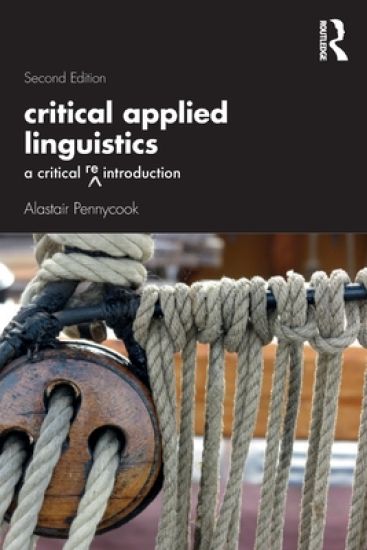
Critical Applied Linguistics

Critical Applied Linguistics

Alastair Pennycook

Routledge
2021
nidottu
Now in its second edition, this accessible guide and introduction to critical applied linguistics provides a clear overview of the problems, debates, and competing views in language education, literacy, discourse analysis, language in the workplace, translation, and other language-related domains. Covering both critical theory and domains of practice, the book is organized around five themes: the politics of knowledge, the politics of language, the politics of difference, the politics of texts, and the politics of pedagogy. Recognizing that a changing world requires new ways of thinking, and that many approaches have watered down over time, the new edition applies a sharp, fresh look at established and new intellectual frameworks. The second edition is comprehensively updated with additional research throughout and features new discussions of colonialism, queer theory, race and gender, translanguaging, and posthumanism. With a critical focus on the role of applied linguists, Pennycook emphasizes the importance of a situated, collaborative perspective that takes the discussion away from questions of implementation, and insists instead that critical applied linguistics has to be an emergent program from the contexts in which it works.This landmark text is essential reading for students and researchers of applied linguistics, multilingualism, language and education, TESOL, and language and identity.
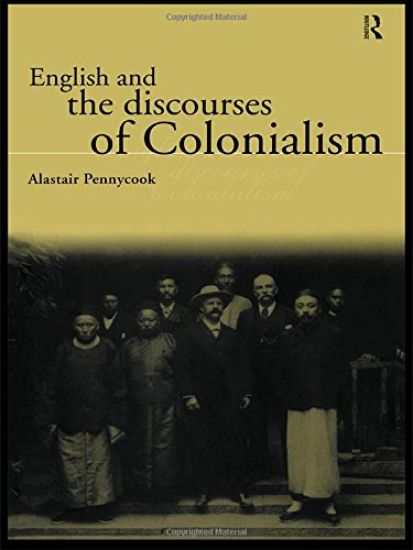
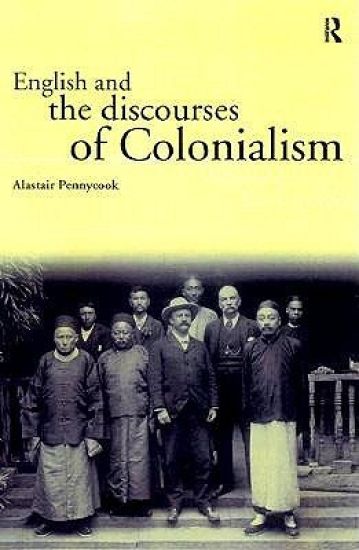
English and the Discourses of Colonialism

English and the Discourses of Colonialism

Alastair Pennycook

Routledge
1998
sidottu
English and the Discourses of Colonialism opens with the British departure from Hong Kong marking the end of British colonialism. Yet Alastair Pennycook argues that this dramatic exit masks the crucial issue that the traces left by colonialism run deep.This challenging and provocative book looks particularly at English, English language teaching, and colonialism. It reveals how the practice of colonialism permeated the cultures and discourses of both the colonial and colonized nations, the effects of which are still evident today. Pennycook explores the extent to which English is, as commonly assumed, a language of neutrality and global communication, and to what extent it is, by contrast, a language laden with meanings and still weighed down with colonial discourses that have come to adhere to it.Travel writing, newspaper articles and popular books on English, are all referred to, as well as personal experiences and interviews with learners of English in India, Malaysia, China and Australia. Pennycook concludes by appealing to postcolonial writing, to create a politics of opposition and dislodge the discourses of colonialism from English.
English and the Discourses of Colonialism

English and the Discourses of Colonialism

Alastair Pennycook

Routledge
1998
nidottu
English and the Discourses of Colonialism opens with the British departure from Hong Kong marking the end of British colonialism. Yet Alastair Pennycook argues that this dramatic exit masks the crucial issue that the traces left by colonialism run deep.This challenging and provocative book looks particularly at English, English language teaching, and colonialism. It reveals how the practice of colonialism permeated the cultures and discourses of both the colonial and colonized nations, the effects of which are still evident today. Pennycook explores the extent to which English is, as commonly assumed, a language of neutrality and global communication, and to what extent it is, by contrast, a language laden with meanings and still weighed down with colonial discourses that have come to adhere to it.Travel writing, newspaper articles and popular books on English, are all referred to, as well as personal experiences and interviews with learners of English in India, Malaysia, China and Australia. Pennycook concludes by appealing to postcolonial writing, to create a politics of opposition and dislodge the discourses of colonialism from English.
Global Englishes and Transcultural Flows

Global Englishes and Transcultural Flows

Alastair Pennycook

Routledge
2006
sidottu
The English language is spreading across the world, and so too is hip-hop culture: both are being altered, developed, reinterpreted, reclaimed. This timely book explores the relationship between global Englishes (the spread and use of diverse forms of English within processes of globalization) and transcultural flows (the movements, changes and reuses of cultural forms in disparate contexts). This wide-ranging study focuses on the ways English is embedded in other linguistic contexts, including those of East Asia, Australia, West Africa and the Pacific Islands. Drawing on transgressive and performative theory, Pennycook looks at how global Englishes, transcultural flows and pedagogy are interconnected in ways that oblige us to rethink language and culture within the contemporary world. Global Englishes and Transcultural Flows is a valuable resource to applied linguists, sociolinguists, and students on cultural studies, English language studies, TEFL and TESOL courses.
Global Englishes and Transcultural Flows

Global Englishes and Transcultural Flows

Alastair Pennycook

Routledge
2006
nidottu
The English language is spreading across the world, and so too is hip-hop culture: both are being altered, developed, reinterpreted, reclaimed. This timely book explores the relationship between global Englishes (the spread and use of diverse forms of English within processes of globalization) and transcultural flows (the movements, changes and reuses of cultural forms in disparate contexts). This wide-ranging study focuses on the ways English is embedded in other linguistic contexts, including those of East Asia, Australia, West Africa and the Pacific Islands. Drawing on transgressive and performative theory, Pennycook looks at how global Englishes, transcultural flows and pedagogy are interconnected in ways that oblige us to rethink language and culture within the contemporary world. Global Englishes and Transcultural Flows is a valuable resource to applied linguists, sociolinguists, and students on cultural studies, English language studies, TEFL and TESOL courses.
Language as a Local Practice

Language as a Local Practice

Alastair Pennycook

Routledge
2010
sidottu
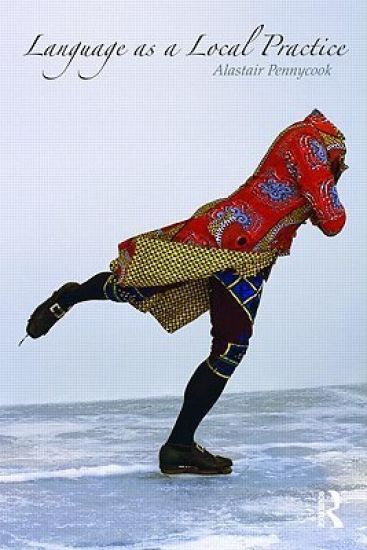
Language as a Local Practice addresses the questions of language, locality and practice as a way of moving forward in our understanding of how language operates as an integrated social and spatial activity. By taking each of these three elements – language, locality and practice – and exploring how they relate to each other, Language as a Local Practice opens up new ways of thinking about language. It questions assumptions about languages as systems or as countable entities, and suggests instead that language emerges from the activities it performs. To look at language as a practice is to view language as an activity rather than a structure, as something we do rather than a system we draw on, as a material part of social and cultural life rather than an abstract entity. Language as a Local Practice draws on a variety of contexts of language use, from bank machines to postcards, Indian newspaper articles to fish-naming in the Philippines, urban graffiti to mission statements, suggesting that rather than thinking in terms of language use in context, we need to consider how language, space and place are related, how language creates the contexts where it is used, how languages are the products of socially located activities and how they are part of the action.Language as a Local Practice will be of interest to students on advanced undergraduate and post graduate courses in Applied Linguistics, Language Education, TESOL, Literacy and Cultural Studies.
Language as a Local Practice

Language as a Local Practice

Alastair Pennycook

Routledge
2010
nidottu
Language as a Local Practice addresses the questions of language, locality and practice as a way of moving forward in our understanding of how language operates as an integrated social and spatial activity. By taking each of these three elements – language, locality and practice – and exploring how they relate to each other, Language as a Local Practice opens up new ways of thinking about language. It questions assumptions about languages as systems or as countable entities, and suggests instead that language emerges from the activities it performs. To look at language as a practice is to view language as an activity rather than a structure, as something we do rather than a system we draw on, as a material part of social and cultural life rather than an abstract entity. Language as a Local Practice draws on a variety of contexts of language use, from bank machines to postcards, Indian newspaper articles to fish-naming in the Philippines, urban graffiti to mission statements, suggesting that rather than thinking in terms of language use in context, we need to consider how language, space and place are related, how language creates the contexts where it is used, how languages are the products of socially located activities and how they are part of the action.Language as a Local Practice will be of interest to students on advanced undergraduate and post graduate courses in Applied Linguistics, Language Education, TESOL, Literacy and Cultural Studies.
The Cultural Politics of English as an International Language
A much-cited and highly influential text by Alastair Pennycook, one of the world authorities in sociolinguistics, The Cultural Politics of English as an International Language explores the globalization of English by examining its colonial origins, its connections to linguistics and applied linguistics, and its relationships to the global spread of teaching practices. Nine chapters cover a wide range of key topics including: international politics colonial history critical pedagogy postcolonial literature. The book provides a critical understanding of the concept of the ‘worldliness of English’, or the idea that English can never be removed from the social, cultural, economic or political contexts in which it is used. Reissued with a substantial preface, this Routledge Linguistics Classic remains a landmark text, which led a much-needed critical and ideologically-informed investigation into the burgeoning topic of World Englishes. Key reading for all those working in the areas of Applied Linguistics, Sociolinguistics and World Englishes.
The Cultural Politics of English as an International Language
A much-cited and highly influential text by Alastair Pennycook, one of the world authorities in sociolinguistics, The Cultural Politics of English as an International Language explores the globalization of English by examining its colonial origins, its connections to linguistics and applied linguistics, and its relationships to the global spread of teaching practices. Nine chapters cover a wide range of key topics including: international politics colonial history critical pedagogy postcolonial literature. The book provides a critical understanding of the concept of the ‘worldliness of English’, or the idea that English can never be removed from the social, cultural, economic or political contexts in which it is used. Reissued with a substantial preface, this Routledge Linguistics Classic remains a landmark text, which led a much-needed critical and ideologically-informed investigation into the burgeoning topic of World Englishes. Key reading for all those working in the areas of Applied Linguistics, Sociolinguistics and World Englishes.
Language Assemblages

Language Assemblages

Alastair Pennycook

Cambridge University Press
2024
pokkari
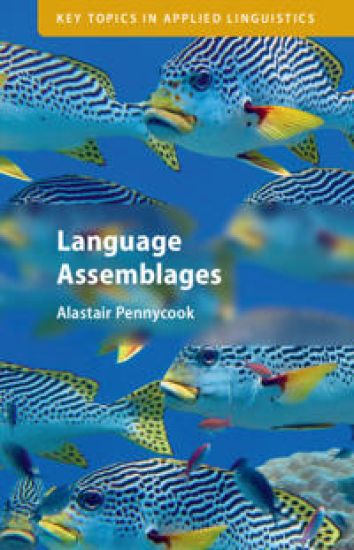
What are languages? An assemblage approach to language gives us ways of thinking about language as dynamic, constructed, open-ended, and in and of the world. This book unsettles regular accounts of knowledge about language in several ways, presenting an innovative and provocative framework for a new understanding of language from within applied linguistics. The idea of assemblages allows for a ?exibility about what languages are, not just in terms of having fuzzy linguistic boundaries but in terms of what constitutes language more generally. Languages are assembled from different elements, both linguistic elements as traditionally understood, as well as items less commonly included. Language from this point of view is embedded in diverse social and physical environments, distributed across the material world and part of our embodied existence. This book looks at what language is and what languages are with a view to understanding applied linguistics itself as a practical assemblage.
Language Assemblages

Language Assemblages

Alastair Pennycook

Cambridge University Press
2024
sidottu
What are languages? An assemblage approach to language gives us ways of thinking about language as dynamic, constructed, open-ended, and in and of the world. This book unsettles regular accounts of knowledge about language in several ways, presenting an innovative and provocative framework for a new understanding of language from within applied linguistics. The idea of assemblages allows for a ?exibility about what languages are, not just in terms of having fuzzy linguistic boundaries but in terms of what constitutes language more generally. Languages are assembled from different elements, both linguistic elements as traditionally understood, as well as items less commonly included. Language from this point of view is embedded in diverse social and physical environments, distributed across the material world and part of our embodied existence. This book looks at what language is and what languages are with a view to understanding applied linguistics itself as a practical assemblage.
Posthumanist Applied Linguistics

Posthumanist Applied Linguistics

Alastair Pennycook

Routledge
2017
sidottu
Drawing on a range of contexts and data sources, from urban multilingualism to studies of animal communication, Posthumanist Applied Linguistics offers us alternative ways of thinking about the human predicament, with major implications for research, education and politics.Exploring the advent of the Anthropocene, new forms of materialism, distributed language, assemblages, and the boundaries between humans, other animals and objects, eight incisive chapters by one of the world's foremost applied linguistics open up profound questions to do with language and the world. This critical posthumanist applied linguistic perspective is essential reading for all researchers and students in the fields of Applied Linguistics and Sociolinguistics.
Posthumanist Applied Linguistics

Posthumanist Applied Linguistics

Alastair Pennycook

Routledge
2017
nidottu
Drawing on a range of contexts and data sources, from urban multilingualism to studies of animal communication, Posthumanist Applied Linguistics offers us alternative ways of thinking about the human predicament, with major implications for research, education and politics.Exploring the advent of the Anthropocene, new forms of materialism, distributed language, assemblages, and the boundaries between humans, other animals and objects, eight incisive chapters by one of the world's foremost applied linguistics open up profound questions to do with language and the world. This critical posthumanist applied linguistic perspective is essential reading for all researchers and students in the fields of Applied Linguistics and Sociolinguistics.
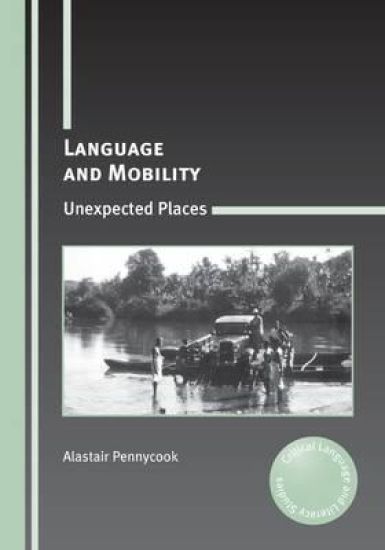
Language and Mobility

Language and Mobility

Alastair Pennycook

Multilingual Matters
2012
nidottu
This book looks at language in unexpected places. Drawing on a diversity of materials and contexts, including farewell addresses to British workers in colonial India, letters written from parents to their children at home, a Cornish anthem sung in South Australia, a country fair in rural Australia, and a cricket match played in the middle of the 19th century in south India, this book explores many current concerns around language, mobility and place, including native speakers, generic forms, and language maintenance. Using a series of narrative accounts – from a journey to southern India to eating cheese in China, from playing soccer in Germany to observing a student teacher in Sydney – this book asks how it is that language, people and cultures turn up unexpectedly and how our lines of expectation are formed.
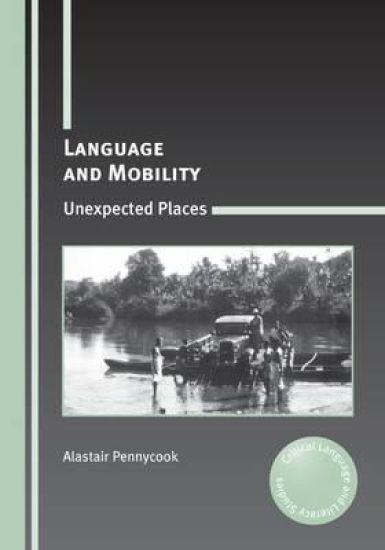
Language and Mobility

Language and Mobility

Alastair Pennycook

Multilingual Matters
2012
sidottu
This book looks at language in unexpected places. Drawing on a diversity of materials and contexts, including farewell addresses to British workers in colonial India, letters written from parents to their children at home, a Cornish anthem sung in South Australia, a country fair in rural Australia, and a cricket match played in the middle of the 19th century in south India, this book explores many current concerns around language, mobility and place, including native speakers, generic forms, and language maintenance. Using a series of narrative accounts – from a journey to southern India to eating cheese in China, from playing soccer in Germany to observing a student teacher in Sydney – this book asks how it is that language, people and cultures turn up unexpectedly and how our lines of expectation are formed.
Metrolingualism

Metrolingualism

Alastair Pennycook; Emi Otsuji

Routledge
2015
sidottu
This book is about language and the city. Pennycook and Otsuji introduce the notion of ‘metrolingualism’, showing how language and the city are deeply involved in a perpetual exchange between people, history, migration, architecture, urban landscapes and linguistic resources. Cities and languages are in constant change, as new speakers with new repertoires come into contact as a result of globalization and the increased mobility of people and languages.Metrolingualism sheds light on the ordinariness of linguistic diversity as people go about their daily lives, getting things done, eating and drinking, buying and selling, talking and joking, drawing on whatever linguistic resources are available. Engaging with current debates about multilingualism, and developing a new way of thinking about language, the authors explore language within a number of contemporary urban situations, including cafés, restaurants, shops, streets, construction sites and other places of work, in two diverse cities, Sydney and Tokyo. This is an invaluable look at how people of different backgrounds get by linguistically. Metrolingualism: Language in the city will be of special interest to advanced undergraduate/postgraduate students and researchers of sociolinguistics and applied linguistics.
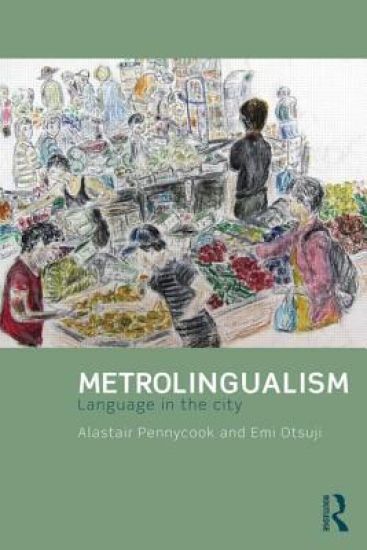
Metrolingualism

Metrolingualism

Alastair Pennycook; Emi Otsuji

Routledge
2015
nidottu
This book is about language and the city. Pennycook and Otsuji introduce the notion of ‘metrolingualism’, showing how language and the city are deeply involved in a perpetual exchange between people, history, migration, architecture, urban landscapes and linguistic resources. Cities and languages are in constant change, as new speakers with new repertoires come into contact as a result of globalization and the increased mobility of people and languages.Metrolingualism sheds light on the ordinariness of linguistic diversity as people go about their daily lives, getting things done, eating and drinking, buying and selling, talking and joking, drawing on whatever linguistic resources are available. Engaging with current debates about multilingualism, and developing a new way of thinking about language, the authors explore language within a number of contemporary urban situations, including cafés, restaurants, shops, streets, construction sites and other places of work, in two diverse cities, Sydney and Tokyo. This is an invaluable look at how people of different backgrounds get by linguistically. Metrolingualism: Language in the city will be of special interest to advanced undergraduate/postgraduate students and researchers of sociolinguistics and applied linguistics.
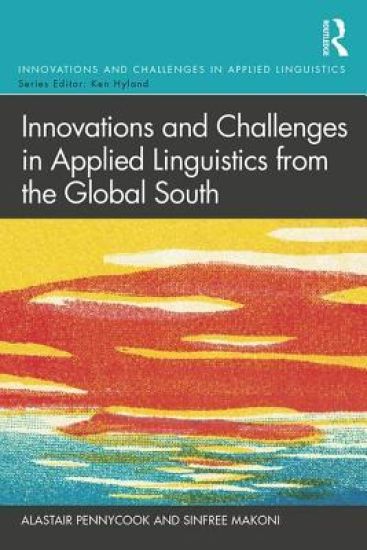
Innovations and Challenges in Applied Linguistics from the Global South
Innovations and Challenges in Applied Linguistics from the Global South provides an original appraisal of the latest innovations and challenges in applied linguistics from the perspective of the Global South. Global South perspectives are encapsulated in struggles for basic, economic, political and social transformation in an inequitable world, and are not confined to the geographical South. Taking a critical perspective on Southern theories, demonstrating why it is important to view the world from Southern perspectives and why such positions must be open to critical investigation, this book: charts the impacts of these theories on approaches to multilingualism, language learning, language in education, literacy and diversity, language rights and language policy; provides broad historical and geographical understandings of the movement towards a Southern perspective and draws on Indigenous and Southern ways of thinking that challenge mainstream viewpoints; seeks to develop alternative understandings of applied linguistics, expand the intellectual repertoires of the discipline, and challenge the complicities between applied linguistics, colonialism, and capitalism.Written by two renowned scholars in the field, Innovations and Challenges in Applied Linguistics from the Global South is key reading for advanced students and researchers of applied linguistics, multilingualism, language and education, language policy and planning, and language and identity.
Innovations and Challenges in Applied Linguistics from the Global South
Innovations and Challenges in Applied Linguistics from the Global South provides an original appraisal of the latest innovations and challenges in applied linguistics from the perspective of the Global South. Global South perspectives are encapsulated in struggles for basic, economic, political and social transformation in an inequitable world, and are not confined to the geographical South. Taking a critical perspective on Southern theories, demonstrating why it is important to view the world from Southern perspectives and why such positions must be open to critical investigation, this book: charts the impacts of these theories on approaches to multilingualism, language learning, language in education, literacy and diversity, language rights and language policy; provides broad historical and geographical understandings of the movement towards a Southern perspective and draws on Indigenous and Southern ways of thinking that challenge mainstream viewpoints; seeks to develop alternative understandings of applied linguistics, expand the intellectual repertoires of the discipline, and challenge the complicities between applied linguistics, colonialism, and capitalism.Written by two renowned scholars in the field, Innovations and Challenges in Applied Linguistics from the Global South is key reading for advanced students and researchers of applied linguistics, multilingualism, language and education, language policy and planning, and language and identity.