
Kirjahaku
Etsi kirjoja tekijän nimen, kirjan nimen tai ISBN:n perusteella.
13 kirjaa tekijältä Alban Goodier


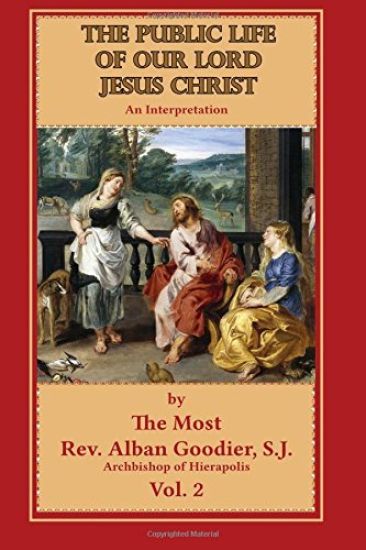
The Public Life of Our Lord Jesus Christ: An Interpretation
Alban Goodier
Createspace Independent Publishing Platform
2017
nidottu
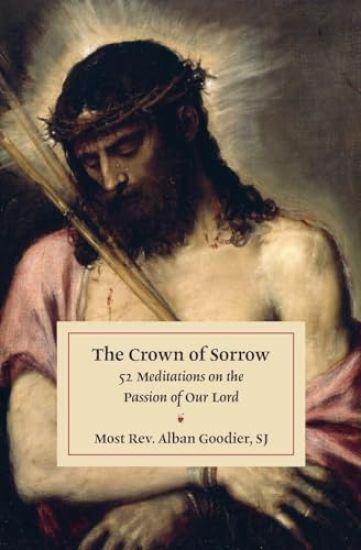
'The Passion of Christ is the greatest and most stupendous work of Divine Love. The greatest and most overwhelming work of God's love.'-St Paul of the CrossThe Passion of Our Lord Jesus Christ is one of the richest sources of meditation and prayer and a most fruitful one; as St Francis de Sales said, 'Mount Calvary is the academy of love'. In this small book Archbishop Alban Goodier gives first a harmony of the Passion-a single text woven from the Passion narratives of the four Evangelists-and then 52 meditations on each part of the Passion. The meditations in this book make a perfect Lenten meditation book, entering deeply into the Passion with a meditation for each day, starting in the lead up to Lent.

Archbishop Alban Goodier created this series of meditations from the events of the nativity and Christ's early life, with each designed to be read within just a few minutes.Useful as a means of administering a daily spiritual reflection, this book contains a total of sixty spiritual meditations, divided into two parts. Topics include the nativity of Jesus, and the character of Mary, Mother of God. Important events such as the visitation of the Magi to the home of Jesus, and the appearance of the Star in the East, also receive commentary. The author's idea with this work is to raise the reader's soul, that it be closer in mind and heart to the essence of God.Although Alban Goodier served for a time in the hierarchy of the church, including as Archbishop of Bombay, he was most at home with writing and publishing religious books. He sought a life of simplicity, immersed in scholarly topics, and assembled a series of influential manuals of faith thereby. To this day, readers value his efforts by reading the various chronicles he published in the early 20th century.
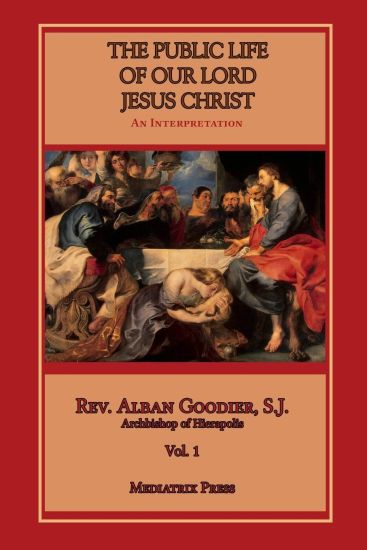
The Public Life of Our Lord Jesus Christ, by bishop Goodier, takes the subject of Christ's life from the coming of John the Baptist until his last day before Palm Sunday and the beginning of His passion.In this work Goodier sets out not merely to write another life of Christ or follow the mold of a devotional work or a scientific analysis but to transcend both to apply logic and reason combined with Catholic faith to understand who Jesus was, and what was the impact of his public life, what was it like for those there, what did his disciples and enemies think?Goodier's text is descriptive, lucid, and original, not being loaded up with quotes from other authors. Moreover, it is entirely faithful to the text of the Gospels and harmonizes the four narratives into one account spanning the three years of Christ's public life before His passion.In this text you will find Bishop Goodier faithful to the Gospel narrative unlike many writers in his time who applied the historical critical method to such lengths that they had rejected the gospels themselves as witnesses. Goodier notes in his introduction: "Hence in a work of this kind it has not seemed necessary to introduce any discussion concerning the four Evangelists, the authenticity of their work, or the special characteristics of each. These have been examined and proved by writers far more skilled and learned than the author and he is content to accept their decision referring readers who would examine these sources to them. On the other hand, when accepting the Gospels, he accepts them wholly and entirely. It seems to him a futile attitude of mind to take a source as authentic, and then, almost entirely from internal evidence, to proceed to whittle it away. For instance, let us take the miracles. Not only do the four Evangelists record them, but they record them as an essential part of their evidence; so essential, in every case, that if they are eliminated their whole concept of Jesus tumbles to ruins. There is scarcely any miracle which may be canceled without involving in its fall many other portions of the Gospel; eliminate them all and there is virtually nothing left. Far more fair to the facts, even from the point of view of the rationalist historian, does it seem to the author to take the evidence as he finds it, make of it the best he can, put faith in those whom he professes to acknowledge as his only safe guides, build up his picture of Jesus as they have built it up and with the same material. If he accepts some evidence and rejects the rest, this at least he must confess: that the conclusion he draws, whether true or not, cannot possibly be the picture drawn by the four Evangelists. In the present work the four Gospels have been taken simply as they are given to us; the question has been simply asked: What is the Jesus of the four Evangelists like?" (From the Introduction)This reprint from the 1944 edition has been made faithful to the original in every detail, retaining UK spelling standards found in the original. The only changes made are the correction of errata in the original text.Additionally, artwork from the Renaissance and Baroque periods has been added which is not in the original to aid the reader. This is not a facsimile copy.For more information on this and other titles, visit Mediatrix press at www.mediatrixpress.com.
The Public Life of Our Lord Jesus Christ, by bishop Goodier, takes the subject of Christ's life from the coming of John the Baptist until his last day before Palm Sunday and the beginning of His passion.In this work Goodier sets out not merely to write another life of Christ or follow the mold of a devotional work or a scientific analysis but to transcend both to apply logic and reason combined with Catholic faith to understand who Jesus was, and what was the impact of his public life, what was it like for those there, what did his disciples and enemies think?Goodier's text is descriptive, lucid, and original, not being loaded up with quotes from other authors. Moreover, it is entirely faithful to the text of the Gospels and harmonizes the four narratives into one account spanning the three years of Christ's public life before His passion.In this text you will find Bishop Goodier faithful to the Gospel narrative unlike many writers in his time who applied the historical critical method to such lengths that they had rejected the gospels themselves as witnesses. Goodier notes in his introduction: "Hence in a work of this kind it has not seemed necessary to introduce any discussion concerning the four Evangelists, the authenticity of their work, or the special characteristics of each. These have been examined and proved by writers far more skilled and learned than the author and he is content to accept their decision referring readers who would examine these sources to them. On the other hand, when accepting the Gospels, he accepts them wholly and entirely. It seems to him a futile attitude of mind to take a source as authentic, and then, almost entirely from internal evidence, to proceed to whittle it away. For instance, let us take the miracles. Not only do the four Evangelists record them, but they record them as an essential part of their evidence; so essential, in every case, that if they are eliminated their whole concept of Jesus tumbles to ruins. There is scarcely any miracle which may be canceled without involving in its fall many other portions of the Gospel; eliminate them all and there is virtually nothing left. Far more fair to the facts, even from the point of view of the rationalist historian, does it seem to the author to take the evidence as he finds it, make of it the best he can, put faith in those whom he professes to acknowledge as his only safe guides, build up his picture of Jesus as they have built it up and with the same material. If he accepts some evidence and rejects the rest, this at least he must confess: that the conclusion he draws, whether true or not, cannot possibly be the picture drawn by the four Evangelists. In the present work the four Gospels have been taken simply as they are given to us; the question has been simply asked: What is the Jesus of the four Evangelists like?" (From the Introduction)This reprint from the 1944 edition has been made faithful to the original in every detail, retaining UK spelling standards found in the original. The only changes made are the correction of errata in the original text.Additionally, artwork from the Renaissance and Baroque periods has been added which is not in the original to aid the reader. This is not a facsimile copy.For more information on this and other titles, visit Mediatrix press at www.mediatrixpress.com.
The Public Life of Our Lord Jesus Christ, by bishop Goodier, takes the subject of Christ's life from the coming of John the Baptist until his last day before Palm Sunday and the beginning of His passion.In this work Goodier sets out not merely to write another life of Christ or follow the mold of a devotional work or a scientific analysis but to transcend both to apply logic and reason combined with Catholic faith to understand who Jesus was, and what was the impact of his public life, what was it like for those there, what did his disciples and enemies think?Goodier's text is descriptive, lucid, and original, not being loaded up with quotes from other authors. Moreover, it is entirely faithful to the text of the Gospels and harmonizes the four narratives into one account spanning the three years of Christ's public life before His passion.In this text you will find Bishop Goodier faithful to the Gospel narrative unlike many writers in his time who applied the historical critical method to such lengths that they had rejected the gospels themselves as witnesses. Goodier notes in his introduction: "Hence in a work of this kind it has not seemed necessary to introduce any discussion concerning the four Evangelists, the authenticity of their work, or the special characteristics of each. These have been examined and proved by writers far more skilled and learned than the author and he is content to accept their decision referring readers who would examine these sources to them. On the other hand, when accepting the Gospels, he accepts them wholly and entirely. It seems to him a futile attitude of mind to take a source as authentic, and then, almost entirely from internal evidence, to proceed to whittle it away. For instance, let us take the miracles. Not only do the four Evangelists record them, but they record them as an essential part of their evidence; so essential, in every case, that if they are eliminated their whole concept of Jesus tumbles to ruins. There is scarcely any miracle which may be canceled without involving in its fall many other portions of the Gospel; eliminate them all and there is virtually nothing left. Far more fair to the facts, even from the point of view of the rationalist historian, does it seem to the author to take the evidence as he finds it, make of it the best he can, put faith in those whom he professes to acknowledge as his only safe guides, build up his picture of Jesus as they have built it up and with the same material. If he accepts some evidence and rejects the rest, this at least he must confess: that the conclusion he draws, whether true or not, cannot possibly be the picture drawn by the four Evangelists. In the present work the four Gospels have been taken simply as they are given to us; the question has been simply asked: What is the Jesus of the four Evangelists like?" (From the Introduction)This reprint from the 1944 edition has been made faithful to the original in every detail, retaining UK spelling standards found in the original. The only changes made are the correction of errata in the original text.Additionally, artwork from the Renaissance and Baroque periods has been added which is not in the original to aid the reader. This is not a facsimile copy.For more information on this and other titles, visit Mediatrix press at www.mediatrixpress.com.
The Public Life of Our Lord Jesus Christ, by bishop Goodier, takes the subject of Christ's life from the coming of John the Baptist until his last day before Palm Sunday and the beginning of His passion.In this work Goodier sets out not merely to write another life of Christ or follow the mold of a devotional work or a scientific analysis but to transcend both to apply logic and reason combined with Catholic faith to understand who Jesus was, and what was the impact of his public life, what was it like for those there, what did his disciples and enemies think?Goodier's text is descriptive, lucid, and original, not being loaded up with quotes from other authors. Moreover, it is entirely faithful to the text of the Gospels and harmonizes the four narratives into one account spanning the three years of Christ's public life before His passion.In this text you will find Bishop Goodier faithful to the Gospel narrative unlike many writers in his time who applied the historical critical method to such lengths that they had rejected the gospels themselves as witnesses. Goodier notes in his introduction: "Hence in a work of this kind it has not seemed necessary to introduce any discussion concerning the four Evangelists, the authenticity of their work, or the special characteristics of each. These have been examined and proved by writers far more skilled and learned than the author and he is content to accept their decision referring readers who would examine these sources to them. On the other hand, when accepting the Gospels, he accepts them wholly and entirely. It seems to him a futile attitude of mind to take a source as authentic, and then, almost entirely from internal evidence, to proceed to whittle it away. For instance, let us take the miracles. Not only do the four Evangelists record them, but they record them as an essential part of their evidence; so essential, in every case, that if they are eliminated their whole concept of Jesus tumbles to ruins. There is scarcely any miracle which may be canceled without involving in its fall many other portions of the Gospel; eliminate them all and there is virtually nothing left. Far more fair to the facts, even from the point of view of the rationalist historian, does it seem to the author to take the evidence as he finds it, make of it the best he can, put faith in those whom he professes to acknowledge as his only safe guides, build up his picture of Jesus as they have built it up and with the same material. If he accepts some evidence and rejects the rest, this at least he must confess: that the conclusion he draws, whether true or not, cannot possibly be the picture drawn by the four Evangelists. In the present work the four Gospels have been taken simply as they are given to us; the question has been simply asked: What is the Jesus of the four Evangelists like?" (From the Introduction)This reprint from the 1944 edition has been made faithful to the original in every detail, retaining UK spelling standards found in the original. The only changes made are the correction of errata in the original text.Additionally, artwork from the Renaissance and Baroque periods has been added which is not in the original to aid the reader. This is not a facsimile copy.For more information on this and other titles, visit Mediatrix press at www.mediatrixpress.com.